Cold-weather camping demands more than a standard three-season shelter. The right tent must balance wind and snow protection, warmth, ventilation, setup time, weight, and usable interior space.
We’ve gathered 10 four-season options for different winter camping styles, from lightweight backpacking tents to stove-compatible hot tents. Use the guide below to narrow your choices by conditions, group size, and gear priorities.
Best 10 Camping Tents for Cold Weather Picks for 2026
Snow-Ready Lightweight Pick
BISINNA 4 Season 2-Person Tent

- Snow skirt and PU 3000mm waterproof coating
- 6.4-pound packable design
- Two doors and two windows for ventilation
Best For: Backpacking couples or solo campers with gear
Cold-Weather Glamping Shelter

- Stove jack supports compatible wood-stove use
- Spacious design for 4–7 campers
- Tall center height allows standing room
Best For: Family camping, hunting camps, and glamping
High-Protection Backpacking Choice
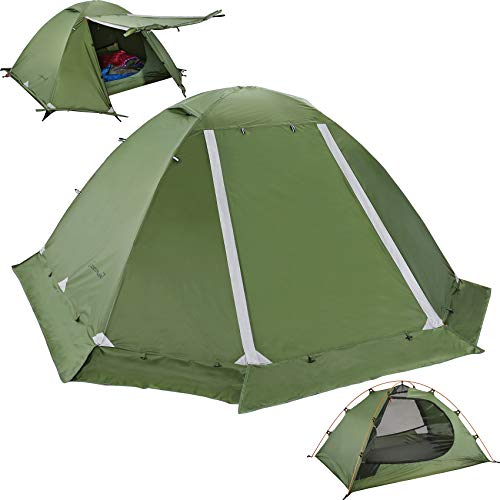
- Snow flaps and sealed seams for winter use
- Two vestibules and two doors
- 5.33-pound minimum trail weight
Best For: Two-person backpacking in snow or cold weather
Ultralight Four-Season Option

- Just 4.4 pounds for backpacking
- 3000mm waterproof nylon construction
- Removable blackout outer tent
Best For: Lightweight backpacking and bushcraft trips
Best Hot-Tent Pick
Naturehike Ranch Fire 4-Season Teepee

- Stove jack with flame-retardant fabric
- Roomy shelter with included mesh inner tent
- Snow skirt and PU3000mm waterproofing
Best For: Small groups wanting a spacious, stove-compatible winter shelter
Best Lightweight Option
GEERTOP 2-Person 4-Season Backpacking Tent

- 6.9-pound freestanding design
- Snow skirt and PU3000mm rainfly
- Dual doors, vestibules, and quick setup
Best For: Two-person backcountry trips where weight and pack size matter
Best Cabin-Style Hot Tent

- Fireproof ground sheet and ember mat
- Stable two-pole cabin design
- Dual doors with rain curtains
Best For: Two campers wanting a portable, stove-ready cabin shelter
Compact Winter Trekker
Lightweight 4-Season Backpacking Tent

- Snow skirt and PU5000 rainfly support winter protection
- Freestanding two-person design weighs about 5.7 pounds
- Compact option with mesh ventilation and one vestibule
Best For: Two-person backpacking and four-season hiking
Stove-Ready Basecamp

- Stove jack and snow skirt suit winter camping
- Removable inner tent and spacious vestibule add versatility
- Four doors and mesh ventilation improve access and airflow
Best For: Winter car camping and heated two-person basecamps
Fast-Pitch Alpine Shelter
Double-Layer 4-Season Backpacking Tent

- About 5.5 pounds with a three-minute setup claim
- PU5000 coating, sealed seams, snow skirt, and aluminum poles
- Two doors and two vents help with access and condensation
Best For: Compact one- or two-person cold-weather backpacking
Snow-Ready Lightweight Pick – BISINNA 4 Season 2-Person Tent
For shoppers comparing camping tents for cold weather, the BISINNA offers a practical balance of winter-oriented features, portability, and interior space. Its snow skirt, PU 3000mm coating, double-layer construction, and aluminum poles suit backpacking and general cold-season camping.
Best For: Couples or solo campers who want a lightweight, freestanding four-season tent with a vestibule for gear.
Pros:
- Snow skirt and waterproof PU 3000mm polyester construction help handle cold, wet conditions.
- At 6.4 pounds, it remains manageable for backpacking, bicycle travel, or motorcycle trips.
- Two doors, two windows, and double-layer mesh provide useful ventilation and access.
- Freestanding design and two aluminum poles support one-person setup.
Cons:
- At 43.3 inches tall, the interior is designed for sleeping rather than standing.
- The manufacturer cautions that the inner and outer layers should not touch, or condensation may soak the inner tent.
The BISINNA is a well-rounded option when you need cold-weather features without moving to a heavier base-camp shelter. Its moderate weight and two-person layout make it especially practical for mobile trips.
Cold-Weather Glamping Shelter – Bell Tent with Stove Jack
This bell tent takes a different approach to camping tents for cold weather, emphasizing living space and stove compatibility over backpacking portability. Its spacious yurt-style layout, mesh openings, and built-in stove jack make it suited to stationary winter camps and glamping trips.
Best For: Families, groups, hunters, and glampers who want room to stand, accommodate gear, and use a compatible wood stove.
Pros:
- Spacious 16.4-foot version accommodates up to 4–7 campers with gear, depending on configuration.
- Built-in stove jack supports wood-stove installation for heating and cooking in cold weather.
- Tall center height provides standing room and a more comfortable interior.
- Mesh windows and insect-proof doors promote airflow while helping block bugs.
Cons:
- At 35.3 pounds, it is intended for car camping or a fixed campsite rather than backpacking.
- The supplied notes recommend an additional rainfly for enhanced protection in rainy conditions.
- The listed version has one door, which may be less convenient for larger groups.
Choose this shelter when interior comfort and stove heating matter more than a compact packed size. Its large footprint and 4-season positioning are a strong fit for extended base camps, but plan for vehicle transport and careful stove setup.
High-Protection Backpacking Choice – Clostnature 4 Season Tent
Among camping tents for cold weather, the Clostnature stands out for its snow flaps, bathtub-style groundsheet, sealed seams, and PU 5000-coated rain fly. It also keeps the load reasonable for a two-person backpacking tent and includes two vestibules for storing footwear or equipment.
Best For: Backpackers and hikers who want a compact two-person winter tent with stronger weatherproofing features and separate vestibule storage.
Pros:
- Snow flaps, factory-sealed seams, and a coated rain fly and groundsheet support four-season use.
- Minimum trail weight is listed at 5.33 pounds, with a 6.28-pound total weight.
- Two D-shaped doors and two vestibules improve access and provide covered storage.
- Freestanding aluminum-pole design is designed for quick, one-person setup.
Cons:
- Its 45.8-inch peak height offers limited headroom for standing or extended indoor activity.
- The product details contain differing water-resistance figures, listing PU 5000 in the description and 1500mm in the specifications.
- Its two-person interior may feel tight when both occupants bring substantial winter gear.
The Clostnature is a compelling choice for hikers who prioritize snow management, vestibule space, and a weather-focused design. Verify the current specifications before buying if the exact waterproof rating is important to your trip.
Ultralight Four-Season Option – OneTigris Stella Tent
The OneTigris Stella is a compact choice for shoppers seeking camping tents for cold weather without a large pack burden. Its 4.4-pound weight, 3000mm waterproof rating, removable blackout outer tent, and mesh inner tent provide a flexible setup for backpacking and changing conditions.
Best For: Backpackers, bushcrafters, and lightweight campers who value low weight, quick setup, and a compact two-person shelter.
Pros:
- At 4.4 pounds, it is the lightest option in this roundup.
- 20D nylon construction, a 40D nylon floor, and 3000mm waterproofing support wet-weather use.
- Removable blackout outer tent allows flexibility between more enclosed and more open configurations.
- Crossed aluminum poles, 10 stakes, and four guy lines support a straightforward setup.
Cons:
- Its 6.9-by-4.1-foot floor and roughly 3.7-foot height provide a compact interior.
- With one door, entry and exit are less flexible than tents with two doors.
- The single-layer outer-fabric design may provide less separation from condensation than a traditional double-wall tent.
The Stella makes the most sense when pack weight is a primary concern and two people can work with a compact sleeping area. Its waterproof rating and removable outer layer add versatility, while the low profile suits lightweight backcountry travel.
Best Hot-Tent Pick – Naturehike Ranch Fire 4-Season Teepee
For campers comparing camping tents for cold weather, the Naturehike Ranch Fire combines a roomy teepee shelter with a stove jack, snow skirt, and included mesh inner tent. Its 210T flame-retardant polyester fabric, PU3000mm waterproof rating, and aluminum pole system make it a versatile option for winter camping and milder-season trips.
Best For: Couples or small groups who want a spacious four-season hot tent with standing room and stove compatibility.
Pros:
- Fire-retardant fabric and a dedicated stove jack support hot-tent use.
- Large 10.8-by-10.8-foot shelter provides standing room for 3–4 people.
- Snow skirt, PU3000mm waterproofing, and aluminum pole help with cold, wet, and windy conditions.
- Included mesh inner tent, two doors, and ventilation windows improve flexibility and airflow.
Cons:
- At about 10.6 pounds, it is heavier than a typical backpacking tent.
- The stove, sleeping setup, and other hot-tent accessories are not listed as included.
This is a strong choice when warmth, livability, and stove use matter more than minimal packed weight. The roomy pyramid design is especially practical for base camps, hunting trips, and family-style winter outings.
Best Lightweight Option – GEERTOP 2-Person 4-Season Backpacking Tent
The GEERTOP is a practical pick among camping tents for cold weather when packability and fast setup are priorities. This freestanding double-wall tent uses a 210T ripstop polyester rainfly, PU3000mm coating, taped seams, aluminum poles, and an extended snow skirt for changing trail conditions.
Best For: Two-person backpacking, motorcycle trips, and weekend adventures where a compact four-season shelter is important.
Pros:
- 6.9-pound weight and 17-by-7-by-7-inch packed size suit mobile trips.
- Snow skirt, windproof construction, and PU3000mm protection help handle rain, wind, and occasional snow.
- Dual doors and vestibules provide convenient access and gear storage.
- Two-pole aluminum frame and clip-on design can pitch in about five to eight minutes.
Cons:
- The 45-inch interior height limits standing room.
- Its two-person layout offers less living space than larger hot-tent designs.
Choose this model if you expect to carry your shelter over distance and want a straightforward freestanding setup. The double-wall design and mesh panels also make it more adaptable when condensation and airflow become concerns.
Best Cabin-Style Hot Tent – POMOLY CHALET 70 Pro
The POMOLY CHALET 70 Pro stands out among camping tents for cold weather with its cabin-style layout, stove-ready design, and reinforced weather protection. Its 70D plaid ripstop polyester shell has a 2500mm waterproof rating, while two aluminum poles, multiple tie-down points, and an integrated fireproof ground sheet support cold-weather camping.
Best For: Two campers seeking a portable hot tent with a comfortable cabin shape, dual doors, and dedicated fire protection.
Pros:
- Integrated fireproof ground sheet and ember mat help protect against stove sparks and hot ash.
- Two aluminum poles, 12 guylines, and eight tie-down points support stability in wind and snow.
- Dual doors with rain curtains allow ventilation and entry while helping keep rain out.
- 70D ripstop polyester and 2500mm waterproofing provide durable weather coverage.
Cons:
- The 2500mm waterproof rating is lower than the 3000mm ratings of the other listed options.
- Its 54-square-foot floor area is best suited to two campers rather than a larger group.
- Hot-tent stove equipment is not listed as included.
This model is appealing for campers who want the features of a hot tent without giving up a more conventional cabin layout. Its built-in fire protection and rain-curtain doors add useful details for extended stays in unsettled weather.
Compact Winter Trekker – Lightweight 4-Season Backpacking Tent
For hikers seeking camping tents for cold weather, this compact two-person shelter combines a snow skirt, full-coverage rainfly, and PU5000 waterproofing in a freestanding design. At about 5.7 pounds, it is better suited to short backpacking trips or shared carry than ultralight solo touring.
Best For: Two-person backpacking, hiking, and camping in variable four-season conditions.
Pros:
- Snow skirt helps block snow, while the rollable design can be opened in milder weather.
- PU5000 coating, aluminum poles, and a full rainfly provide waterproof and wind-resistant coverage.
- Compact packed size, freestanding setup, mesh ventilation, and a double-layer door support practical trail use.
Cons:
- At 5.73 pounds, it is not among the lightest options for solo backpacking.
- The 45.3-inch center height and 59.1-by-86.6-inch floor favor sleeping space over roomy living space.
- Only one door and one vestibule may be less convenient for two occupants.
This tent is a sensible choice when you want winter-oriented features without moving to a larger hot-tent setup. Its modest interior and weight are the main trade-offs.
Stove-Ready Basecamp – Naturehike Dune Hot Tent
This Naturehike model stands out among camping tents for cold weather because it includes a stove jack and snow skirt. Its removable inner tent, large vestibule, and multiple doors make it a flexible choice for winter basecamps, car camping, and trips where comfort matters more than low pack weight.
Best For: Cold-weather car camping, motorcycle travel, and two-person trips needing stove compatibility and extra gear space.
Pros:
- Stove jack and snow skirt are useful features for heated winter camping.
- Removable inner tent and fly-only configuration provide flexible shelter and shade options.
- Four doors, mesh panels, and ventilation windows support access and airflow across seasons.
- Large vestibule accommodates cooking equipment, chairs, tables, and other gear.
Cons:
- At approximately 16.5 pounds, it is considerably heavier than backpacking-focused tents.
- The fly has a 3000mm waterproof rating, lower than the 4000mm-rated floor.
- Its larger packed dimensions are less convenient for extended foot travel.
The Dune is the most comfort- and versatility-oriented option here. Choose it when stove use, ventilation, and usable camp space outweigh portability.
Fast-Pitch Alpine Shelter – Double-Layer 4-Season Backpacking Tent
For shoppers comparing camping tents for cold weather, this double-layer backpacking tent offers a strong balance of low weight and winter coverage. Its PU5000 coating, sealed seams, snow skirt, aluminum poles, and two-door layout are aimed at hikers who need a compact shelter for one or two people.
Best For: Backpacking, mountaineering, fishing, and other trips requiring a quick-pitch four-season shelter for one or two adults.
Pros:
- Weighs about 5.5 pounds and packs to 16 by 7 by 7 inches.
- Double-stitched seams and PU5000 waterproof coating are designed for rain and snow.
- Snow skirt, aluminum poles, aluminum stakes, and wind-resistant construction support cold-weather use.
- Two doors and two vents can improve access and reduce condensation.
Cons:
- The 43.3-inch maximum height provides limited room to sit up.
- The 55-by-82.6-inch interior is compact for two occupants and gear.
- It has one listed vestibule, so storage space remains limited for extended trips.
This is the most streamlined choice for hikers prioritizing fast setup and manageable trail weight. Its compact interior is best viewed as sleeping space rather than a roomy winter basecamp.
How We Picked the Best Camping Tents for Cold Weather
We evaluated these shelters by looking at the features that matter most in winter: four-season construction, waterproofing, wind resistance, snow-management features, pole strength, ventilation, packed size, and ease of setup. We also considered whether each design suits backpacking, base camping, family-style trips, or heated hot-tent use.
Stove-jack models are included for campers who want a wood-burning stove, while conventional double-wall tents may be simpler and lighter for fast-moving trips. Product specifications can vary by size and seller, so confirm dimensions, packed weight, and included components before ordering.
Quick Comparison
| Best For | Look For | Typical Trade-Off |
|---|---|---|
| Winter backpacking | Light weight, aluminum poles, compact pack size | Less living space |
| Snowy base camps | Snow skirt, strong frame, double-wall design | Heavier carry |
| Hot-tent camping | Stove jack, heat-resistant materials, ventilation | Requires stove and careful setup |
| Couples or small groups | Two- to four-person floor plan and vestibule space | Larger packed footprint |
Key Buying Factors for Camping Tents for Cold Weather
Season Rating and Weather Protection
A four-season rating generally indicates stronger poles, a more enclosed canopy, and better protection from wind and snow than a three-season tent. Waterproof coatings, taped seams, a full-coverage rainfly, and a bathtub-style floor help prevent moisture from entering during storms.
Weight, Structure, and Snow Performance
For backpacking, compare total packed weight rather than tent-only weight. Aluminum poles offer a useful balance of strength and portability. Snow skirts and steep walls can help reduce buildup, but no tent replaces proper site selection and regular snow clearing during a storm.
Ventilation and Stove Compatibility
Cold-weather tents need ventilation to limit condensation, even when temperatures drop. Adjustable vents, mesh panels, and a double-wall design improve airflow. If you choose a hot tent, verify that the stove jack is correctly positioned and use a compatible chimney shield, spark protection, and carbon-monoxide detector.
Capacity and Livability
Use the stated capacity as a maximum sleeping count, not necessarily a comfort rating. A two-person tent may be more comfortable for one camper with winter clothing and equipment. Check peak height, floor dimensions, vestibules, and door placement before choosing a compact shelter.
Who Should Buy Which Camping Tents for Cold Weather?
Choose a lightweight four-season backpacking tent if you carry your shelter for miles and need quick pitching with minimal bulk. These are best for solo campers or pairs who prioritize mobility over interior room.
Choose a hot tent with a stove jack if warmth, extended base-camp comfort, and drying wet clothing are central to your trip. These tents require more equipment, ventilation awareness, and safe stove operation.
Choose a spacious bell, teepee, or cabin-style tent for group camping, longer stays, or extra room for gear. Their larger interiors are comfortable but typically cost more in weight and setup effort.
Before buying, match the tent to your expected snow load, wind exposure, campsite access, and sleeping capacity. The best option is the lightest shelter that still provides adequate protection and space for your specific winter conditions.