Side sleepers need more than a compact pad that simply keeps them off the ground. The right sleeping pad should provide enough cushioning for your hips and shoulders while staying supportive, warm, and practical for the type of camping you do.
We selected 10 sleeping pads for side sleepers across backpacking, car camping, festivals, and all-season use. The lineup includes extra-thick air pads, memory-foam designs, self-inflating mattresses, and lightweight models with built-in pumps or pillows.
Best 10 Sleeping Pads for Side Sleepers Picks for 2026
Best Foam-and-Air Hybrid

- Hybrid foam reduces the bouncy air-pad feel
- Self-inflating design includes a foot pump
- Insulated and quieter for cool-weather camping
Best For: Car campers wanting adjustable foam comfort
Best Two-Person Value

- Two 4-inch pads with built-in pillows
- Connectable for a wider shared sleep surface
- Foot pumps inflate pads in about 30–60 seconds
Best For: Couples and friends camping together
Best Foam Comfort

- Dual-layer memory and support foam cushions pressure points
- Washable cover and non-slip bottom add convenience
- Includes pillow, straps, and carry bag
Best For: Vehicle campers and cot users prioritizing cushioning
Best Ultralight Comfort

- Four-inch cushioning for side-sleeper pressure points
- Built-in foot pump and neck pillow
- About 1.9 pounds with compact packed size
Best For: Backpackers wanting lightweight, cushioned support
Best Extra-Thick Support

- Six-inch thickness for elevated cushioning
- Built-in foot pump and pillow
- Connects with another compatible pad
Best For: Campers who prioritize thickness over minimum weight
Best Insulated Self-Inflating Option
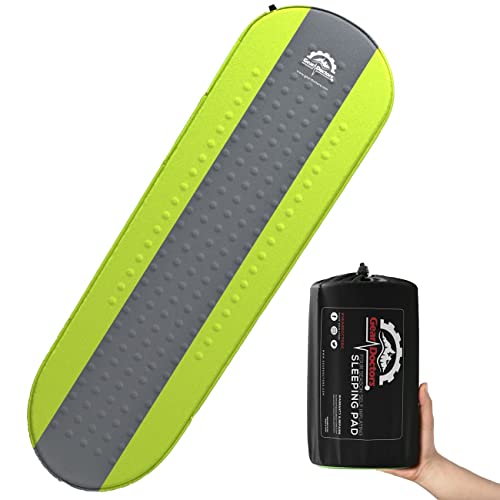
- 4.3 R-value for cold-ground insulation
- Self-inflating foam-and-air construction
- 75D shell with lifetime replacement guarantee
Best For: Cool-weather campers wanting insulation and foam cushioning
Plush Cot Comfort
Uniqwamer Thick Camping Sleeping Pad

- Soft lamb fleece over high-density foam
- Wide 74.8-by-27.56-inch sleeping surface
- Foldable 2 kg design for camping or home use
Best For: Cot camping, car camping, guest beds, and plush comfort
All-Season Air Support

- 4-inch thickness supports side and back sleepers
- 7.2 R-value for strong ground insulation
- 900 g weight with compact water-bottle-size packing
Best For: Backpacking and all-season camping with firm inflatable support
Ultralight Side-Sleeper Pick
Gear Doctors Ether 17.5oz Sleeping Pad

- Only 17.5 ounces and highly compact
- ErgoCushion contour is designed for side sleepers
- Includes detachable foot pump and repair kit
Best For: Warm-weather backpacking where minimal pack weight matters
Best Full-Air Support – 4-Inch Airlive2000
For side sleepers comparing sleeping pads for side sleepers, the ZOOOBELIVES Airlive2000 focuses on even, full-surface support. Its 4-inch air-filled design helps keep hips and shoulders elevated, while the built-in foot pump simplifies setup.
Best For: Side sleepers who want a lightweight inflatable pad with adjustable firmness for camping, backpacking, and road trips.
Pros:
- Four-inch full-air support helps reduce pressure gaps and bottoming out.
- Built-in foot pump requires no mouth inflation or batteries.
- Lightweight 1.4-kilogram design packs into the included storage sack.
- Secure side connections allow multiple pads to be linked together.
Cons:
- Inflatable construction may require firmness adjustments to suit individual preferences.
- The regular 24-inch width may feel narrow for sleepers who prefer extra room.
This is a practical pick when elevated support and portability matter more than foam-like cushioning. The waterproof TPU construction, repair patch, and low-noise surface add useful features for repeated outdoor use.
Best Foam-and-Air Hybrid – 3-Inch OGERY Memory Foam Pad
The OGERY combines expanding foam with air adjustment, making it a strong option among sleeping pads for side sleepers who dislike the bouncy feel of air-only mattresses. Its 3-inch hybrid structure is designed to cushion shoulders and hips while maintaining stable support.
Best For: Campers who want insulated, quieter foam comfort with the ability to fine-tune firmness using a built-in foot pump.
Pros:
- Hybrid foam-and-air construction provides stable support for multiple sleep positions.
- Self-inflates as the foam expands, with a foot pump for firmness adjustment.
- Internal foam helps insulate against cooler ground temperatures.
- Textured bottom helps reduce sliding on tents, car floors, and cots.
Cons:
- At 6 pounds, it is substantially heavier than lightweight air-only options.
- The 3-inch profile provides less thickness than the 4-inch pads in this roundup.
Choose this pad if quiet movement, insulation, and a less springy sleeping surface are priorities. Its larger weight makes it better suited to car camping and shorter-carry trips than weight-conscious backpacking.
Best Two-Person Value – 2-Pack 4-Inch Inflatable Pads
This two-pack is a convenient choice for couples, friends, or campers building a shared sleep setup. Each 4-inch pad is designed for side sleepers, includes a built-in pillow and foot pump, and can be connected to create a wider surface.
Best For: Couples, festival campers, and car campers who need two portable pads with the option to join them together.
Pros:
- Includes two 4-inch pads with built-in pillows and storage bags.
- Connectable design creates a wider sleeping area for two people.
- Built-in foot pumps can inflate each pad in about 30–60 seconds.
- Each pad weighs about 1.8 to 1.9 pounds and packs compactly.
Cons:
- The set may be unnecessary for solo campers who need only one pad.
- Its extra-firm feel may not suit sleepers who prefer a softer surface.
For shared outdoor sleeping arrangements, this set offers useful flexibility without requiring a separate pump. It is especially practical for festivals, weekend camping, and road trips where two aligned pads are more convenient than one oversized mattress.
Best Foam Comfort – 4-Inch Dual-Layer Mattress
For side sleepers who value cushioning over a small packed size, this 4-inch dual-layer memory foam mattress provides a more bedlike surface. A memory foam comfort layer sits over supportive foam, helping cushion pressure points on cots, prepared ground, and vehicle-based camping setups.
Best For: Car campers, cot users, and anyone who prioritizes foam comfort, a washable cover, and easy setup over backpacking portability.
Pros:
- Dual-layer 4-inch foam provides cushioning and supportive structure.
- Washable cover helps simplify cleanup after camping or guest use.
- Non-slip bottom, carry bag, straps, and pillow are included.
- Requires no pump or inflation once expanded.
Cons:
- At 11 pounds, it is much heavier than inflatable sleeping pads.
- Larger packed size makes it unsuitable for long-distance backpacking.
- Its 72-by-24-inch dimensions are shorter and narrower than some alternatives.
This is the comfort-first choice in the group, particularly for SUV, truck, van, RV, cot, and tent setups. The foam construction and washable cover are convenient, but the weight and packed size favor vehicle-based trips rather than extended carries.
Best Ultralight Comfort – 4-Inch Side-Sleeper Pad
For side sleepers who want substantial cushioning without carrying a bulky mattress, this 4-inch inflatable pad is a practical option. Its built-in foot pump, integrated pillow, and 1.9-pound weight make it well suited to backpacking and camping trips.
Best For: Side sleepers prioritizing hip and shoulder cushioning, low weight, and quick inflation.
Pros:
- Four inches of thickness are designed to reduce hip and shoulder pressure.
- Built-in foot pump inflates the pad without mouth inflation.
- Weighs about 1.9 pounds and packs to approximately 9.4 by 4.3 inches.
- Includes an integrated neck pillow and a stated 400-pound weight capacity.
Cons:
- The extra-firm feel may not suit sleepers who prefer a softer surface.
- The single pad is 27.5 inches wide, which may feel narrow for some campers.
This is a strong fit when side-sleeping comfort and packability matter equally. The quiet, non-slip surface and durable 40D nylon construction add useful camping practicality, while the foot pump keeps setup simple.
Best Extra-Thick Support – 6-Inch Camping Pad
This 6-inch camping mattress is one of the more elevated choices among sleeping pads for side sleepers. It combines extra thickness with a built-in pillow and foot pump, making it appealing for campers who want more separation from uneven ground.
Best For: Campers seeking maximum thickness, built-in inflation, and the option to connect two pads.
Pros:
- Six-inch inflated thickness provides elevated cushioning and support.
- Built-in foot pump supports easy inflation without a separate pump.
- Built-in pillow helps support the head and neck.
- Side buttons allow two compatible pads to be connected into a wider surface.
Cons:
- At 2.4 pounds, it is heavier than the 4-inch option in this roundup.
- The manufacturer advises using ground protection and avoiding sharp surfaces to help prevent punctures.
- Its 27.5-inch width remains relatively compact for a thick mattress.
The OGERY stands out for campers who value height and cushioning over minimum pack weight. Its waterproof-coated 50D polyester and compact 5.9 by 5.9 by 11-inch packed size make it versatile for tents, cars, and travel.
Best Insulated Self-Inflating Option – Oxylus 4.3 R-Value Pad
For side sleepers camping in cooler conditions, an insulated self-inflating design can provide a steadier blend of cushioning and warmth. The Gear Doctors Oxylus uses a foam-and-air construction with a 4.3 R-value and adjusts with a few breaths after self-inflation.
Best For: Four-season campers who want insulation, foam cushioning, and a self-inflating setup.
Pros:
- 4.3 R-value is designed to provide warmth on cold or uneven ground.
- Self-inflates after the valve is opened, with manual firmness adjustment available.
- Foam-and-air construction offers cushioning without requiring a separate pump.
- Includes a 75D coated polyester shell and a stated lifetime replacement guarantee.
Cons:
- At 1.5 inches thick, it is substantially thinner than the other two pads here.
- The listed sleeping surface is 72 by 20 inches, making it shorter and narrower.
- Its 35.2-ounce weight is heavier than the lightest inflatable option.
The Oxylus is the most warmth-focused choice in this group, rather than the thickest. Side sleepers who prefer foam-backed support and reliable insulation may appreciate it, especially for cool-weather trips where pack size is still important.
Plush Cot Comfort – Uniqwamer Thick Camping Sleeping Pad
For shoppers comparing sleeping pads for side sleepers, the Uniqwamer emphasizes cushioning over minimum pack size. Its high-density foam and plush lamb fleece top create a soft, warm surface, while the 74.8-by-27.56-inch rectangular shape provides useful room for changing positions.
Best For: Car campers, cot users, guest beds, and indoor or outdoor sleepers who prioritize plush comfort and warmth.
Pros:
- High-density foam and lamb fleece provide a soft, supportive sleep surface.
- Generous 74.8-by-27.56-inch size offers room for side sleeping.
- Foldable design weighs 2 kg and is intended for portable use.
- Double-sided construction includes a tougher, water-resistant blue bottom.
Cons:
- At 2 kg, it is less suitable for ultralight backpacking.
- The supplied details describe the bottom as water-resistant, but list the overall water-resistance level as not water resistant.
This is a comfort-first option rather than a minimalist air pad. The foam-and-fleece construction makes it appealing for cots, tents, cars, and guest use, especially when side sleepers want a softer surface.
All-Season Air Support – TREKOLOGY UL R7 Sleeping Pad
The TREKOLOGY UL R7 is a strong contender among sleeping pads for side sleepers who want substantial cushioning without carrying a heavy mattress. Its 4-inch inflatable profile, 24-inch width, and 7.2 R-value combine support, insulation, and a compact packed size.
Best For: Backpackers and campers who need a lightweight, insulated pad for three-season or all-season trips and prefer a firmer inflatable feel.
Pros:
- Four-inch thickness helps reduce the chance of bottoming out.
- 7.2 R-value provides strong insulation against cold ground.
- Weighs 900 g and packs to approximately water-bottle size.
- Supports up to 330 pounds and uses 40D ripstop nylon with TPU coating.
Cons:
- A pump bag is not included, and there is no built-in pump.
- The 70.8-inch length is best suited to sleepers up to about 5 feet 11 inches.
- Its listed firm feel may not suit shoppers seeking a plush foam-like surface.
With its combination of thickness, width, insulation, and manageable weight, the UL R7 is a practical pick for side sleepers who want portable support across changing conditions. Plan to inflate it by mouth or bring a separate pump bag.
Ultralight Side-Sleeper Pick – Gear Doctors Ether 17.5oz Sleeping Pad
The Gear Doctors Ether stands out among sleeping pads for side sleepers who prioritize very low carry weight. Its ErgoCushion U-shape varies from 3.35 inches at the edges to 2.36 inches in the center, creating a contoured surface designed to help provide stable, hugging comfort.
Best For: Backpackers, hikers, and summer campers seeking an exceptionally light, compact pad with side-sleeper-focused contouring.
Pros:
- Weighs only 17.5 ounces and packs to 8.6 by 3.1 inches.
- Inflates to 76 by 25 inches and supports up to 440 pounds.
- Detachable foot pump and anti-leak valve enable lung-free inflation in under 90 seconds.
- Includes a repair kit and lifetime replacement support.
Cons:
- Its 2 R-value insulation is intended for spring and summer use rather than cold conditions.
- The contoured design tapers to 2.36 inches in the center, so it is not uniformly 3.35 inches thick.
- The ultralight construction may provide less cushioning than a thicker foam or four-inch pad.
The Ether is the weight-saving choice in this group. Its wide, contoured layout and stated side-sleeper suitability make it attractive for warm-weather trips, while the included pump simplifies setup without adding much bulk.
How We Picked the Best Sleeping Pads for Side Sleepers
We focused on the features that make the greatest difference for side sleepers: usable thickness, pressure relief, stability, insulation, packed size, weight, and inflation convenience. The selection includes pads ranging from ultralight backpacking models to wide, cushioned mattresses for car camping.
We also considered practical details such as built-in foot pumps, integrated pillows, non-slip surfaces, washable covers, and stated R-values. Because comfort preferences vary, no single pad is ideal for every sleeper or camping style.
Quick Comparison
- Best for maximum cushioning: Choose a 4- to 6-inch pad, especially if you feel your hips or shoulders touching the ground.
- Best for backpacking: Prioritize low weight and a compact packed size, while confirming the pad is thick enough for your sleeping position.
- Best for cold conditions: Look for a published R-value and an insulated construction, such as foam, air-foam, or a high-R-value air pad.
- Best for convenience: Built-in foot pumps and self-inflating designs reduce the need to carry a separate pump.
Key Buying Factors for Sleeping Pads for Side Sleepers
Thickness and Pressure Relief
Thickness creates room for your hips and shoulders to sink without bottoming out. For many side sleepers, 3 to 4 inches is a useful starting point; thicker designs can feel more forgiving but are usually heavier and bulkier.
Width, Firmness, and Stability
A wider pad gives you more room to change positions and reduces the chance of rolling off. Avoid inflating an air pad excessively if that makes it feel hard and bouncy. A moderately firm surface often balances support with pressure relief.
Warmth and Insulation
Ground temperatures can drain body heat even when the air temperature seems comfortable. For three-season or colder camping, compare R-values and favor insulated or foam-backed construction. If no R-value is listed, treat the pad as harder to evaluate for cold-weather use.
Weight, Packability, and Inflation
Backpackers should compare packed dimensions and weight, not just advertised thickness. A built-in pump can simplify setup, while self-inflating pads may offer a steadier foam-like feel but take more room in a pack or vehicle.
Who Should Buy Which Sleeping Pads for Side Sleepers?
Backpackers and hikers should choose the lightest pad that still provides adequate thickness and insulation. Car campers can favor wider memory-foam or self-inflating models for a more mattress-like experience. Cold-weather campers should prioritize a verifiable R-value over extra features. Festival travelers and occasional campers may prefer affordable, thick pads with built-in pumps and pillows for fast setup.
Before buying, check the packed size, valve or pump design, dimensions, and return policy. The best Sleeping Pads for Side Sleepers are the ones that combine enough cushioning for your body with the portability and warmth your trips actually require.