Finding the best binoculars for low light means balancing brightness, magnification, portability, and the type of viewing you actually plan to do. Some traditional binoculars excel at dawn and dusk, while digital night-vision models are better suited to observing subjects after dark.
We selected 10 options spanning compact everyday binoculars, high-powered designs, waterproof outdoor models, and infrared night-vision goggles. The guide below explains the key differences so you can choose confidently for birdwatching, hunting, camping, boating, or nighttime observation.
Best 10 Binoculars for Low Light Picks for 2026
High-Power Pick
FLYA 20x50 Low-Light Binoculars

- 20x magnification with 50mm objective lenses
- BAK4 prism and multilayer-coated optics
- Waterproof rubberized body with 26mm eyepieces
Best For: Long-range outdoor observation and stargazing
All-Weather Value

- HD optics with fully multi-coated lenses
- Waterproof, fogproof, and shockproof construction
- Includes GlassPak harness and lifetime warranty
Best For: Versatile hunting, birdwatching, and hiking
Dedicated Night Vision

- 4K imaging with seven adjustable IR levels
- 10x digital zoom and 4.5-inch HD screen
- 5000mAh battery and included 8GB card
Best For: Nighttime wildlife viewing and outdoor exploration
Wet-Weather Favorite

- BaK-4 prisms and fully multi-coated glass
- IPX7 waterproof and nitrogen-purged
- Includes case, strap, and lens covers
Best For: Boating, fishing, and wet-weather wildlife viewing
Best Compact Pick
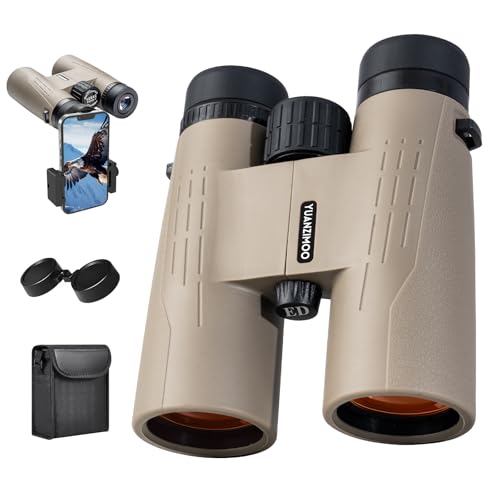
- 12x magnification with 42mm lenses
- BAK4 prisms and fully multi-coated optics
- Foldable design with smartphone adapter
Best For: Portable dawn and dusk viewing
Best Digital Night Vision
4K WiFi Night Vision Binoculars

- 4K video and up to 112MP photos
- Infrared viewing up to 1,500 feet
- WiFi, motion detection, and 32GB card
Best For: Recording wildlife and surroundings after dark
Best Long-Range Optical Pick

- 15x magnification for distant subjects
- 52mm lenses for dim conditions
- Phone adapter and phase-corrected BAK4 prisms
Best For: Long-range observation at dawn, dusk, or under tree cover
Best Lightweight Pick
Falcury 12x42 Low-Light Binoculars

- 12x magnification with 42mm lenses
- BAK4 and fully multi-coated optics
- Lightweight, foldable, tripod-mountable design
Best For: Portable birdwatching, hiking, travel, and family use
Best Accessory Bundle
Adorrgon 12x42 Waterproof Binoculars
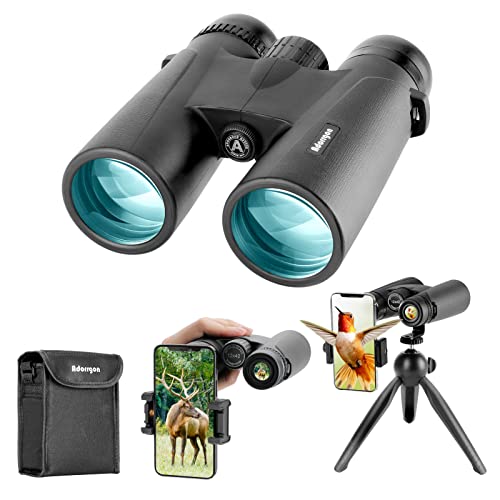
- BAK4 and FMC optics for lower-light viewing
- 367-foot field of view for tracking subjects
- Includes smartphone adapter and tripod
Best For: Birdwatching, travel, wildlife viewing, and phone recording
Best Long-Range Option
18x56 UHD Low-Light Binoculars

- 18x magnification for distant subjects
- Large 56mm lenses for limited-light viewing
- Waterproof and includes a phone adapter
Best For: Long-distance wildlife viewing, birdwatching, and travel
High-Power Pick – FLYA 20×50 Low-Light Binoculars
For shoppers seeking binoculars for low light with strong long-distance magnification, this FLYA model combines 20x power with 50mm objective lenses and multilayer-coated optics. The BAK4 Porro prism and anti-reflective coating are designed to improve light transmission, while the rubberized body supports outdoor use.
Best For: Long-range birdwatching, hunting, stargazing, camping, and travel.
Pros:
- 20x magnification and 50mm objective lenses support detailed distant viewing.
- BAK4 Porro prism and multilayer-coated lenses are designed for brightness and color accuracy.
- Waterproof, shock-resistant rubber construction provides a secure grip outdoors.
- 26mm eyepieces and a soft center-focus wheel support extended viewing comfort.
Cons:
- At 0.89 kg, it is heavier than many compact binoculars.
- The 2.5mm exit pupil may be less forgiving in very dim conditions than lower-magnification models.
- Waterproof construction is intended for outdoor conditions but should not be immersed.
This is a practical choice when magnification and reach matter most. Its 20x design can reveal distant details, though users prioritizing easier handheld viewing or darker scenes may prefer a lower-power model with a larger exit pupil.
All-Weather Value – Vortex Crossfire HD 10×42
The Vortex Crossfire HD is a versatile option among binoculars for low light, using 10x magnification, 42mm objective lenses, and fully multi-coated optics to support light transmission. Its roof-prism design keeps the body compact, while nitrogen purging and O-ring seals add water- and fogproof protection.
Best For: Hunting, birdwatching, hiking, and general outdoor use in changing weather.
Pros:
- HD optics are designed to improve resolution, color fidelity, and edge-to-edge sharpness.
- Fully multi-coated lenses support increased light transmission.
- Waterproof, fogproof, and shockproof construction suits demanding outdoor conditions.
- Includes a GlassPak harness and an unlimited, unconditional lifetime warranty.
Cons:
- 15mm eye relief may be less comfortable for some eyeglass wearers than longer-relief models.
- Its 4.2mm exit pupil is capable in low light but not as large as some lower-magnification binoculars.
- The 1.4-pound weight may be noticeable during long handheld sessions.
This model balances portability, optical performance, and weather protection. It is a strong all-purpose pick for users who want dependable low-light capability without moving to a specialized night-vision device.
Dedicated Night Vision – XOOIOOY 4K Digital Binoculars
For genuinely dark conditions, these digital binoculars for low light use a 4K imaging system, seven adjustable infrared levels, and a 10x digital zoom. A 4.5-inch HD screen, 5000mAh rechargeable battery, and included 8GB card make them suited to recorded nighttime observation rather than conventional glass-only viewing.
Best For: Nighttime wildlife observation, hunting, camping, and outdoor exploration.
Pros:
- 4K imaging and adjustable seven-level infrared support dark-environment viewing.
- 10x digital zoom helps inspect distant subjects.
- 5000mAh rechargeable battery supports extended outdoor use.
- Includes an 8GB memory card, compass, LED light, and glow-in-the-dark buttons.
Cons:
- It is not water resistant, so it requires protection in wet weather.
- Digital night vision differs from traditional optical binocular viewing.
- At 1.6 pounds, it is less lightweight than many conventional binoculars.
This is the most specialized option in the group for viewing after dark. Choose it when infrared performance, a built-in display, and photo or video storage are more important than waterproofing or a traditional optical design.
Wet-Weather Favorite – Bushnell H2O Xtreme 10×42
The Bushnell H2O Xtreme is a dependable choice for binoculars for low light when weather resistance is equally important. Its 10×42 configuration, BaK-4 prisms, and fully multi-coated glass are designed for bright images, while IPX7 waterproofing and nitrogen purging protect against submersion and internal fogging.
Best For: Boating, fishing, hunting, birdwatching, travel, and wet-weather observation.
Pros:
- BaK-4 prisms and fully multi-coated optics support clear, bright viewing.
- IPX7 waterproof construction can withstand accidental submersion.
- Nitrogen purging helps prevent internal fogging in changing weather.
- Includes a strap, carrying case, and lens covers.
Cons:
- 10x magnification offers less reach than the 20x FLYA model.
- It does not provide dedicated infrared night vision for complete darkness.
- The listed dimensions may make it less convenient to pack than smaller compact models.
This Bushnell is a sensible low-light generalist for users who spend time around water or unpredictable weather. Its 4.2mm exit pupil and coated optics support dimmer conditions, while its standout advantage is protection against water and fog.
Best Compact Pick – 12×42 Low-Light Binoculars
These 12×42 binoculars are a practical choice for shoppers seeking binoculars for low light without a bulky setup. Fully multi-coated optics, BAK4 prisms, and 42mm objective lenses are designed to provide brighter views at dawn, dusk, and in other dim outdoor conditions.
Best For: Bird watching, hunting, camping, concerts, travel, and outdoor users who want a compact design with phone-recording capability.
Pros:
- 12x magnification with a 42mm objective lens and 383-foot field of view at 1,000 yards.
- Fully multi-coated optics and BAK4 prisms support low-light viewing.
- Foldable, lightweight design includes a smartphone adapter and waterproof construction.
Cons:
- Its 3.5mm exit pupil may provide less light than larger-objective binoculars.
- At 0.72 kg, it is portable but not ultralight.
This model balances reach, portability, and useful accessories. It is well suited to general outdoor viewing in fading light, though dedicated night-vision recording is not its main function.
Best Digital Night Vision – 4K WiFi Night Vision Binoculars
For shoppers who need binoculars for low light and after-dark observation, this digital model adds infrared illumination, video recording, and smartphone connectivity. It can capture 4K video and photos up to 112MP while providing adjustable infrared levels for different viewing conditions.
Best For: Nighttime wildlife viewing, camping, hiking, backyard monitoring, farm checks, and recording outdoor activity after dark.
Pros:
- Infrared night vision is rated for viewing distances up to 1,500 feet under suitable conditions.
- Built-in 5,000mAh battery provides up to 9 hours of nighttime use with infrared enabled, depending on settings.
- Includes WiFi app connectivity, motion detection, a 32GB memory card, and support for cards up to 256GB.
Cons:
- The 25mm objective lens is smaller than those on the optical models in this roundup.
- WiFi mode limits which infrared and flashlight controls can be adjusted on the device.
- Digital magnification is listed at up to 10x, rather than 12x or 15x optical magnification.
This is the most capable option for actual nighttime recording and sharing. Choose it over conventional binoculars when infrared viewing, stored footage, and app connectivity matter more than a simple optical design.
Best Long-Range Optical Pick – 15×52 Low-Light Binoculars
These 15×52 binoculars are aimed at buyers who want binoculars for low light with extra magnification and a larger objective lens. The 52mm optics, BAK4 prisms, and fully multi-coated lenses are designed for overcast conditions, tree cover, daybreak, and the last light of day.
Best For: Long-distance bird watching, hunting, cruising, travel, and stationary observation where added magnification is more important than the smallest possible size.
Pros:
- 15x magnification provides more reach for distant subjects.
- 52mm objective lenses and high-transmission glass support viewing in dim conditions.
- Includes a phone adapter, waterproof construction, twist-down eyecups, and phase-corrected BAK4 roof prisms.
Cons:
- Higher 15x magnification can be less forgiving of hand movement than lower-powered binoculars.
- The larger optical configuration may be less convenient for quick, pocketable carry.
- It is intended for low-light conditions, not infrared night vision.
This model is the strongest conventional optical choice for distant subjects in fading or filtered light. Its larger lenses and higher magnification favor detail and reach, while the phone adapter adds a convenient way to document observations.
Best Lightweight Pick – Falcury 12×42 Low-Light Binoculars
If you want binoculars for low light that remain easy to carry, the Falcury 12×42 combines a 42mm objective lens with BAK4 prisms and fully multi-coated optics. Its lightweight, rubber-armored design suits birdwatching, hiking, travel, and other casual outdoor viewing.
Best For: Families, hikers, birdwatchers, and travelers who prioritize portability and comfortable handling.
Pros:
- 12x magnification and 42mm lenses provide detailed views while remaining compact.
- BAK4 prisms and fully multi-coated lenses support viewing at dawn, dusk, and in cloudy conditions.
- Large 18mm eyepieces, adjustable eyecups, and a non-slip grip improve viewing comfort.
- Foldable, water-repellent construction weighs about 1.1 pounds and supports tripod mounting.
Cons:
- The listed 4.2mm eye relief may be less accommodating for some eyeglass wearers.
- Manual central focus and diopter adjustment require setup before viewing.
This is a practical choice when low-light capability, portability, and versatility matter more than maximum reach. The 12x magnification is useful for wildlife and sports, while the compact build makes it easier to carry on longer outings.
Best Accessory Bundle – Adorrgon 12×42 Waterproof Binoculars
The Adorrgon is a versatile option among binoculars for low light, pairing 12×42 optics with BAK4 prisms, fully multi-coated lenses, and a wide 367-foot field of view. It also includes a smartphone adapter and compact tripod for steadier viewing and recording.
Best For: Birdwatchers, travelers, and outdoor users who want phone capture and hands-free viewing accessories included.
Pros:
- BAK4 prisms and FMC optics are designed to improve brightness, contrast, and color in lower-light conditions.
- The 367-foot field of view helps users locate and follow moving subjects.
- Included smartphone adapter and tripod expand its usefulness for photos, video, and steady observation.
- Waterproof construction and rubber armor suit changing outdoor conditions.
Cons:
- At 12x magnification, it offers less reach than higher-powered alternatives.
- Manual focusing requires adjustment through the center wheel and right-eye diopter.
Choose this model if the included accessories are valuable to you. Its wide field of view is helpful for moving wildlife, while the waterproof body and phone adapter make it a well-rounded travel and observation package.
Best Long-Range Option – 18×56 UHD Low-Light Binoculars
For distant subjects in limited light, these 18×56 binoculars for low light emphasize reach and light-gathering potential. The large 56mm objective lenses, dielectric-coated BAK4 prisms, wide field of view, and clear low-light vision are suited to wildlife and scenic observation.
Best For: Long-distance birdwatching, wildlife observation, travel, and users who want a high-power view with smartphone capture.
Pros:
- 18x magnification brings distant details closer than typical 12x or 15x binoculars.
- Large 56mm lenses and dielectric-coated BAK4 prisms are designed for brighter low-light views.
- Wide field of view helps users locate and follow moving subjects.
- Waterproof, fogproof, lightweight construction includes an upgraded phone adapter and adjustable eyecups.
Cons:
- High 18x magnification can make steady handheld viewing more demanding.
- The large 56mm objectives may be less compact than the 42mm alternatives.
This model makes the most sense when distant detail and low-light performance are the main priorities. Its higher magnification and larger objectives favor range and brightness, while the phone adapter adds a convenient way to capture what you see.
How We Picked the Best Binoculars for Low Light
We compared these models by looking at optical design, stated magnification, objective-lens size, low-light performance, weather resistance, handling, and included accessories. We also separated conventional optical binoculars from digital night-vision devices, since they serve different purposes.
Traditional binoculars depend on ambient light and generally provide a more natural image with no battery required. Digital models use infrared illumination, screens, recording features, and electronic zoom to extend viewing into darkness, but they may introduce latency, image noise, or reduced runtime.
Quick Comparison
| Type | Best For | Main Advantage | Trade-Off |
|---|---|---|---|
| 10×42 optical | General outdoor use | Balanced brightness and stability | Limited in complete darkness |
| 12×42 to 15×52 optical | Long-range daytime and twilight viewing | More reach and detail | More difficult to hold steady |
| 18×56 to 20×50 optical | Stationary observation | High magnification | May benefit from a tripod |
| Digital night vision | After-dark observation | Infrared viewing and recording | Requires charging and setup |
Key Buying Factors for Binoculars for Low Light
Objective Lens and Exit Pupil
The objective lens is the second number in a specification such as 10×42. Larger lenses can gather more light, but they also add weight. Divide the objective diameter by the magnification to estimate exit pupil: a larger exit pupil can make twilight viewing more comfortable.
Magnification and Stability
Higher magnification is not automatically better. Models around 10x are easier to hold steady, while 12x and above can reveal more distant detail but may produce a shakier image. Consider tripod adaptability when choosing a high-powered pair.
Optical Quality and Coatings
Fully multi-coated lenses and quality prisms can improve contrast and light transmission. Specifications such as BAK4 prisms are useful indicators, but real-world sharpness, edge clarity, and focus performance still matter.
Weather Protection and Ergonomics
For hunting, boating, hiking, and camping, waterproof, fogproof, and shock-resistant construction is valuable. Also check weight, focus-wheel placement, eye relief, and whether eyeglass wearers can obtain a full field of view.
Traditional Optics or Digital Night Vision?
Choose conventional binoculars for dawn, dusk, wildlife, and natural-looking images. Choose digital night vision if you need infrared viewing, built-in recording, or observation in near-total darkness. Check battery capacity, IR range, screen size, storage, and whether the device can be used comfortably in daylight.
Who Should Buy Which Binoculars for Low Light?
- For general outdoor viewing: A 10×42 waterproof optical model offers the most versatile balance.
- For birdwatching and travel: Choose a lighter 10×42 or 12×42 pair with a phone adapter if documenting sightings matters.
- For hunting and long-range observation: Consider higher magnification, larger objectives, and tripod compatibility.
- For boating and wet conditions: Prioritize waterproof and fogproof construction over extreme magnification.
- For complete darkness: Select digital night-vision binoculars with infrared illumination, a practical battery, and usable controls.