The best heart rate monitor helps you train at the right intensity without relying on guesswork. This roundup compares chest straps, wearable trackers, and fingertip devices for workouts, health checks, and connected fitness equipment.
We focus on signal accuracy, device compatibility, comfort, battery life, water resistance, and the features that matter most for your training routine.
Best 10 Heart Rate Monitor Picks for 2026
Most Accurate Pick
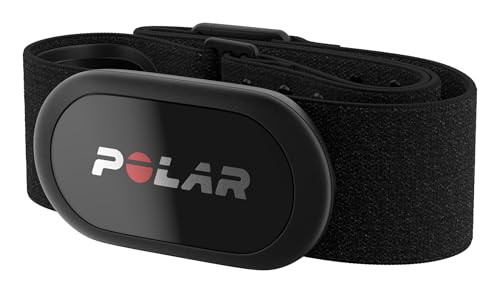
- Highly accurate heart rate sensor
- Bluetooth, ANT+, and 5 kHz connectivity
- Waterproof with up to 400 hours of battery life
Best For: Serious training and broad device compatibility
Best for Data-Driven Athletes

- Real-time heart rate and HRV data
- Records workouts and syncs with Garmin Connect
- Adds running, indoor, and swim features
Best For: Garmin athletes tracking detailed performance metrics
Best Affordable Option
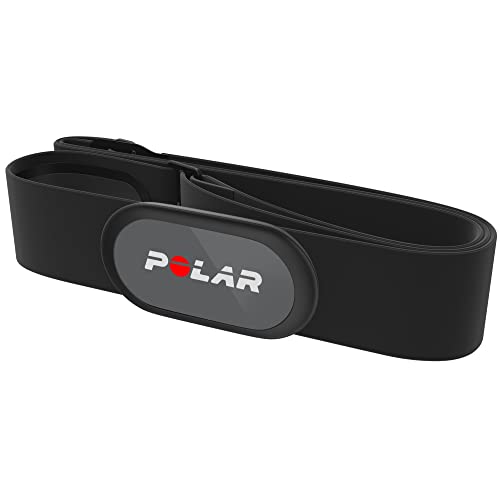
- Reliable Polar heart rate tracking
- Works with equipment and smartphone apps
- Up to 400 hours of battery life
Best For: Everyday workouts and budget-conscious buyers
Best for Long Battery Life

- Real-time heart rate and HRV tracking
- Up to one year of battery life
- Machine-washable strap with 3 ATM water rating
Best For: Convenient everyday Garmin-based training
Best Dual-Mode Chest Strap

- ANT+ and Bluetooth connectivity
- 800-hour replaceable-battery life
- IP67 protection for training conditions
Best For: Cyclists, runners, and multi-device fitness users
Best Fingertip Wellness Check

- Shows pulse rate and SpO2
- Large OLED display with signal indicator
- Includes batteries and carrying lanyard
Best For: Portable everyday and outdoor spot checks
Best Budget Training Strap
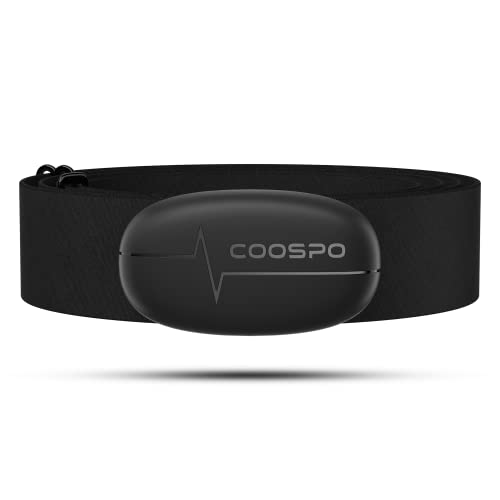
- Claims ±1 BPM real-time data
- Bluetooth and ANT+ transmission
- Compatible with apps and gym equipment
Best For: Connected cycling, gym, and fitness training
Best Smartwatch-Style Pick

- 24/7 heart rate plus wellness tracking
- 25 sport modes and sleep scoring
- 5 ATM waterproof with 10–14-day battery
Best For: All-day fitness and wellness tracking
Best Long-Battery Chest Strap
POWR LABS Bluetooth ANT+ Monitor
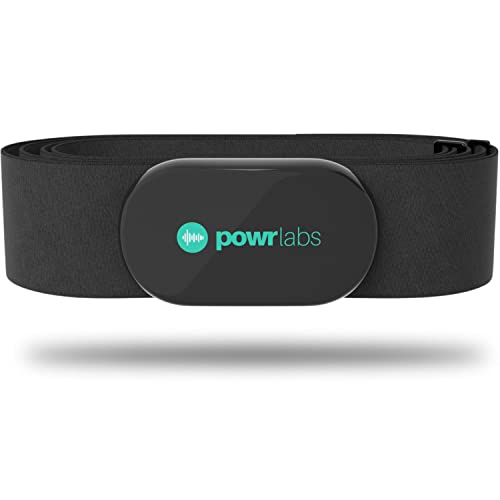
- Bluetooth and ANT+ connectivity
- 400+ hours of battery life
- Soft adjustable strap with IPX67 protection
Best For: Multi-device training and frequent workouts
Best Value Training Strap
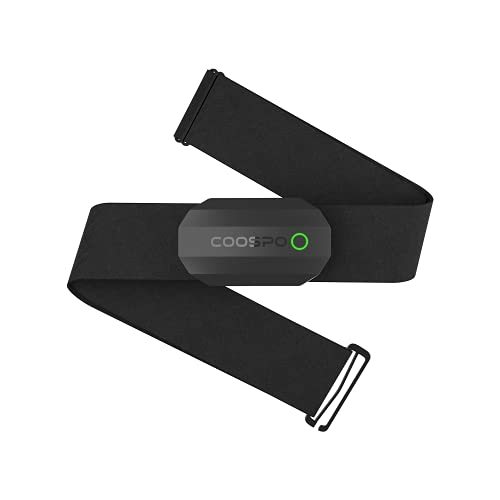
- Bluetooth and ANT+ dual-mode connection
- Up to 300 hours from a replaceable battery
- Works with major fitness apps and devices
Best For: App-based workout heart-rate tracking
Most Accurate Pick – Polar H10 Heart Rate Monitor
The Polar H10 is a strong choice if you want a highly accurate heart rate monitor for training, indoor equipment, or connected fitness apps. Its Bluetooth, ANT+, and 5 kHz connectivity provide broad compatibility, while the included Polar Pro chest strap is designed for a secure, comfortable fit.
Best For: Athletes and serious exercisers who prioritize measurement accuracy, broad connectivity, and waterproof performance.
Pros:
- Widely recognized for highly accurate heart rate readings.
- Supports Bluetooth, ANT+, and 5 kHz connections, including simultaneous Bluetooth connections.
- Waterproof design with internal memory for multiple hours of data.
- Battery life is rated at up to 400 hours.
Cons:
- Uses a replaceable CR2025 battery rather than a rechargeable battery.
- The listed M–XXL size may not suit every user.
The H10 is the most feature-rich Polar option here for users who want dependable precision and flexible device support. Its chest-strap design and long battery life make it especially practical for structured training.
Best for Data-Driven Athletes – Garmin HRM 600
The Garmin HRM 600 is a heart rate monitor built for athletes who want more than basic pulse tracking. It sends real-time heart rate and HRV data to compatible Garmin devices, records workouts when a watch cannot be worn, and adds advanced running dynamics for supported setups.
Best For: Garmin users, runners, swimmers, and team-sport athletes who want extensive workout and performance data.
Pros:
- Transmits heart rate and HRV data in real time.
- Records workouts without a watch and syncs data to Garmin Connect.
- Supports running dynamics, indoor pace and distance, and swim heart rate recording with compatible devices.
- Machine-washable strap and rechargeable battery with up to two months of life.
Cons:
- Advanced running features require a compatible Garmin smartwatch.
- Two months of battery life is shorter than some replaceable-battery models.
The HRM 600 is the most capable option for Garmin-centered training ecosystems. Choose it when workout recording, HRV, running metrics, and swim support matter as much as heart rate measurement.
Best Affordable Option – Polar H9 Heart Rate Sensor
Polar H9 Heart Rate Sensor – ANT + / Bluetooth - Waterproof HR Monitor with Soft Chest Strap, M-XXL
Check Price On AmazonThe Polar H9 is a straightforward heart rate monitor for everyday training and app-based workouts. It uses Polar’s established tracking technology, works with HRM-compatible equipment, and connects to popular smartphone apps for flexible use without a more advanced feature set.
Best For: Everyday exercisers who want reliable heart rate tracking and wide compatibility at an affordable level.
Pros:
- Designed as an affordable, reliable heart rate sensor.
- Works with HRM-compatible equipment and popular smartphone apps.
- Uses high-accuracy Polar sensors and includes a soft strap.
- Battery life is rated at up to 400 hours.
Cons:
- Does not list the H10’s simultaneous Bluetooth connection capability or internal memory.
- Uses a replaceable CR2025 button-cell battery.
The H9 keeps the essentials intact while avoiding unnecessary complexity. It is a sensible starting point for phone-based workouts, gym equipment, and regular heart rate tracking.
Best for Long Battery Life – Garmin HRM 200
The Garmin HRM 200 is a practical heart rate monitor for users who want accurate real-time readings and minimal battery maintenance. It sends heart rate and HRV data to compatible Garmin devices, fitness equipment, and apps, while its machine-washable strap and 3 ATM water rating support regular use.
Best For: Garmin users seeking dependable heart rate and HRV tracking with long battery life and easy upkeep.
Pros:
- Transmits real-time heart rate and HRV data.
- Compatible with Garmin smartwatches, cycling computers, fitness equipment, apps, and smartphones.
- Offers up to one year of battery life with a user-replaceable battery.
- Machine-washable strap and 3 ATM water rating help with routine training.
Cons:
- Does not offer the HRM 600’s listed workout recording and advanced running features.
- Available strap sizing is listed as XS–S and M–XL, so fit should be checked before buying.
The HRM 200 is a well-balanced Garmin option for everyday training. Its year-long battery rating and washable strap make it especially appealing to users who value convenience over expanded performance analytics.
Best Dual-Mode Chest Strap – HS500 Heart Rate Monitor
The GEOID HS500 is a practical heart rate monitor for athletes who want real-time readings from a chest strap. Its ANT+ and Bluetooth compatibility supports phones, sports watches, bike computers, treadmills, and many popular fitness apps.
Best For: Cycling, running, gym workouts, and users who need long battery life with broad device compatibility.
Pros:
- Supports both ANT+ and Bluetooth connections.
- Up to 800 hours of battery life with a replaceable CR2032 battery.
- IP67 protection helps handle sweat and rainy training conditions.
- LED feedback confirms readiness and connection.
Cons:
- Swimming is not recommended.
- Bluetooth should be connected through the fitness app rather than directly through phone settings.
With its long runtime, fast wake-up, and movement-focused algorithms, the HS500 is a strong choice for frequent training sessions across multiple connected devices.
Best Fingertip Wellness Check – JKS50B Pulse Oximeter
The JKS50B is a compact fingertip heart rate monitor that also displays blood oxygen saturation. Its one-button operation and bright OLED screen make quick readings straightforward at home, during workouts, or while traveling outdoors.
Best For: Everyday pulse and SpO2 checks, fitness enthusiasts, and outdoor users who want a portable device.
Pros:
- Displays SpO2, pulse rate, and signal strength on a large, easy-to-read screen.
- Simple one-button operation with automatic power-off.
- Compact design includes a lanyard for carrying.
- Includes two AAA batteries and is ready to use out of the box.
Cons:
- It is designed for spot checks rather than continuous exercise tracking.
- The listed SpO2 measuring range is 70% to 100%.
This pulse oximeter is a convenient option when you want heart rate and oxygen readings in a small, self-contained device without an app or wearable strap.
Best Budget Training Strap – COOSPO H6 Heart Rate Monitor
The COOSPO H6 is a chest-strap heart rate monitor built for real-time training data. With Bluetooth and ANT+ transmission, it connects with fitness apps, bike computers, sports watches, and compatible gym equipment.
Best For: Riders, gym users, and athletes training with Peloton, Garmin, Zwift, Strava, or other supported platforms.
Pros:
- Provides real-time heart rate data with claimed ±1 BPM accuracy.
- Dual Bluetooth and ANT+ connectivity supports multiple device types.
- Works with many apps, sports watches, bike computers, and gym machines.
- IP67 protection and 300 hours of replaceable-battery runtime.
Cons:
- Not intended for swimming or soaking.
- The strap electrode areas may need moistening for stable transmission.
- The sensor and strap should be separated after each workout.
The H6 offers broad training compatibility and useful real-time data at a practical price, provided you follow the setup and moisture recommendations for the chest strap.
Best Smartwatch-Style Pick – Zeacool Fitness Tracker
If you want a heart rate monitor that also tracks everyday wellness, the Zeacool Fitness Tracker combines 24/7 heart rate readings with blood oxygen, blood pressure, temperature, sleep, steps, distance, and calorie tracking. Its 1.10-inch AMOLED display and 25 sport modes make it suited to daily activity and varied workouts.
Best For: Users seeking an all-in-one fitness tracker with extended battery life and smartwatch-style features.
Pros:
- Tracks heart rate continuously alongside blood oxygen, blood pressure, temperature, and sleep data.
- Offers 25 sport modes and records steps, distance, and calories in the Keep Health app.
- 5 ATM waterproof design, 10–14 days of regular-use battery life, and compatibility with iPhone and Android.
Cons:
- Health readings are presented as wellness-tracking features rather than a substitute for medical equipment.
- Requires the Keep Health app for reviewing recorded activity and sleep data.
The Zeacool is a versatile choice if you prefer a wrist-worn heart rate monitor with broad activity and sleep features. Choose it over a chest strap when convenience and all-day tracking matter more than a dedicated training sensor.
Best Long-Battery Chest Strap – POWR LABS Bluetooth ANT+ Monitor
For training-focused users, this heart rate monitor chest strap sends live data over both Bluetooth and ANT+. It is designed to pair with Garmin, Wahoo, Polar, Peloton, cycling computers, smartwatches, and more than 400 fitness apps.
Best For: Athletes who want a comfortable, broadly compatible chest strap with minimal battery maintenance.
Pros:
- Dual Bluetooth and ANT+ connectivity supports a wide range of devices and fitness apps.
- Replaceable battery is rated for more than 400 hours of use, or over six months of daily training.
- Soft, seamless fabric adjusts from 24 to 61 inches and is IPX67 sweatproof and water resistant.
- Supplied notes cite clinical accuracy of ±1 BPM for compatible applications.
Cons:
- A chest strap is less convenient for casual all-day wear than a wrist-worn tracker.
- Must be worn before pairing, according to the supplied usage guidance.
The POWR LABS strap is a strong option when reliable app connectivity and long battery life are priorities. Its dual-protocol design gives it flexibility for cycling, indoor training, and multi-device workouts.
Best Value Training Strap – COOSPO H808S Chest Monitor
The COOSPO H808S is a straightforward heart rate monitor chest strap for real-time exercise data. Its Bluetooth 4.0 and ANT+ connections work with sports watches, bike computers, Peloton, Strava, Wahoo Fitness, Polar Beat, Zwift, and other compatible apps.
Best For: Exercisers who want a replaceable-battery chest strap with broad app and device compatibility.
Pros:
- Uses Bluetooth and ANT+ to connect with multiple fitness devices and third-party applications.
- Provides real-time heart rate monitoring with a stated ±1 BPM accuracy specification.
- IP67 waterproof construction and a replaceable CR2032 battery rated for up to 300 hours.
- LED indicators and a beep provide pairing and operating-status feedback.
Cons:
- The electrode areas should be moistened before use for proper operation.
- The supplied guidance recommends replacing the strap after six months or 300 washes.
- Setup requires connecting through the app rather than the phone’s standard Bluetooth menu.
The H808S offers the core features most workout users need without adding smartwatch functions. It is a practical pick for app-based training, provided you are comfortable with chest-strap setup and periodic strap replacement.
How We Picked the Best Heart Rate Monitor Options
We selected these 10 devices across several common use cases, including structured training, indoor cycling, running, general activity tracking, and quick oxygen-saturation checks. The comparison considers sensor design, connection protocols, battery expectations, water resistance, comfort, and compatibility with phones, watches, gym equipment, and fitness platforms.
Chest straps generally provide more responsive workout data than wrist-based trackers because they measure electrical signals closer to the heart. Wearable trackers are more convenient for all-day metrics, while fingertip pulse oximeters are better suited to brief spot checks rather than continuous exercise tracking.
Quick Comparison
| Type | Best For | Connectivity | What to Check |
|---|---|---|---|
| Chest strap | Training accuracy and fast response | ANT+ and/or Bluetooth | Fit, battery, app compatibility |
| Fitness tracker | All-day activity and sleep trends | Bluetooth and app sync | Wrist comfort, display, water rating |
| Pulse oximeter | Short oxygen and pulse readings | Usually standalone | Screen readability and proper placement |
Key Heart Rate Monitor Buying Factors
Accuracy and Sensor Placement
For interval workouts, racing, cycling, and heart-rate-zone training, choose a snug chest strap from a reputable brand. Optical wrist sensors can be easier to wear but may respond more slowly during rapid intensity changes.
Connectivity
ANT+ is useful for bike computers, watches, and gym equipment, while Bluetooth works well with phones and many fitness apps. If you train with multiple devices, dual-protocol support offers greater flexibility. Confirm that the monitor supports the apps and equipment you use before buying.
Comfort and Fit
A strap should remain secure without restricting breathing or irritating the skin. Look for adjustable sizing, washable materials, and replaceable straps if you train frequently. A tracker should be comfortable enough for overnight wear if sleep data is important to you.
Battery Life and Water Resistance
Long battery life reduces maintenance, particularly for frequent training. Water resistance is important for sweaty workouts and outdoor use, but check the stated rating and care instructions before swimming. Not every water-resistant device is designed for prolonged submersion.
Health Features
Blood oxygen, sleep, and activity features can add useful context, but consumer devices are not substitutes for medical equipment or professional advice. Treat unusual readings as a reason to follow up with a qualified healthcare professional.
Who Should Buy Which Heart Rate Monitor?
Choose a chest strap if workout accuracy, quick response, and compatibility with sports apps matter most. These are the strongest choices for runners, cyclists, athletes, and users who train by heart-rate zones.
Choose a fitness tracker if you want one wearable for daily steps, sleep, heart rate, and general activity. It is a better convenience-focused option than a dedicated strap, though workout readings may vary by activity and fit.
Choose a fingertip pulse oximeter if you need occasional spot readings for pulse and blood oxygen rather than continuous exercise data. For serious training or medical monitoring, select equipment appropriate to that specific purpose and follow professional guidance.