The best hybrid bikes with rigid forks combine efficient road manners with the practical fit and stability many everyday riders want. Without a suspension fork, they are typically lighter, simpler to maintain, and better suited to pavement, bike paths, and smooth gravel.
We compared 10 commuter, fitness, urban, and gravel-oriented models across frame design, gearing, braking, tire clearance, comfort features, and intended use. Use the guide below to narrow the list by budget, riding surface, and preferred riding position.
Best 10 Hybrid Bikes with Rigid Fork Picks for 2026
Lightweight City Pick
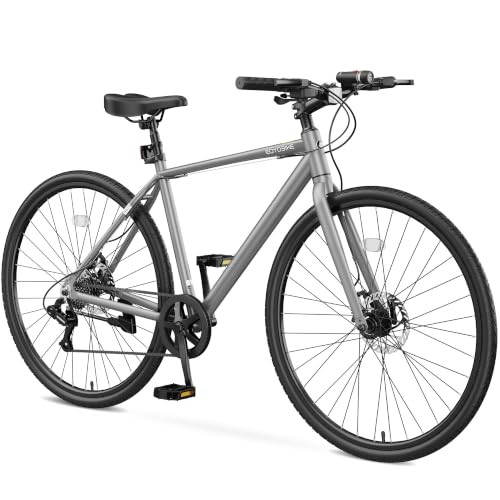
- Lightweight aluminum frame with rigid fork
- 700C wheels and 8-speed drivetrain
- Disc brakes, headlight, and reflectors included
Best For: Beginners and commuters riding paved urban routes
Comfort-Focused Choice

- 21-speed drivetrain for varied paved routes
- Front suspension and suspension seat post
- Fenders and rear cargo rack included
Best For: Comfort-oriented commuters needing carrying capacity
Fast Urban Performer

- 29.5-pound aluminum frame
- Rigid fork for direct power transfer
- 700C wheels and mechanical disc brakes
Best For: Fast urban commuting and daily city errands
Adventure Upgrade
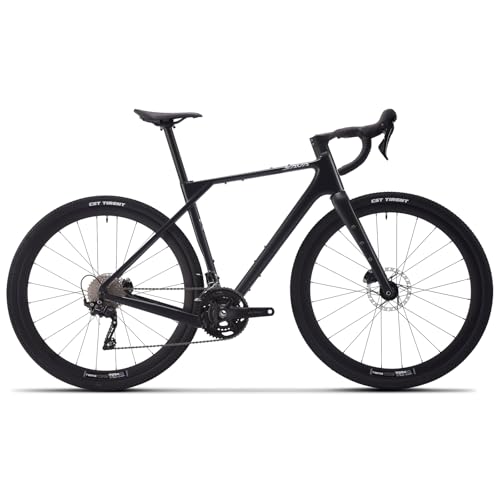
- 10.4 kg T800 carbon frame and fork
- 20-speed Shimano GRX400 groupset
- Hydraulic brakes and 700x40c gravel tires
Best For: Road and gravel riders wanting a lightweight rigid bike
Lightweight Commuter Pick
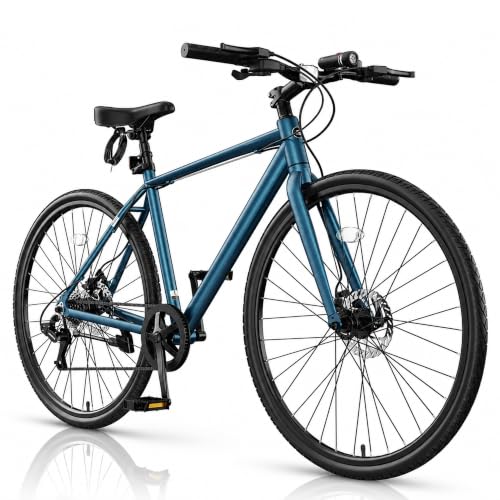
- 29-pound aluminum frame
- 8-speed drivetrain with disc brakes
- 350-pound stated capacity
Best For: Daily commuting, fitness rides, and paved paths
Comfort-Oriented Classic
Schwinn Network 3.5 Hybrid Bike
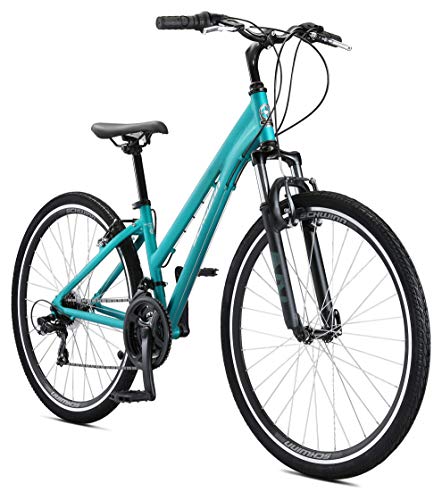
- 21-speed drivetrain
- Upright comfort-focused geometry
- Aluminum frame with alloy rims
Best For: Commuting and light trails where comfort is a priority
Beginner-Friendly Value

- Rigid fork with flat handlebar
- 7-speed drivetrain and dual disc brakes
- 90% assembled with tools and pedals
Best For: Beginner commuters and urban recreational riders
Versatile Urban Pick
Jupiter 17/19-Inch Hybrid Bike

- Lightweight aluminum frame
- 21-speed Shimano drivetrain
- Mounting points for accessories
Best For: City riding, gravel, and light trails
Commuter Comfort Choice

- 24-speed trigger shifting
- 700 x 32C tires
- 90% pre-assembled
Best For: Urban commuting and casual mixed-surface rides
Lightweight Fitness Favorite

- Rigid fork and aluminum frame
- 24-speed drivetrain
- Mechanical disc brakes
Best For: Paved roads, city riding, and fitness use
Lightweight City Pick – Aluminum 8-Speed Commuter
For riders comparing hybrid bikes with rigid fork designs, this aluminum commuter model offers a straightforward setup for paved roads, bike paths, and urban riding. Its rigid suspension, 700C wheels, 8-speed drivetrain, upright geometry, and disc brakes make it a practical everyday option.
Best For: Beginners and commuters who want a light, comfortable hybrid bike for city streets and moderate hills.
Pros:
- Lightweight, rust-resistant aluminum frame is easy to maneuver.
- 700C wheels and 8 speeds suit pavement, urban routes, and moderate hills.
- Dual disc brakes, LED headlight, and reflectors support confident low-light commuting.
- Arrives 95% pre-assembled and is offered in two sizes.
Cons:
- Rigid fork provides no suspension cushioning on rough surfaces.
- Designed primarily for paved roads and urban terrain rather than trails.
- The listed size range overlaps between the two frame options, so fit selection requires care.
This is a sensible choice when low maintenance, efficient pavement riding, and commuter visibility matter more than trail capability or suspension comfort.
Comfort-Focused Choice – Schwinn Discover 2
The Schwinn Discover 2 is worth considering alongside hybrid bikes with rigid fork designs if comfort and carrying capacity are priorities. Although it uses a front suspension fork, its 700c wheels, 21-speed drivetrain, suspension seat post, fenders, and rear rack make it well suited to everyday paved-road riding.
Best For: Commuters and neighborhood riders who want a versatile bike with comfort features and cargo utility.
Pros:
- 21-speed EZ-Fire shifters provide broad gearing flexibility.
- Front suspension fork, suspension seat post, and hybrid saddle add comfort.
- Front and rear fenders help reduce splashes and grit.
- Rear cargo rack provides convenient carrying capacity.
Cons:
- It is not a rigid-fork model, so it does not match the target design as closely as the other options.
- At 16.61 kg, it is heavier than the lightweight aluminum commuter alternatives.
- The listed fit is for riders approximately 5’5″ to 6’0″, limiting suitability outside that range.
The Discover 2 is the practical comfort-and-utility option here, especially for riders who value fenders and a rack more than the efficiency and simplicity of a rigid fork.
Fast Urban Performer – 29-Inch 8-Speed Hybrid
This model is a strong match for shoppers seeking hybrid bikes with rigid fork construction and an efficient urban focus. Its 29.5-pound aluminum frame, 700C wheels, 8-speed gearing, mechanical disc brakes, and rigid fork prioritize easy handling, rolling efficiency, and direct pedaling on paved roads.
Best For: Urban riders who want a lightweight commuter for fast city travel, bridges, and daily errands.
Pros:
- 29.5-pound aluminum frame is easier to carry and maneuver around the city.
- Rigid fork supports direct power transfer and efficient pedaling.
- 700C wheels and 8-speed gearing are suited to flats and city inclines.
- Front and rear mechanical disc brakes provide reliable stopping power.
Cons:
- Rigid construction offers less cushioning on rough roads than a suspension fork.
- The listed large frame fits riders 5’8″ to 6’0″, while the other size is not detailed in the notes.
- Its intended terrain is primarily paved roads and urban terrain.
For riders who prioritize speed, portability, and efficient energy transfer, this is one of the most focused rigid-fork options in the group.
Adventure Upgrade – SAVADECK Carbon Gravel Bike
Although categorized as a road bike, this SAVADECK model belongs in a comparison of hybrid bikes with rigid fork designs for riders who want broader terrain capability. Its T800 carbon frame and fork, 20-speed Shimano GRX400 groupset, hydraulic disc brakes, and 700x40c tires are built for paved roads and unpaved gravel trails.
Best For: Experienced riders seeking a lightweight rigid bike for road riding, gravel, and longer adventures.
Pros:
- T800 carbon frame and fork keep the listed weight to 10.4 kg.
- Shimano GRX400 20-speed groupset offers precise shifting.
- Hydraulic disc brakes provide strong control across varied conditions.
- 700x40c tires support stability and traction on rougher terrain.
Cons:
- Drop-bar controls may be less approachable for riders accustomed to flat-bar hybrids.
- Its gravel-oriented equipment may be more than needed for simple city commuting.
- The listed 53cm size may not suit every rider.
This is the premium, adventure-oriented choice: lighter and more capable off pavement than a typical commuter, but potentially less practical for riders seeking a simple upright city bike.
Lightweight Commuter Pick – MOONCOOL 700C Hybrid Bike
For riders comparing hybrid bikes with rigid fork designs, the MOONCOOL offers a lightweight aluminum frame, efficient 700C tires, and practical gearing for everyday travel. Its rigid setup suits paved roads, city streets, bike paths, and some gravel, while mechanical disc brakes add dependable stopping control.
Best For: Commuters and recreational riders who want a lightweight, higher-capacity bike with multiple gears and disc brakes.
Pros:
- Lightweight 29-pound aluminum frame is easier to carry and load.
- 8-speed drivetrain supports climbing and efficient flat-road cruising.
- Mechanical disc brakes and 700C × 1.75 tires suit urban and paved riding.
- Arrives 85% pre-assembled with tools and instructions.
Cons:
- The listed sizing covers riders approximately 5’2″ to 6’0″, so taller riders may need another option.
- Its rigid fork does not provide front suspension for rougher trails.
With its 350-pound stated capacity, manageable weight, and commuter-oriented components, this is a practical rigid-fork hybrid for riders prioritizing everyday versatility over trail suspension.
Comfort-Oriented Classic – Schwinn Network 3.5 Hybrid Bike
The Schwinn Network is designed for riders who want an upright, comfortable hybrid for pavement and light trails. Although it uses a front suspension fork rather than a rigid fork, its 21-speed drivetrain, aluminum frame, and swept-back handlebar make it a useful comparison for shoppers considering different hybrid setups.
Best For: Riders seeking an upright-position hybrid for commuting, neighborhood rides, paved roads, and light unpaved paths.
Pros:
- 21-speed twist shifters offer a broad range for varied terrain.
- Aluminum frame and alloy rims provide lightweight durability.
- Suspension fork and suspension seat are aimed at ride comfort.
- Upright riding position can reduce strain on the lower back.
Cons:
- It has a front suspension fork, so it is not a rigid-fork model.
- The listed fit is for riders about 5’5″ to 5’9″, limiting its sizing range.
- Linear-pull brakes differ from the mechanical disc brakes on some alternatives.
This Network model is better suited to shoppers who value comfort and gear range than to those specifically requiring a rigid fork. Its suspension-focused design may feel more forgiving on uneven paths.
Beginner-Friendly Value – HILAND 700C Hybrid Bike
The HILAND 700C is a straightforward choice among hybrid bikes with rigid fork designs, pairing a stable flat handlebar with a 7-speed drivetrain and dual disc brakes. Its upright riding position is intended to help reduce strain during city commutes and longer casual rides.
Best For: Beginners and commuters who want simple gearing, an upright position, and responsive disc braking for urban riding.
Pros:
- Rigid fork and flat handlebar provide a simple, stable riding setup.
- 7-speed drivetrain handles hills, flats, and city streets.
- Dual disc brakes offer responsive stopping and straightforward maintenance.
- Arrives 90% assembled with pedals, tools, and a manual included.
Cons:
- The listed M and L sizing starts around 5’9″, which may not suit shorter riders.
- Seven speeds provide less range than a 21-speed hybrid.
- The supplied notes specify urban and road use rather than demanding trail riding.
For new cyclists who prefer uncomplicated controls and a comfortable upright posture, the HILAND combines practical everyday features with a rigid design that keeps the setup relatively simple.
Versatile Urban Pick – Jupiter 17/19-Inch Hybrid Bike
For riders seeking hybrid bikes with rigid fork performance across paved roads, gravel, and light trails, the Jupiter combines an aluminum frame with a 21-speed Shimano EF500 drivetrain. Its adjustable contact points and mounting options make it practical for everyday riding and customization.
Best For: Commuters and recreational riders who want a versatile, adjustable hybrid bike for city roads, gravel, and light trails.
Pros:
- Lightweight aluminum frame balances durability and handling.
- 21-speed Shimano EF500 shifting supports varied terrain.
- Mounting points accommodate a bottle holder, mudguards, or rear rack.
- Adjustable saddle and handlebars help fine-tune riding comfort.
Cons:
- The supplied details identify the wheel size as 70 centimeters, which may require fit verification before purchase.
- The medium frame is listed as 19 inches, so sizing options may be limited for some riders.
The Jupiter is a well-equipped choice when flexibility matters. Its rigid suspension setup, disc brakes, broad terrain use, and included kickstand, bell, reflectors, and tool kit make it especially appealing for practical everyday cycling.
Commuter Comfort Choice – 24-Speed 700C Hybrid Bike
This model suits riders comparing hybrid bikes with rigid fork alternatives for paved roads, gravel, and urban use, though the supplied specifications list dual suspension. It emphasizes commuter comfort with a 24-speed drivetrain, 700 x 32C tires, an adjustable seat, and internal cable routing.
Best For: Adult commuters and casual riders who prioritize gearing range, an upright position, and easy assembly.
Pros:
- 24-speed 3 x 8 drivetrain offers a broad range for climbs and descents.
- 700 x 32C wheels are designed to reduce rolling resistance on varied surfaces.
- Dual-disc brakes provide front and rear braking response.
- Arrives 90% pre-assembled with tools and installation instructions.
Cons:
- The supplied details list dual suspension, so it does not clearly match a rigid-fork specification.
- The frame is carbon steel rather than aluminum, which may be less appealing to riders focused on minimum weight.
- Only size S and M guidance is provided in the notes.
This bike is strongest as a practical city and recreational option rather than a strict rigid-fork pick. Its gearing, tire size, upright seating position, and simplified assembly make it useful for everyday routes and longer casual rides.
Lightweight Fitness Favorite – Schwinn Volare 1500
The Schwinn Volare 1500 is a compelling option for shoppers seeking hybrid bikes with rigid fork handling for paved roads and urban routes. Its aluminum fitness frame, 700c wheels, flat-style handlebar, and sport tires are aimed at quick, controlled everyday riding.
Best For: Intermediate adult riders who want a lightweight fitness bike for city riding and paved-road workouts.
Pros:
- Rigid fork and 18.5-inch aluminum frame support quick, agile handling.
- 24-speed shifter and brake-lever combination provides broad gearing.
- Mechanical disc brakes offer strong stopping power.
- Flat handlebar, ergonomic grips, and fitness saddle add contact-point comfort.
Cons:
- It arrives partially assembled and requires tools for setup.
- The supplied notes contain conflicting model and component descriptions, including Volare 1300 in the title and Volare 1500 in the specifications.
- 700c wheels are listed for riders approximately 5’6″ to 5’11”, so fit should be checked carefully.
With its rigid fork, aluminum construction, disc brakes, and 24-speed drivetrain, the Volare is well suited to fitness-focused urban riding. Buyers should allow time for assembly and confirm the exact model details before ordering.
How We Picked the Best Hybrid Bikes with Rigid Forks
We focused on bikes that use a rigid fork or a road-oriented fork design and evaluated how well each model fits common real-world needs. Key considerations included frame material, wheel and tire size, gear range, brake type, rider comfort, assembly considerations, and the balance between speed and stability.
Because the lineup includes traditional flat-bar hybrids, drop-bar road hybrids, and gravel-capable options, we judged each bike against its intended use rather than treating every specification as interchangeable. A commuter bike may prioritize upright comfort and simple controls, while a gravel bike may offer wider tires and stronger braking.
Quick Comparison
| Riding priority | Look for | Best fit in this roundup |
|---|---|---|
| Everyday commuting | Flat bars, practical gearing, comfortable fit | Schwinn Discover, MOONCOOL, HILAND |
| Fitness and faster pavement riding | Light frame, efficient tires, broad gearing | Schwinn Volare, SAVADECK |
| Value-focused city use | Aluminum frame, straightforward components | Generic 700C commuter and urban hybrid options |
| More comfort on mixed surfaces | Wider tires, relaxed geometry, supportive saddle | Schwinn Network 3.5, SAVADECK |
Key Buying Factors for Hybrid Bikes with Rigid Forks
Frame and Fit
Aluminum frames are common because they offer a useful mix of low weight, stiffness, and corrosion resistance. Check the available frame sizes and stand-over clearance before focusing on component count. A correctly sized bike will usually feel faster and more comfortable than a poorly fitted bike with upgraded parts.
Tires and Riding Surface
Narrower tires can feel quick on smooth pavement, while 35mm to 45mm tires generally provide more comfort and control on rough streets, paths, and light gravel. Confirm the actual tire width and clearance if you regularly ride beyond paved roads.
Gears and Brakes
More speeds do not automatically mean better performance. A wide, usable range matters most for hills and varied routes. Mechanical or hydraulic disc brakes can offer dependable stopping in wet conditions, while linear-pull rim brakes are often simpler and less expensive to service.
Comfort and Equipment
Look for a saddle that suits your riding position, ergonomic grips, practical gearing, and mounting points for accessories if you commute. Internal cable routing can create a cleaner appearance, but replacement and adjustment may be slightly less convenient.
Who Should Buy Which Hybrid Bikes with Rigid Fork?
Choose a traditional flat-bar hybrid if you want easy control, an upright position, and a practical bike for errands, commuting, and recreational paths. The Schwinn Discover, MOONCOOL, HILAND, and comparable 700C city models are natural starting points for those priorities.
Choose a fitness-oriented or drop-bar model if speed and longer paved rides matter more than maximum upright comfort. The Schwinn Volare and SAVADECK are better suited to riders who want a more performance-focused position and efficient rolling, with the SAVADECK offering a stronger case for mixed-surface riding.
If comfort is your main concern, prioritize fit, tire volume, and saddle design over the highest advertised gear count. If value is most important, compare included equipment, brake system, assembly requirements, and warranty support—not just the list price.