An arm bike for home workouts can add upper-body movement to your routine without requiring a full gym setup. This roundup compares 10 options, from compact folding bikes to supportive recumbent models with integrated arm exercisers.
Use the guide below to compare comfort, adjustability, storage, resistance, and user capacity so you can choose a practical bike for your space and fitness goals.
Best 10 Arm Bike for Home Workouts Picks for 2026
Versatile Low-Impact Pick
2-in-1 Recumbent Elliptical Bike

- Cycling and elliptical movement in one machine
- 400-pound capacity with 16 resistance levels
- Padded reclined seat and quiet magnetic operation
Best For: Low-impact, full-body home workouts and family use
Compact Upper-Body Choice

- Upright and semi-recumbent riding modes
- Arm resistance bands for upper-body engagement
- Folds for storage and supports up to 300 pounds
Best For: Small spaces and convenient daily home workouts
Connected Full-Body Pick

- Movable handles train arms alongside legs
- 400-pound capacity with a supported recumbent position
- Bluetooth works with Kinomap and Zwift
Best For: Low-impact training, rehabilitation routines, and connected workouts
Storage-Friendly Value

- Dual bands add upper-body training
- Three modes with foldable storage design
- Quiet magnetic resistance and 300-pound capacity
Best For: Small spaces and simple full-body cardio routines
Best Low-Impact Pick

- Dual-action arms and pedals
- Eight magnetic resistance levels
- 380-pound capacity with padded seat
Best For: Seniors, rehabilitation, and comfortable full-body cardio
Best Space-Saving Option

- Folds to a 20-by-20-inch footprint
- Resistance bands add upper-body exercises
- Quiet, 16-level magnetic resistance
Best For: Compact homes and varied full-body routines
Best Heavy-Duty Model

- 420-pound reinforced frame
- 16 resistance levels and Bluetooth connectivity
- Mesh backrest with stepless seat adjustment
Best For: Plus-size users and stable, connected home cardio
Best Seated Rehab Pick
Adjustable Full-Body Pedal Exerciser

- Seated arm and leg exercise with resistance bands
- Adjustable height, base length, and tension
- LCD tracking plus a stable suction-cup base
Best For: Seniors, rehabilitation, and gentle seated workouts
Best Heavy-Duty Connected Pick
450-Lb Recumbent Arm Exerciser
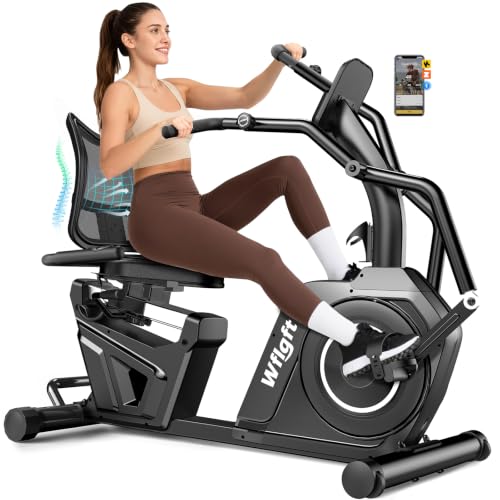
- 16 magnetic resistance levels for varied training
- Arm-and-leg movement with adjustable recumbent seating
- Bluetooth app, LCD monitor, and pulse tracking
Best For: Supported full-body cardio and progressive home training
Best Easy-Setup Pick
Connected Low-Impact Recumbent Bike

- Full-body movement with 16 magnetic resistance levels
- Adjustable seat, handlebars, backrest, and pedal straps
- 80% pre-assembled with Bluetooth and transport wheels
Best For: Comfortable connected workouts and low-impact home training
Versatile Low-Impact Pick – 2-in-1 Recumbent Elliptical Bike
This 2-in-1 machine is a strong option if you want an arm bike for home workouts with the added flexibility of cycling and elliptical-style movement. Its reclined seat, quiet magnetic resistance, and broad resistance range suit low-impact cardio, family use, and progressive training.
Best For: Families, beginners, seniors, and users seeking a stable, low-impact full-body machine.
Pros:
- Combines recumbent cycling with elliptical motion for varied training.
- Supports up to 400 pounds and offers 16 magnetic resistance levels.
- Padded seat, backrest, pulse sensors, and a multifunction LCD support comfortable workouts.
- Arrives 85% pre-assembled and includes transport wheels.
Cons:
- At 66 pounds, it is less lightweight than folding bike options.
- Its larger recumbent-elliptical footprint may require more dedicated space.
Choose this model when comfort, stability, and exercise variety matter more than compact storage. The 400-pound capacity and 16 resistance settings give it useful room for gradual progression.
Compact Upper-Body Choice – pooboo Folding X-Bike
If space is limited, this folding model provides a practical arm bike for home workouts without the footprint of a full-size recumbent machine. Its upright and semi-recumbent positions, resistance bands, and portable frame support varied daily sessions.
Best For: Apartment users and households that need a foldable bike with light upper-body training.
Pros:
- Offers upright and semi-recumbent riding positions plus arm resistance bands.
- Folds for storage and includes transport wheels for repositioning.
- Quiet magnetic resistance has eight adjustable levels.
- Supports up to 300 pounds and accommodates users from 4’10” to 6’1″.
Cons:
- Eight resistance levels provide less adjustment than the 16-level model in this roundup.
- The compact folding design has a lower 300-pound capacity.
This is a sensible pick for casual cardio, compact home gyms, and users who want arm-band work without committing to a larger machine. The bottle holder and phone holder add convenience for everyday sessions.
Connected Full-Body Pick – VANSWE Recumbent Arm Bike
The VANSWE is designed for shoppers who want an arm bike for home workouts with a supported recumbent position and connected tracking. Moving arm handles, elliptical-sized pedals, Bluetooth, and app compatibility make it suited to more engaging full-body sessions.
Best For: Seniors, rehabilitation-focused users, and riders who want app-connected low-impact training.
Pros:
- Works the arms and legs together with movable handles and elliptical-style pedals.
- Reclined positioning is intended to reduce load on the back, knees, hips, and ankles.
- 400-pound capacity, quiet magnetic resistance, non-slip pedals, and transport wheels support stable use.
- Bluetooth connectivity works with Kinomap and Zwift, while the adjustable seat fits a 29- to 37-inch inseam.
Cons:
- It has eight resistance levels, offering fewer increments than some higher-range machines.
- The advertised setup time is about one hour despite arriving 80% pre-assembled.
This model stands out for combining a joint-conscious riding position with upper- and lower-body movement and digital connectivity. It is particularly appealing if tracking, virtual rides, and a wide seat-adjustment range will help you stay consistent.
Storage-Friendly Value – Foldable 8-Level Arm Bike
This foldable stationary bike is a straightforward arm bike for home workouts when quiet operation and easy storage are priorities. Dual resistance bands add upper-body work, while three riding modes and an adjustable seat make the frame adaptable for different routines.
Best For: Small homes, beginners, and users wanting simple full-body cardio with foldaway storage.
Pros:
- Includes dual resistance bands for arm and upper-body training while cycling.
- Three modes include upright, recumbent, and foldable configurations.
- Quiet eight-level magnetic resistance, transport wheels, and a phone or tablet holder suit home use.
- Supports up to 300 pounds and accommodates riders from 4’4″ to 6’6″.
Cons:
- Its eight resistance levels offer less fine-tuning than 16-level alternatives.
- The monitor lists basic workout metrics and does not include the Bluetooth app connectivity found on the VANSWE.
For a compact home gym, this model balances basic tracking, upper-body bands, and flexible storage without adding complicated features. Its wide stated height range is useful for households sharing one bike.
Best Low-Impact Pick – Recumbent Arm Exerciser Bike
If you want an arm bike for home workouts that also provides comfortable lower-body cardio, this ECHANFIT recumbent model combines dual-action handles with smooth pedaling. Its reclining design, adjustable seat, and magnetic resistance make it suitable for gentle daily exercise, rehabilitation, or more demanding sessions.
Best For: Seniors, rehabilitation-focused routines, and users who want a joint-friendly full-body workout.
Pros:
- Dual-action handles work the arms and legs together.
- Eight magnetic resistance levels support gradual intensity changes.
- Wide padded seat, backrest, and adjustable sliding seat improve comfort.
- Supports up to 380 pounds and includes transport wheels.
Cons:
- The recumbent frame has a larger footprint than a folding bike.
- The display is designed for workout metrics rather than app connectivity.
This is a practical choice when comfort and low-impact movement matter more than compact storage. The included resistance bands also add some upper-body variety beyond the built-in arm exerciser.
Best Space-Saving Option – PLENY 5-in-1 Folding Bike
For shoppers seeking an arm bike for home workouts in a smaller space, the PLENY folding exercise bike offers a versatile setup with integrated resistance bands for rowing and upper-body toning. Its folding X-shaped frame, transport wheels, and quiet magnetic system suit apartments, bedrooms, or shared living areas.
Best For: Space-conscious users who want multiple exercise modes and easy storage.
Pros:
- 5-in-1 design supports cycling, stretching, rowing, and full-body toning.
- Folds to a compact 20-by-20-inch footprint and has transport wheels.
- Quiet magnetic resistance system operates under 15 dB.
- Includes a cushioned backrest, phone holder, and LCD workout monitor.
Cons:
- Its 300-pound weight capacity is lower than the recumbent alternatives here.
- The folding design may offer less seat support than a full-size recumbent bike.
The PLENY stands out for versatility and storage convenience. It is a strong fit for home users who want arm-band exercises and cycling in one compact machine, though it prioritizes flexibility over a heavy-duty capacity rating.
Best Heavy-Duty Model – Kawnina Recumbent Arm Bike
The Kawnina is a heavy-duty arm bike for home workouts built around a supportive recumbent seat and synchronized dual-action handlebars. With a 420-pound capacity, 16 magnetic resistance levels, and Bluetooth app connectivity, it is designed for stable daily cardio and progressive full-body training.
Best For: Plus-size users, seniors, and households wanting a supportive recumbent bike with connected tracking.
Pros:
- Reinforced steel frame supports up to 420 pounds.
- Synchronized handlebars engage the upper and lower body together.
- Stepless seat adjustment, oversized cushioning, and a mesh backrest support longer sessions.
- Bluetooth connectivity and 16 magnetic resistance levels add training flexibility.
Cons:
- At nearly 54 inches long, it requires substantial floor space.
- Its 73.8-pound weight makes moving it less convenient than a folding model.
Choose the Kawnina when stability, capacity, and comfort are top priorities. Its quiet drive and app connectivity make it especially practical for shared spaces and users who want to monitor ongoing progress.
Best Seated Rehab Pick – Adjustable Full-Body Pedal Exerciser
If you want an arm bike for home workouts that can be used while seated, this pedal exerciser combines upper- and lower-body movement in a compact, low-impact design. Adjustable resistance, height, and base length make it especially practical for light exercise, physical therapy, or recovery routines.
Best For: Seniors, sedentary users, and people seeking seated exercise or rehabilitation support.
Pros:
- Supports arm, leg, hand, and knee exercise, plus resistance-band work.
- Five-level height adjustment and stepless base-length adjustment accommodate different users.
- LCD display tracks time, counts, total counts, and calories.
- Triangular steel frame, enlarged U-shaped base, and suction cups promote stability.
Cons:
- Manual, pedal-powered operation lacks app connectivity.
- Its seated, low-impact format may not suit users seeking vigorous cardio.
This is the most recovery-focused option in the group. The massage function and seated operation add comfort, while the adjustable structure helps tailor the machine to home therapy and gentle daily movement.
Best Heavy-Duty Connected Pick – 450-Lb Recumbent Arm Exerciser
For shoppers wanting an arm bike for home workouts with more support and training range, this recumbent bike pairs arm and leg movement with 16 magnetic resistance levels. Its reclining seat, quiet operation, Bluetooth app support, and heavy-duty frame make it suited to structured home cardio and low-impact routines.
Best For: Adults and seniors who want supported full-body cardio, adjustable resistance, and app-based workout tracking.
Pros:
- Synchronized or separate arm and leg movement helps customize low-impact workouts.
- Sixteen magnetic resistance levels cover recovery through endurance training.
- 450-pound capacity, padded seat, breathable backrest, and adjustable fit support comfort.
- Bluetooth app support, LCD metrics, and hand-grip pulse sensors help monitor progress.
Cons:
- The larger recumbent format requires more space than a compact pedal exerciser.
- Assembly is still required, even though setup is designed to be straightforward.
This model is the strongest choice when stability, comfort, and progressive resistance matter more than portability. Its quiet magnetic drive also makes it practical for shared living spaces.
Best Easy-Setup Pick – Connected Low-Impact Recumbent Bike
This recumbent bike is a practical arm bike for home workouts when you want low-impact upper- and lower-body movement without a complicated setup. It offers 16 magnetic resistance levels, adjustable seating, Bluetooth tracking, and a frame rated for up to 400 pounds.
Best For: Families and users who want comfortable, connected home exercise with easier assembly and room-to-room mobility.
Pros:
- Combines cycling and elliptical-style movement for coordinated full-body exercise.
- Sixteen resistance levels support light recovery rides and more demanding cardio.
- Sliding seat, supportive backrest, adjustable handlebars, and pedal straps improve fit.
- Arrives 80% pre-assembled and includes transport wheels for easier relocation.
Cons:
- Its 400-pound capacity is lower than the comparable 450-pound model.
- The recumbent design is less compact than a standalone pedal exerciser.
Choose this version if convenient setup and everyday comfort are priorities. It balances rehabilitation-friendly movement with app connectivity and enough resistance range for ongoing home fitness.
How We Picked the Best Arm Bike for Home Workouts
We focused on the features that matter most for consistent home use: arm and leg exercise capability, resistance adjustment, seating comfort, stability, portability, storage, and overall accessibility. The selection includes upright and recumbent designs, folding magnetic bikes, and compact pedal exercisers for users who need a smaller or more adaptable machine.
Because specifications and included features can vary by listing, check the current product details before buying. Pay particular attention to dimensions, maximum user weight, warranty coverage, and whether the arm exerciser can be adjusted or used independently.
Quick Comparison
| Best For | Look For | Most Suitable Design |
|---|---|---|
| Full-body seated workouts | Recumbent seat and adjustable arm exerciser | Recumbent exercise bike |
| Small rooms | Foldable frame and transport wheels | Folding magnetic bike |
| Older adults or limited mobility | Low step-through access, stable base, and back support | Recumbent bike or pedal exerciser |
| Higher-weight users | Clearly stated weight capacity and reinforced frame | Heavy-duty recumbent model |
| Light upper- or lower-body movement | Compact pedals and simple resistance control | Pedal exerciser |
Key Buying Factors for an Arm Bike for Home Workouts
Seating and Access
Recumbent bikes generally provide more back support and a lower seating position than upright models. They can be easier to mount, especially for users with balance, joint, or mobility concerns. Confirm that the seat adjusts far enough to support your leg length.
Arm Exerciser Movement
Check whether the arm crank offers adjustable resistance, multiple hand positions, and a comfortable range of motion. A separate arm mechanism is useful for alternating upper- and lower-body sessions, but it should move smoothly without forcing the shoulders into an awkward position.
Resistance and Tracking
Magnetic resistance is typically quieter and requires less maintenance than friction resistance. Look for several resistance levels and a display that tracks useful metrics such as time, speed, distance, calories, or pulse. Treat displayed calorie counts as estimates.
Stability, Capacity, and Storage
A wide base and secure frame reduce rocking during pedaling or arm cranking. Compare the stated user-weight limit with your needs, leaving a reasonable margin. If space is limited, measure the bike when folded as well as assembled, and confirm that it is light enough to move safely.
Who Should Buy Which Arm Bike for Home Workouts?
Choose a recumbent arm bike if comfort, back support, stability, or easy access is your priority. It is often the best fit for steady, low-impact sessions and users who want to work the arms and legs while seated. Choose a folding upright bike if you have limited floor space and want a general-purpose cardio machine that can be stored after use.
A pedal exerciser is the practical choice for a desk, chair, or rehabilitation-oriented setup, but it usually offers less whole-body support and fewer features than a full bike. For heavier users, prioritize a model with a clearly stated high weight capacity and a sturdy frame rather than choosing based only on price or compactness.
Before purchasing, measure your available area, verify the return policy, and consider how frequently you will use the machine. The best Arm Bike for Home Workouts is the one that fits your body, space, and routine well enough to use consistently.