The best bike computer with ANT+ can turn a basic ride into a more measurable, connected workout. These computers pair with compatible heart-rate monitors, cadence sensors, speed sensors, and power meters while recording useful ride data.
We selected 10 wireless GPS bike computers spanning simple speed-and-distance tracking, color mapping, rerouting, touchscreen controls, and long battery life. Use the guide below to match features and connectivity with the way you ride.
Best 10 Bike Computer with Ant Plus Picks for 2026
Best All-Rounder

- 40+ cycling metrics with broad satellite coverage
- ANT+ and Bluetooth 5.0 sensor support
- 40-hour battery and IPX7 waterproofing
Best For: Everyday riders wanting detailed data and flexible sensor pairing
Best for Navigation

- 3.3-inch touchscreen with button controls
- Dual-band positioning and smart route navigation
- Voice alerts, rerouting, and climb planning
Best For: Route-focused cyclists who also want training analysis
Best Budget Pick
COOSPO BC107 GPS Bike Computer
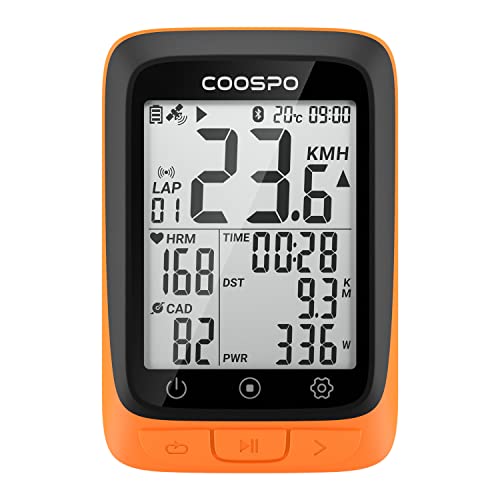
- Compact 2.4-inch GPS display
- ANT+ support for key cycling sensors
- App syncing and Strava compatibility
Best For: Affordable GPS tracking with ANT+ accessories
Best Battery Life

- More than 55 hours of working time
- Lightweight 70-gram pocket-size design
- Automatic backlight and GPS ride tracking
Best For: Long rides requiring lightweight, basic GPS tracking
Best for Easy Setup

- 2.8-inch color screen with rerouting
- ANT+ and Bluetooth sensor support
- Indoor training and extensive data fields
Best For: Cyclists wanting navigation and broad training connectivity
Best Battery Value

- Up to 40 hours of battery life
- Large 3-inch anti-glare display
- Auto start/stop and 38+ ride metrics
Best For: Endurance riders seeking simple long-lasting tracking
Best Compact Navigation

- Compact 2.4-inch color navigation screen
- ANT+, Bluetooth, and Wi-Fi connectivity
- Up to 100 hours of storage
Best For: Riders wanting route guidance in a compact computer
Reliable Sensor Connectivity

- ANT+ support for heart-rate, speed, cadence, and power sensors
- Up to 80-hour battery life
- 2.4-inch auto-backlit display with IP67 protection
Best For: Long rides and riders building an ANT+ sensor setup
Navigation-Focused Choice
iGPSPORT BSC200S GPS Bike Computer

- Route support for Strava, Ride with GPS, and Komoot
- ANT+ and Bluetooth connectivity with 100+ data types
- 2.4-inch color display and up to 25-hour battery
Best For: Route planning, turn guidance, and connected rides
Lightweight Entry-Level Pick

- 45-gram design with a 13.5 mm slim profile
- ANT+ and Bluetooth 5.0 sensor support
- 22-hour battery with customizable data pages
Best For: Lightweight everyday riding and basic training data
Best All-Rounder – iGPSPORT BSC100S
If you want a versatile bike computer with ant plus connectivity, the iGPSPORT BSC100S combines broad satellite coverage, more than 40 riding metrics, and support for speed, cadence, and heart-rate sensors. Its 2.6-inch anti-glare display, IPX7 water resistance, and 40-hour battery make it well suited to everyday and longer-distance rides.
Best For: Riders who want extensive ride data, sensor compatibility, and long battery life without built-in navigation.
Pros:
- Supports GPS, BeiDou, GLONASS, Galileo, and QZSS for broad positioning coverage.
- Tracks more than 40 metrics, including speed, distance, grade, cadence, calories, and temperature.
- ANT+ and Bluetooth 5.0 support connects with compatible cycling sensors and smart watches.
- Offers up to 40 hours of battery life and IPX7 waterproof protection.
Cons:
- Navigation and mapping features are not listed among the supplied features.
- A Type-C charging cable is not included.
The BSC100S is a practical choice when data collection and device compatibility matter more than route guidance. App syncing to Strava and Komoot adds useful post-ride analysis and sharing.
Best for Navigation – iGPSPORT BSC500
For riders seeking a bike computer with ant plus support and route guidance, the iGPSPORT BSC500 stands out with a 3.3-inch touchscreen, dual-band positioning, and smart map navigation. Voice prompts, automatic rerouting, and turn reminders are designed to reduce the need to check your phone while riding.
Best For: Cyclists who prioritize navigation, route importing, and training-oriented features.
Pros:
- Large touchscreen supports both touch and button operation.
- Dual-band GPS and five-satellite positioning systems improve positioning accuracy and interference resistance.
- Supports route imports from the iGPSPORT app, Strava, Komoot, and route files.
- Provides turn reminders, voice navigation, off-course rerouting, and climb planning.
Cons:
- The supplied notes do not specify battery runtime.
- Its larger navigation-focused design may be more than needed for riders who only want basic ride metrics.
The BSC500 is the most feature-rich option here for route-based riding. Its ANT+ and Bluetooth connectivity, navigation tools, and training analysis make it a strong fit for cyclists who want one device for guidance and performance tracking.
Best Budget Pick – COOSPO BC107 GPS Bike Computer
The COOSPO BC107 is a compact bike computer with ant plus connectivity for riders who want GPS tracking and compatible external sensors at a lower-complexity setup. It supports GPS and Beidou positioning, offers a 2.4-inch display, and syncs ride records through the CoospoRide app.
Best For: Budget-conscious cyclists who need essential GPS data and ANT+ sensor compatibility.
Pros:
- Compact 2.4-inch design keeps the handlebar setup lightweight and uncluttered.
- Supports GPS and GPS/Beidou positioning, with an option to disable GPS for indoor riding.
- Works with ANT+ heart-rate, speed, cadence, and power sensors.
- CoospoRide supports activity analysis, firmware updates, and syncing to Strava.
Cons:
- The computer itself supports ANT+ sensor connections rather than Bluetooth sensor connections.
- The extension long front mount is sold separately.
- It has an IP67 rating rather than the higher IPX7 rating listed for some alternatives.
The BC107 keeps the feature set focused and affordable. It is a sensible option for riders who already use ANT+ accessories and want straightforward GPS recording instead of advanced mapping or navigation.
Best Battery Life – CYCPLUS G1 GPS Bike Computer
If extended runtime is your priority in a bike computer with ant plus, the CYCPLUS G1 offers a pocket-size 70-gram design and more than 55 hours of working time. Its glare-free backlit screen, automatic backlight, and GPS ride tracking keep the focus on readable essentials.
Best For: Long-distance riders who value a lightweight computer and extended battery life.
Pros:
- More than 55 hours of stated working time from a 1200mAh battery.
- Lightweight 70-gram construction with a compact 2.0-inch display.
- FSTN backlit screen is designed for visibility in sunlight and low light.
- GPS tracks ride time, distance, total mileage, clock, and current altitude.
Cons:
- The supplied notes identify wireless connectivity but do not specify ANT+ support.
- IPX6 water resistance is below the IPX7 rating offered by some alternatives.
- The display is smaller and the listed metrics are more limited than on some competing models.
The G1 is best viewed as a minimalist GPS computer rather than a connected training hub. Its long runtime, automatic sleep mode, and readable backlight make it appealing for riders who want dependable basic ride data with fewer distractions.
Best for Easy Setup – GEOID CC700
For riders seeking a bike computer with ant plus connectivity and detailed route guidance, the GEOID CC700 combines a 2.8-inch color display with turn reminders, GPX route uploads, and automatic rerouting. Wi-Fi, Bluetooth, and ANT+ support make it suitable for connected training setups.
Best For: Cyclists who want colorful navigation, extensive data customization, and indoor smart-trainer support.
Pros:
- Color route navigation includes turn notifications and automatic rerouting.
- Supports GPS, BeiDou, GLONASS, QZSS, and Galileo, with 5-second positioning after AGNSS sync.
- ANT+ and Bluetooth connect with up to nine types of devices.
- Offers up to 10 customizable pages and 108 supported data items.
Cons:
- Requires Wi-Fi synchronization for the stated fast AGNSS positioning.
- The feature-rich interface may be more than casual riders need.
The CC700 is a strong choice when navigation and sensor compatibility matter as much as basic ride recording. Its color screen, data flexibility, and indoor-training features give it broad appeal for structured cyclists.
Best Battery Value – iGPSPORT BSC100MAX
The iGPSPORT BSC100MAX is a practical bike computer with ant plus support for riders prioritizing long battery life and straightforward ride tracking. Its 3-inch anti-glare screen, auto start/stop recording, and support for more than 38 metrics keep everyday data easy to monitor.
Best For: Long-distance riders who want a large display, automatic recording, and up to 40 hours of battery life.
Pros:
- 700mAh battery provides up to 40 hours of use.
- 3-inch anti-glare screen is designed for clear viewing while riding.
- Automatically pauses and resumes recording when the ride stops and starts.
- Works with Bluetooth sports devices and shares data through the iGPSPORT app to services including Strava and Komoot.
Cons:
- The supplied specifications list Bluetooth connectivity, while ANT+ appears in the product highlight rather than the connectivity details.
- Navigation and rerouting features are not listed among the supplied features.
This model focuses on simple, dependable ride recording rather than route-focused navigation. Its large screen, automatic recording, and substantial battery make it a sensible option for endurance-oriented riders.
Best Compact Navigation – GEOID CC600
The GEOID CC600 is a compact bike computer with ant plus connectivity, color route navigation, and Wi-Fi syncing. Its 2.4-inch display supports GPX uploads, turn reminders, automatic rerouting, and customizable data pages, making it a capable option for riders who want navigation without a larger head unit.
Best For: Riders seeking compact route guidance, indoor training, and compatibility with multiple cycling accessories.
Pros:
- Color navigation provides turn reminders and automatic rerouting when off course.
- Supports ANT+, Bluetooth, Wi-Fi, and connections with up to eight sensors.
- Offers 100 hours of storage and up to 24 hours of battery life.
- Compatible with sensors, power meters, smart trainers, radar lights, and electronic shifting systems listed in the specifications.
Cons:
- The 2.4-inch screen is smaller than the CC700’s 2.8-inch display.
- Fast 5-second positioning depends on syncing current AGNSS data over Wi-Fi.
The CC600 balances route features and device compatibility in a smaller format. It is particularly appealing to riders who want GPX navigation, structured indoor training, and broad accessory support without choosing a larger screen.
Reliable Sensor Connectivity – CooSpo GPS Bike Computer
For riders seeking a bike computer with ant plus connectivity, the CooSpo BC107 supports heart-rate, speed, cadence, and power-meter sensors. Its GPS tracking, 80-hour battery, auto-backlit display, and IP67 protection make it a practical choice for extended rides in changing weather.
Best For: Riders who want long battery life and broad ANT+ sensor compatibility.
Pros:
- Supports ANT+ heart-rate, speed, cadence, and power-meter sensors.
- Offers up to 80 hours of battery life and stores riding data.
- Includes Bluetooth app support for setup, firmware updates, activity analysis, and Strava syncing.
- Uses a sunlight-readable 2.4-inch screen with automatic backlight and IP67 protection.
Cons:
- First GPS positioning can take 3–5 minutes and requires being outdoors.
- Sensors and the out-front mount may require additional purchase depending on the option selected.
The CooSpo stands out for endurance-focused riders who value battery life and sensor flexibility. Confirm the package contents before ordering if you need heart-rate, speed, cadence, or power data immediately.
Navigation-Focused Choice – iGPSPORT BSC200S GPS Bike Computer
The iGPSPORT BSC200S is a bike computer with ant plus support designed for riders who want wireless route guidance alongside sensor connectivity. It imports routes from services including Strava, Ride with GPS, and Komoot, while its color screen, smart notifications, and 25-hour battery suit everyday and longer-distance rides.
Best For: Riders who prioritize route navigation, smart alerts, and a color display.
Pros:
- Supports ANT+ and Bluetooth connections and provides more than 100 riding data types.
- Offers route creation and imports from Strava, Ride with GPS, and Komoot.
- Includes turn, direction, incoming-call, SMS, and app notifications.
- Provides up to 25 hours of battery life, 400 hours of ride storage, and IPX7 protection.
Cons:
- The included components list notes that a Type-C cable is not included.
- It has a shorter stated battery life than the CooSpo model in this roundup.
Choose the BSC200S if navigation and ride-data customization matter more than maximum battery duration. Its compatibility with third-party route platforms adds useful flexibility for planned rides.
Lightweight Entry-Level Pick – Navihood L4 GPS Bike Computer
The Navihood L4 is a compact bike computer with ant plus and Bluetooth 5.0 connectivity for riders who want essential GPS tracking without much handlebar weight. Its 45-gram design, customizable data pages, automatic backlight, and IPX7 rating make it well suited to straightforward daily training and recreational rides.
Best For: Riders seeking a lightweight, customizable entry-level GPS computer.
Pros:
- Weighs 45 grams and measures 13.5 mm thick.
- Supports ANT+ and Bluetooth sensors, including heart-rate, speed, and cadence sensors.
- Offers GPS and GLONASS positioning with stated 2-second warm-start response.
- Provides 22-hour battery life, automatic backlight, and IPX7 waterproofing.
Cons:
- It is positioned as an entry-level model and does not list route-navigation features.
- The supplied details list a 2.4-inch display, while the product title describes it as 2.3 inches.
The L4 is a sensible option when low weight and configurable ride pages are priorities. Its ANT+ and Bluetooth support covers common training sensors, while the storage capacity helps accommodate frequent rides.
How We Picked the Best Bike Computer with Ant Plus
We focused on models that offer GPS-based ride tracking and ANT+ or combined ANT+/Bluetooth connectivity, since broad sensor support is one of the main reasons to choose a bike computer over a phone. We also compared screen size, navigation features, waterproofing, battery claims, control style, and ease of use.
The selection includes compact entry-level computers for casual riders, larger displays for training, and navigation-focused options for touring or unfamiliar routes. Because advertised battery life and GPS performance can vary with settings, temperatures, sensors, and screen use, treat manufacturer estimates as general guidance rather than guaranteed results.
Quick Comparison
- Best for basic ride data: Choose a simple wireless GPS computer with clear speed, distance, time, and route recording.
- Best for sensor-based training: Look for ANT+ support alongside Bluetooth, plus compatibility with cadence, heart-rate, or power sensors.
- Best for navigation: Prioritize a color display, route loading, turn guidance, rerouting, and automatic syncing over minimal size.
- Best for long rides: Compare battery capacity and estimated runtime, particularly if you often ride all day or tour without frequent charging.
- Best for poor weather: Check the exact IP rating and consider whether the buttons or touchscreen remain practical when wet.
Key Buying Factors for a Bike Computer with ANT+
Connectivity and Sensor Compatibility
ANT+ is useful when you already own cycling sensors or plan to add them later. Confirm that the computer supports the specific sensor types you need; ANT+ support alone does not guarantee compatibility with every accessory. Dual ANT+/Bluetooth models offer more flexibility for phones and newer devices.
Navigation and Display
A larger or color screen is easier to read, but it may increase size, weight, and power consumption. If you mainly need workout metrics, a compact monochrome display can be sufficient. For route planning, look for map support, turn prompts, rerouting, Wi-Fi or app syncing, and a display that remains legible in direct sunlight.
Battery, Durability, and Controls
Choose battery capacity based on your longest typical ride, not only your average commute. Waterproof ratings help protect against rain and spray, while physical buttons can be easier to operate with gloves than a touchscreen. Auto start/stop, automatic backlighting, and customizable data pages can also reduce distractions during a ride.
Who Should Buy Which Bike Computer with Ant Plus?
Casual riders and commuters should prioritize simple operation, reliable GPS, a readable display, and enough battery for several rides between charges. Fitness-focused cyclists should choose a bike computer with ANT+ that supports the sensors they use now and may add later, especially cadence, heart rate, and power.
Tourers and unfamiliar-route riders will benefit most from color mapping, route guidance, rerouting, and automatic synchronization. Minimalist or weight-conscious riders should look for compact, lightweight models with physical controls and strong weather protection. Before buying, verify mount compatibility, app support, included accessories, and the return policy so the computer fits both your bike and your riding routine.