Serious runners need more than a basic walking treadmill. A dependable commercial-grade model should provide a stable running platform, useful speed and incline controls, effective cushioning, and enough durability for frequent training.
We selected 10 treadmills spanning heavy-duty home machines, foldable designs, curved treadmills, and connected commercial-style models. Use the guide below to match the right machine to your mileage, space, budget, and workout goals.
Best 10 Commercial Treadmill for Runners Picks for 2026
Commercial-Grade Marathon Trainer

- 22-by-62-inch cushioned running deck
- 4.0 HP motor with 12 MPH top speed
- 400-pound capacity; no membership required
Best For: Marathon training and frequent runners needing a spacious, stable treadmill
Connected Home Training Pick

- 12 MPH speed and 12% incline
- Folding design with ProShox cushioning
- iFIT features require a membership
Best For: Home runners wanting guided workouts and convenient storage
Space-Saving Runner's Choice

- Folding frame with heavy-duty construction
- 3.0 HP motor, 12 MPH speed, and 15% incline
- 350-pound capacity with no membership required
Best For: Home runners needing foldable storage and durable training features
Interactive Incline Training Pick

- 16-inch pivoting touchscreen
- -3% decline to 12% incline range
- Folding frame with iFIT automation
Best For: Runners seeking guided terrain workouts and large-screen training
Best Foldable Option

- 5.0 HP brushless motor and 10 MPH maximum speed
- 15% auto incline with 12 preset programs
- Foldable, cushioned 50-by-20-inch running deck
Best For: Home runners who need incline training and convenient storage
Best Commercial-Style Pick

- 20-by-60-inch cushioned running deck
- 11.2 MPH speed and 15% auto incline
- 15-inch display with Kinomap and Zwift connectivity
Best For: Runners wanting a roomy deck and structured training features
Best High-Speed Capacity

- 12 MPH maximum speed with 20 incline levels
- 4.5 HP motor and 500-pound stated capacity
- 36 programs with cushioning and hydraulic folding
Best For: Runners focused on faster intervals, hills, and high-capacity support
Self-Powered Performance
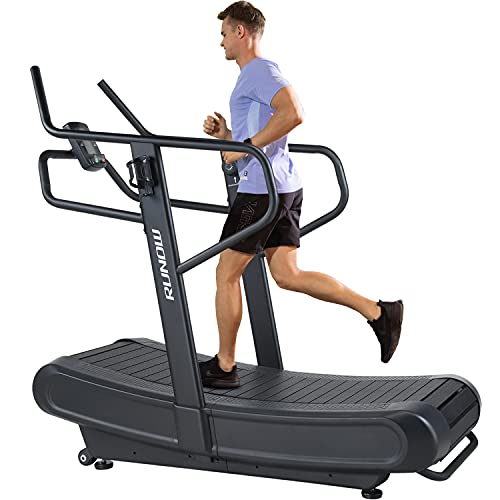
- Non-electric curved design follows your natural pace
- Four resistance levels for sprinting and HIIT
- 450-pound capacity with LCD workout tracking
Best For: Runners wanting self-paced curved-treadmill training
Incline Training Value

- 20 automatic incline levels for hill workouts
- 12 MPH speed with 4.5 HP brushless motor
- Wide 20-inch belt and 500-pound capacity
Best For: Home runners focused on incline and endurance training
Quiet Shared-Space Runner
UMAY Heavy Duty Incline Treadmill

- 20 incline levels up to 20%
- Quiet 4.0 HP motor rated below 45 dB
- 400-pound capacity with cushioned 55-inch belt
Best For: Home or office users needing quieter incline workouts
Commercial-Grade Marathon Trainer – Elite Runner X
If you want a commercial treadmill for runners that prioritizes stability, durability, and training space, the 3G Cardio Elite Runner X is built for demanding home workouts. Its 22-by-62-inch deck, 4.0 HP motor, 15% incline, and 400-pound capacity suit distance running, intervals, and everyday walking.
Best For: Marathon training, frequent runners, and users who want a spacious, non-folding commercial-grade machine.
Pros:
- Large 22-by-62-inch running platform with Ortho Flex Shock Suspension.
- Club-rated 4.0 HP motor, 12 MPH top speed, and quick acceleration for intervals.
- Supports up to 400 pounds and includes wireless heart-rate monitoring, Bluetooth, and FTMS connectivity.
- No membership is required, and residential coverage includes a lifetime frame and drive-motor warranty.
Cons:
- Non-foldable design requires a permanent workout area.
- At roughly 366 pounds, it is difficult to reposition.
- Its commercial-grade footprint may be excessive for compact rooms.
The Elite Runner X is the strongest fit here for serious runners who value a wide, quiet deck and robust construction over portability. Measure doorways, ceiling clearance, and floor space before buying.
Connected Home Training Pick – ProForm Carbon
The ProForm Carbon is a practical commercial treadmill for runners who want guided training and space-saving storage at home. It reaches 12 MPH, offers 0-12% incline, uses ProShox cushioning, and folds for easier room management.
Best For: Home runners who want iFIT-guided workouts, automatic adjustments, and a folding treadmill for smaller spaces.
Pros:
- 12 MPH speed and 12% incline support running, jogging, and hill workouts.
- ProShox cushioning is designed to reduce impact during workouts.
- Folding frame, hydraulic foot bar, and compact design help with storage.
- iFIT can provide trainer-led workouts, SmartAdjust, app syncing, and AI coaching.
Cons:
- Many connected features require an iFIT Train Membership.
- Heart-rate control requires a compatible Bluetooth monitor sold separately.
- The 20-inch-wide deck and 300-pound capacity are less generous than the heavier-duty options here.
This is a good choice when interactive coaching and foldability matter more than commercial-grade construction. Budget for the membership if you want the full automated training experience.
Space-Saving Runner's Choice – 3G Cardio Pro Runner X
The 3G Cardio Pro Runner X is a strong commercial treadmill for runners who need a folding design without giving up a heavy-duty frame. Its 3.0 HP motor, 12 MPH speed, 15% incline, orthopedic belt, and 350-pound capacity make it suitable for regular running and interval sessions.
Best For: Runners who need a foldable treadmill with impact reduction, useful incline range, and no required subscription.
Pros:
- Folds for compact storage while retaining heavy-duty construction.
- Ortho Flex suspension and orthopedic belt help make running more comfortable.
- Provides 12 MPH speed, 15% incline, and rapid acceleration for HIIT workouts.
- Includes Bluetooth, built-in programs, and a residential lifetime frame and drive-motor warranty.
Cons:
- The 20.5-inch-by-58-inch belt is narrower and shorter than the Elite Runner X’s deck.
- Wireless heart-rate strap is optional rather than included.
- Folding storage still requires substantial floor and vertical clearance.
The Pro Runner X is a well-balanced option for serious home runners who need to reclaim floor space after training. It offers a useful combination of cushioning, incline, and durability without tying workouts to a membership.
Interactive Incline Training Pick – NordicTrack Commercial Series
The NordicTrack Commercial Series is a commercial treadmill for runners who prefer a connected training experience with a large display. The Commercial 1750 configuration offers a 16-inch pivoting touchscreen, 12 MPH speed, -3% decline to 12% incline, RunFlex cushioning, and a folding frame.
Best For: Runners who want guided terrain workouts, decline training, large-screen entertainment, and automatic speed and incline changes.
Pros:
- 16-inch pivoting touchscreen supports on- and off-treadmill iFIT sessions.
- Offers 0-12 MPH speed with a -3% decline to 12% incline range.
- RunFlex cushioning and a 22-inch-wide deck support comfortable running.
- Folding design, SmartAdjust, ActivePulse, and fitness-app syncing add convenience.
Cons:
- iFIT Pro Membership is required for many guided, streaming, and automatic-adjustment features.
- Compatible heart-rate monitor for ActivePulse is sold separately.
- Its 80-inch length and 65-inch height require careful space and ceiling planning.
This series stands out for runners who want structured, terrain-focused workouts rather than a purely self-directed machine. It is especially appealing if the touchscreen and decline capability justify the ongoing membership cost.
Best Foldable Option – WELLFIT 15% Incline Treadmill
For shoppers seeking a commercial treadmill for runners that can still fit into a home, the WELLFIT combines a foldable frame with a 10 MPH top speed, 15% auto incline, and a 500-pound stated capacity. Its cushioned 50-by-20-inch deck is suited to walking, jogging, and sprint-focused workouts.
Best For: Home users who want a foldable treadmill for incline training, intervals, and everyday running.
Pros:
- 5.0 HP brushless motor with speeds from 1 to 10 MPH and operation under 45 dB.
- 15% automatic incline, 12 preset programs, and one-touch controls support varied workouts.
- Foldable design, hydraulic soft drop, transport wheels, Bluetooth app connectivity, and speakers.
- 50-by-20-inch five-layer belt with eight shock absorbers and wide safety rails.
Cons:
- Its 10 MPH maximum is lower than the top speed of some runner-focused treadmills.
- The 50-inch deck may provide less room for longer-stride runners than a 60-inch deck.
The WELLFIT is a practical choice when storage matters as much as workout variety. It offers strong incline and capacity specifications, but runners seeking extended high-speed work may prefer a longer deck and faster maximum speed.
Best Commercial-Style Pick – Niceday TM3 Commercial Series
The Niceday TM3 is a strong commercial treadmill for runners who prioritize a spacious deck and training data. It pairs an 11.2 MPH maximum speed with 15% auto incline, a 20-by-60-inch cushioned surface, and a commercial-grade steel frame rated for up to 330 pounds.
Best For: Runners who want a roomy, durable home treadmill for easy miles, tempo work, incline sessions, and connected training.
Pros:
- 60-inch running surface and 20mm cushioned deck with six impact zones.
- 4.0 HP brushless motor, 11.2 MPH top speed, and 0%-15% automatic incline.
- 15-inch LED display shows 12 metrics and includes a marathon pace window.
- Bluetooth compatibility with Kinomap and Zwift, plus a tablet or phone holder.
Cons:
- Its 330-pound capacity is lower than the 500-pound ratings of some alternatives.
- The treadmill is substantially heavier and larger than compact folding models.
The TM3 is the most training-oriented option here for runners who value deck length, pace feedback, and app compatibility. Its 11.2 MPH ceiling supports faster work, while the commercial-style construction is better suited to frequent use than a basic walking treadmill.
Best High-Speed Capacity – Heavy Duty 12 MPH Treadmill
This heavy-duty commercial treadmill for runners emphasizes speed, incline range, and user capacity. It reaches 12 MPH, offers 20 incline levels, and uses a 4.5 HP brushless motor with a stated 500-pound capacity, while its cushioning system is designed to soften repeated impact.
Best For: Home runners who want faster training, substantial incline adjustment, and a high-capacity frame.
Pros:
- 12 MPH maximum speed and 20 incline levels support challenging hill and interval workouts.
- 4.5 HP brushless motor and reinforced steel frame are rated for up to 500 pounds.
- 50-by-20-inch belt with eight spring dampers, six silicone cushions, and a dual-layer deck.
- 36 programs, rounds tracking, Bluetooth speakers, app connectivity, and hydraulic folding.
Cons:
- The listed 50-inch deck is shorter than the Niceday TM3’s 60-inch running surface.
- Only a one-year manufacturer warranty is specified.
- Its 30-inch width and 62-inch depth may require considerable floor space when in use.
Choose this model if speed and incline variety matter most, especially for structured interval or hill workouts. The high capacity and extensive cushioning add versatility, although runners with long strides may prefer a longer deck.
Self-Powered Performance – RUNOW Curved Treadmill
For runners seeking a commercial treadmill for runners without motor-driven speed controls, the RUNOW Curved Treadmill uses your stride to set the pace. Its manual operation suits sprinting, jogging, and HIIT, while four resistance levels let you adjust workout difficulty.
Best For: Runners, athletes, and HIIT users who want self-paced, non-electric training with a high weight capacity.
Pros:
- Manual curved design requires no electricity and responds directly to your pace.
- Four resistance levels support jogging, sprinting, and HIIT workouts.
- Supports up to 450 pounds and includes a 5-inch LCD tracking key metrics.
- Transport wheels, cup holder, and a metal-and-rubber construction add practical convenience.
Cons:
- Its 48-inch deck may feel short for users with a long running stride.
- Manual operation requires active effort and may not suit users who prefer automated speed control.
- The 287-pound frame is substantial to move despite the transport wheels.
The RUNOW stands out for runners who want a durable, self-generated workout and direct control over pace. It is especially compelling for sprint and interval training, though its shorter deck deserves consideration before purchase.
Incline Training Value – Heavy Duty 20-Level Treadmill
This heavy-duty model is a versatile commercial treadmill for runners who want structured incline sessions at home. Its 20 automatic incline levels, 12 MPH top speed, wide deck, and 36 programs support endurance, hill, and HIIT workouts.
Best For: Home runners who prioritize automatic hill training, a spacious running surface, and high user-weight support.
Pros:
- 20-level automatic incline helps simulate hill climbs and varied terrain.
- 4.5 HP brushless motor reaches 12 MPH with a stated 500-pound capacity.
- 20-inch-wide running belt and shock-absorption system support a more comfortable stride.
- Bluetooth speakers, app connectivity, rounds tracking, and 36 programs add workout variety.
Cons:
- Its 62-inch deck is substantial, but the supplied notes do not specify a commercial product grade.
- The one-year manufacturer warranty is shorter than some competing fitness-equipment warranties.
- At 128 pounds, it is lighter than many heavy-duty frames and may feel less substantial to some users.
With automatic incline, a 12 MPH ceiling, and a wide belt, this treadmill is a strong choice for runners building hill strength and endurance. Its foldable design also makes it more practical where storage space matters.
Quiet Shared-Space Runner – UMAY Heavy Duty Incline Treadmill
The UMAY is a practical commercial treadmill for runners who need incline training in a home gym, office, or shared space. It combines a quiet 4.0 HP brushless motor with 20 incline levels, a 9.5 MPH maximum speed, and a 400-pound capacity.
Best For: Home and office users who want quieter running, moderate-speed workouts, and automatic incline adjustment.
Pros:
- 20 incline levels range from 2% to 20% for hill and calorie-burning workouts.
- Quiet brushless motor is rated below 45 dB for shared environments.
- 55-by-18-inch belt and triple-layer cushioning support walking, jogging, and running.
- Includes stated 400-pound capacity and real-time heart-rate monitoring.
Cons:
- The 9.5 MPH maximum speed is lower than the 12 MPH option offered by some running treadmills.
- An 18-inch belt is narrower than the 20-inch deck on some heavy-duty competitors.
- The supplied notes do not list a warranty, display type, or program count.
The UMAY emphasizes quiet operation, cushioning, and incline variety rather than top-end speed. It is a sensible fit for shared spaces and runners whose training stays within its 9.5 MPH limit.
How We Picked the Best Commercial Treadmill for Runners
We focused on features that matter most to runners: motor output, top speed, deck size, shock absorption, incline range, weight capacity, stability, controls, and available training connectivity. We also considered practical details such as step-up height, folding designs, noise, warranty considerations, and whether a treadmill is better suited to steady running, interval work, hill training, or shared household use.
“Commercial” can describe a treadmill’s construction or marketing category, so buyers should verify the manufacturer’s specifications rather than relying on the label alone. A strong candidate should feel stable at running speeds and offer a deck long and wide enough for the user’s stride.
Quick Comparison
| Best For | Look For |
|---|---|
| Daily distance running | Stable frame, durable motor, generous deck, and reliable cushioning |
| Speed and interval workouts | At least 10–12 mph, responsive controls, and a firm running surface |
| Hill training | Automatic incline with a broad adjustment range and strong motor support |
| Small home gyms | Folding frame, transport wheels, manageable step-up height, and a suitable footprint |
| Natural running mechanics | A curved, self-powered design with no motor-driven belt |
Key Buying Factors for a Commercial Treadmill for Runners
Motor and Speed
Choose a motor and frame designed for repeated running, not occasional walking. Runners who perform intervals or fast tempo sessions should prioritize a top speed of 10–12 mph or higher, while long-distance runners may value smooth operation and cooling more than peak speed. Horsepower figures are not standardized, so use them alongside the treadmill’s stated user capacity and intended use.
Deck Size and Cushioning
A deck around 20 inches wide gives many runners useful lateral room; taller users or runners with a long stride may prefer a belt at least 55 inches long. Cushioning can reduce perceived impact, but too-soft surfaces may feel unstable during faster workouts. If possible, compare the treadmill’s feel with the surface you normally train on.
Incline, Controls, and Connectivity
Automatic incline is valuable for hill repeats and varied workouts. Preset buttons or quick-adjust controls make intervals easier than repeatedly tapping small increments. Bluetooth, FTMS, built-in training platforms, and app compatibility can add structure, but they should supplement—not replace—solid hardware and straightforward manual controls.
Capacity, Noise, and Maintenance
Choose a stated weight capacity comfortably above the heaviest user’s weight, especially for frequent running. Check whether the frame remains steady at speed and whether the motor and belt are covered by a meaningful warranty. Regular belt lubrication, cleaning, and alignment are essential for long-term performance.
Who Should Buy Which Commercial Treadmill for Runners?
Daily runners should prioritize the most stable, best-cushioned model with a generous deck and durable construction. Interval runners should look for fast speed changes, a 12-mph class top speed, and easy incline controls. Runners with limited space should choose a foldable model, while buyers who want a more natural stride may prefer a curved treadmill. If multiple people will use the machine, select a heavy-duty option with a higher capacity, broad deck, and simple adjustment controls.