If you want a faster, less tiring way to loosen tight muscles, an electric foam roller can be a smart upgrade from a manual roller. These tools add vibration, percussion, or hands-free rolling to help target sore areas with less effort.
In this roundup, we focus on the best options for recovery, comfort, and ease of use, so you can find the right roller for your back, legs, neck, or full-body routine.
Best 10 Electric Foam Roller Picks for 2026
Vibrating Full-Body Recovery Pick

- 5 app-controlled vibration settings
- Wave-textured EVA foam for traction
- Made for full-body and large muscles
Best For: Full-body recovery and larger muscle groups
Contoured Back Relief Pick

- Contoured for back, neck, and spine
- 5 app-adjustable vibration settings
- Includes pouch and charging cable
Best For: Focused back and neck muscle relief
Extra-Long Coverage Pick
- 17-inch length for wider coverage
- Up to 3800 RPM vibration output
- Lightweight with carrying bag included
Best For: Full-body recovery and deep tissue massage
Hands-Free Automatic Recovery
A1 Fully Automatic Foam Roller

- App-controlled hands-free rolling
- 3 speeds with two massage covers
- Quiet, portable, 300 lb capacity
Best For: Runners, lifters, and desk workers who want effortless recovery
High-Intensity Vibrating Recovery
VibePro Flow Vibrating Foam Roller
- 5 vibration modes up to 3700RPM
- Multi-zone EVA foam surface
- Compact 3 lb rechargeable design
Best For: Athletes who want adjustable vibrating recovery in a portable size
Percussive + Rolling Combo
Chirp RPM Rolling Percussive Massager

- Percussion plus rolling pressure
- 5 intensity levels with reversible spin
- Hands-free base for full-body use
Best For: Users wanting a deeper, hands-free recovery tool for large muscle groups
Recovery Pick
High-Density Vibrating Foam Roller with 4 Speeds

- Wave-textured design for broader pressure coverage
- Multiple vibration levels for recovery control
- Compact build with carrying pouch included
Best For: People wanting portable muscle recovery and pain relief
Most Adjustable
Vibrating Foam Roller with 5 Speeds

- Five speeds plus variable mode for fine-tuned intensity
- Long battery life with 4 to 8 hours of use
- Dense EVA foam built for repeated sessions
Best For: People who want maximum control over vibration intensity
Portable Recovery Pick
Kucttic Wave Vibrating Foam Roller
- Textured wave grooves for added traction and pressure
- Three density patterns for varied body areas
- Compact, lightweight design with carrying pouch
Best For: Travel-friendly recovery and portable muscle relief
Vibrating Full-Body Recovery Pick – Therabody WaveRoller
If you want an electric foam roller that feels more advanced than a basic recovery tool, the Therabody WaveRoller stands out with vibration plus a high-density wave texture. It is built for full-body rolling, especially larger muscle groups, and the Therabody App lets you fine-tune the experience with five vibration settings.
Best For: Full-body recovery, large muscle groups, and users who want app-controlled vibration settings.
Pros:
- Five customizable vibration intensity settings through the Therabody App.
- Wave-textured EVA foam adds traction and a more targeted rolling feel.
- Designed for full-body use and larger muscle groups.
- Includes a carrying pouch and power adapter.
Cons:
- Shorter than some full-length rollers at 12 inches.
- Requires app use to adjust vibration settings.
- May be more feature-rich than needed for simple, no-frills rolling.
Overall, this is a premium electric foam roller for buyers who want customizable vibration and a textured surface in one recovery device. It is a strong fit if you value a guided, tech-forward massage experience.
Controlled Rolling Recovery Pick – Electric Muscle Roller
This electric foam roller is built around rolling pressure rather than percussion, which may appeal to athletes who prefer a steadier, more controlled recovery tool. It is aimed at post-workout use and covers common tight spots like legs, calves, back, and neck with three speed options.
Best For: Post-workout recovery, controlled rolling pressure, and targeted use on legs, back, and neck.
Pros:
- Uses rolling massage instead of vibration or percussion.
- Three speed settings make it easier to match your recovery needs.
- Targets legs, calves, back, and neck for post-workout use.
- Rechargeable with Type-C charging and a portable design.
Cons:
- Battery life is listed at about 1 hour.
- Open-ring cylindrical design may not feel as traditional as a standard roller.
- Best suited to rolling pressure, not users specifically wanting percussion-style massage.
As an electric foam roller, this one is a practical pick if you want a more controlled massage feel and straightforward speed adjustment. It is especially useful for post-training recovery on commonly overworked muscle groups.
Contoured Back Relief Pick – Therabody WaveDuo
For buyers looking for an electric foam roller made specifically for the back and neck, the Therabody WaveDuo has an ergonomically contoured shape that targets both sides of the spine. It adds vibration control through the Therabody App, which makes it a strong choice when you want focused relief without extra pressure on the spine itself.
Best For: Back, neck, and spine-adjacent muscle relief with a contoured design.
Pros:
- Contoured shape is designed for the back, neck, and spine area.
- Five vibration intensity settings can be adjusted in the app.
- Hypo-allergenic EVA high-density foam helps with sound insulation.
- Includes a protective pouch and USB-A to USB-C cable.
Cons:
- Focused design makes it less versatile for full-body rolling.
- Primarily targets the back and neck rather than legs or large muscle groups.
- App-based controls may be unnecessary for users wanting simple operation.
This is a smart option if your main goal is targeted upper-body recovery rather than broad full-body use. Its contoured form gives it a clear advantage for people who want a roller that fits the back and neck more naturally.
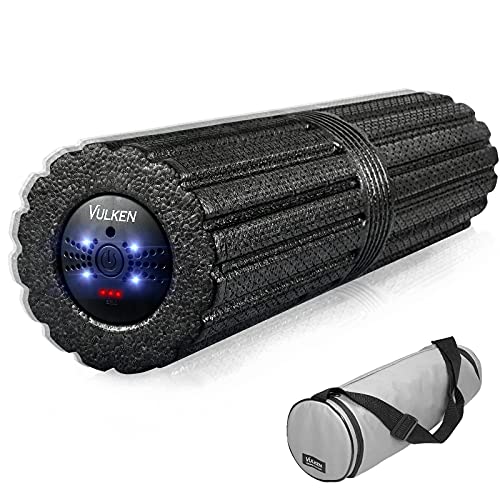
Extra-Long Coverage Pick – Vulken Vibrating Foam Roller
If you want an electric foam roller that covers more area in fewer passes, the Vulken Vibrating Foam Roller is built around its 17-inch extra-long format. It combines a firm, lightweight EPP build with up to 3800 RPM vibration, making it a strong option for full-body muscle recovery after training.
Best For: Full-body coverage, deep tissue recovery, and users who want a longer vibrating roller.
Pros:
- 17-inch length provides wider coverage than standard 12-inch rollers.
- Up to 3800 RPM delivers a powerful vibration massage.
- Four vibration modes, including an auto-pulsating mode, add flexibility.
- Lightweight at 2.1 lbs and includes a carrying bag.
Cons:
- Longer size may be less convenient for tight storage or smaller spaces.
- Firm build may feel intense for users who prefer a softer roller.
- Focuses on vibration-powered recovery rather than app-based controls.
This electric foam roller is a good fit for athletes or frequent gym users who want broad coverage and strong vibration output. Its longer shape and travel-ready design make it especially practical for full-body recovery routines.
Hands-Free Automatic Recovery – A1 Fully Automatic Foam Roller
If you want an electric foam roller that does the work for you, the RheoFit A1 is built for hands-free recovery. Lie back, choose a program in the app, and let it roll through areas like your calves, hamstrings, or upper back with quiet, consistent motion.
Best For: Runners, lifters, and desk workers who want app-controlled, no-effort recovery at home or on the go.
Pros:
- Hands-free rolling sessions with app-controlled body-area selection
- Three speed settings plus two included covers for different pressure preferences
- Patented motor supports users up to 300 lb and runs below 45 dB
- Lightweight 5.4 lb design with 240-480 minute battery life
Cons:
- Designed around 10-minute sessions rather than long continuous use
- Requires the app for program and speed control
Overall, this is a strong pick if you value convenience and consistency over manual control. The A1 stands out as a travel-friendly electric foam roller that can fit into a daily recovery routine without much effort.
High-Intensity Vibrating Recovery – VibePro Flow Vibrating Foam Roller
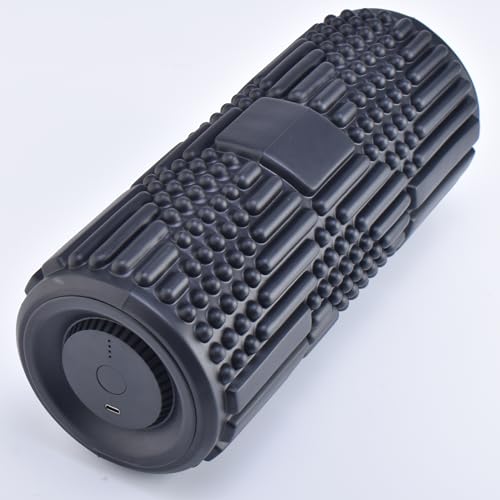
The VibePro Flow is an electric foam roller designed for users who want vibration plus pressure in one recovery tool. With five intensity modes and a multi-zone EVA foam surface, it can be used for warmups, post-workout recovery, and targeted relief across the back, legs, shoulders, and more.
Best For: Athletes and active users who want a compact vibrating roller with adjustable intensity.
Pros:
- Five vibration settings from 2000-3700RPM for customizable intensity
- Multi-zone surface pattern aims at shoulders, back, legs, arms, feet, and core
- Rechargeable design with 3.5-hour USB charging and cordless use
- Compact 13″ x 5.25″ size and 3 lb weight for travel
Cons:
- Uses a 15-minute smart timer, so sessions are intentionally short
- Firm feel may not suit users who prefer softer rolling
For buyers comparing an electric foam roller with more active vibration, this model offers a focused and portable option. It is especially appealing if you want a simple, rechargeable recovery tool with multiple intensity levels.
Percussive + Rolling Combo – Chirp RPM Rolling Percussive Massager
The Chirp RPM is an electric foam roller alternative that combines rolling pressure with percussion for deeper-feeling muscle work. Its hands-free base, reversible spin, and five intensity levels make it a flexible option for targeting legs, feet, back, and other large muscle groups.
Best For: People who want a hands-free rolling massager with percussive action for broader full-body coverage.
Pros:
- Combines percussion and rolling for deep tissue muscle therapy
- Five intensity levels plus reversible spin for more control
- Hands-free base supports use across legs, arms, hamstrings, and more
- Cordless, rechargeable, and built for portable recovery
Cons:
- At 7 lb, it is heavier than some portable foam roller options
- Upright standalone form factor may take more setup space
If you want a more aggressive recovery tool than a basic roller, this model brings extra power and versatility. It is a practical choice for users who want one device for multiple muscle groups without holding it in place.
Recovery Pick – High-Density Vibrating Foam Roller with 4 Speeds
If you want an electric foam roller that covers the basics well, this Kucttic Wave Roller focuses on full-body relief, adjustable vibration, and portability. Its wave-textured surface and high-density foam are designed to target larger muscle groups while giving you enough control to dial in a gentler or stronger session.
Best For: Users who want a compact vibrating roller for muscle recovery, pain relief, and travel-friendly use.
Pros:
- Wave foam texture adds traction and pressure variation for fuller rolling coverage.
- Vibration settings let you adjust intensity for different muscles and recovery needs.
- High-density EVA foam is built for durability and regular use.
- Compact 13 x 4.5-inch size and included carrying pouch make it easy to bring along.
Cons:
- Top-end vibration may be more than some users want for light recovery.
- Best results seem geared toward short sessions rather than long continuous use.
This is a practical pick if you want a vibrating foam roller that blends surface texture, multiple speeds, and easy transport. It looks especially useful for gym bags, post-workout recovery, and on-the-go therapy routines.
Most Adjustable – Vibrating Foam Roller with 5 Speeds
This electric foam roller is built for users who want a lot of control over intensity. With five adjustable speeds plus a variable mode, it can shift from lighter muscle relaxation to stronger deep-tissue work, making it a flexible option for warm-ups and post-exercise recovery.
Best For: Buyers who want a highly adjustable vibrating roller for recovery, stretching, and deep tissue massage.
Pros:
- Five speeds plus one variable mode offer broad intensity control.
- 800RPM to 3600RPM range supports both gentle and stronger sessions.
- 4000 mAh battery is rated for 4 to 8 hours on a single charge.
- High-density EVA foam is designed to hold shape through repeated use.
Cons:
- Stronger settings may feel too intense for users new to vibrating rollers.
- Best usage time is noted as within 15 minutes, which limits longer sessions.
If adjustability matters most, this model stands out with more speed options than a basic roller. It fits well for athletes and regular exercisers who want a rechargeable recovery tool they can use at the gym, at home, or on the move.
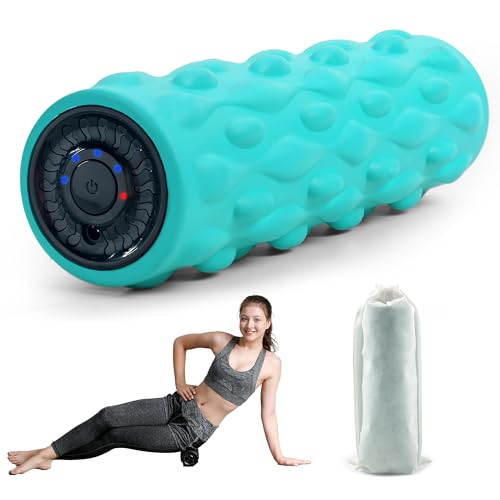
Portable Recovery Pick – Kucttic Wave Vibrating Foam Roller
For shoppers comparing an electric foam roller that is easy to carry, this Kucttic Wave Roller combines vibration, a textured surface, and a compact footprint. It is built to work across large muscle groups while still being small enough for gym bags, travel, or quick recovery sessions after workouts.
Best For: Anyone who wants a compact vibrating roller with textured pressure and straightforward portability.
Pros:
- Wave grooves add extra pressure points and traction control during rolling.
- Multiple vibration settings help address soreness and muscle tension.
- Three density patterns make it usable on different body areas.
- Lightweight 13 x 4.5-inch design includes a carrying pouch for transport.
Cons:
- The compact size may be less ideal for users who want a larger surface area roller.
- As with other vibrating rollers, some sessions may feel too stimulating at higher settings.
This version keeps the same core recovery features while emphasizing portability and versatile texture. It is a solid fit if you want a small, rechargeable roller that can move between home, gym, and travel use without much hassle.
How We Picked the Best Electric Foam Roller
We looked for Electric Foam Roller models that balance recovery performance, comfort, and practical design. Key factors included vibration intensity, rolling style, power source, surface texture, body coverage, and whether the product is easier to use for solo sessions. We also considered whether a model suits targeted relief or broader full-body recovery.
Quick Comparison
Some rollers are better for broad back-and-leg coverage, while others focus on compact, controlled pressure for smaller muscle groups. Bluetooth or app control can add convenience, but simple speed controls are often enough if you want straightforward operation. Hands-free and automatic rollers are best if you prefer less upper-body effort, while handheld designs offer more precision.
Key Buying Factors for an Electric Foam Roller
Intensity and Speed Settings
Look for multiple speed levels if you want flexibility for warm-ups, post-workout recovery, and sensitive areas. Lower speeds are usually better for beginners, while higher settings suit deep tissue work.
Coverage and Shape
A longer roller can help with the back, glutes, and legs, while contoured or compact designs are easier to aim at the neck, spine, calves, and shoulders. Choose the shape based on the body areas you use most.
Power and Convenience
Rechargeable batteries are ideal for portability, while app or Bluetooth features are useful if you want more control. If you dislike holding pressure yourself, consider automatic or hands-free designs.
Material and Comfort
High-density foam and textured surfaces can provide firmer massage input, but they should still feel manageable for regular use. A stable surface and grippy finish can also improve control.
Who Should Buy Which Electric Foam Roller?
If you want broad recovery support after workouts, choose a longer or full-body design. If your main concern is back or neck relief, a contoured roller may be the better fit. Travelers and casual users may prefer a simpler rechargeable model, while frequent lifters or athletes may benefit most from higher-intensity or automatic options. In short, the best Electric Foam Roller is the one that matches your recovery routine, comfort level, and the muscles you actually need to treat.