Hill training is easier to maintain at home when your treadmill offers enough incline range, stable construction, and simple speed controls. The right model can support steep walking, sustained climbs, interval workouts, and everyday cardio without requiring outdoor hills.
We selected 10 treadmills with incline features ranging from compact walking-focused designs to heavy-duty machines built for challenging grades. Use the guide below to match incline capability, deck size, user capacity, and storage needs to your training routine.
Best 10 Incline Treadmill for Hill Training Picks for 2026
Best Overall Climbing Range
UMAY Fitness 20% Incline Treadmill

- 2%–20% automatic incline range
- 400-pound capacity with 3.5 HP motor
- Folds nearly flat for storage
Best For: Home hill training with flexible storage
Best Connected Training

- 0%–10% digital incline
- Up to 10 MPH running speed
- iFIT supports guided, adaptive workouts
Best For: App-guided hill intervals and endurance training
Best for HIIT Intervals
JAGJOG JT60 15% Incline Treadmill

- 15% automatic incline for uphill intensity
- 12 preset HIIT programs
- No assembly and compact folded size
Best For: Preset home HIIT and incline cardio
Best Steep-Incline Walking Option
CURSOR FITNESS X5FD 40% Incline Treadmill

- Up to 40% (15°) incline
- Extended handlebar for steep walking
- Flat walking-pad and uphill modes
Best For: Steep, supported incline walking at home
Heavy-Duty Hill Trainer
15% Auto-Incline WELLFIT Treadmill

- 0%-15% automatic incline for hill workouts
- 10 MPH top speed and 500-pound capacity
- Folding, cushioned, Bluetooth-enabled design
Best For: Automatic hill simulation and demanding home cardio
Compact Manual Climber
CURSOR FITNESS 16% Incline Treadmill

- Manual incline adjusts up to 16%
- 400-pound capacity with quiet 3.0HP motor
- Compact, foldable, and 90% pre-assembled
Best For: Space-conscious walking and moderate hill training
Quiet Adjustable Walker
12% Auto-Incline Folding Walking Pad

- 0%-12% one-touch automatic incline
- Below-30 dB motor with 300-pound capacity
- Adjustable handrails and app control
Best For: Quiet incline walking in home offices and small spaces
Best with Extra Features
20-Level Auto Incline Treadmill
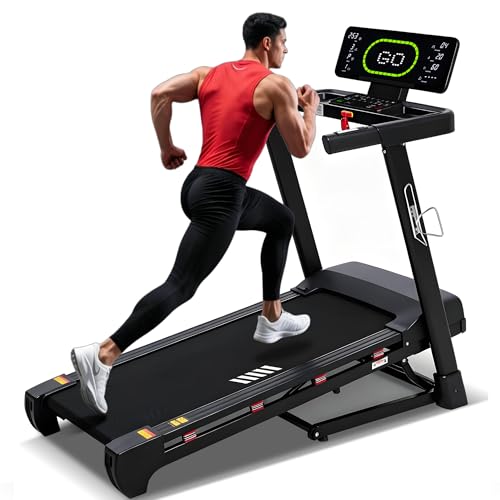
- 20 automatic incline levels with speeds up to 12 MPH
- 500-pound capacity and 20-inch-wide running deck
- 36 programs, Bluetooth speakers, and foldable storage design
Best For: Serious home runners and high-capacity hill training
Compact Hill Walker
LONTEK 15% Incline Walking Pad
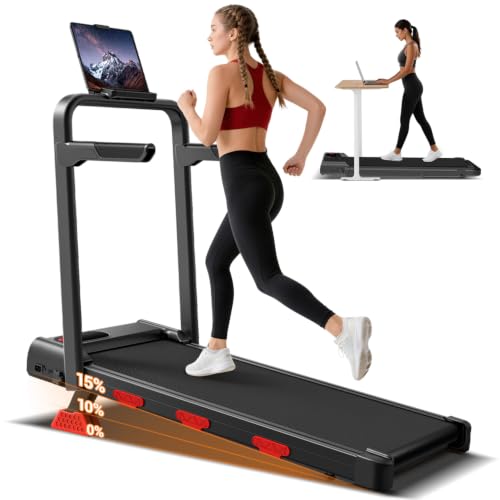
- Manual flat, 10%, and 15% incline positions
- Quiet motor, 350-pound capacity, and speeds up to 6.2 MPH
- Low-profile design stores under beds, desks, or sofas
Best For: Space-conscious walkers and apartment workouts
Versatile Home Climber
20% Auto Incline Folding Treadmill

- Auto incline reaches a steep 20% grade
- 8.7 MPH top speed with handrail speed and incline controls
- Foldable deck, app connectivity, and 450-pound capacity
Best For: Home users wanting steep hills and compact storage
Best Overall Climbing Range – UMAY Fitness 20% Incline Treadmill
For shoppers seeking an incline treadmill for hill training, the UMAY Fitness L10 offers a broad 2%–20% automatic incline range with one-touch adjustment. Its 8.7 MPH top speed supports walking, jogging, running, and interval workouts, while the fold-flat design suits compact home gyms.
Best For: Home users who want substantial incline range, high weight capacity, and flexible storage.
Pros:
- 20 incline levels from 2% to 20% for hill-style workouts.
- 3.5 HP brushless motor, speeds up to 8.7 MPH, and a 400-pound capacity.
- Folds to approximately 6.5 inches high and includes a height-adjustable deck.
Cons:
- The 16.2-by-42.5-inch belt is shorter than the deck on some running-focused treadmills.
- The one-year warranty is relatively limited.
The L10 is a strong all-around pick when steep incline work and user capacity matter more than premium connected-training features. Its compact folded profile is especially useful in smaller spaces.
Best Connected Training – NordicTrack T Series T6.5S
The NordicTrack T Series T6.5S is a practical incline treadmill for hill training when guided workouts are part of your plan. It combines 0%–10% digital incline, speeds up to 10 MPH, KeyFlex cushioning, and folding storage, with iFIT providing trainer-led sessions and automatic terrain adjustments through a required membership.
Best For: Runners and walkers who prefer app-guided workouts and trainer-controlled speed and incline changes.
Pros:
- Supports speeds up to 10 MPH for running and endurance work.
- Digital 0%–10% incline helps add hill intervals to home workouts.
- KeyFlex cushioning and an assisted folding frame improve everyday usability.
Cons:
- Many smart features, including automatic adjustments and expanded workouts, require an iFIT membership.
- Its 10% maximum incline is less steep than several dedicated hill-training models.
- The listed maximum user weight is 300 pounds.
The T6.5S makes the most sense for users who value structured programming and connected fitness more than maximum incline. Its 10 MPH speed ceiling also gives it an advantage for faster running sessions.
Best for HIIT Intervals – JAGJOG JT60 15% Incline Treadmill
The JAGJOG JT60 is a convenient incline treadmill for hill training and high-intensity home cardio. Its 15% automatic incline simulates uphill walking, while 12 preset HIIT programs, an 8.8 MPH top speed, and a quiet brushless motor support varied sessions in shared living spaces.
Best For: Users who want preset HIIT workouts, moderate hill simulation, and a ready-to-use treadmill.
Pros:
- 15% automatic incline increases workout intensity for uphill sessions.
- Includes 12 HIIT programs and speeds up to 8.8 MPH.
- Quiet operation under 48 dB, joint-friendly cushioning, and a large 14.96-inch LED touchscreen.
- Folds to 54 by 28.3 by 8.5 inches and requires no assembly according to the supplied notes.
Cons:
- The 300-pound capacity is lower than some competing high-capacity models.
- The maximum speed is better suited to walking, jogging, and moderate running than sprint work.
With its preset programs and simple setup, the JT60 is a good fit for users who want to begin structured incline intervals without assembling a complex machine. The compact fold is another advantage for home storage.
Best Steep-Incline Walking Option – CURSOR FITNESS X5FD 40% Incline Treadmill
The CURSOR FITNESS X5FD stands out as an incline treadmill for hill training because its incline reaches a stated 40% (15°), far above conventional home models. It is designed primarily for walking and controlled uphill work, with speeds listed up to 7.5 MPH, an extended handlebar, and a dual-use flat walking-pad mode.
Best For: Steep incline walking, supported uphill conditioning, and small-space home use.
Pros:
- Up to 40% maximum incline for particularly steep hill-style training.
- Extended 51.2-inch handlebar provides added support on steep slopes.
- Triple shock absorption, a seven-layer belt, and an advertised 350-pound capacity.
- Folds to about 57.3 by 24.4 by 6.1 inches and can operate as a flat walking pad.
Cons:
- The 0.6–6.2 MPH motor-speed description in the supplied bullets makes it less suitable for fast running, despite a listed 7.5 MPH maximum in the details.
- Its extreme incline is geared more toward walking than conventional running workouts.
- Some features require attaching the handlebar for full uphill-training mode.
The X5FD is the specialist choice here for users prioritizing steep incline walking over speed. Its supportive handlebar and dual-use format make it particularly useful for controlled hill work in compact spaces.
Heavy-Duty Hill Trainer – 15% Auto-Incline WELLFIT Treadmill
For shoppers seeking an incline treadmill for hill training, the WELLFIT stands out with automatic elevation from 0% to 15%, speeds up to 10 MPH, and a 50-by-20-inch running surface. Its sturdy design, cushioning, and folding frame make it suited to demanding home workouts without sacrificing storage convenience.
Best For: Users who want automatic hill simulation, interval training, and a higher-capacity treadmill for home use.
Pros:
- 15% automatic incline with one-touch controls and 12 preset programs.
- 5.0HP brushless motor supports speeds from 1.0 to 10 MPH and users up to 500 pounds.
- Large cushioned belt, eight shock absorbers, heart-rate sensors, Bluetooth, and a swiveling LED display.
- Folding frame with soft-drop hydraulics and transport wheels.
Cons:
- At 125.9 pounds, it is heavier to reposition than compact walking pads.
- The 50-inch deck may feel short for some users with a long running stride.
The WELLFIT is the strongest match here for serious incline-focused conditioning, especially if you want automatic adjustments and a robust weight rating. It is less compelling if your priority is an ultralight treadmill for occasional walking.
Compact Manual Climber – CURSOR FITNESS 16% Incline Treadmill
The CURSOR FITNESS offers a steep 16% setting for shoppers comparing an incline treadmill for hill training, but the elevation is adjusted manually with the included attachments. With a 7.2 MPH maximum speed, compact folding design, and 400-pound capacity, it is better suited to walking and moderate jogging than fast hill sprints.
Best For: Apartment users and walkers who want a steep manual incline in a compact, quiet treadmill.
Pros:
- Manual incline reaches 16%, the highest incline listed among these options.
- 3.0HP brushless motor operates below 45 dB and supports up to 400 pounds.
- Seven-layer belt, cushioning pads, and six silicone shock absorbers help reduce impact.
- Folds compactly and arrives 90% pre-assembled for easier setup and storage.
Cons:
- Manual incline changes are less convenient than automatic adjustment.
- The 15-by-37.5-inch belt is notably smaller than a conventional running deck.
- Its 7.2 MPH maximum limits sprint-oriented training.
This model makes sense when incline intensity and space savings matter more than running speed or a wide deck. Plan your workout transitions in advance because changing elevation requires manual setup rather than an on-the-fly button press.
Quiet Adjustable Walker – 12% Auto-Incline Folding Walking Pad
If you want an incline treadmill for hill training in a home office or shared space, this walking pad combines one-touch 0%-12% automatic incline with a quiet motor rated below 30 dB. Its adjustable handrails, app control, and folding 3-in-1 format support walking, desk use, and light running.
Best For: Users who prioritize quiet daily walking, adjustable support rails, and compact home-office workouts.
Pros:
- 12-level automatic incline reaches 12% without manual setup.
- Five-level handrails adjust from 35 to 43 inches for different users.
- Quiet 3.0HP EvoQuiet BLDC motor supports up to 300 pounds.
- Folding design, app control, smart resume, and a five-layer shock-absorbing belt.
Cons:
- The 40-by-16-inch belt is narrower and shorter than the WELLFIT deck.
- Its 7.5 MPH top speed is better for walking and light running than sprinting.
- The 300-pound capacity is lower than the other listed models.
This is a practical choice for consistent incline walking, especially where noise and storage are concerns. Runners needing a broader deck, faster pace, or a higher weight rating should look toward a full-size treadmill instead.
Best with Extra Features – 20-Level Auto Incline Treadmill
If you want an incline treadmill for hill training that can handle demanding workouts, this heavy-duty model offers 20 automatic incline levels, speeds up to 12 MPH, and a reinforced running deck. Its wide belt, shock absorption, and high weight capacity make it suited to walking, running, endurance work, and HIIT.
Best For: Runners and households needing a stable, high-capacity treadmill for structured hill workouts.
Pros:
- 20-level automatic incline helps simulate varied hill climbs.
- 4.5 HP brushless motor reaches 12 MPH and supports up to 500 pounds.
- 20-inch-wide deck, dual-layer cushioning, Bluetooth speakers, and 36 programs add comfort and training variety.
Cons:
- At 128 pounds, it is less convenient to move than a compact walking pad.
- The 1-year manufacturer warranty is relatively limited for a heavy-duty machine.
Choose this model if incline range, stability, and higher-speed running matter more than having the smallest possible footprint. The hydraulic folding system and transport wheels help with storage, but it still requires substantial floor space when in use.
Compact Hill Walker – LONTEK 15% Incline Walking Pad
This LONTEK walking pad is a practical incline treadmill for hill training when space and noise are major concerns. It offers flat, 10%, and 15% incline positions that change manually, along with speeds from 0.6 to 6.2 MPH for walking, light jogging, and interval pacing.
Best For: Apartment dwellers, home-office users, and walkers who want steep incline work without a full-size treadmill.
Pros:
- Three manually configured levels provide flat, 10%, or 15% hill walking.
- Compact, low-profile design can slide under furniture or stand upright for storage.
- Quiet brushless motor stays below 45 dB and supports up to 350 pounds.
Cons:
- Manual incline changes are less convenient than one-touch automatic adjustment.
- The 6.2 MPH maximum speed and 37.4-by-15-inch belt are better suited to walking than fast running.
- It has a basic LED display rather than a connected training display.
Its main advantage is portability: you get a meaningful 15% grade without committing to a bulky treadmill. Expect a walking-focused workout platform, not the running speed or automatic hill control of a larger machine.
Versatile Home Climber – 20% Auto Incline Folding Treadmill
For shoppers seeking an incline treadmill for hill training with a compact home-gym format, this folding model combines up to 20% auto incline with speeds reaching 8.7 MPH. Handrail controls, a 16-by-41-inch deck, and shock absorption support walking, jogging, and moderate running sessions.
Best For: Home users who want steep incline training, quick controls, and a foldable treadmill with a 450-pound capacity.
Pros:
- 20% auto incline provides a steep challenge for hill-focused workouts.
- Quick keys on the handrails adjust speed and incline during training.
- Foldable design, app connectivity, touchscreen tracking, and four shock absorbers add convenience.
Cons:
- The 8.7 MPH maximum speed is lower than models designed for faster running.
- The 90-day warranty is notably short.
- Its 41-inch deck length may feel limiting for users with a long running stride.
This is a balanced choice for steep incline work when storage and easy controls matter. It reaches the highest incline in this group, though its shorter deck and moderate top speed make it more appropriate for walking, jogging, and controlled running than sprint training.
How We Picked the Best Incline Treadmill for Hill Training
We focused on the features that most affect uphill workouts: maximum incline, incline adjustment, motor and frame stability, running-surface dimensions, weight capacity, speed range, and folding or storage design. Models advertised with 12% to 20% incline are suitable for regular hill walking and moderate climbing intervals, while a 40% model is aimed at users who want particularly steep training.
We also considered practical details such as extended handrails, heart-rate features, LED displays, preset controls, and whether the machine is better suited to walking, jogging, or running. Product specifications can vary by configuration, so verify the exact model details before ordering.
Quick Comparison
| What to Compare | Best For | Why It Matters |
|---|---|---|
| 12%–15% incline | Walking and moderate hill intervals | Provides useful climbing resistance while often keeping the machine compact. |
| 16%–20% incline | Stronger hill workouts | Offers more demanding grades for power walking and interval training. |
| 40% incline | Steep, specialized climbing | Creates a substantially harder uphill effort but may require more space and stability. |
| Wide running deck | Jogging and running | Improves comfort and gives you more room to maintain your stride. |
| Compact folding design | Small rooms and walking routines | Makes storage easier, though compact models may have less cushioning or running space. |
Key Buying Factors for an Incline Treadmill for Hill Training
Incline Range and Adjustment
Choose the steepest grade you will realistically use, not simply the highest advertised number. Automatic incline adjustment is convenient for intervals and preset programs; manual incline settings can reduce cost and still work well for steady climbs.
Deck Size and Workout Type
Walking-focused users can usually manage with a shorter deck, while runners should prioritize enough length for a natural stride and sufficient width for lateral comfort. A 20-inch-wide deck is a useful benchmark for many running workouts.
Stability, Capacity, and Motor Performance
Look for a frame and weight capacity that leave a reasonable margin above the user’s weight. Higher incline adds mechanical demand, so a stable frame, dependable motor, and secure handrails matter during steep efforts.
Controls, Tracking, and Storage
Quick incline buttons, readable displays, heart-rate monitoring, and preset workouts can make hill sessions easier to manage. If the treadmill stays in a shared room, check its folded dimensions, transport wheels, and whether the folding mechanism is practical for your space.
Who Should Buy Which Incline Treadmill for Hill Training?
Choose a compact 12% to 15% model if you primarily walk, have limited space, or want a straightforward cardio machine. A 16% to 20% treadmill is a better fit for users planning frequent hill intervals, faster power walking, or mixed jogging workouts. Select the 40% incline option only if steep climbing is central to your training and you can accommodate its stability and space requirements.
For runners, prioritize deck dimensions, cushioning, and frame rigidity over incline alone. For beginners, automatic programs and easy-to-reach handrails may be more valuable than an extreme grade. Whichever model you choose, begin at a manageable incline, maintain good posture, and increase duration or grade gradually.