Adding incline training to your home routine can increase workout intensity without requiring a faster pace or a larger gym setup. The best models balance useful elevation, steady performance, convenient controls, and a footprint that fits your space.
This roundup compares 10 incline treadmills for home use, including compact walking pads, folding machines, and higher-capacity options. Use the guide below to match the treadmill’s incline, speed, size, and features to your training goals.
Best 10 Incline Treadmill for Home Gym Picks for 2026
Best Heavy-Duty Pick
ATEEDGE 15% Auto-Incline Treadmill

- 15% auto incline and up to 10 MPH
- 350-pound capacity with 3 HP motor
- 18-inch belt and shock-absorbing deck
Best For: Higher-intensity home workouts and heavier users
Best Compact Manual-Incline Pick

- Manual incline up to 16%
- Padded handrails and 0.6 MPH start
- Folds flat and supports up to 330 pounds
Best For: Supported walking in apartments and small home offices
Best Connected Training Pick
NordicTrack T Series Treadmill

- 0–10 MPH with 0–10% digital incline
- iFIT supports guided and adaptive workouts
- 55-inch deck with KeyFlex cushioning
Best For: Runners who want structured, app-connected training
Best Easy-Storage Pick
WELLFIT Folding Incline Walking Pad

- Manual incline up to 10%
- Handlebar controls and cushioned 36-inch belt
- Folds with wheels and supports up to 350 pounds
Best For: Walking-focused routines in small spaces
Best Speed-and-Handle Option
Compact Incline Treadmill with Handles

- Up to 10.0 MPH for walking and running
- Foldable handles support small-space storage
- 400-pound capacity with 12 preset programs
Best For: Small-space users who want handles and a faster top speed
Best Budget-Friendly Hill Trainer

- 12% manual incline for hill-style walking
- Smart-memory LED display tracks core metrics
- Lightweight folding design for apartments
Best For: Beginners and walkers needing compact incline training
Best Portable Incline Pick
LONTEK 15% Incline Walking Pad
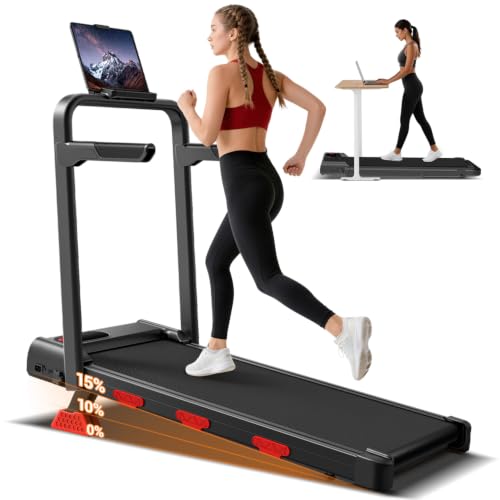
- Three manual positions: flat, 10%, and 15%
- Quiet motor with 350-pound capacity
- Slim, portable design for compact spaces
Best For: Small home gyms and walking-focused workouts
Best High-Capacity Option
UMAY Fitness 20% Folding Treadmill

- 20-level automatic incline from 2% to 20%
- 8.7 MPH speed and 400-pound capacity
- Folds nearly flat for compact storage
Best For: Incline training, HIIT, and family use
Best Budget-Style Compact Pick
Folding Walking Pad with Manual Incline
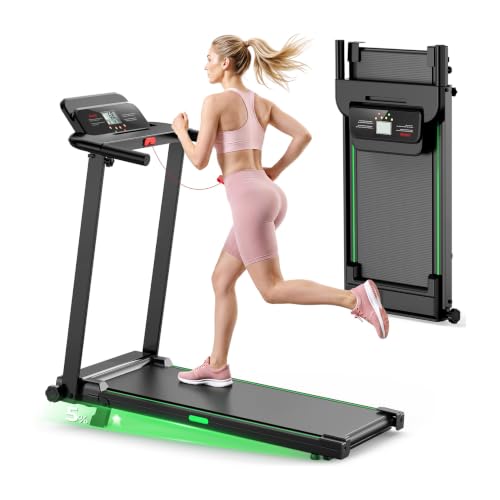
- Compact foldable design for small rooms
- 12 programs plus countdown modes
- Manual incline and 6.2 MPH maximum speed
Best For: Light walking and jogging in apartments or home offices
Best Heavy-Duty Pick – ATEEDGE 15% Auto-Incline Treadmill
If you want an incline treadmill for home gym workouts that can handle walking, jogging, and HIIT, the ATEEDGE combines a 15% auto incline with speeds up to 10 MPH. Its 350-pound capacity, wide belt, folding design, and cushioned deck make it a versatile choice for regular home training.
Best For: Users who want higher-intensity incline workouts, a wider running surface, and heavy-duty support.
Pros:
- 15 incline options with speeds from 0.5 to 10 MPH.
- 350-pound maximum user weight and a 3 HP motor.
- 18-inch-wide belt with multiple built-in and external cushions.
- Folds for more convenient storage and includes Bluetooth, speakers, and a device holder.
Cons:
- The 42.5-inch belt length may feel limited for users with a longer running stride.
- At 90 pounds, it may not be as easy to move as a lightweight walking pad.
The ATEEDGE stands out when incline range, capacity, and cushioning matter more than minimal size. It is a practical all-around option for home users who want to progress from walking to faster interval training.
Best Compact Manual-Incline Pick – 16% Incline Walking Pad
This incline treadmill for home gym use is designed for compact walking and light jogging spaces. It uses a manually adjusted incline of up to 16%, padded handrails, a foldable frame, and a low starting speed, making it approachable for beginners and convenient for apartments or home offices.
Best For: Beginners, seniors, and compact-space users who prefer supported walking and manual hill training.
Pros:
- Manual incline adjusts up to 16% without complex electronics.
- Long padded handrails provide extra balance and support.
- Folds flat and weighs 46.3 pounds for easier storage.
- Supports up to 330 pounds and displays speed, time, distance, and calories.
Cons:
- The 6.3 MPH maximum speed is better suited to walking and light jogging than fast running.
- The 35.8-by-15.2-inch walking surface is narrower and shorter than full-size treadmill decks.
- Incline adjustment is manual rather than automatic.
With a strong incline percentage in a compact format, this model makes hill-style walking accessible without requiring a dedicated workout room. Its handles and low 0.6 MPH starting speed are especially useful for controlled, supported sessions.
Best Connected Training Pick – NordicTrack T Series Treadmill
For shoppers seeking an incline treadmill for home gym training with guided workouts, the NordicTrack T Series pairs speeds up to 10 MPH with a 0–10% digital incline range. Its folding frame, KeyFlex cushioning, LCD display, and optional iFIT ecosystem support structured cardio and running sessions.
Best For: Runners and guided-workout users who want app-connected training and automatic workout adjustments.
Pros:
- 0–10 MPH speed range and 0–10% digital incline controls.
- iFIT can automatically adjust speed and incline during trainer-led workouts.
- KeyFlex cushioning is designed to reduce impact during walking or running.
- Folding frame and assisted lowering help with storage.
Cons:
- Many iFIT features require an iFIT Train Membership.
- The 300-pound capacity is lower than some heavy-duty alternatives.
- At 203 pounds, it is substantially heavier than compact walking pads.
The T Series is a better fit for users who value guided programming and connected features over portability. Its 55-inch deck and 10 MPH top speed also make it more suitable for running than most compact incline walking pads.
Best Easy-Storage Pick – WELLFIT Folding Incline Walking Pad
The WELLFIT is a space-conscious incline treadmill for home gym routines, with a compact folding design, handlebar controls, and a cushioned 36-by-16-inch belt. Its manual incline reaches 10%, while app and Bluetooth connectivity help track everyday walking and light cardio.
Best For: Daily walkers and small-space users who want simple controls, portability, and app tracking.
Pros:
- Handlebar buttons allow speed and start/stop adjustments without bending.
- Five-layer cushioned belt is designed to reduce impact on knees and ankles.
- Folds compactly and includes wheels for moving between rooms.
- Supports up to 350 pounds and works with WELLFIT, KINOMAP, and Apple Health.
Cons:
- The 6.2 MPH top speed is intended more for walking and light jogging than fast running.
- The 36-inch belt length may not suit users with long strides.
- The incline is manual and limited to 10%.
WELLFIT emphasizes convenient everyday use rather than high-speed training. Its accessible controls, compact footprint, belt-cushioning design, and generous stated capacity make it a sensible option for walking-focused home routines.
Best High-Capacity Incline Pick – 16% Foldable Home Treadmill
If you want an incline treadmill for home gym workouts that emphasizes climbing intensity without taking over your room, this CURSOR FITNESS model is a practical option. Its three-position manual incline reaches 16%, while the 0.6–7.0 MPH range covers walking, jogging, and steady running.
Best For: Home users who want a high weight capacity, steep manual incline, and compact foldable storage.
Pros:
- 16% manual incline supports hill-style training and higher-intensity leg and glute workouts.
- 400-pound maximum weight recommendation and iron frame provide a stable foundation.
- Three LED displays show speed, time, distance, and calories, with a phone, tablet, and cup holder.
- Foldable design and a quiet brushless motor suit apartments and compact home gyms.
Cons:
- The incline is manual, so it must be adjusted before training rather than during a workout.
- The 7.0 MPH top speed is better suited to walking, jogging, and steady running than fast-paced running.
- The running surface is 37.5 by 15 inches, which may feel narrow for some runners.
Choose this model if incline capacity and user support matter more than advanced speed or automated incline controls. Its cushioning, quiet operation, and foldable profile make it a well-rounded choice for everyday home training.
Best Speed-and-Handle Option – Compact Incline Treadmill with Handles
This compact incline treadmill for home gym use combines a handlebar design with a 0.6–10.0 MPH speed range. It is aimed at shoppers who need a small-space treadmill that can handle both walking sessions and faster running workouts.
Best For: Home, office, or apartment users who want foldable handles, higher top speed, and a 400-pound capacity.
Pros:
- 3.5HP motor and 10.0 MPH maximum speed support walking, jogging, and running.
- Foldable handles help preserve floor space when the treadmill is stored.
- Multi-layer belt and cushioning are designed to reduce knee impact by up to 40%.
- Includes 12 preset programs and year-round 24/7 support coverage.
Cons:
- The supplied notes do not specify the incline percentage, so incline range is less clear than on the other options.
- The compact design may provide less running room than a full-size treadmill.
- Its many small-space descriptions emphasize portability over a larger, roomier deck.
This is the strongest fit for shoppers who want more speed and a supportive handlebar in a compact format. Confirm the exact incline range and deck dimensions before buying if those specifications are central to your training plan.
Best Budget-Friendly Hill Trainer – 12% Compact Folding Treadmill
For shoppers seeking an incline treadmill for home gym use in a compact package, this 3.0HP model offers a 12% manual slope and a 0.6–6.2 MPH speed range. It is designed for walking, incline training, and light jogging rather than high-speed running.
Best For: Apartment dwellers and beginners who want a lightweight, foldable treadmill with simple controls and incline capability.
Pros:
- 12% manual incline adds hill-style intensity and supports muscle-focused workouts.
- Smart-memory LED display saves workout data when paused and tracks key metrics.
- Six-layer cushioning and a 38 by 15 inch belt are designed for a more comfortable stride.
- Lightweight, foldable construction and transport wheels simplify storage in small spaces.
Cons:
- The 300-pound maximum weight recommendation is lower than the other listed models.
- A 6.2 MPH top speed limits suitability for faster running.
- The incline is manual rather than electronically adjustable during a workout.
This model makes sense when storage convenience, basic workout tracking, and incline walking are the priorities. Its lower speed and weight limits make it a better match for walking and moderate cardio than demanding running programs.
Best Portable Incline Pick – LONTEK 15% Incline Walking Pad
The LONTEK is a practical incline treadmill for home gym setups where portability and easy storage matter. Its manual incline options provide flat, 10%, or 15% positioning, while the quiet brushless motor supports walking and light jogging at up to 6.2 MPH.
Best For: Apartment dwellers, home-office users, and walkers who want a compact treadmill with a high manual incline.
Pros:
- Offers flat, 10%, and 15% manual incline positions without complicated controls.
- Quiet 3.0HP brushless motor runs below 45 dB and supports up to 350 pounds.
- Low-profile design, detachable device holder, and transport-friendly construction suit small spaces.
- Cushioned belt with side impact strips helps reduce impact during walking or light jogging.
Cons:
- Manual incline requires changing the support legs by hand.
- Maximum speed is 6.2 MPH, so it is better suited to walking and light jogging than fast running.
- The 37.4-by-15-inch belt may feel narrow for users wanting a spacious running surface.
Choose the LONTEK if you value simple incline changes, quiet operation, and easy storage over automated workout controls or high-speed running.
Best High-Capacity Option – UMAY Fitness 20% Folding Treadmill
The UMAY Fitness L10 is a strong incline treadmill for home gym users who want automated intensity changes and room for both walking and running. Its 20-level motorized incline, 8.7 MPH top speed, and 400-pound capacity make it the most versatile option in this group.
Best For: Families and users seeking a higher-capacity treadmill for incline walking, HIIT, and moderate running.
Pros:
- Provides one-touch adjustment across a 2%-20% automatic incline range.
- 3.5HP brushless motor supports speeds up to 8.7 MPH and runs below 45 dB.
- 400-pound capacity and a seven-layer cushioned deck accommodate a broad range of users.
- Folds to approximately 6.5 inches high and arrives 90% pre-assembled.
Cons:
- Its full-size footprint is larger than a basic walking pad when opened.
- The belt measures 16.2 by 42.5 inches, which may be limiting for some runners.
- It has a one-year warranty, so long-term coverage is relatively limited.
The UMAY stands out when incline variety, user capacity, and running speed are priorities. Its fold-flat storage helps offset the larger workout footprint.
Best Budget-Style Compact Pick – Folding Walking Pad with Manual Incline
This compact walking pad is a straightforward incline treadmill for home gym users who need basic workout tracking and easy storage. It combines a manual incline, 12 preset programs, a 0.6-6.2 MPH speed range, and a foldable frame suited to apartments or home offices.
Best For: Light walking and jogging in small rooms, apartments, and work-from-home spaces.
Pros:
- Folds to 40.5 by 18 by 4.7 inches for storage under a bed or sofa.
- Includes 12 preset programs and countdown modes for time, distance, and calories.
- Manual incline feet and a five-layer shock-absorbing belt add workout variety and cushioning.
- Transport wheels, a device holder, and safety handlebars make repositioning and use convenient.
Cons:
- Manual incline does not offer the convenience of powered incline adjustment.
- Its 220-pound user limit is lower than the other listed options.
- The 35-by-14-inch running area is relatively compact.
This model makes sense for buyers who want a small, movable treadmill for regular walking and occasional light jogging. It is less appropriate for heavier users or sustained fast running.
How We Picked the Best Incline Treadmill for Home Gym
We focused on the features that matter most in a home machine: maximum incline, speed range, motor output, weight capacity, folding or portable design, handlebar stability, and control layout. The selection includes options for walking, under-desk movement, brisk incline sessions, and more demanding home workouts.
Because advertised horsepower, capacity, and incline systems can vary by model and configuration, confirm the current specifications, warranty, dimensions, and assembly requirements before ordering. Also check whether the incline is automatic, manual, or available only at certain speeds.
Quick Comparison
| Best For | Look For | Shortlist Types |
|---|---|---|
| Walking and light cardio | Comfortable deck, simple controls, compact footprint | Walking pads and portable folding models |
| Incline-focused training | At least 12% to 16% incline and stable handrails | Automatic-incline home treadmills |
| Running workouts | Higher top speed, longer deck, stronger frame | Full-size folding treadmills |
| Shared or small spaces | Folding frame, transport wheels, manageable storage depth | Compact and under-desk designs |
Key Buying Factors for an Incline Treadmill for Home Gym
Incline Type and Range
A 12% to 16% incline is useful for challenging walking workouts, while a 20% setting offers more demanding hill simulation. Automatic incline lets you change elevation during a workout; manual incline is generally simpler but requires stopping to adjust it.
Speed, Deck Size, and Stability
Walking-focused models may top out around 6 to 10 mph, while running models need a higher maximum speed and a longer, wider belt. Taller users and runners should prioritize deck dimensions and a rigid frame over the smallest folded size. Handrails should feel secure at the intended incline and pace.
Motor, Capacity, and Noise
Consider the manufacturer’s recommended user capacity rather than choosing a model right at your body weight. A margin can reduce strain and improve durability. For apartments or shared rooms, check noise expectations, floor protection, and whether the machine can be moved easily after use.
Storage and Controls
Measure both the operating and folded dimensions, including ceiling clearance when the deck rises. Useful controls include quick speed and incline buttons, a readable display, emergency stopping features, and a remote or handlebar controls on compact models.
Who Should Buy Which Incline Treadmill for Home Gym?
Choose a compact walking pad if you mainly want light walking, under-desk movement, or easy storage. Choose a folding incline treadmill if you want regular incline cardio while preserving floor space. Choose a sturdier full-size model if you plan to run, train frequently, or need more deck room and stability. Choose a high-incline model if hill workouts are your priority, but verify that its frame, handrails, and motor suit your intended pace.