The best incline treadmill for runners makes it easier to add hills, intervals, and steady aerobic work to a home training routine. This roundup compares 10 models with different incline ranges, speeds, footprints, and handle designs.
Because compact treadmills vary widely in running performance, focus on more than the maximum incline. Motor output, usable belt space, speed control, stability, and storage features all affect whether a machine suits serious running or lighter walking and jogging.
Best 10 Incline Treadmill for Runners Picks for 2026
Best Overall

- 20-level motorized incline from 2% to 20%
- 8.7 MPH speed and 400-pound capacity
- Folds nearly flat for compact storage
Best For: Home runners who prioritize powered incline and high capacity
Best Compact Choice

- 12% incline with 12 customizable programs
- Quiet 3HP motor and 300-pound capacity
- Cushioning and compact folding design
Best For: Apartment users and casual joggers
Best Manual-Incline Value

- Manual incline adjusts up to 16%
- Padded handrails and 330-pound capacity
- Folds for under-bed or wall storage
Best For: Beginners, walkers, and light joggers
Best High-Capacity Manual Incline
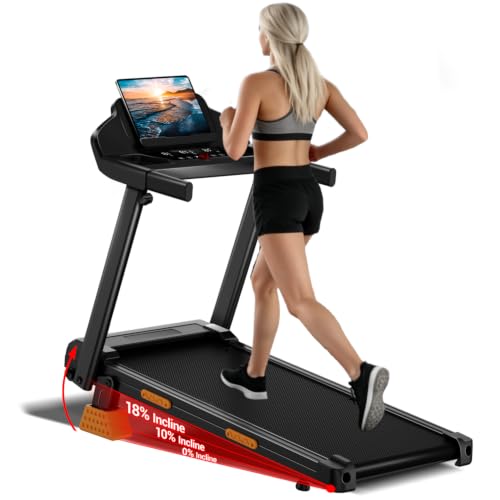
- Manual incline settings up to 18%
- 400-pound capacity with shock-absorbing belt
- 7.5 MPH speed and compact folding frame
Best For: Steady runners and users prioritizing high capacity
Best Adjustable Incline Walking Pad

- Manual 10% incline for hill workouts
- Quiet brushless motor below 40dB
- 350-pound capacity with wide belt
Best For: Home users seeking quiet incline walking and moderate-speed jogging
Best Compact Folding Incline Treadmill

- Steep 12% manual incline
- Foldable design stores under a bed or in a closet
- 3.0HP motor with 300-pound capacity
Best For: Small-space users focused on walking, jogging, and hill workouts
Best Faster Incline Walking Pad

- 7.5 MPH maximum speed
- Fixed 5% incline for added intensity
- App, remote, console, and AI coaching controls
Best For: Users wanting compact uphill jogging with handrail stability
Best Space-Saving Incline
Vitalwalk Full-Deck Walking Pad

- 15% six-level automatic incline
- 350-pound capacity with shock cushioning
- Stores upright in a compact footprint
Best For: Compact-home incline walking, recovery, and under-desk cardio
Best Budget Hill Walking
LONTEK 15% Incline Walking Pad
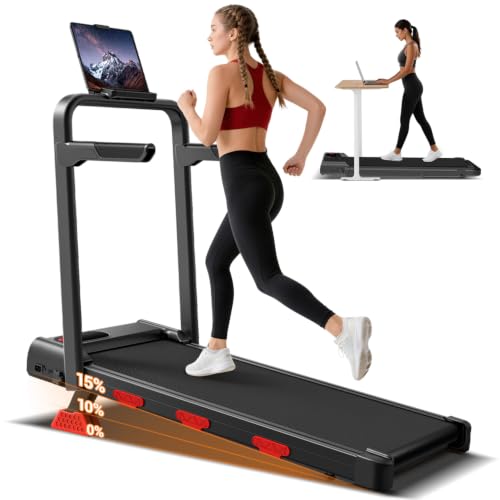
- Manual flat, 10%, and 15% incline settings
- 6.2 MPH maximum speed for light jogging
- 350-pound capacity with cushioned belt
Best For: Simple hill walking and light jogging in small spaces
Best Compact Running Range
HevGlrm 10 MPH Folding Treadmill

- 10 MPH maximum speed for faster workouts
- 400-pound capacity with 3.5 HP motor
- Foldable handles and 12 preset programs
Best For: Compact home walking, jogging, and faster running sessions
Best Overall – UMAY 20% Incline Treadmill
If you want an incline treadmill for runners that can also handle walking and HIIT, the UMAY L10 offers the broadest incline range here. Its one-touch 2%-20% motorized incline, 8.7 MPH top speed, and 400-pound capacity make it a versatile choice for home training.
Best For: Runners and households wanting substantial incline adjustment, high weight capacity, and compact storage.
Pros:
- 20-level auto incline adjusts from 2% to 20% with one touch.
- 3.5HP brushless motor supports speeds up to 8.7 MPH and operates below 45 dB.
- 400-pound capacity, seven-layer cushioned deck, and three-level adjustable handle height.
- Folds to about 6.5 inches high and arrives 90% pre-assembled.
Cons:
- The 16.2-by-42.5-inch belt may feel short for runners with a long stride.
- The 8.7 MPH maximum is better suited to steady running than faster-paced training.
The UMAY stands out for its powered incline and weight capacity, while its compact folding profile helps offset its full-size workout footprint. Check the belt dimensions if running stride length is a priority.
Best Compact Choice – Abonow 12% Incline Treadmill
The Abonow is a compact incline treadmill for runners who want basic hill training in a smaller home setup. It combines a 12% incline, 12 workout programs, and a quiet 3HP brushless motor, though its 6.25 MPH top speed is aimed more at walking, jogging, and moderate running.
Best For: Apartment users and casual runners seeking a compact, cushioned treadmill with preset programs.
Pros:
- 12% incline and 12 programs provide flexible home workouts.
- 3HP brushless drive operates below 45 dB and supports up to 300 pounds.
- Six shock absorbers and dual-layer cushioning help reduce impact.
- Touchscreen displays workout metrics and the treadmill is 90% pre-assembled.
Cons:
- The 6.25 MPH maximum speed limits faster running workouts.
- The 37-by-15.2-inch belt is relatively compact for longer running strides.
Choose the Abonow when space, quiet operation, and workout variety matter more than high-speed running. Its shorter belt and lower top speed make it a better match for jogging and incline conditioning than serious speed sessions.
Best Manual-Incline Value – 16% Incline Walking Pad
This 16% model is an incline treadmill for runners who prefer simple, manual hill adjustment and a compact footprint. Its 0.6-6.3 MPH range supports walking, jogging, and light running, while the padded handrails and 330-pound capacity add stability for mixed-fitness households.
Best For: Beginners, walkers, and light joggers who want manual incline training, handrail support, and easy storage.
Pros:
- Manual incline reaches 16% without relying on powered incline controls.
- Long padded side handrails provide added support for beginners and recovery workouts.
- Seven-layer cushioning and a slip-resistant belt are designed to soften impact.
- Foldable 46.3-pound design stores against a wall or under a bed.
Cons:
- The 6.3 MPH maximum speed is not intended for fast running.
- The 35.8-by-15.2-inch walking surface is narrower and shorter than many running decks.
- Manual incline requires stopping to change the grade.
The X5F is practical for low-impact incline walking and occasional jogging, especially where storage space is limited. Runners seeking sustained speed work should consider a longer deck and higher maximum speed.
Best High-Capacity Manual Incline – LONTEK 18% Incline Treadmill
The LONTEK offers a strong manual-incline option for an incline treadmill for runners who need a high weight rating and simple controls. Its 0%, 8%, and 18% settings, 7.5 MPH maximum speed, and shock-absorbing belt suit walking, jogging, and steady running.
Best For: Users who want high capacity, manual hill settings, and a lightweight folding treadmill for small spaces.
Pros:
- Three manual incline positions reach up to 18% for hill-focused workouts.
- 400-pound capacity and a heavy-duty iron frame provide substantial support.
- Three LED screens, side rails, phone holder, and cup holder support convenient workouts.
- Seven-layer belt with four shock absorbers helps reduce joint impact.
Cons:
- The 18% incline must be changed manually rather than electronically.
- The 7.5 MPH top speed is suitable for steady running but not faster intervals.
- The 37.5-by-15-inch running surface may feel narrow for some runners.
With its 400-pound capacity and 18% manual incline, the LONTEK is a compelling choice for controlled hill walking and steady runs. Its compact, lightweight frame is convenient, but the modest belt width and speed favor general conditioning over performance training.
Best Adjustable Incline Walking Pad – Quiet 10% Incline Model
For shoppers seeking an incline treadmill for runners, this KALWOL walking pad offers a compact way to add hill work at home. Its manual 10% incline, 6.2 MPH top speed, wide belt, and shock-absorbing construction make it suitable for walking, jogging, and moderate running workouts.
Best For: Home users who want adjustable incline training, quiet operation, and a high 350-pound weight capacity.
Pros:
- Manual incline adjusts to 10% for more demanding hill workouts.
- 2.75HP brushless motor operates below 40dB.
- Wide running belt supports users up to 350 pounds.
- Includes 12 preset programs, countdown modes, remote control, and transport wheels.
Cons:
- Its 6.2 MPH maximum speed may not suit fast-paced runners.
- The incline is manual rather than motorized.
- Compact walking-pad construction may provide less running room than a full-size treadmill.
This is a practical choice when incline versatility, quiet use, and storage convenience matter more than high-speed running. The 10% grade adds useful hill intensity, while the spacious belt and cushioning support everyday home cardio.
Best Compact Folding Incline Treadmill – 12% Manual Incline
This compact treadmill is a strong option for shoppers comparing an incline treadmill for runners in a small home or apartment. It combines a 12% manual incline with a 6.2 MPH top speed, foldable storage, and cushioning designed to make walking and light running more comfortable.
Best For: Apartment dwellers and beginners who want steep manual incline training in a lightweight, foldable treadmill.
Pros:
- 12% manual incline supports challenging hill simulations.
- 3.0HP brushless motor runs below 50dB and supports up to 300 pounds.
- Folds to approximately 5.5 inches high for compact storage.
- Smart memory saves workout data when the treadmill is paused.
Cons:
- Its 6.2 MPH maximum speed is limited for advanced runners.
- The 38-by-15-inch belt is relatively narrow for running.
- Incline adjustment is manual.
The standout feature is the 12% incline, which provides more hill intensity than many compact models. It is best viewed as a space-saving incline trainer for walking, jogging, and introductory running rather than a high-speed runner’s treadmill.
Best Faster Incline Walking Pad – 7.5 MPH with Handrails
Among options marketed as an incline treadmill for runners, the Superun stands out with a 7.5 MPH top speed and integrated handrails. Its fixed 5% incline adds steady uphill resistance, while app, remote, and console controls support flexible home training.
Best For: Users who want a compact incline treadmill with handrail support, a higher top speed, and app-based workout controls.
Pros:
- 7.5 MPH maximum speed accommodates walking, jogging, and faster running.
- Fixed 5% incline increases calorie burn and muscle engagement.
- 3.0HP motor supports users up to 300 pounds.
- Includes dual safety handrails, emergency safety key, app control, and AI coaching features.
Cons:
- The 5% incline is fixed and cannot be adjusted.
- The compact 19-inch width may feel narrow for some runners.
- App-based features may require using compatible connected devices or services.
This model is the most runner-oriented of the three because of its 7.5 MPH ceiling and handrails. The fixed incline limits workout variety, but it offers a straightforward uphill training setup with quiet operation and compact storage.
Best Space-Saving Incline – Vitalwalk Full-Deck Walking Pad
If you need an incline treadmill for runners but have limited floor space, the Vitalwalk emphasizes portability without omitting incline training. Its 15% auto incline, 4 MPH top speed, full-deck belt, and upright storage make it better suited to brisk walking, hill intervals, and lighter cardio than sustained running.
Best For: Apartment dwellers, under-desk users, active seniors, and walkers who want steep incline sessions in a compact machine.
Pros:
- Six-level automatic incline reaches 15% for hill-style workouts.
- Full-deck 40-by-16-inch belt provides more usable stepping space.
- Supports up to 350 pounds and includes shock cushioning with a 3.0 HP brushless motor.
- Folds or stores upright in a small footprint and supports FitShow, Zwift, Apple Health, and Strava.
Cons:
- Its 4 MPH maximum speed is limiting for runners seeking faster training.
- The 40-inch deck may feel short for a full running stride.
This is an appealing incline-focused walking pad for compact homes, especially when incline intensity matters more than running speed. Runners should consider it primarily for warmups, recovery work, and hill walking rather than high-speed workouts.
Best Budget Hill Walking – LONTEK 15% Incline Walking Pad
The LONTEK is a practical incline treadmill for runners who want a compact machine for walking, light jogging, and interval pacing. Its incline is manually configured at flat, 10%, or 15%, while the 6.2 MPH maximum speed gives it more running potential than many walking pads.
Best For: Home users who want simple hill settings, light jogging capability, and a portable treadmill for small rooms.
Pros:
- Offers flat, 10%, and 15% incline options without complicated electronic settings.
- 6.2 MPH speed range supports walking, light jogging, and intervals.
- 350-pound capacity and quiet 3.0 HP brushless motor suit daily home use.
- Multi-layer cushioning and side impact strips help make the belt more comfortable.
Cons:
- Manual incline changes are less convenient during changing-pace workouts.
- The 37.4-by-15-inch belt is relatively compact for running.
- It has a one-year warranty, shorter than some competing coverage options.
Choose this model if straightforward incline choices and easy storage are priorities. It can handle light jogging, but runners planning longer or faster sessions may prefer a treadmill with a longer deck and powered incline adjustment.
Best Compact Running Range – HevGlrm 10 MPH Folding Treadmill
For shoppers comparing an incline treadmill for runners, the HevGlrm stands out for its 10 MPH top speed and 400-pound stated capacity. Its foldable handlebar, 3.5 HP motor, cushioning, and preset programs make it the most running-oriented option here, although the supplied details do not specify the exact incline percentage.
Best For: Home users who need a compact treadmill for walking, jogging, and faster running workouts with added handle support.
Pros:
- 10 MPH maximum speed provides the broadest pace range among these products.
- 3.5 HP motor and 400-pound capacity support demanding home workouts.
- Foldable handles improve storage flexibility in smaller rooms.
- Twelve preset programs and a cushioned, anti-slip belt add workout structure and comfort.
Cons:
- The supplied notes do not state the specific incline percentage or incline adjustment method.
- Compact dimensions may still provide less running room than a full-size treadmill.
This is the strongest choice of the three for users who prioritize running speed and greater weight capacity. Before buying, verify the incline specifications and deck dimensions if hill training or a long stride is central to your routine.
How We Picked the Best Incline Treadmill for Runners
We selected models across several home-training categories, including foldable treadmills, compact walking pads, and machines with handles for added stability. The comparison emphasizes incline capability, stated speed range, motor specifications, deck and frame design, portability, weight capacity, and space-saving features.
Specifications can vary by seller or model revision, so verify the current listing before purchase. In particular, check whether the advertised incline is automatic or manual and whether the top speed is suitable for your running pace.
Quick Comparison
| Best For | What to Prioritize | Models to Consider |
|---|---|---|
| Hill-focused training | Higher incline range and stable frame | UMAY 20%, LONTEK 18%, 16% 3-in-1 model |
| Small spaces | Compact dimensions, folding or rolling storage | Abonow, Vitalwalk, LONTEK 15% |
| Desk-side walking | Low profile, quiet operation, remote controls | Walking Pad 6.2 MPH, Superun |
| Faster home workouts | Higher speed ceiling, handrail, and rigid deck | 3.5HP portable model, 3.0HP foldable model |
Key Buying Factors for an Incline Treadmill for Runners
Incline Type and Range
Automatic incline lets you change elevation during intervals without interrupting your stride. Manual incline can cost less but requires stopping to adjust the deck. A 12% to 20% range is useful for hill simulations, though the highest setting may be better for walking than fast running.
Speed, Motor, and Belt Space
Match the maximum speed to your training. A walking pad may be excellent for brisk walking and easy jogging but unsuitable for sprint work. Runners should also look for a sufficiently long and wide belt, responsive speed controls, and a frame that does not flex during faster efforts. Motor horsepower is only one indicator; overall construction and continuous-duty performance matter too.
Stability, Safety, and Noise
A substantial handrail, emergency safety key, cushioned deck, and non-slip running surface can improve confidence during incline sessions. If the treadmill will be used near living areas or a desk, review noise claims and consider vibration transmission through the floor.
Storage and User Fit
Measure the treadmill when unfolded, not just its stored dimensions. Confirm the maximum user weight, ceiling clearance for elevated running, and whether wheels make repositioning practical. Compact designs are convenient, but smaller decks may feel restrictive for taller runners or longer strides.
Who Should Buy Which Incline Treadmill for Runners?
- Choose a high-incline model if your priority is hill walking, steep aerobic sessions, or incline intervals and you have room for a sturdier frame.
- Choose a foldable treadmill if you want a general-purpose home machine with a more conventional running setup and easier storage.
- Choose a walking pad if portability, low-profile storage, and desk-side walking matter more than top-speed running.
- Choose a model with handles if you want extra balance support during steep inclines or prefer a more enclosed training position.
For most runners, the best choice is the model that combines adequate belt length, stable construction, usable speed, and an incline system you will actually use. Prioritize those fundamentals over an impressive maximum incline alone.