The best incline treadmill can make home workouts more challenging without requiring more floor space or outdoor hills. Built-in heart rate monitoring adds useful feedback, helping you adjust pace and incline to match your training goals.
Our 2026 roundup compares 10 models across incline range, belt dimensions, motor performance, folding design, user capacity, display features, and heart rate tracking. Use the guide below to narrow the list before choosing a treadmill for walking, intervals, or regular running.
Best 10 Incline Treadmills with Heart Rate Monitors Picks for 2026
Best Overall
MERACH 18% Auto-Incline Treadmill

- 18% auto incline and heart-rate tracking
- 350-pound capacity with shock absorption
- Folds hydraulically in about 30 seconds
Best For: High-incline home workouts and strong weight capacity
Best for Guided Training
NordicTrack T6.5S iFIT Treadmill

- 10 mph speed and 0–10% digital incline
- ActivePulse works with Bluetooth HR monitors
- iFIT can automate workout adjustments
Best For: Trainer-led workouts and connected heart-rate training
Best Touchscreen Value
JAGJOG 15% Auto-Incline Treadmill

- 15% incline with 12 HIIT programs
- Handrail pulse sensors and large LED touchscreen
- No assembly and compact folded dimensions
Best For: Compact home cardio with convenient pulse tracking
Best Compact Smart Option

- 10 mph speed and 0–10% incline
- Bluetooth heart-rate training through ActivePulse
- 130-pound compact frame with cushioned deck
Best For: Space-conscious users wanting iFIT-connected cardio
Best Value Incline Pick

- Handrail pulse sensors track heart rate
- 15 programs and 18-inch LED display
- Up to 9.0 MPH with 300-pound capacity
Best For: Home users prioritizing speed and preset workouts
Best Compact Auto-Incline Pick

- Automatic incline adjusts up to 15%
- Heart-rate sensors and Bluetooth speakers
- Foldable and 90% pre-assembled
Best For: Small-space walking and moderate jogging
Best Heavy-Duty Incline Pick
UMAY 20% Auto-Incline Treadmill

- Automatic incline reaches 20%
- Pulse sensors and touchscreen track heart rate
- 400-pound capacity with quiet 4.0 HP motor
Best For: Steep incline training and higher-capacity home use
Practical Compact Pick
3.0 HP Folding Incline Treadmill
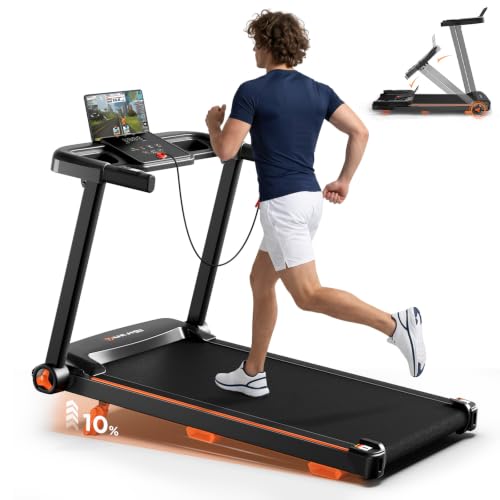
- Manual 10% incline for hill-focused cardio
- 0.8–8.5 MPH range with a 3 HP brushless motor
- Foldable frame, Bluetooth, pulse sensors, and 300-lb capacity
Best For: Walkers and beginners needing compact everyday cardio equipment
Quiet Auto-Incline Pick
YUEJIQI 3220S 15% Auto-Incline Treadmill

- Automatic 0%–15% incline with one-touch controls
- Quiet 3.5 HP brushless motor rated at 45 dB
- Pulse sensors, Bluetooth apps, folding storage, and 300-lb capacity
Best For: Users wanting quiet, connected workouts with automatic incline changes
High-Capacity Climbing Pick
UMAY Fitness 20% Incline Treadmill

- Automatic 2%–20% incline for steep hill training
- 3.5 HP brushless motor, 8.7 MPH speed, and under-45 dB operation
- 400-lb capacity with flat folding storage to 6.5 inches
Best For: Users prioritizing steep incline workouts and higher weight capacity
Best Overall – MERACH 18% Auto-Incline Treadmill
For shoppers comparing incline treadmills with heart rate monitors, the MERACH combines a steep 18% auto incline with real-time heart-rate display, a sturdy 350-pound capacity, and app connectivity. Its 8.7-mph top speed suits walking, jogging, and running, while hydraulic folding helps conserve floor space.
Best For: Home users who want high incline training, a strong weight capacity, and visible workout metrics.
Pros:
- 18% auto incline supports challenging hill-style workouts.
- LED display tracks speed, time, distance, calories, incline, and heart rate.
- 3.5 HP brushless motor, shock absorption, and 350-pound capacity provide a stable setup.
- Hydraulic folding system stores the treadmill in about 30 seconds.
Cons:
- Its 8.7-mph maximum speed is lower than some running-focused models.
- The 47-inch belt may feel less spacious for longer strides than larger decks.
The MERACH is a compelling all-around choice when incline range and built-in heart-rate visibility matter more than maximum running speed. Its quiet motor, cushioning, and foldable design also make it practical for shared living spaces.
Best for Guided Training – NordicTrack T6.5S iFIT Treadmill
The NordicTrack T6.5S is a good fit among incline treadmills with heart rate monitors for users who want guided workouts. It reaches 10 mph, offers 0–10% digital incline, and works with a compatible Bluetooth heart-rate monitor for ActivePulse zone-based adjustments through iFIT.
Best For: Exercisers who want trainer-led workouts and automated speed and incline changes.
Pros:
- iFIT can automatically adjust speed and incline to match workouts.
- ActivePulse uses a Bluetooth heart-rate monitor to support heart-rate-zone training.
- 10-mph speed, 10% incline, and a 55-by-20-inch deck support varied cardio sessions.
- KeyFlex cushioning and assisted folding improve comfort and storage convenience.
Cons:
- The heart-rate monitor is sold separately.
- Many smart training features require an iFIT Train Membership.
- The treadmill weighs 203 pounds, which may make moving it more difficult.
This model stands out for connected training rather than a built-in heart-rate sensor. It is most appealing if you already use, or plan to subscribe to, iFIT and want the treadmill to respond to your workout data.
Best Touchscreen Value – JAGJOG 15% Auto-Incline Treadmill
The JAGJOG is a practical option for shoppers seeking incline treadmills with heart rate monitors and a large control display. Its 15% auto incline, handrail pulse sensors, 12 HIIT programs, and 14.96-inch LED touchscreen support varied home workouts without requiring assembly.
Best For: Home users who prioritize simple pulse tracking, HIIT programs, and compact storage.
Pros:
- 15% auto incline and 12 preset HIIT programs add workout variety.
- Handrail pulse sensors provide convenient heart-rate readings.
- 3.5 HP brushless motor reaches 8.8 mph while operating below 48 dB.
- Folds to 54 by 28.3 by 8.5 inches and arrives with no assembly required.
Cons:
- The 8.8-mph top speed is better suited to general cardio than fast running.
- The supplied notes do not specify the maximum user weight.
- App features depend on the FitShow connection.
JAGJOG offers a user-friendly mix of incline, pulse monitoring, and preset programming. Its compact folded profile and no-assembly setup are especially useful for apartments or rooms where equipment must be stored after use.
Best Compact Smart Option – NordicTrack T Series T5
The NordicTrack T5 is a compact choice for shoppers comparing incline treadmills with heart rate monitors. It provides 0–10 mph speed, 0–10% incline, a cushioned deck, and Bluetooth connectivity for iFIT features and compatible heart-rate training, while its 130-pound frame is easier to reposition than heavier models.
Best For: Walkers and runners with limited space who want connected workouts and a 300-pound capacity.
Pros:
- 10-mph speed and 10% incline support walking, jogging, and running.
- ActivePulse can use a Bluetooth heart-rate monitor for automated training adjustments.
- KeyFlex cushioning is designed to reduce joint impact.
- Compact design and a 130-pound weight simplify home placement.
Cons:
- The heart-rate monitor is sold separately.
- iFIT-dependent features require an iFIT Train Membership.
- The 18-inch deck is narrower than the T6.5S model listed above.
The T5 makes sense when space and connected guidance are priorities. It offers the essential incline and speed range for home cardio, but buyers should budget for a compatible heart-rate monitor if they want ActivePulse training.
Best Value Incline Pick – THERUN 6% Foldable Treadmill
For shoppers comparing incline treadmills with heart rate monitors, the THERUN TR07 combines handrail pulse sensors, a 0–6% manual incline range, and speeds up to 9.0 MPH. Its 18-inch LED display tracks key workout metrics, while the foldable design suits home fitness spaces.
Best For: Home users who want preset programs, a higher top speed, and a compact treadmill with basic heart-rate tracking.
Pros:
- Handrail pulse sensors provide real-time heart-rate readings.
- Offers 15 preset programs and an 18-inch LED display.
- Quiet 3.0 HP motor reaches up to 9.0 MPH and supports up to 300 pounds.
- Foldable frame and shock-absorbing, non-slip running surface support convenient home use.
Cons:
- The incline is manual rather than automatic.
- The incline range is limited to 6%.
- The running area is narrower than some larger treadmill decks.
The THERUN is a practical choice when speed and preset training variety matter more than automated incline adjustment. Its pulse sensors add useful workout feedback, although users seeking steep climbs or one-touch incline changes may prefer another model.
Best Compact Auto-Incline Pick – LIJIUJIA 15% Home Treadmill
The LIJIUJIA 8066 is one of the more compact incline treadmills with heart rate monitors, pairing handrail heart-rate sensors with a one-click 0–15% auto incline. Its 6.2 MPH maximum speed is suited to walking and moderate jogging, while Bluetooth speakers and a foldable design add home-use convenience.
Best For: Small apartments, offices, and users who want automatic incline adjustment for walking or moderate jogging.
Pros:
- One-click automatic incline adjusts from 0% to 15%.
- Heart-rate sensors and LED display track workout data in real time.
- Wide 41-by-16.1-inch belt uses a seven-layer shock-absorbing structure.
- Arrives 90% pre-assembled and folds for storage.
Cons:
- The 6.2 MPH top speed is less suitable for fast running.
- The listed deck length is 40 inches, which may feel short for longer strides.
- It has fewer preset programs than some competing models, with 12 listed.
Choose the LIJIUJIA if automated hill training and easy storage are more important than a running-focused top speed. It offers a useful combination of heart-rate tracking, cushioning, and compact setup for everyday home workouts.
Best Heavy-Duty Incline Pick – UMAY 20% Auto-Incline Treadmill
For shoppers seeking incline treadmills with heart rate monitors and a more demanding climb range, the UMAY U70 offers 2–20% automatic incline, touchscreen workout tracking, and handrail pulse sensors. Its 4.0 HP motor supports speeds up to 8.0 MPH, while the frame is rated for up to 400 pounds.
Best For: Users who want steep automatic incline training, a high weight capacity, and a cushioned running deck.
Pros:
- Automatic incline reaches 20% across 20 incline levels.
- Touchscreen and handrail controls monitor heart rate, speed, distance, time, and calories.
- Quiet motor operates below 45 dB and supports up to 400 pounds.
- Wide suspended deck includes seven-layer shock absorption and a foldable hydraulic frame.
Cons:
- The 8.0 MPH maximum speed is below the THERUN’s listed top speed.
- The product details do not specify the number of preset workout programs.
- At 44.1 inches, the deck may not suit users who prefer a longer running surface.
The UMAY stands out for steep incline work and heavier-duty support rather than maximum running speed. Its heart-rate monitoring, quiet operation, touchscreen, and shock absorption make it a strong fit for varied home training sessions.
Practical Compact Pick – 3.0 HP Folding Incline Treadmill
If you want incline treadmills with heart rate monitors for everyday walking, jogging, and moderate running, this foldable model offers a practical home-gym setup. Its manual 10% incline adds hill-focused effort, while the 0.8–8.5 MPH range accommodates gradual training at home.
Best For: Walkers, beginners, and busy adults who need a foldable treadmill with hand-pulse monitoring and a compact footprint.
Pros:
- Manual incline reaches 10% for more challenging walks.
- 3 HP brushless motor supports walking, jogging, and running up to 8.5 MPH.
- Foldable design, Bluetooth, 12 programs, and a 300-pound capacity add everyday versatility.
- Cushioned deck includes six silicone pads and six shock absorbers.
Cons:
- The incline is manual rather than automatically adjustable.
- The 42 x 16-inch belt may feel compact for users who prefer a longer running surface.
This is a sensible choice when storage space and routine monitoring matter more than advanced incline automation. The handrail pulse sensors provide a convenient way to check heart rate during workouts.
Quiet Auto-Incline Pick – YUEJIQI 3220S 15% Auto-Incline Treadmill
Among incline treadmills with heart rate monitors, the YUEJIQI 3220S stands out for combining one-touch folding with automatic incline control. Its 0%–15% incline, 8.5 MPH top speed, and integrated pulse sensors suit varied home workouts without requiring a large permanent setup.
Best For: Home users who want quieter operation, automatic incline changes, app connectivity, and real-time pulse readings.
Pros:
- Automatic incline adjusts from 0% to 15% through dedicated controls.
- 3.5 HP brushless motor is rated at 45 dB and supports speeds up to 8.5 MPH.
- One-touch folding and transport wheels simplify storage in compact spaces.
- Wide 42 x 16-inch belt, 12 programs, Bluetooth, and a 300-pound capacity support varied routines.
Cons:
- The running deck is still only 42 inches long, which may feel short for longer-stride runners.
- The treadmill weighs 68 pounds, so moving it may require more effort than lighter compact models.
The 3220S is a balanced option for households that want automatic hill adjustments and connected training in a relatively quiet machine. Its handrail sensors make pulse checks easy while exercising.
High-Capacity Climbing Pick – UMAY Fitness 20% Incline Treadmill
For shoppers comparing incline treadmills with heart rate monitors for steeper training and higher user capacity, the UMAY Fitness L10 emphasizes incline range and support. Its 2%–20% automatic incline, 8.7 MPH maximum speed, and 400-pound capacity make it suited to walking, HIIT, and running sessions at home.
Best For: Users prioritizing a steep incline, high weight capacity, compact flat storage, and a cushioned home treadmill deck.
Pros:
- 20-level automatic incline ranges from 2% to 20% for challenging hill workouts.
- 3.5 HP brushless motor operates below 45 dB and reaches 8.7 MPH.
- 400-pound capacity and a seven-layer cushioned deck provide substantial support.
- Folds to 6.5 inches high and includes a height-adjustable handle design.
Cons:
- The supplied details do not list a heart-rate monitor or pulse sensors, unlike the other models in this roundup.
- The 16.2 x 42.5-inch belt remains relatively compact for running.
- The supplied notes do not mention Bluetooth or app connectivity.
The L10 is the strongest fit here for incline intensity and user capacity, but it is less clearly aligned with heart-rate-focused buying criteria because the supplied specifications do not confirm heart-rate monitoring. Verify that feature before purchasing if it is essential.
How We Picked the Best Incline Treadmills with Heart Rate Monitors
We focused on treadmills that combine meaningful elevation with some form of heart rate monitoring, such as built-in hand-grip sensors or compatible connected tracking. We also considered the practical details that affect everyday use: maximum speed, motor output, running-belt size, weight capacity, folding design, display readability, noise, and adjustment controls.
Because specifications can vary by model and listing, confirm the exact version before buying. In particular, check whether the stated incline is automatic or manual, whether heart rate data appears on the console, and whether any app or subscription is required for advanced features.
Quick Comparison
| Feature | What to compare | Why it matters |
|---|---|---|
| Incline | 10% to 25%; manual or automatic | Determines hill-training range and workout convenience |
| Speed | Walking-focused to approximately 8.5–10 MPH | Indicates whether the treadmill suits jogging or running |
| Belt | Width, length, and cushioning | Affects stability, stride comfort, and usable space |
| Heart rate | Handle sensors, wireless compatibility, or both | Helps monitor workout intensity |
| Capacity | Listed user-weight limit | Provides an important safety and durability margin |
Key Buying Factors for Incline Treadmills with Heart Rate Monitors
Incline Control and Workout Range
Automatic incline is the more convenient option for interval workouts and guided programs, while manual incline systems can cost less and have fewer components to maintain. A 15% incline is sufficient for demanding hill sessions; 20% to 25% provides more room for advanced training, provided the motor and frame feel stable at higher elevations.
Heart Rate Accuracy and Compatibility
Handlebar sensors are useful for quick spot checks but may be less consistent when your hands are moving. If heart-rate-based training is central to your routine, look for wireless chest-strap or wearable compatibility and verify the supported standards. Treat treadmill readings as workout guidance rather than medical measurements.
Motor, Belt, and Space Requirements
Choose a belt long and wide enough for your stride, especially if you plan to run. A stronger motor, sturdy frame, and higher capacity generally make incline use smoother. Measure both the operating footprint and the folded dimensions, and leave clearance around the machine for safe access and ventilation.
Who Should Buy Which Incline Treadmills with Heart Rate Monitors?
For walking and compact home gyms: Choose a folding model with a moderate incline, simple controls, and reliable hand-grip monitoring.
For hill intervals and challenging workouts: Prioritize automatic incline, a stable frame, a higher maximum elevation, and quick speed controls.
For regular runners: Look for the longest belt, the widest running surface, suitable cushioning, a higher speed ceiling, and a motor designed for sustained use.
For connected training: Select a treadmill with a clear console and confirmed app, wearable, or wireless heart-rate compatibility. The right choice balances those features with available space, budget, and the workouts you will actually perform.