The right lifting grips can help reduce grip fatigue and let you focus on the muscles you intend to train during deadlifts, rows, pull-ups, and shrugs.
We compared popular straps, hook-style supports, rubber grips, and leather designs to help you find a comfortable, secure option for your training style and budget.
Best 10 Lifting Grips Picks for 2026
Premium All-in-One Grip

- No-slip material for deadlifts, rows, and pull-ups
- Built-in arch support and extended palm coverage
- Quick-release design with four precision sizes
Best For: Serious lifters wanting premium, versatile lifting grips
Leather Palm Protection
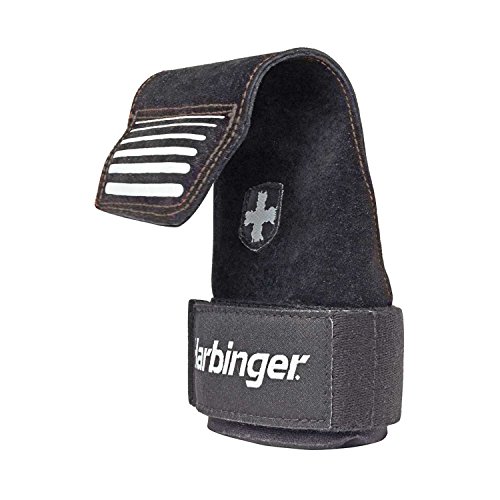
- Fingerless design maintains full range of motion
- Durahide leather helps reduce calluses and blisters
- BioForm bar pad and padded wrist support
Best For: Weightlifters wanting comfortable leather hand protection
Heavy-Duty Hook Support

- Hooks rated up to 250 pounds each
- Neoprene-padded adjustable wrist straps
- Designed for deadlifts, shrugs, rows, and pull-ups
Best For: Heavy pulling workouts limited by grip fatigue
Adjustable Leather Strap
Double-Layer Leather Wrist Straps

- Double-layer leather supports heavy pulling exercises
- Padded wrist area and adjustable hook-and-loop closure
- Fits 6.3- to 8-inch wrists according to supplied details
Best For: Lifters wanting padded, traditional leather lifting straps
Best Silicone Grip Pads

- Textured silicone helps improve traction
- Fingerless, ambidextrous palm coverage
- Includes a portable storage case
Best For: Compact palm protection for mixed strength workouts
Best Integrated Wrist Support

- Adjustable neoprene wrist support
- Rubber palm grip with padding
- Fits 5.5- to 8.75-inch wrists
Best For: Heavy pulling movements and supported deadlifting
Best Fast-Adjusting Straps

- Anti-slip rubber grip for gym exercises
- Padded wrists with left/right markings
- Fast hook-and-release system
Best For: Quickly adjustable straps for deadlifts and rows
Heavy-Duty Pick
Gymreapers Weight Lifting Grips

- Reinforced rubber grip and heavy-duty stitching
- Dense neoprene wrist padding
- Adjustable fit with lifetime warranty
Best For: Heavy pulling workouts and powerlifting
Comfort-Focused Pick
Frelaxy Leather Lifting Wrist Straps
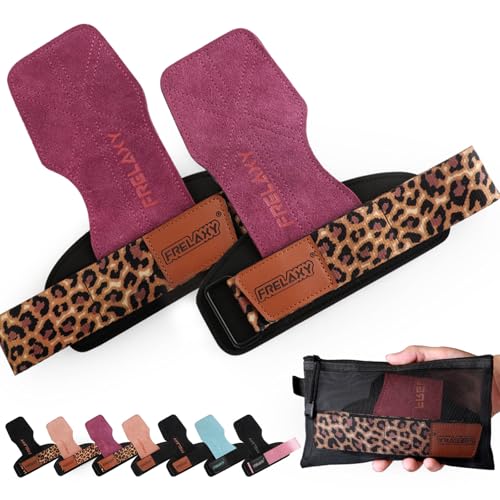
- Double-layer soft cowhide construction
- Widened neoprene wrist padding
- Includes storage pouch and adjustable closure
Best For: Comfortable support across varied wrist sizes
Premium All-in-One Grip – Versa Gripps PRO
For lifters who want a versatile alternative to traditional lifting straps and gloves, the Versa Gripps PRO combines a no-slip gripping surface with built-in wrist and arch support. Its quick-release design is useful for deadlifts, rows, and pull-ups where secure bar contact matters.
Best For: Serious lifters seeking premium lifting grips with quick release and added wrist support.
Pros:
- Exclusive no-slip material is designed for strong bar control.
- Built-in arch support helps distribute pressure away from the carpal tunnel and median nerve.
- Extended grip helps protect palms from calluses while maximizing bar contact.
- Quick-release design lets you drop the bar instantly.
Cons:
- Requires careful wrist measurement to choose among four sizes.
- Premium all-in-one design may be more than casual lifters need.
Versa Gripps PRO stands out as a feature-rich option for frequent pulling workouts. Check the wrist sizing carefully, especially since this model is listed in the Regular/Large range of 7 1/8 to 8 inches.
Leather Palm Protection – Harbinger Lifting Grips
The Harbinger Lifting Grips are a practical choice for protecting your hands without restricting finger movement. Their leather construction, padded wrist area, and bar-forming BioForm pad make them suitable lifting grips for users focused on comfort and grip coverage.
Best For: Weightlifters who want leather hand protection and unrestricted finger motion.
Pros:
- Un Glove design preserves full finger range of motion.
- SpiderGrip Durahide leather helps prevent calluses and blisters.
- BioForm pad forms to the bar to help transfer load and secure the grip.
- Padded Notec wrist area adds cushioning during workouts.
Cons:
- Only a Medium-Large size is specified in the supplied details.
- Leather requires hand washing for care.
This is a straightforward leather grip option for gym users who prefer a glove-like fit without full-finger coverage. Its adjustable hook-and-loop closure and ambidextrous design add everyday convenience.
Heavy-Duty Hook Support – Gymreapers Lifting Hooks
Gymreapers Lifting Hooks are designed for athletes whose hands and forearms fatigue before their back, lats, traps, or glutes. These lifting grips use metal-coated hooks and padded, adjustable wrist straps to help maintain a secure connection during heavy pulling exercises.
Best For: Heavy deadlifts, shrugs, rows, and pull-ups where grip fatigue limits training.
Pros:
- Hooks are rated for up to 250 pounds per hook.
- Metal-coated construction is designed to resist wear and bending.
- Neoprene-padded wrist straps help reduce pressure and digging.
- Adjustable fit supports a secure, locked-in feel.
Cons:
- Hooks can reduce direct hand contact with the bar compared with standard straps.
- One-size construction may not provide an ideal fit for every wrist.
- The 0.51 kg pair is heavier than minimalist lifting straps.
If your grip regularly gives out before the target muscles, these hooks provide a specialized way to offload hand and forearm demand. They are best suited to controlled pulling movements where hook engagement is appropriate.
Adjustable Leather Strap – Double-Layer Leather Wrist Straps
These double-layer leather lifting grips combine a long leather strap with padded, adjustable wrist support for heavy training. The pair is designed to help protect hands, reduce pressure on the wrists, and support exercises such as deadlifts, rows, shrugs, and pull-ups.
Best For: Lifters wanting padded leather straps with a broad adjustable wrist range.
Pros:
- Double-layer leather is designed for durability and a secure grip.
- Neoprene padding helps cushion the wrist around the metal ring.
- Adjustable hook-and-loop closure fits wrist circumferences from 6.3 to 8 inches.
- Suitable for several pulling and strength-training exercises.
Cons:
- The stated palm-circumference guidance of 8.11 inches and above may not suit smaller hands.
- Leather straps can take more setup than quick-release grip designs.
- One-size construction offers less individualized sizing.
This pair is a solid fit for lifters who prefer traditional leather straps but want extra wrist cushioning. Verify both the wrist and palm measurements before ordering to ensure the 8.07-inch leather strap works for your hand size.
Best Silicone Grip Pads – Ryptfit Gym Grips
These lifting grips are a lightweight, fingerless alternative to gloves for barbell work, pull-ups, and other strength exercises. Their flexible silicone surface uses raised suction-cup texture to improve traction, while the curved shape helps cushion the palms during training.
Best For: Lifters who want compact, ambidextrous silicone palm protection for sweaty-hand workouts.
Pros:
- Textured silicone is designed to improve grip stability, including with sweaty hands.
- Curved palm support may help reduce friction, calluses, and blisters.
- Suitable for CrossFit-style workouts, deadlifts, rows, shrugs, pull-ups, and pressing movements.
- Includes a portable cloth case and uses a fingerless design for unrestricted movement.
Cons:
- The medium, general sizing may not provide a precise fit for every adult hand.
- Hand-wash-only care requires additional maintenance.
- Provides palm coverage rather than the built-in wrist support found on some lifting gloves.
Choose these Ryptfit grips if portability and palm coverage matter more to you than wrist wrapping. They are a straightforward option for everyday pulling and pushing exercises.
Best Integrated Wrist Support – Cobra Grips PRO
These lifting grips combine rubber palm coverage with adjustable neoprene wrist wraps, creating an all-in-one alternative to separate grip pads, gloves, and power hooks. The PRO model is designed for wrist sizes from 5.5 to 8.75 inches and is aimed at demanding pulling exercises such as deadlifts.
Best For: Lifters seeking heavy-duty rubber grips with built-in adjustable wrist support.
Pros:
- Built-in wrist wrap adds support without requiring a separate wrist-wrap accessory.
- Rubber grip and palm padding are designed to reduce slipping and chafing.
- Adjustable hook-and-loop closure provides a customizable fit.
- Suitable for deadlifts and other workouts where grip assistance is useful.
Cons:
- The PRO size range may be too large for smaller wrists; the listed range starts at 5.5 inches.
- Rubber and neoprene construction may feel less minimal than simple palm pads.
- Hand-wash-only care may be less convenient for frequent use.
Cobra Grips PRO makes the most sense when wrist support is a priority alongside grip assistance. Check your wrist measurement before ordering, especially if you normally wear smaller fitness accessories.
Best Fast-Adjusting Straps – Fitgriff Elite Straps
These lifting grips are rubber wrist straps designed to make barbell and gym-machine work quicker to set up. An anti-slip bulge helps with bar contact, while left- and right-hand markings, wrist padding, and a hook-and-release system simplify use during deadlifts, rows, pull-ups, and lat pulldowns.
Best For: Lifters who want padded rubber straps with fast orientation and release.
Pros:
- Anti-slip rubber design is intended to provide a secure hold on standard barbells and gym grips.
- Left/right markings help speed up setup and reduce orientation guesswork.
- Neoprene wrist padding adds comfort during demanding sessions.
- Industrial-grade hook-and-loop fastening is designed for repeated use.
Cons:
- Fitgriff recommends choosing the smaller size when between sizes because the material stretches.
- The available sizing means buyers should consult the size chart before ordering.
- Strap-based support may require more setup than simple slip-on palm grips.
These straps are a practical choice for people who value efficient transitions between exercises. Review the size chart carefully, then use the marked hand orientation to get the intended fit and setup.
Heavy-Duty Pick – Gymreapers Weight Lifting Grips
Gymreapers Weight Lifting Grips are lifting grips designed for demanding pulling sessions. Reinforced rubber, heavy-duty stitching, adjustable straps, and dense neoprene padding help provide a secure, supported connection for deadlifts, rows, pull-ups, and other strength-training movements.
Best For: Experienced or aspiring weightlifters, powerlifters, and bodybuilders who want reinforced grip support for heavy pulling workouts.
Pros:
- Reinforced rubber grip is designed to help prevent slipping on the bar.
- Dense neoprene padding helps reduce wrist pressure.
- Adjustable design and three-tiered sizing approach support a more tailored fit.
- Includes a lifetime warranty.
Cons:
- The listed option is a medium size, so shoppers should check the sizing chart.
- The specialized design is most suited to pulling and strength-training exercises.
Choose these lifting grips if durable construction, rubber bar contact, and padded wrist support are higher priorities than a minimal strap design.
Comfort-Focused Pick – Frelaxy Leather Lifting Wrist Straps
Frelaxy lifting grips combine double-layer soft cowhide with a widened neoprene wrist pad. Their adjustable hook-and-loop closure fits wrist circumferences from 5.5 to 8 inches, making them a practical option for deadlifts, rows, lat pulldowns, and other gym movements.
Best For: Women and men seeking cushioned wrist support, leather grip material, and convenient storage for regular gym use.
Pros:
- Double-layer leather is designed to improve grip and durability.
- Widened, thickened neoprene padding helps take pressure off the wrists and hands.
- Adjustable closure accommodates wrist sizes from 5.5 to 8 inches.
- Includes a storage pouch and is available in seven colors.
Cons:
- The leather construction may require more care than synthetic materials.
- The listed color is Purple/Leopard, which may not suit every preference.
These lifting grips stand out for shoppers who want a softer leather feel, broad wrist-size coverage, and a pouch to keep the pair organized in a gym bag.
High-Capacity Pick – DMoose Weight Lifting Hooks
DMoose Weight Lifting Hooks are lifting grips built around heavy-load training. The pair uses double-layer leather, thick neoprene wrist padding, and an adjustable hook-and-loop closure for exercises such as deadlifts, rows, shrugs, pull-ups, and other strength-training movements.
Best For: Lifters who want padded wrist support and a product engineered to withstand loads up to 480 pounds.
Pros:
- Double-layer leather is designed for traction and control.
- Thick neoprene padding helps absorb wrist pressure.
- Adjustable hook-and-loop closure allows a customized fit.
- Engineered to withstand up to 480 pounds.
Cons:
- The listed option is a medium size, so fit should be checked before ordering.
- At 0.23 kg, the pair may feel more substantial than minimalist straps.
Consider this pair when load capacity and wrist cushioning are central to your buying decision, particularly for heavy deadlift and pulling sessions.
How We Picked the Best Lifting Grips
We focused on the features that matter during real workouts: grip security, wrist comfort, material durability, ease of adjustment, and versatility across pulling movements. The lineup includes traditional lifting straps, hook-based designs, rubber-grip models, and alternatives that provide more hand coverage.
We also considered whether each design suits beginners, experienced lifters, or specific needs such as heavy deadlifts, high-volume back training, or reduced hand fatigue. Because fit can affect both comfort and performance, wrist padding, closure style, and available sizing were part of the comparison.
Quick Comparison
| Type | Best For | Main Advantage | Potential Trade-Off |
|---|---|---|---|
| Traditional straps | Deadlifts and rows | Simple, versatile support | Requires wrapping practice |
| Weight lifting hooks | Heavy pulls | Reduces the need for grip strength | Less natural hand contact |
| Rubber or silicone grips | Anti-slip training | Fast setup and added traction | May feel less secure for some users |
| Leather grips | Frequent heavy lifting | Durable, structured support | Can require a break-in period |
Key Buying Factors for Lifting Grips
Grip Style and Intended Lifts
Choose traditional straps if you want flexibility for deadlifts, rows, and shrugs. Hooks can be useful when your forearms fail before your back or posterior chain, while rubber and silicone surfaces prioritize quick setup and traction.
Comfort and Wrist Support
Look for padded neoprene or broad wrist sections if you train frequently or use heavy loads. A secure closure should stay put without cutting into your wrist. Check the manufacturer’s sizing guidance rather than relying only on a general small, medium, or large label.
Materials and Durability
Leather and reinforced nylon generally suit repeated heavy use, while rubberized materials can improve contact with the bar. Inspect stitching, hook construction, and strap edges regularly, especially if you train near your maximum loads.
Ease of Use
Beginners may prefer a straightforward design with clear left- and right-hand orientation. More advanced lifters can choose a specialized grip once they know whether they prefer a tighter wrap, open-hand feel, or hook-assisted connection.
Who Should Buy Which Lifting Grips?
Choose traditional leather or nylon straps for an all-purpose option that works across most pulling exercises. Hook-style grips are a practical choice for lifters prioritizing heavy deadlifts and maximum load support. Rubber or silicone grips fit users who want fast transitions and added anti-slip contact. Padded, adjustable models are best for frequent trainees who value wrist comfort, while premium designs may appeal to experienced lifters seeking refined materials and construction.
Whichever style you choose, use Lifting Grips as a complement to grip training rather than a total replacement. Practice fitting them with lighter weights first, keep the material dry and clean, and replace any pair showing frayed stitching, damaged hooks, or weakened closures.