The best self-inflating sleeping pads balance cushioning, insulation, packability, and setup speed. This roundup compares 10 options ranging from lightweight backpacking mats to thick, feature-rich pads designed for car camping.
Use the buying guide below to compare R-value, dimensions, inflation systems, materials, and intended use before choosing the pad that fits your trips and sleeping style.
Best 10 Self Inflating Sleeping Pads Picks for 2026
Best All-Around Insulation
Gear Doctors Oxylus 4.3 R-Value
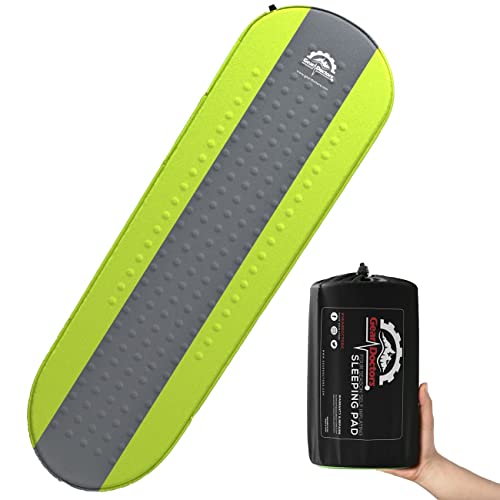
- 4.3 R-value hybrid foam core
- Self-inflates in under five minutes
- 35.2-ounce packable design
Best For: Hikers and campers seeking insulated, versatile comfort
Best Two-Person Value
Pretyw Double Camping Sleeping Pad

- 78 x 54-inch two-person sleeping area
- Built-in pillow and foot pump
- 4 inches thick and 3 pounds
Best For: Couples and comfort-focused car campers
Best Traditional Coleman Option
Silver Springs Insulated Foam Pad

- R-value 5+ insulated foam
- Three inches thick for cushioning
- PVC coating supports abrasion resistance
Best For: General campers prioritizing warmth and durability
Best Cold-Weather Comfort
Elegear CumbreX Memory Foam Pad

- R-value 9.5 for four-season insulation
- 26D memory foam and 3.15-inch thickness
- Wide 27-inch surface with built-in pillow
Best For: Cold-weather car campers and road-trippers
Year-Round Comfort

- R-value 6 for year-round insulation
- Two-inch thermal foam cushioning
- Fast WingLock inflation and deflation
Best For: Frontcountry campers wanting warmth and comfort
Powered Plushness
OGERY 3.15-Inch Memory Foam Pad

- Built-in electric inflation and deflation
- 3.15-inch memory foam cushioning
- Integrated pillow and adjustable firmness
Best For: Car camping, RV travel, and plush tent sleeping
Maximum Cushioning

- Extra-thick 5.9-inch cushioning
- Built-in foot pump for quick setup
- Connects to another pad for a double bed
Best For: Comfort-first campers needing extra ground clearance
Best Overall Comfort

- 3-inch hybrid foam-and-air support
- Built-in foot pump for firmness adjustment
- Non-slip, insulated, waterproof design
Best For: Comfort-focused car and tent campers
Best Electric-Pump Option
Memory Foam Pad with Electric Pump

- Inflates in about 40 seconds
- Rechargeable USB-C pump battery
- 9.5 R-value and 800-pound capacity
Best For: Fast setup for car camping and road trips
Best Lightweight Insulation
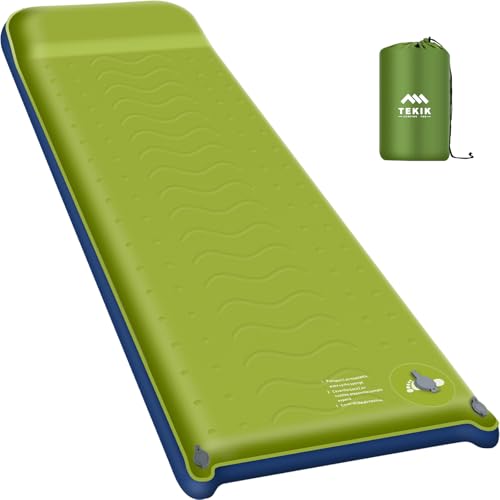
- 3.96-pound compact design
- 9.5 R-value insulation
- Dual-layer valves and foot-pump finish
Best For: Portable, well-insulated camping and travel
Best All-Around Insulation – Gear Doctors Oxylus 4.3 R-Value
The Gear Doctors Oxylus is a versatile choice for shoppers comparing self inflating sleeping pads for backpacking, car camping, or four-season use. Its foam-and-air construction combines a 4.3 R-value with a 1.5-inch sleeping surface, while the included elastic band helps simplify packing.
Best For: Hikers and campers who want a reasonably compact, insulated pad with straightforward self-inflation.
Pros:
- 4.3 R-value hybrid foam core provides insulation across multiple seasons.
- Self-inflates in under five minutes, with optional breaths for firmness adjustment.
- Weighs 35.2 ounces and packs to approximately 8 x 12 inches.
- 75D coated polyester shell is designed for water, abrasion, and UV resistance.
Cons:
- At 20 inches wide, it may feel narrow for some sleepers.
- The 1.5-inch thickness offers less cushioning than thicker car-camping pads.
This is a balanced pick when insulation, portability, and easy setup matter more than maximum plushness. Its lifetime replacement guarantee is an additional consideration for buyers focused on long-term ownership.
Best Two-Person Value – Pretyw Double Camping Sleeping Pad
The Pretyw Double Camping Sleeping Pad stands out among self inflating sleeping pads for couples or families who need a wide, elevated sleeping surface. It measures 78 x 54 inches, reaches 4 inches thick, and uses a built-in foot pump instead of requiring breath inflation or a separate pump.
Best For: Two-person tent camping, car travel, beach trips, and overnight guests who value width and built-in convenience.
Pros:
- Wide 78 x 54-inch surface supports two sleepers.
- Built-in pillow and foot pump add convenience at camp.
- Inflates in approximately one to three minutes by stepping on the pump.
- 40D nylon with multilayer TPU construction is waterproof and easy to wipe clean.
Cons:
- Its 3-pound weight is less suited to weight-conscious solo backpacking.
- Correct deflation requires following the instructions for the two valves.
For couples, the generous dimensions and 660-pound stated weight capacity make this a practical comfort-first option. Solo backpackers may prefer a narrower pad, but travelers who want quick setup without carrying a separate pump should find the integrated design useful.
Best Traditional Coleman Option – Silver Springs Insulated Foam Pad
The Coleman Silver Springs is a straightforward option for shoppers seeking self inflating sleeping pads with insulated foam and a familiar camping-focused design. Its foam-and-75D-polyester construction measures 72 x 20 x 3 inches, while the intuitive valve is designed for inflation in seconds.
Best For: Campers who want a simple, warm, durable pad for general camping rather than ultralight trips.
Pros:
- R-value of 5+ helps provide insulation from cooler ground.
- Three-inch thickness adds cushioning over uneven surfaces.
- PVC coating improves abrasion resistance.
- Weighs less than 4 pounds and has a soft 75D polyester outer layer.
Cons:
- Its approximately 4-pound weight is relatively substantial for backpacking.
- The 20-inch width is fairly narrow compared with double or wide-format pads.
The Silver Springs makes sense for campsite use when warmth and durability take priority over the smallest packed size. Its medium firmness and conventional dimensions offer a familiar sleeping-pad setup without the complexity of a larger two-person model.
Best Cold-Weather Comfort – Elegear CumbreX Memory Foam Pad
The Elegear CumbreX is a premium-sized choice among self inflating sleeping pads, combining 26D memory foam, a 3.15-inch profile, and a claimed R-value of 9.5. Its 77 x 27-inch surface, built-in pillow, and high insulation rating make it especially appealing for family camping, vehicle camping, and colder conditions.
Best For: Cold-weather campers and road-trippers who want a wide, plush pad with strong insulation.
Pros:
- R-value of 9.5 is designed for four-season insulation.
- 26D memory foam helps distribute weight and relieve pressure.
- Self-inflates in about 20 seconds under normal use, according to the product notes.
- 77 x 27-inch surface, built-in pillow, and 800-pound stated capacity support comfortable car camping.
Cons:
- At 8.1 pounds, it is too heavy for most backpacking trips.
- The first inflation after vacuum packing may take up to 20 minutes.
- The thicker, wider design requires more storage space than compact backpacking pads.
This pad prioritizes sleeping comfort and insulation over trail weight. The quiet, skin-friendly stretch-knit fabric and dual-use valves add practical appeal, but its 8.1-pound carry weight makes it a better fit for vehicles, basecamps, or home guests than long-distance hikes.
Year-Round Comfort – Therm-a-Rest BaseCamp
Therm-a-Rest Basecamp Self-Inflating Foam Camping Sleeping Pad, Large - 25 x 77 inches
Check Price On AmazonThe Therm-a-Rest BaseCamp is a dependable choice among self inflating sleeping pads for campers who prioritize warmth, cushioning, and straightforward setup. Its thick thermal foam and R-value of 6 provide insulation for year-round camping, while the WingLock valve speeds inflation and deflation.
Best For: Frontcountry campers seeking a warm, comfortable pad for three-season and winter trips.
Pros:
- R-value of 6 offers year-round insulation.
- Two-inch thermal foam provides a comfortable sleeping surface.
- WingLock valve supports faster inflation and deflation.
- Includes a stuff sack and has a limited lifetime warranty.
Cons:
- At 3 pounds 6 ounces, it is less suited to ultralight backpacking.
- Its 2-inch thickness provides less cushioning than some extra-thick camping mattresses.
The BaseCamp stands out for its insulation, durable construction, and established valve system. It is a practical investment for car camping and other trips where warmth and comfort matter more than minimum packed weight.
Powered Plushness – OGERY 3.15-Inch Memory Foam Pad
The OGERY is one of the more comfort-focused self inflating sleeping pads, combining a 3.15-inch memory foam-and-air construction with a built-in electric pump. It is designed for convenient setup in tents, vehicles, RVs, and guest-use situations rather than ultralight backpacking.
Best For: Car campers, RV travelers, and sleepers who want thick cushioning, adjustable firmness, and powered inflation.
Pros:
- 3.15-inch thickness cushions uneven ground.
- Built-in electric pump handles inflation and deflation.
- Integrated pillow supports the head without separate gear.
- Memory foam and air pressure allow adjustable support.
Cons:
- It is not positioned as an ultralight backpacking pad.
- The pad is not water resistant.
- Its electric pump requires powered operation.
Choose the OGERY when easy powered setup and plush sleeping comfort are higher priorities than minimalist packing. Its quiet surface and integrated pillow also make it appealing for shared tents and road-trip sleeping arrangements.
Maximum Cushioning – LLUAII 5.9-Inch Camping Pad
The LLUAII is a particularly thick option among self inflating sleeping pads, measuring 5.9 inches when inflated and offering a wide 29.5-inch sleeping surface. Its built-in foot pump enables setup without blowing air by mouth, while the waterproof fabric and compact packed size support varied outdoor use.
Best For: Campers who want maximum separation from hard ground, quick foot-pump inflation, and a roomy sleeping surface.
Pros:
- Extra-thick 5.9-inch design helps cushion uneven terrain.
- Built-in foot pump inflates the pad in about 30–60 seconds.
- Waterproof, tear-resistant material is easy to wipe clean.
- Side connectors allow two pads to form a double bed.
Cons:
- The 5.9-inch design is bulkier than traditional low-profile sleeping pads when in use.
- Its stated packed weight is about 2.65–2.7 pounds, so it may not suit weight-focused backpackers.
- The supplied notes describe a foot pump rather than automatic electric inflation.
For sleepers who dislike feeling the ground, the LLUAII offers exceptional thickness, width, and built-in support. It is a strong fit for comfort-first camping, though minimalist hikers may prefer a thinner design.
Best Overall Comfort – OGERY 3-Inch Memory Foam Pad
If you want a supportive option among self inflating sleeping pads, the OGERY combines memory foam with adjustable air support. Its 3-inch profile, built-in foot pump, and non-slip base make it particularly practical for car camping, tent camping, and other setups where comfort matters more than ultralight weight.
Best For: Campers who want cushioned, stable support for multiple sleeping positions.
Pros:
- Three-inch hybrid foam-and-air construction helps reduce pressure on shoulders and hips.
- Built-in foot pump allows firmness adjustments without mouth blowing or a separate pump.
- Insulated foam, waterproof fabric, and a textured non-slip base suit cooler nights and varied camping surfaces.
Cons:
- At approximately 6 pounds, it is heavier than many backpacking-focused pads.
- The larger cushioned design may be better suited to car camping than minimalist trips.
The OGERY is a comfort-first choice with useful stability and insulation features. Choose it when a quieter, less bouncy sleeping surface is more important than minimizing pack weight.
Best Electric-Pump Option – Memory Foam Pad with Electric Pump
This self inflating sleeping pad is designed for quick, low-effort setup. Its built-in electric pump inflates the 3.15-inch pad in about 40 seconds, while the rechargeable battery and automatic deflation are convenient for car camping, road trips, and guest use.
Best For: Campers who prioritize fast inflation, high insulation, and convenient electric operation.
Pros:
- Built-in 7.4V pump inflates in about 40 seconds and deflates in about 90 seconds.
- Rechargeable 1200mAh battery provides up to seven uses per charge and recharges through USB-C.
- Listed 9.5 R-value, 800-pound capacity, built-in pillow, and waterproof construction add versatility.
Cons:
- At 6.8 pounds including the pump, it is oriented toward car travel rather than lightweight backpacking.
- Electric-pump operation depends on the rechargeable battery being charged.
The standout feature is setup speed, backed by thick foam, a pillow, and high listed insulation. It is a strong fit for campers who prefer convenience and generous support over minimum carry weight.
Best Lightweight Insulation – TEKIK 9.5 R-Value Foam Pad
The TEKIK offers a useful balance for shoppers comparing self inflating sleeping pads: high-density memory foam, 9.5 R-value insulation, and a compact 3.96-pound design. Its staged self-inflation and foot-pump finishing process are suited to campers who want substantial insulation without carrying a bulkier mattress.
Best For: Campers seeking a relatively light, compact pad for three-season or four-season-style trips.
Pros:
- High-density foam provides body-fitting cushioning and support with an 800-pound capacity.
- Listed 9.5 R-value and double-layer insulation help retain warmth in cool conditions.
- Folds to approximately 13 by 9 inches and weighs about 3.96 pounds.
- Dual-layer valves and a foot pump support quick inflation and easier deflation.
Cons:
- Finishing inflation requires opening and closing valves and using the foot pump.
- Its 2.6-inch thickness is less substantial than some ultra-thick alternatives.
TEKIK is the most portable option here while retaining a high insulation rating and generous weight capacity. It makes sense for travelers who want a compact package without giving up foam cushioning or cold-ground protection.
How We Picked the Best Self Inflating Sleeping Pads
We focused on the features that matter most outdoors: insulation, sleeping comfort, packed size, durability, inflation convenience, and overall versatility. The selection includes established camping designs as well as thick memory-foam models with built-in pillows, foot pumps, or electric pumps.
We also considered different use cases. Backpackers typically need lower weight and a compact packed shape, while car campers can prioritize thickness, width, warmth, and convenience. Because advertised specifications can vary by size, always verify the dimensions, R-value, packed size, and included accessories for the exact model you plan to buy.
Quick Comparison
- Best for backpacking: Choose a lighter pad with a compact pack size and enough insulation for your expected temperatures.
- Best for cold-weather camping: Prioritize a higher R-value and sufficient thickness to reduce heat loss through the ground.
- Best for couples: A two-person or extra-wide design offers more sleeping space but is usually heavier and bulkier.
- Best for home-like comfort: Thick memory-foam pads with pillows and integrated pumps suit car camping and larger tents.
- Best for fast setup: Built-in foot pumps or electric pumps reduce manual inflation, though electric models require a compatible power source.
Key Buying Factors for Self-Inflating Sleeping Pads
R-Value and Insulation
R-value indicates how well a pad resists heat loss to the ground. Higher values are generally better for cold conditions, while moderate insulation may be sufficient for warm-weather camping. If you camp across multiple seasons, choose a warmer pad rather than relying only on a sleeping bag.
Thickness and Sleeping Comfort
Thicker pads provide more cushioning and help prevent hips and shoulders from touching the ground. A 3-inch-plus pad can feel substantially more comfortable for side sleepers and car campers, but thickness often increases weight and packed volume.
Size, Weight, and Packed Dimensions
Check the fully inflated width and length, not just the product name. Backpackers should compare total packed weight and bulk against their available pack space. Wider and double pads are more comfortable but less practical for long carries.
Inflation and Durability
Self-inflation usually requires opening the valve and allowing the foam core to expand, followed by a few top-off breaths or pump cycles. Look for dependable valves, reinforced construction, and a repair kit when available. Built-in pumps are convenient, but electric pumps may add weight and depend on batteries or USB power.
Who Should Buy Which Self Inflating Sleeping Pads?
Backpackers and hikers should favor the lightest insulated option that still provides adequate warmth and sleeping width. Car campers can benefit from thick memory-foam models with pillows and integrated pumps. Cold-weather campers should make R-value the deciding specification, while couples or families may prefer a double pad if the tent floor and vehicle storage space can accommodate it.