The best slat belt treadmills for sprint training let you control pace naturally while building acceleration, power, and repeat-sprint conditioning. Unlike motorized treadmills, curved manual designs respond directly to your stride and effort.
We compared 10 options across commercial and home-gym categories, focusing on resistance control, running-surface design, durability, feedback, footprint, and practical training needs.
Best 10 Slat Belt Treadmills for Sprint Training Picks for 2026
Adjustable Resistance Pick

- Eight resistance levels for progressive sprint work
- Self-generated curved track with no stated speed limit
- Spacious rubber-slat running surface and digital metrics
Best For: High-intensity sprint and HIIT training with adjustable resistance
Premium Commercial Choice

- Vulcanized rubber slats glide on ball bearings
- 22-by-68-inch deck with 0-15% incline
- Commercial AC servo drive and HD console
Best For: Premium home gyms and commercial athletic training spaces
Value Curved Treadmill
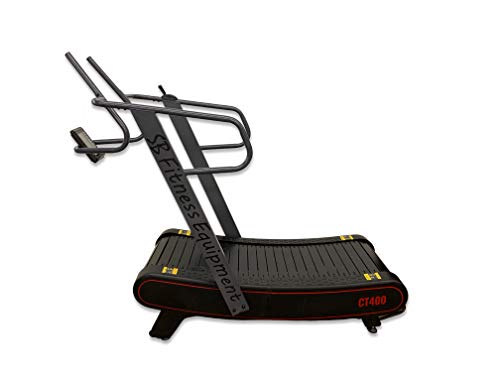
- Three resistance levels for adjustable effort
- Flexible slats designed for shock absorption
- Lighter 145-pound frame with transport wheels
Best For: Home users seeking a compact curved treadmill for HIIT
Canine Conditioning Option

- Manual pace control for medium dogs
- Three-level braking and adjustable incline
- Fiberglass track with clear side panels
Best For: Indoor exercise and conditioning for medium-sized dogs
Best Overall
Health Runner Curved Manual Treadmill
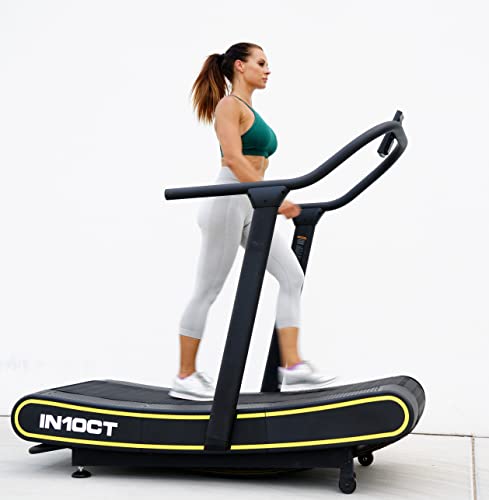
- Self-paced, non-motorized operation
- Rubber slats and PU belt help reduce impact
- Tracks pace, watts, heart rate, and more
Best For: Sprinters and HIIT users seeking a sturdy, data-focused treadmill
Best Foldable Pick
Adjustable Resistance Manual Treadmill

- Folds for more convenient storage
- Eight resistance settings for varied workouts
- LED display includes pace and heart rate
Best For: Space-conscious home and office users
Best High-Capacity Option
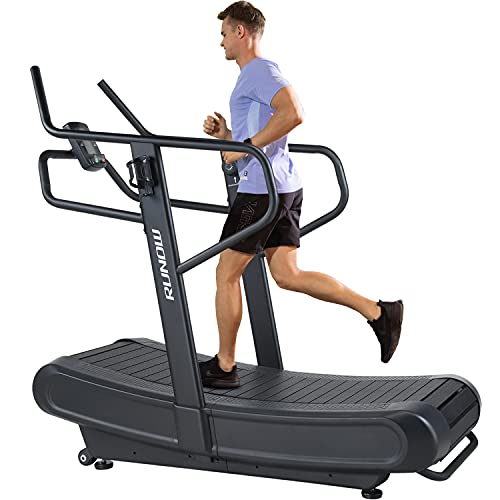
- Supports up to 450 pounds
- Four manual resistance levels
- Commercial-grade, self-powered design
Best For: Athletes and shared training spaces needing higher capacity
Versatile Resistance Pick

- Eight magnetic resistance levels
- Tracks speed, pace, heart rate, and calories
- Self-powered design with 440-lb capacity
Best For: Adjustable home or gym sprint and cardio training
Premium Slat-Belt Choice
Sole Fitness C80 Curved Treadmill

- Interlocking self-powered slat belt
- Eight magnetic resistance levels
- Bluetooth LCD console
Best For: Home-gym sprint intervals and steady-state cardio
Shock-Absorbing Training Option

- Five-layer shock-absorbing belt
- Six-level metal resistance knob
- 400-lb capacity with digital metrics
Best For: HIIT, interval sprints, and cushioned conditioning
Adjustable Resistance Pick – SB Fitness CT700
For shoppers comparing slat belt treadmills for sprint training, the SB Fitness CT700 stands out with self-generated operation, eight resistance levels, and no stated maximum speed. Its 66.5-by-19-inch running area, rigid rubber slats, and multi-grip handrails provide a spacious setup for sprinting, HIIT, walking, and sport-specific work.
Best For: Users who want adjustable resistance and a commercial-style curved treadmill for demanding sprint and HIIT sessions.
Pros:
- Eight resistance levels allow progressive training and added challenge.
- Self-generated, non-motorized design responds quickly to speed changes.
- Spacious 66.5-inch-long, 19-inch-wide track with rigid rubber slats.
- Digital display tracks time, distance, speed, calories, and total miles.
Cons:
- At 308 pounds, it is a substantial piece of equipment to move.
- Its 78-by-34-by-62-inch footprint may require dedicated floor space.
The CT700 is a strong fit when sprint training priorities include resistance control, rapid pace changes, and a generous running surface. Its included transport wheels and leveling feet add practicality, while the substantial frame supports a maximum recommended user weight of 400 pounds.
Premium Commercial Choice – Woodway Desmo Elite
The Woodway Desmo Elite is a premium option among slat belt treadmills for sprint training, using individual vulcanized rubber slats that glide on precision ball bearings. Its 22-by-68-inch surface, 0-15% incline, and speeds up to 12.5 MPH support intervals, endurance work, jogging, and walking.
Best For: Dedicated home gyms, athletic facilities, rehabilitation settings, and buyers seeking a professionally serviced commercial treadmill.
Pros:
- Patented slat belt is designed for smooth operation and reduced friction.
- Commercial-grade AC brushless servo drive system supports dependable use.
- Large 22-by-68-inch running surface accommodates varied workouts.
- Adjustable 0-15% incline expands interval and endurance options.
Cons:
- The 445-pound weight makes installation and relocation challenging.
- Its listed maximum speed of 12.5 MPH is lower than some sprint-focused treadmills.
- The non-folding design requires substantial dedicated space.
Professionally inspected, tested, and serviced before sale, the preowned Desmo Elite emphasizes commercial construction and a smooth slat-belt feel. It is best suited to buyers who value incline versatility and a large deck over portability.
Value Curved Treadmill – SB Fitness CT400
The SB Fitness CT400 offers a more compact entry point into slat belt treadmills for sprint training. This self-generated curved treadmill uses flexible track slats for shock absorption, provides three resistance levels, and adjusts immediately to changes in pace for running, walking, HIIT, and sport-specific exercise.
Best For: Buyers wanting a lighter, open-box curved treadmill with basic resistance adjustment and workout tracking.
Pros:
- Self-generated operation allows natural pacing without a motor.
- Three resistance levels provide simple intensity adjustment.
- Flexible slats are designed to add shock absorption and reduce joint impact.
- Digital display reports time, distance, speed, calories, and total miles.
Cons:
- Its 60-by-18-inch deck is smaller than the CT700’s running surface.
- Three resistance levels offer less adjustability than higher-level models.
- Listed as open box, so buyers should consider condition details before purchase.
At 145 pounds, the CT400 is considerably easier to position than heavier commercial models, and transport wheels and leveling feet add convenience. It is a practical choice for home users who want curved, non-motorized training without the larger footprint and weight of a premium treadmill.
Canine Conditioning Option – HotFeed Dog Slat Mill
This HotFeed model is a dog slat mill rather than a human treadmill, so it is not a direct choice for people seeking slat belt treadmills for sprint training. For medium dogs, its manual track lets the animal set its own walking, jogging, or sprinting pace, while adjustable braking and incline help tailor resistance.
Best For: Medium-dog households needing indoor, weather-independent conditioning and controlled manual exercise.
Pros:
- Manual operation lets dogs pause and regulate their own pace.
- Three-level adjustable braking system provides resistance and stopping control.
- Fiberglass running belt avoids splinters associated with traditional wooden belts.
- Clear side panels and safety-focused design help owners observe movement.
Cons:
- It is designed for dogs, not human sprint training.
- Owners must measure their dog carefully for the 66-by-20-inch track.
- Manual and visual tracking provides no integrated workout metrics.
With a carbon-steel frame, adjustable forward tilt, and a stated maximum recommended weight of 320 pounds, the DT04 is aimed at medium breeds and multi-dog homes. It can support canine conditioning indoors, but shoppers should choose a human treadmill for personal sprint workouts.
Best Overall – Health Runner Curved Manual Treadmill
For runners comparing slat belt treadmills for sprint training, the Health Runner offers a non-motorized curved platform that responds directly to your pace. Its rubber slats and PU belt are designed to reduce impact, while the commercial-grade frame and 400-pound recommended capacity suit demanding training.
Best For: Sprinters and HIIT users who want a sturdy, self-paced treadmill with detailed workout tracking.
Pros:
- No power outlet is required, and the user controls the speed.
- Rubber slats and a PU belt help reduce shock to joints, muscles, and ligaments.
- Tracks time, distance, calories, watts, pace, and heart rate.
- Includes transport wheels and a rear handle for repositioning.
Cons:
- Its 150 kg weight makes it substantial to move despite the transport features.
- The supplied warranty information includes a 20% restocking fee for eligible returns.
The Health Runner is a strong all-around option when durability, impact reduction, and performance metrics matter more than powered speed control.
Best Foldable Pick – Adjustable Resistance Manual Treadmill
Rongle Manual Treadmill, Adjustable Resistance, Foldable, LED Display, Supports up to 350 lbs
Check Price On AmazonThis foldable manual treadmill is a practical choice among slat belt treadmills for sprint training when storage space matters. Its curved running surface uses front, middle, and rear zones for acceleration, steady running, and deceleration, while eight resistance levels let you vary workout difficulty.
Best For: Home or office users who need a compact, adjustable-resistance treadmill for sprinting, jogging, and walking.
Pros:
- No motor-imposed speed limit lets you set your own pace.
- Eight resistance levels support varied training intensity.
- Foldable design and transport wheels simplify storage and repositioning.
- LED display shows time, calories, speed, distance, pace, and heart rate.
Cons:
- The supplied details list a 300-pound maximum weight recommendation, despite a bullet mentioning 350 pounds.
- No warranty service is provided.
- The 15.7-inch belt width is narrower than some larger commercial-style treadmills.
Choose this model if easy storage and resistance adjustment are priorities, but verify the applicable weight limit before buying.
Best High-Capacity Option – RUNOW Curved Treadmill
The RUNOW Curved Treadmill stands out among slat belt treadmills for sprint training with its self-powered design, four manual resistance levels, and 450-pound recommended capacity. It is built for running, sport-specific training, and HIIT without waiting for a motor to accelerate or decelerate.
Best For: Athletes, runners, and shared training spaces that need a high-capacity curved treadmill with basic workout monitoring.
Pros:
- Manual operation allows quick speed changes without buttons or motor lag.
- Four resistance levels support sprinting, jogging, and HIIT sessions.
- 450-pound recommended capacity and commercial product grade suit demanding use.
- Five-inch LCD tracks time, distance, calories, watts, speed, pace, and resistance.
Cons:
- At 287 pounds, it is considerably heavier than the other listed options.
- The 48-inch deck length may provide less running room than longer platforms.
- Manual resistance offers four levels rather than the eight levels on the foldable model.
The RUNOW is the most compelling pick here for heavier users or shared facilities, provided you have adequate space for its large, heavy frame.
Versatile Resistance Pick – 2026 Manual Curved Treadmill
For shoppers comparing slat belt treadmills for sprint training, this self-powered curved model stands out for its eight magnetic resistance levels. Its curved deck, shock-absorbing belt, and workout tracking features make it suitable for varied home or gym sessions without requiring electricity.
Best For: Users who want adjustable resistance, multiple training modes, and a high weight capacity.
Pros:
- Eight magnetic resistance levels support walking through sprint-focused workouts.
- LCD display tracks time, distance, pace, calories, speed, and heart rate.
- Self-powered design needs no outlet and offers quieter, lower-maintenance operation.
- 440-pound recommended weight capacity and built-in transport wheels add practicality.
Cons:
- At 354 pounds, it is substantial to move despite the transport wheels.
- The supplied specifications list an unusual maximum-speed value, so shoppers should verify speed details before purchase.
This is a feature-rich option for buyers who want resistance control and broad workout tracking in a non-electric curved treadmill. Its size and weight are worth considering for smaller spaces.
Premium Slat-Belt Choice – Sole Fitness C80 Curved Treadmill
The Sole Fitness C80 is a focused choice among slat belt treadmills for sprint training, combining a self-propelled curved deck with an interlocking slat belt and eight magnetic resistance levels. Its 19-by-62-inch running surface is designed for both sprint intervals and steady-state cardio.
Best For: Home-gym users seeking a durable slat belt, Bluetooth console, and dedicated sprinting capability.
Pros:
- Self-powered slat belt responds directly to changes in stride.
- Eight magnetic resistance levels help vary workout intensity.
- Bluetooth LCD console tracks speed, distance, and heart rate.
- 330-pound capacity and a 19-by-62-inch deck support demanding sessions.
Cons:
- The home-use product has a lower stated weight capacity than some alternatives.
- Its warranty coverage is one year for parts and labor, with separate cosmetic and frame terms.
With a clear slat-belt focus and useful console connectivity, the C80 is a well-rounded home option for runners alternating sprint work with regular cardio.
Shock-Absorbing Training Option – Curved Manual Treadmill
This curved manual treadmill is aimed at runners who want a responsive platform for interval work, HIIT, and sprint training. The self-powered design pairs a five-layer shock-absorbing belt with six levels of metal resistance and a wide running deck.
Best For: Users prioritizing belt cushioning, a high weight capacity, and manual intensity changes.
Pros:
- Five-layer rubber belt is designed to absorb impact and provide a high-grip surface.
- Six-level metal resistance knob allows quick manual intensity changes.
- 400-pound recommended weight capacity and alloy-steel frame provide a stable setup.
- Digital monitor tracks speed, time, distance, calories, pulse, and wattage.
Cons:
- It has six resistance levels rather than the eight offered by some competing models.
- At 316 pounds, it may require planning to reposition.
- The supplied details list a one-year warranty.
This model makes the strongest case for cushioning and stability, while its manual resistance knob suits runners who want direct control during sprint and conditioning sessions.
How We Picked the Best Slat Belt Treadmills for Sprint Training
We evaluated the selected treadmills for features that matter during acceleration work, short intervals, resisted efforts, and conditioning sessions. Priority went to self-powered or manually driven designs, curved running platforms, adjustable resistance, usable displays, belt stability, and construction suited to repeated high-intensity training.
We also considered whether each model fits a commercial facility, dedicated home gym, or more specialized use case. Product descriptions and listed specifications can vary by seller, so confirm dimensions, user-weight limits, warranty coverage, and assembly requirements before purchasing.
Quick Comparison
- Best for commercial sprint facilities: Look for a heavy-duty frame, a wide running surface, and a console built for frequent use.
- Best for home sprint training: A compact curved manual treadmill with adjustable resistance offers useful versatility without motor maintenance.
- Best for resisted training: Models with multiple resistance levels are better suited to sled-style pushes, power intervals, and controlled overload.
- Best for straightforward conditioning: A self-powered treadmill with a digital monitor can provide essential pace, time, distance, and calorie feedback without unnecessary complexity.
Key Buying Factors for Slat Belt Treadmills for Sprint Training
Running Surface and Belt Design
A curved platform encourages you to place your foot beneath your center of mass and drive the belt with your own stride. A wider, longer surface generally feels more secure during fast running, especially for taller athletes or users with long strides. Slat construction can also provide a firmer, more stable feel than a basic flexible belt.
Resistance and Training Control
Adjustable resistance helps you switch between warm-ups, sprint intervals, power efforts, and slower recovery work. More resistance settings provide finer control, while simpler designs may be easier to operate. Make sure the adjustment mechanism is accessible while training and does not interfere with your running position.
Frame Stability and Weight Capacity
Sprinting creates greater impact and force than walking. Choose a substantial frame with secure handrails, a suitable maximum user weight, and enough overall machine mass to prevent movement. Commercial-grade construction is particularly valuable for teams, gyms, and high-frequency use.
Console, Footprint, and Maintenance
Displays vary from basic time and distance readouts to advanced training metrics. Decide which information you actually use, then check whether the treadmill requires batteries, electrical power, lubrication, or periodic belt adjustment. Measure ceiling height, doorway clearance, and floor space before ordering.
Who Should Buy Which Slat Belt Treadmills for Sprint Training?
Athletes and coaches should favor stable commercial models with broad decks and adjustable resistance for repeatable sprint programming. Home-gym users may prefer a smaller self-powered curved treadmill that balances training capability with storage and budget. Users with limited space should investigate foldable or compact designs, while recognizing that lighter frames may feel less planted during maximal efforts. Buyers seeking general fitness can choose a simpler manual treadmill with a digital display rather than paying for features they will not use.