The best spotting scopes for astronomy combine useful magnification, adequate light-gathering power, and manageable size for viewing the Moon, bright planets, star clusters, and distant terrestrial subjects.
This roundup compares 10 selected models across optical design, aperture, zoom range, portability, focusing, and included accessories so you can choose the right scope for your observing style and budget.
Best 10 Spotting Scopes for Astronomy Picks for 2026
Astronomy-Ready Compact Power

- 5-inch Schmidt-Cassegrain optical design
- 1,250mm focal length with StarBright XLT coatings
- Camera-ready and includes case and finderscope
Best For: Portable astronomy and long-distance viewing
Value-Oriented Wide-Range Spotter

- 20-60x zoom with an 80mm objective
- HD optics and fully multi-coated lenses
- Waterproof, fogproof, and Arca-Swiss compatible
Best For: Versatile astronomy and outdoor observation
Ultra-Compact Maksutov Choice

- 90mm Maksutov-Cassegrain optical design
- 1,250mm focal length in a portable format
- Includes eyepiece, finderscope, and backpack
Best For: Compact lunar, planetary, and terrestrial viewing
Grab-and-Go High-Magnification Scope

- 28-84x zoom with an 80mm objective
- Compact Maksutov-Cassegrain design
- Includes tripod, case, and detachable eyepiece
Best For: Portable lunar, planetary, and multipurpose viewing
Best Compact Astronomy Pick

- 70mm Maksutov-Cassegrain design with 700mm focal length
- 25-75x zoom for lunar, planetary, and daytime viewing
- Lightweight body with tabletop tripod and carrying case
Best For: Travelers and beginners seeking a versatile compact scope
Best Weather-Ready Option
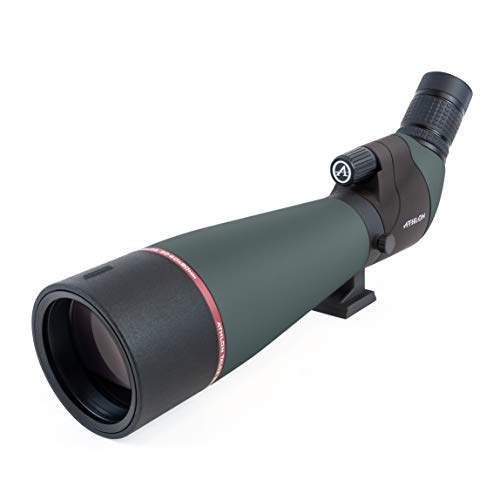
- 80mm objective with 20-60x magnification range
- Fully multi-coated optics and silver-coated K9 prisms
- Waterproof, fog-proof body with included case
Best For: Outdoor observers needing a durable full-size spotting scope
Best Large-Aperture Value

- 100mm aperture with 25-75x zoom
- Fully multi-coated optics for brighter viewing
- Includes phone adapter, desktop tripod, and carrying case
Best For: Observers prioritizing aperture, magnification, and digiscoping accessories
Versatile High-Power Pick

- 20-60x zoom with dual focusing
- 80mm BAK4 FMC optics
- Tripod and phone adapter included
Best For: Versatile outdoor and occasional astronomy viewing
Maximum Magnification Value

- 25-75x zoom reaches 75x
- Large 85mm objective lens
- Heavy-duty tripod included
Best For: Stationary high-power viewing and long-range targets
Beginner-Friendly Compact Option

- 25-75x zoom for flexible viewing
- 70mm objective lens
- Desktop tripod and phone adapter included
Best For: Portable beginner observation and casual astronomy
Astronomy-Ready Compact Power – Celestron C5
For shoppers comparing spotting scopes for astronomy, the Celestron C5 combines a 5-inch Schmidt-Cassegrain design with a 1,250mm focal length and f/10 focal ratio. It is built for sharp, high-contrast long-distance views while remaining relatively compact at 6 pounds and 11 inches long.
Best For: Astronomy observers who also want a portable scope for terrestrial viewing, target shooting, or digiscoping.
Pros:
- 5-inch aperture and StarBright XLT coatings are designed for bright, high-contrast views.
- Accepts 1.25-inch eyepieces and supports camera adaptation with optional accessories.
- Includes a 25mm eyepiece, erect-image diagonal, finderscope, and carrying case.
Cons:
- Camera adapters and T-rings are optional rather than included.
- Manual focusing and a 50x included eyepiece may require additional eyepieces for different viewing needs.
The C5 is a strong multipurpose choice when portability, astrophotography flexibility, and a larger aperture matter more than a lightweight tabletop setup.
Value-Oriented Wide-Range Spotter – Vortex Crossfire HD 20-60×80
The Vortex Crossfire HD 20-60×80 is a practical option among spotting scopes for astronomy when you want a large 80mm objective and flexible magnification. Its HD optical system, fully multi-coated lenses, and weatherproof construction also suit low-light terrestrial observation.
Best For: Buyers seeking one durable, high-magnification scope for lunar viewing, target observation, wildlife, and general outdoor use.
Pros:
- 20-60x zoom range provides flexibility for finding and examining distant subjects.
- 80mm objective and anti-reflective coatings support light transmission and clarity.
- Helical focus, Arca-Swiss-compatible foot, rubber armor, and nitrogen purging add practical usability.
Cons:
- At 15.6 inches long, it is less compact than the small Maksutov designs in this roundup.
- A tripod is needed for stable use at the scope’s higher magnifications.
The Crossfire HD emphasizes versatility and rugged outdoor handling, making it a sensible choice for observers who want astronomy capability without giving up a conventional spotting-scope format.
Ultra-Compact Maksutov Choice – Celestron C90 Maksutov
The Celestron C90 is worth considering if your search for spotting scopes for astronomy prioritizes portability. Its 90mm Maksutov-Cassegrain optical design folds the light path into a compact body, while the 1,250mm focal length is suited to detailed distant and astronomical viewing.
Best For: Travelers and beginners who want a compact scope for lunar, planetary, terrestrial, and digiscoping use.
Pros:
- Compact Maksutov-Cassegrain design delivers a long focal length in a portable package.
- 90mm objective is suited to bright, sharp views of distant subjects and astronomical objects.
- Includes a 32mm eyepiece, erect-image diagonal, finderscope, and nylon backpack.
Cons:
- The included setup uses manual focus and may benefit from a sturdier support for high-power viewing.
- Camera adapters and T-rings are optional.
The C90 offers a useful balance of aperture and compactness, particularly for observers who want one lightweight instrument for both astronomy and daytime viewing.
Grab-and-Go High-Magnification Scope – SVBONY SV41Pro 28-84×80
The SVBONY SV41Pro is a travel-friendly pick for spotting scopes for astronomy, combining an 80mm objective with a 28-84x zoom eyepiece. Its Maksutov-Cassegrain design, dual-speed focus, and included tripod make it suitable for lunar and planetary observation as well as daytime spotting.
Best For: Users who want a compact, ready-to-carry scope for lunar and planetary viewing, birding, target shooting, and digiscoping.
Pros:
- 28-84x zoom provides a broad range for locating and examining distant subjects.
- 80mm objective and fully multi-coated optics are designed to improve brightness and detail.
- Includes a tripod, carrying case, and detachable 1.25-inch eyepiece compatible with select Wi-Fi cameras.
Cons:
- The finderscope is not included.
- Its maximum 84x magnification makes stable support especially important for detailed viewing.
The SV41Pro is a practical all-rounder for buyers who value portability and high zoom, especially when lunar and planetary observing is part of a broader outdoor use case.
Best Compact Astronomy Pick – Celestron C70 Mini Mak
For shoppers seeking compact spotting scopes for astronomy, the Celestron C70 Mini Mak offers a portable Maksutov-Cassegrain design with a 70mm aperture and 700mm focal length. Its built-in 25-75x zoom eyepiece is suited to viewing the Moon, Jupiter, Saturn, and daytime subjects.
Best For: Travelers and beginners who want one lightweight scope for terrestrial viewing, lunar observation, and basic planetary viewing.
Pros:
- Compact 2-pound design measuring about 11 inches long
- 25-75x built-in zoom eyepiece supports flexible magnification
- Includes a tabletop tripod with slow-motion controls and a soft case
- Accepts 1.25-inch eyepieces and supports smartphone digiscoping
Cons:
- Its 70mm aperture gathers less light than larger scopes
- The included tabletop tripod is better suited to compact setups than full-height outdoor observing
The C70 is a practical choice when portability matters as much as versatility. It is especially appealing for casual astronomy, though dedicated observers may prefer a larger aperture for dimmer deep-sky targets.
Best Weather-Ready Option – Athlon Talos 20-60×80
The Athlon Talos is one of the more practical spotting scopes for astronomy when you want an 80mm objective, flexible 20-60x magnification, and weather protection. Fully multi-coated optics and silver-coated K9 prisms are designed to support bright images, while nitrogen purging adds fog-proofing and thermal stability.
Best For: Outdoor observers who want a full-size, tripod-mounted scope for astronomy, hunting, shooting, and changing weather conditions.
Pros:
- 80mm objective provides a larger light-gathering aperture than compact models
- 20-60x zoom range supports wide views and higher magnification
- Fully multi-coated optics and silver-coated K9 prisms promote bright images
- Waterproof and fog-proof construction with a rotating tripod ring
Cons:
- At 2.4 pounds, it is less travel-friendly than smaller scopes
- The included soft-sided case and cleaning cloth are practical but do not replace a more protective hard case
With its 80mm aperture and sealed construction, the Talos balances optical reach with outdoor durability. Its 20-60x range is useful for general observing, although serious deep-sky astronomy may call for a telescope designed specifically for that purpose.
Best Large-Aperture Value – SVBONY SV28 100mm
The SVBONY SV28 stands out among spotting scopes for astronomy with its large 100mm aperture and 25-75x zoom. Its fully multi-coated optics are intended to improve light transmission, and the package includes a phone adapter, desktop tripod, carrying case, and lens covers for a ready-to-use setup.
Best For: Budget-minded observers who prioritize a large aperture, high magnification, and smartphone-friendly accessories for stargazing and long-range viewing.
Pros:
- Large 100mm objective is designed for brighter viewing, including in lower light
- 25-75x zoom offers substantial magnification flexibility
- Fully multi-coated optics and BAK4 Porro prism construction
- Includes a smartphone adapter, desktop tripod, carrying case, and protective covers
Cons:
- Its approximately 2.56kg weight makes it less portable than compact alternatives
- The included desktop tripod may require replacement with a taller tripod for standing outdoor observation
- High magnification can make a sturdy tripod especially important
The SV28 offers the largest aperture in this group and a generous zoom range, making it attractive for brighter lunar and general sky views. Plan on a full-size tripod if you want comfortable outdoor use beyond a tabletop.
Versatile High-Power Pick – 20-60×80 HD Spotting Scope
For shoppers comparing spotting scopes for astronomy and general outdoor viewing, this 20-60×80 model offers a broad zoom range, a large objective lens, and BAK4 optics with full broadband multi-coating. Its angled design, included tripod, and phone adapter make it a practical choice for observing distant scenery and sharing images.
Best For: Beginners and outdoor observers who want a versatile, weather-resistant scope with phone photography accessories.
Pros:
- 20-60x zoom and dual focusing knobs support precise viewing.
- 80mm objective lens and BAK4, full broadband multi-coated optics are designed for brighter images.
- Includes a rotating tripod, carrying case, and smartphone adapter.
- Nitrogen purging, waterproofing, fogproofing, and rubber armor add field durability.
Cons:
- At 1.18 kg, it may be less convenient for lightweight travel.
- The included tripod may be better suited to general observation than demanding high-magnification astronomy work.
The detachable 1.25-inch eyepiece interface and twist-extendable eyecup add flexibility, while the 45-degree viewing angle can be comfortable for extended sessions. It is a feature-rich option when portability is less important than aperture and included accessories.
Maximum Magnification Value – 25-75×85 Spotting Scope
Among spotting scopes for astronomy, this model stands out for its 25-75x range and large 85mm objective lens. BAK4 and FMC optics are intended to maintain brightness in lower light, while the included heavy-duty tripod is designed to provide stability at the scope’s highest magnification.
Best For: Buyers who prioritize high magnification, a large aperture, and a full-size tripod for stationary observation.
Pros:
- 25-75x magnification provides substantial reach for distant subjects.
- 85mm objective lens is designed for brighter viewing in dawn, dusk, and wooded settings.
- Heavy-duty tripod supports steadier viewing at high power.
- Dual-speed focusing, twist-up eyecup, phone adapter, and weather protection are included.
Cons:
- The high-power configuration is likely less portable than a compact beginner scope.
- Its supplied details list plastic as the material type, which may matter to shoppers seeking a more premium construction.
This is the strongest fit here for viewers who want maximum reach and are comfortable setting up a larger, more stationary system. The 75x ceiling and 85mm aperture are appealing for distant targets, though stability and atmospheric conditions will still affect high-power viewing.
Beginner-Friendly Compact Option – SVBONY SV28 25-75×70
For beginners exploring spotting scopes for astronomy, the SVBONY SV28 combines a 25-75x zoom with a 70mm objective lens in a relatively portable package. Its 45-degree angled body, manual focus, included desktop tripod, and phone adapter make it straightforward for casual observation at home, a campsite, or a shooting range.
Best For: Beginners seeking an affordable, portable scope for casual wildlife, scenery, and introductory astronomy viewing.
Pros:
- 25-75x zoom offers flexible magnification for distant subjects.
- 70mm objective lens provides useful light-gathering ability for general viewing.
- Includes a portable desktop tripod, phone adapter, carrying case, and lens covers.
- Lightweight 910g design and 45-degree angle suit travel and casual use.
Cons:
- The desktop tripod may not be ideal for extended high-magnification astronomy sessions.
- Its listed warranty is 60 days, shorter than the warranties supplied with the other options.
- Waterproofing is described as light, so it may offer less weather protection than more rugged models.
The SV28 is a sensible entry point for users who value simple setup and portability over advanced construction. Its 75x maximum magnification is useful on paper, but a stable surface and realistic expectations are important for clear views at the upper end.
How We Picked These Spotting Scopes for Astronomy
We selected models with features that matter for occasional or dedicated skywatching: practical aperture, high-quality optical coatings, useful magnification ranges, stable mounting options, and focusing systems that can bring lunar and terrestrial details into sharp view. The list includes Schmidt-Cassegrain, Maksutov, and conventional roof-style spotting scopes, along with compact and larger-aperture designs.
Because spotting scopes are primarily built for daytime viewing, we also considered versatility. A scope that works for birding, target shooting, wildlife observation, or digiscoping may offer better value than an astronomy-only instrument, especially for beginners.
Quick Comparison
| Best For | What to Prioritize | Recommended Type |
|---|---|---|
| Moon and bright planets | Sharp optics, steady mount, fine focusing | Maksutov or Schmidt-Cassegrain |
| Wide-field star clusters | Larger field of view and moderate magnification | 80mm conventional scope |
| Travel and casual use | Compact body and lower weight | 70mm to 80mm compact model |
| Maximum detail | Large aperture and rigid tripod | 85mm to 100mm scope |
Key Buying Factors for Spotting Scopes for Astronomy
Aperture and Light Gathering
Aperture is the diameter of the objective lens or mirror. Larger apertures collect more light and can reveal finer lunar detail, but they add weight and usually require a stronger tripod. An 80mm scope is a practical middle ground; 90mm to 100mm models are better when portability is less important.
Optical Design
Maksutov and Schmidt-Cassegrain designs can deliver strong contrast and long focal lengths in relatively compact bodies, making them well suited to the Moon and planets. Conventional angled spotting scopes are often easier to use for broad sky views and daytime subjects, but their performance depends heavily on lens quality and coatings.
Magnification and Field of View
High magnification does not automatically produce a clearer image. Atmospheric turbulence, vibration, and optical quality often limit useful power. Zoom ranges around 20-60x or 25-75x are flexible, while a stable low-power setting is valuable for locating targets before increasing magnification.
Mounting, Focus, and Accessories
A solid tripod is essential. At high power, even small vibrations can obscure detail, so check tripod load capacity and head stability. Dual or fine-focus controls are useful for astronomy, and phone adapters can help with lunar snapshots. Waterproofing and fog resistance are worthwhile if the scope will also be used outdoors in changing weather.
Who Should Buy Which Spotting Scopes for Astronomy?
Choose a compact 70mm or 80mm model if you travel, hike, or want a versatile scope for occasional Moon viewing. Choose a Maksutov design if your priority is compact, high-contrast views of the Moon and bright planets. Choose a Schmidt-Cassegrain if you want a more astronomy-oriented option with strong long-distance performance and room to grow. Choose an 85mm or 100mm model if maximum brightness and detail matter more than carrying weight.
Whichever model you choose, budget for a dependable tripod and use the lowest effective magnification first. Clear skies, proper focus, and vibration-free support will usually improve your viewing more than simply selecting the highest advertised power.