Cold hands can turn an otherwise enjoyable run into a frustrating one. The best thermal running gloves balance insulation, dexterity, breathability, and reliable grip without feeling bulky.
We compare 10 popular options for runners, cyclists, walkers, and commuters, with attention to touchscreen usability, weather protection, fit, and everyday versatility.
Best 10 Thermal Running Gloves Picks for 2026
Everyday Grip & Warmth
TRENDOUX Thermal Running Gloves
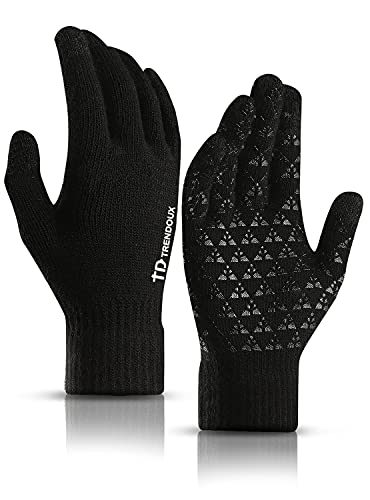
- Soft napped lining adds lightweight warmth
- Three-finger touchscreen compatibility
- Silicone palm improves everyday grip
Best For: Light running, commuting, driving, and errands
Second-Skin Fleece Liner
3-Layer Thermal Running Gloves
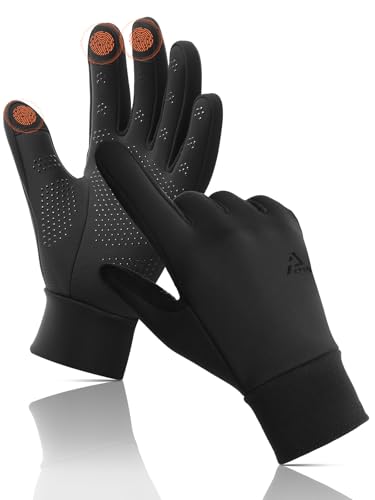
- 320 gsm fleece adds warmth without bulk
- Wind-blocking and water-repellent construction
- Stretch fit supports active movement
Best For: Moderate-cold running, cycling, and daily outdoor use
Best Convertible Pick
RIGWARL Thermal Running Gloves
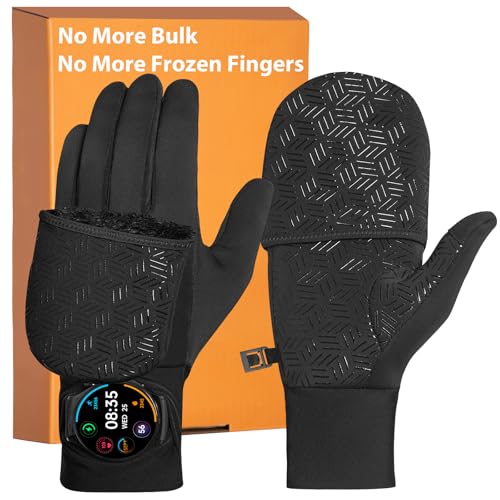
- Convertible full-finger and mitten design
- Watch window and touchscreen fingertips
- Grip, reflective print, and light water resistance
Best For: Cold-weather runners wanting adaptable coverage
Best Insulated Option
Deemii 3M Thinsulate Running Gloves

- 3M C40 insulation with fleece lining
- Touchscreen fingertips and silicone grip
- Water- and wind-resistant outer layer
Best For: Cold-weather running and everyday outdoor use
Best Lightweight Liners

- Thin, stretchy, windproof construction
- Sensitive touchscreen thumb and index fingers
- Works alone or under bulkier gloves
Best For: Runners wanting flexible gloves or layering liners
Best Lightweight Pick
Lightweight Thermal Running Gloves

- Fleece-lined, four-way stretch construction
- Touchscreen fingertips for phones and watches
- Silicone grip with reflective back details
Best For: Lightweight running, commuting, cycling, and layering
Best for Cool, Wet Conditions

- 320 gsm fleece for cool-weather warmth
- DWR finish and extended cuff help resist drafts and light precipitation
- Three touchscreen fingers and silicone palm grip
Best For: Running and cycling in cool weather with light rain or snow
Best Versatile Classic
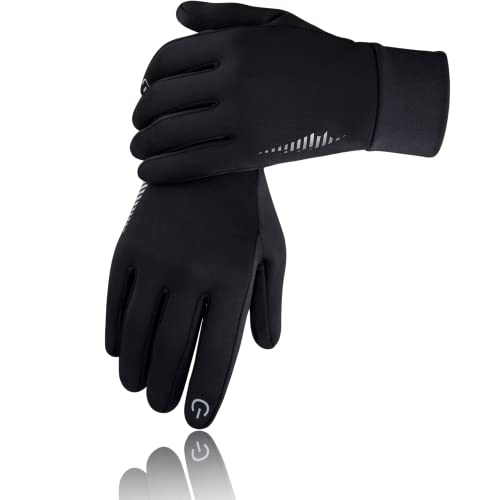
- Warm flannel lining with elastic cuffs
- Touchscreen-compatible fingers for devices and GPS
- Silicone grip and reflective accents
Best For: Everyday running and varied outdoor winter activities
Everyday Grip & Warmth – TRENDOUX Thermal Running Gloves
For everyday thermal running gloves that stay lightweight, the TRENDOUX pair combines a soft napped lining with a stretchy fit. Conductive fingertips and a silicone-covered palm also make them practical for phone use, driving, and outdoor errands.
Best For: Runners and commuters who want lightweight warmth, flexible comfort, and dependable grip.
Pros:
- Conductive material on the thumb, forefinger, and middle finger supports touchscreen use.
- Soft napped lining provides warmth without a bulky feel.
- Triangle silicone palm coverage improves grip on phones and steering wheels.
- Elastic cuffs help seal out wind and snow.
Cons:
- Touchscreen coverage is limited to three fingers.
- Hand-wash care is required.
- Only two sizes are offered.
The TRENDOUX is a sensible choice when comfort, dexterity, and everyday grip matter more than heavy-duty weather protection.
Lightweight 3M Insulation – Bruvoalon Thermal Running Gloves
These thermal running gloves use five-layer construction with 3M Thinsulate C40 insulation while keeping a slim, flexible profile. They are designed for cold-weather activity, with touchscreen fingertips, a wind-resistant backhand, and a full silicone grip.
Best For: Cold-weather runners and multi-sport users who prioritize warmth, dexterity, and all-five-finger touchscreen access.
Pros:
- 3M Thinsulate insulation and thermal lining help retain body heat.
- Touchscreen pads work on all five fingers.
- Water-resistant backhand helps repel light rain and snow.
- Reflective logo and snap-together buckle add practical outdoor features.
Cons:
- These gloves run small; sizing up may be necessary.
- They are water-resistant rather than fully waterproof.
- Hand-wash care is recommended.
With broad touchscreen coverage and a secure palm pattern, this is one of the more versatile options for runners who also cycle, hike, drive, or commute.
Second-Skin Fleece Liner – 3-Layer Thermal Running Gloves
For moderate cold, these thermal running gloves provide a close, flexible fit through a three-layer design, 320 gsm fleece, and a wind-blocking mid-layer. The water-repellent exterior and silicone palm make them suitable for active use when conditions are damp but not severe.
Best For: Runners and cyclists seeking a slim liner-style glove for approximately 32–50°F conditions.
Pros:
- Three-layer construction offers warmth without excessive bulk.
- Four-way stretch and soft knit create a second-skin feel.
- Conductive thumb, index, and middle fingers support touchscreen use.
- Silicone palm provides a secure grip for handlebars and other equipment.
Cons:
- For temperatures below 25°F, the notes recommend layering with a shell.
- Water-repellent protection is intended for light rain and road spray, not prolonged wet conditions.
- Touchscreen coverage is limited to three fingers.
This pair is best viewed as a lightweight active liner: comfortable and flexible for moderate winter outings, but not a standalone solution for extreme cold or steady precipitation.
Weather-Resistant Outdoor Pick – FanVince Thermal Running Gloves
FanVince thermal running gloves pair a thin windproof polyester shell with thermal TR insulation, soft fleece, and a waterproof membrane. They offer touchscreen access through the thumb and forefinger while the silica-gel palm helps maintain grip during active outdoor use.
Best For: Runners, cyclists, and walkers who want lightweight insulation with added wind and moisture protection.
Pros:
- Windproof shell and thermal insulation help protect against cold air.
- Waterproof membrane supports warmth and dryness in wet outdoor conditions.
- Silica-gel palm improves grip for cycling and driving.
- Five sizes support a broad range of adult hand sizes.
Cons:
- Touchscreen functionality is limited to the thumb and forefinger.
- The gloves run slightly large, especially for women according to the notes.
- They may offer less precision than a thinner liner-style glove.
Choose the FanVince pair when wind and damp conditions are bigger concerns than maximum touchscreen coverage or an especially close fit.
Best Convertible Pick – RIGWARL Thermal Running Gloves
For runners who want adaptable coverage, these thermal running gloves convert from full-finger gloves to mittens when extra warmth is needed. The fleece-lined, water-resistant design also adds touchscreen control, grip, and visibility features for changing outdoor conditions.
Best For: Cold-weather runners who want convertible mitten coverage and easy access to a watch or phone.
Pros:
- Flip-top design switches between fingered gloves and warmer mittens.
- Watch window and conductive fingertips support workout tracking and touchscreen use.
- Silicone grip, reflective print, and glove clip add practical running features.
- Water-resistant coating helps with light rain and chilly wind.
Cons:
- The notes specify water resistance, not protection for heavy rain or immersion.
- Only a medium size and black color are listed in the supplied details.
RIGWARL stands out when versatility matters more than a minimalist glove profile. The convertible construction is especially useful for runs that shift between active movement and colder, more exposed conditions.
Best Insulated Option – Deemii 3M Thinsulate Running Gloves
These thermal running gloves use 3M C40 Thinsulate insulation and a fleece lining to provide warmth without excessive bulk. They are designed for cold-weather activities, with touchscreen fingertips, silicone grip, wind resistance, and protection from light moisture.
Best For: Runners and outdoor commuters seeking lightweight insulation with broad sizing and added weather protection.
Pros:
- 3M C40 insulation is designed to keep hands warm while preserving dexterity.
- Touchscreen thumb and index fingertips support phone use without removing the gloves.
- Silicone stripes improve grip on handlebars, steering wheels, and other surfaces.
- Elastic cuffs and a reflective logo help with warmth retention and visibility.
Cons:
- The manufacturer states they are not waterproof and are intended for light moisture.
- Hand washing is recommended, which requires more care than machine-washable options.
Deemii is a strong choice for runners who prioritize insulation and everyday versatility. Its S–XXL sizing range also makes it easier to find a suitable fit than products with fewer listed sizes.
Best Lightweight Liners – Aegend Thermal Running Gloves
For runners who prefer a thin, flexible layer, these thermal running gloves combine stretchy polyester-spandex fabric with thermal insulation and windproof construction. They can be worn alone for running and cycling or used as liners beneath bulkier gloves.
Best For: Active users who want lightweight glove liners with touchscreen capability and a snug, flexible fit.
Pros:
- Lightweight, stretchy material supports movement during running and other activities.
- Upgraded thumb and index fingertips are designed for sensitive touchscreen control.
- Silicone palm and finger lines improve grip and abrasion resistance.
- Can serve as liners under ski mittens, work gloves, or other bulky gloves.
Cons:
- The thin liner-style design may provide less warmth than bulkier insulated gloves.
- Care instructions advise avoiding hot water, dryers, and ironing.
- The supplied details list only small, medium, and large sizes.
Aegend is the practical pick for runners who dislike bulky handwear or need a versatile layering piece. Its lightweight construction favors dexterity and breathability, while the liner capability expands its usefulness in colder conditions.
Best Lightweight Pick – Lightweight Thermal Running Gloves
For runners who want warmth without bulk, these thermal running gloves combine a lightweight fleece lining with four-way stretch fabric. They also add touchscreen fingertips, silicone grip, and reflective details for everyday cold-weather activities.
Best For: Lightweight running, commuting, cycling, and layering under heavier ski gloves.
Pros:
- Lightweight fleece lining and stretchy fit support dexterity.
- Touchscreen fingertips work with phones, tablets, and smartwatches.
- Silicone palm and finger particles improve grip.
- Reflective patterns can improve visibility during nighttime cycling.
Cons:
- Standard thermal construction is better suited to cool weather than severe cold.
- The supplied details do not claim waterproof protection.
This is a practical choice when you prioritize flexibility and device access over heavy insulation. Its liner-friendly design also makes it useful as part of a layered winter setup.
Best for Cool, Wet Conditions – DWR Thermal Running Gloves
These thermal running gloves are designed for cool conditions, using a 320 gsm fleece lining with a stretch shell. A DWR finish, extended cuff, touchscreen fingertips, and silicone palm pattern make them suited to active commutes and outdoor exercise.
Best For: Running, cycling, hiking, and driving in roughly 41–59°F weather with occasional light rain or snow.
Pros:
- 320 gsm fleece provides warm, breathable comfort for cool days.
- DWR finish beads light rain and snow.
- Extended cuff helps block drafts.
- Three-finger touchscreen design supports texting, typing, and GPS use.
Cons:
- Not waterproof for heavy rain or prolonged exposure.
- The listed sizing combines men’s medium with women’s large/extra-large, so fit should be checked carefully.
Choose this pair if you want more clearly defined cool-weather performance than a basic liner glove. For heavy precipitation or colder temperatures, the notes recommend adding a shell or using it as a liner.
Best Versatile Classic – SIMARI Thermal Running Gloves
SIMARI’s thermal running gloves pair a warm flannel lining with an elastic cuff and flexible polyester-spandex construction. Touchscreen compatibility, silicone grip, and reflective accents make them a versatile option for running and other outdoor activities.
Best For: Everyday running, cycling, driving, walking, and general winter sports use.
Pros:
- Flannel lining and elastic cuffs help retain warmth.
- Touchscreen fingers support phones, tablets, smartwatches, and vehicle GPS panels.
- Silicone particles improve grip and abrasion resistance.
- Reflective patterns may improve visibility during nighttime cycling.
Cons:
- The supplied details do not specify a temperature range.
- Water-resistant construction is not described as fully waterproof.
- The listed warranty is 180 days, shorter than some competing options.
This is a well-rounded choice for shoppers seeking one pair of thermal running gloves for varied daily activities. It emphasizes convenience and grip while retaining a classic liner-glove profile.
How We Picked the Best Thermal Running Gloves
We focused on features that matter during active cold-weather use rather than choosing solely by insulation claims. Each option was considered for warmth, flexibility, moisture and wind protection, touchscreen compatibility, palm traction, cuff coverage, and versatility across running, cycling, hiking, driving, and walking.
We also looked for practical differences between lightweight liner gloves, fleece-lined designs, water-resistant styles, and convertible mitten models. Since hand temperature and weather conditions vary, the right choice depends on whether you prioritize maximum dexterity, added protection, or all-purpose convenience.
Quick Comparison
| Glove Type | Best For | Key Advantage | Potential Trade-Off |
|---|---|---|---|
| Lightweight liner | Running and cool weather | Excellent flexibility | Less insulation in severe cold |
| Fleece-lined thermal | Cold-weather daily use | Added warmth and comfort | May feel bulkier |
| Water-resistant or windproof | Wet or windy conditions | Better weather protection | Breathability can vary |
| Convertible mitten | Changing conditions | Adjustable coverage | Less streamlined for fast running |
Key Buying Factors for Thermal Running Gloves
Warmth Without Excess Bulk
Look for fleece lining, thermal insulation, or layered construction if you run in genuinely cold conditions. Lightweight gloves are often better for high-output runs because they allow heat and moisture to escape, while thicker styles suit slower activities and exposed environments.
Fit, Dexterity, and Cuff Coverage
A close but non-restrictive fit helps preserve warmth and makes it easier to adjust clothing, use a phone, or handle a water bottle. Stretch fabrics can improve mobility. Longer cuffs help prevent gaps between the glove and jacket sleeve, especially in wind.
Touchscreen and Grip Performance
Touchscreen fingertips are useful for changing music, checking navigation, or stopping a workout without removing your gloves. Anti-slip palms and silicone patterns add confidence when holding phones, handlebars, or vehicle controls. These features can vary by finger and may work less reliably in damp conditions.
Weather Protection and Breathability
Wind-resistant or water-resistant materials are helpful for drizzle, cold gusts, and light snow, but they are not necessarily waterproof. For sweaty runs, prioritize breathable fabric and moisture management; for exposed or wet routes, favor stronger weather protection.
Who Should Buy Which Thermal Running Gloves?
Choose lightweight liner gloves for mild-to-moderately cold runs, indoor-to-outdoor transitions, and maximum finger mobility. They are also convenient for cycling, walking, and everyday errands.
Choose fleece-lined or heavily insulated gloves if your hands get cold easily or you exercise at a slower pace in freezing weather. These provide more comfort but may feel warmer than necessary during intense runs.
Choose water-resistant or windproof gloves for blustery routes, wet commutes, and variable forecasts. They are especially useful when wind chill is a bigger concern than raw temperature.
Choose convertible mittens when you need to alternate between precise finger control and maximum warmth. They are a practical compromise for long outings, changing weather, or activities that require occasional phone and gear access.