The best lever weightlifting belts provide firm abdominal support without shifting during heavy squats, deadlifts, and pressing movements. Their rigid leather construction and quick-adjust lever systems make them popular with serious strength athletes.
We compare 10 belts across thickness, width, buckle design, adjustability, materials, and intended use so you can choose dependable support that matches your training style and fit requirements.
Best 10 Lever Weightlifting Belts Picks for 2026
Leather Core Stability Pick

- 10mm leather resists stretching
- Four-inch design supports the core
- Quick-locking lever buckle
Best For: Heavy squats, deadlifts, and powerlifting
Competition-Ready Choice

- Genuine bovine leather construction
- Steel lever buckle adjusts quickly
- Listed as IPF and USAPL approved
Best For: Training and powerlifting competition
Colorful Leather Alternative

- 10mm leather supports heavy lifting
- Four-inch width braces the torso
- Olive-green finish stands out
Best For: Powerlifting with a distinctive leather belt
Adjustable Nylon Option

- 10mm nylon construction
- Quick-locking heavy-duty lever
- Listed for 34–40-inch waists
Best For: Fast adjustments and nylon belt preference
Best Adjustable Option
IBRO 10mm Powerlifting Lever Belt
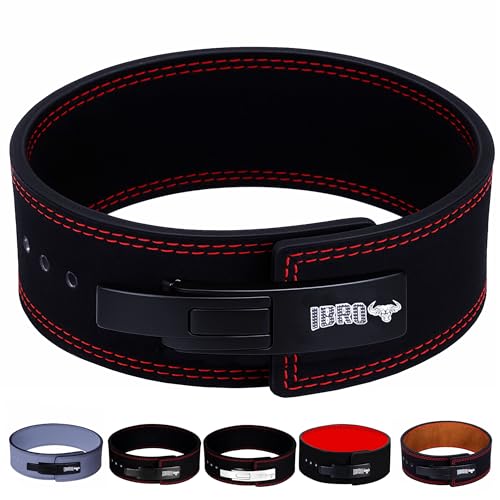
- Quick-release steel lever
- Leather construction with double stitching
- Available in three thicknesses
Best For: Lifters wanting an adjustable, all-around leather belt
Best Flexible-Fit Choice

- 24- to 45-inch stated adjustment range
- 10mm leather and 4-inch width
- Fast-locking adjustable lever
Best For: Lifters wanting broad sizing flexibility and firm support
Best for Competition Training
- Stated IPF and USAPL compliant
- Premium bovine leather construction
- Camac steel adjustable lever
Best For: Powerlifters training and competing in the same belt
Durable Leather Pick
- 10mm leather with suede lining
- Quick-locking heavy-duty lever
- Four-inch support for squats and deadlifts
Best For: Lifters wanting durable leather and fast fastening
Warranty-Supported Choice

- Pre-broken 9mm leather construction
- Quick-adjusting lever mechanism
- One-year replacement warranty
Best For: Medium-waist lifters wanting support and service coverage
Large-Size Pick
- Fits listed 38–44-inch waist range
- Pre-broken 9mm leather
- One-year replacement warranty
Best For: Larger-waisted lifters training heavy compound lifts
Leather Core Stability Pick – 10mm Gray Lever Belt
This 10mm leather option is a practical choice among lever weightlifting belts for lifters who want firm torso support without a traditional prong closure. Its four-inch width, suede lining, and quick-locking lever are suited to heavy squats, deadlifts, and powerlifting sessions.
Best For: Men and women seeking a sturdy leather belt for heavy strength training and powerlifting.
Pros:
- 10mm leather construction is designed to resist stretching.
- Four-inch width supports the abs and lower back evenly.
- Lever buckle allows quick, precise adjustments.
- Suede lining adds a more secure contact surface.
Cons:
- Correct sizing requires measuring your true waist rather than pants size.
- The rigid leather construction may require a break-in period.
Choose this belt if you prioritize straightforward leather construction and dependable bracing for compound lifts. Check the listing’s sizing chart carefully before ordering.
Competition-Ready Choice – Gymreapers 10mm Lever Belt
For lifters comparing lever weightlifting belts for both training and competition, the Gymreapers 10mm belt emphasizes support, adjustability, and federation compatibility. It combines a four-inch bovine leather body with a suede exterior and a steel lever buckle.
Best For: Powerlifters who want one belt for regular training and IPF-, IPL-, USPA-, or USAPL-compliant competition.
Pros:
- 10mm genuine bovine leather provides a stable brace.
- Contoured four-inch design is intended to fit securely without digging into the sides.
- Camac steel lever buckle offers quick, precise adjustments.
- Listed as IPF and USAPL approved, as well as compliant with several other federations.
Cons:
- The medium size is limited to a listed 30–36-inch waist range.
- Leather construction can feel firm compared with more flexible belt materials.
This is the most competition-focused option in the group, particularly for lifters who do not want to change belts between gym sessions and meets. Verify your federation’s current equipment rules and measure for the stated size range.
Colorful Leather Alternative – Olive Green 10mm Lever Belt
This olive-green belt offers the core-supporting format many lifters want from lever weightlifting belts: a 10mm leather body, four-inch width, suede lining, and a heavy-duty lever buckle. It is designed for squats, deadlifts, and other demanding powerlifting work.
Best For: Lifters who want a leather lever belt with a distinctive olive-green finish.
Pros:
- 10mm leather is designed to maintain consistent support.
- Four-inch width wraps the torso for abdominal and lower-back bracing.
- Heavy-duty lever closes quickly and supports precise fitting.
- Suede lining is intended to improve comfort and grip against the torso.
Cons:
- The supplied details do not specify a full waist-size range for this medium model.
- As with other stiff leather belts, it may feel less flexible initially.
This model makes sense if you want the same basic support profile as a traditional leather powerlifting belt but prefer an olive-green color. Confirm the size chart and waist measurement before purchase.
Adjustable Nylon Option – MANUEKLEAR 4-Inch Lever Belt
The MANUEKLEAR is a practical alternative among lever weightlifting belts for lifters who prefer a nylon construction with a heavy-duty closure. Its 10mm thickness, four-inch profile, and quick-locking lever are designed to provide support during demanding training.
Best For: Lifters with a 34–40-inch waist who want quick adjustments and a nylon lever-belt design.
Pros:
- 10mm construction is intended to support form and stability.
- Quick-locking lever allows fast adjustments between exercises.
- Nylon material offers an alternative to the leather belts in this roundup.
- The manufacturer states that the buckle design was upgraded for safety and stability.
Cons:
- The supplied size information is limited to the L, 34–40-inch range.
- Unlike the Gymreapers model, the notes do not mention competition approval.
- The listed seven-day free return policy is relatively short.
This belt is worth considering when quick fit changes and nylon construction matter more than a leather feel or documented federation approval. Measure your waist to confirm that the large size is appropriate.
Best Adjustable Option – IBRO 10mm Powerlifting Lever Belt
If you want a dependable fit across squat, deadlift, and bench sessions, the IBRO is a practical choice among lever weightlifting belts. Its 10mm leather construction offers a balance of firmness and usability, while the steel lever releases quickly between sets.
Best For: Lifters seeking an all-around 10mm leather belt with repeatable tightening and multiple thickness options.
Pros:
- Quick-release steel lever locks to the same setting between sets.
- Genuine leather core with suede finish and double stitching.
- Available in 8mm, 10mm, and 13mm thicknesses.
- Includes a one-year warranty covering lever or stitching failure.
Cons:
- Arrives unassembled and requires a Phillips screwdriver for setup.
- The 4-inch uniform width may feel substantial for lifters wanting a more flexible profile.
The IBRO stands out for its straightforward setup, repeatable lever closure, and broad thickness selection. The 10mm version is the sensible middle ground for general strength training, while experienced strongman athletes may prefer the stiffer 13mm option.
Best Flexible-Fit Choice – MANUEKLEAR 10mm Lever Belt
The MANUEKLEAR combines a 10mm-thick leather body with a lever buckle designed for fast locking and flexible adjustment. Among lever weightlifting belts, it is geared toward users who want a broad fit range for strength training, squats, deadlifts, and other demanding workouts.
Best For: Men and women who prioritize a wide adjustment range and substantial 4-inch lumbar support.
Pros:
- Adjustable lever buckle supports a stated 24- to 45-inch range.
- 4-inch-wide, 10mm-thick leather design provides firm support.
- Suitable for weightlifting, powerlifting, deadlifts, squats, and general strength training.
- Non-slip leather is designed for durable, secure use.
Cons:
- The product notes do not specify competition approval.
- Its thick, wide construction may be less appealing for lifters seeking maximum flexibility.
This belt focuses on fit versatility and sturdy support rather than competition-specific features. Its stated adjustment range makes it worth considering for shared households or lifters whose waist measurement changes over time.
Best for Competition Training – Gymreapers 10mm Lever Belt
The Gymreapers 10mm belt is designed for serious strength work and competition preparation. It pairs a 4-inch genuine bovine leather body with a Camac steel lever, making it one of the more competition-oriented lever weightlifting belts in this roundup.
Best For: Powerlifters who want one 10mm belt for training and IPF, IPL, USPA, or USAPL competition.
Pros:
- Stated to meet IPF and USAPL requirements and major federation standards.
- Made from 100% premium bovine leather with a suede exterior.
- Camac steel lever is designed for secure, precise adjustments.
- Contoured 4-inch profile aims to support the torso without sacrificing mobility.
Cons:
- Only a large 34-41-inch size is specified in the supplied details.
- The structured 10mm leather may require a break-in period for some lifters.
Gymreapers is the strongest fit for lifters who want competition compatibility without changing belts between gym sessions and meets. Its premium leather, reinforced construction, and competition-focused design come at the expense of a potentially less flexible feel.
Durable Leather Pick – 10mm Gray Lever Belt
This 10mm leather option is a straightforward choice for shoppers comparing lever weightlifting belts for heavy squats, deadlifts, and powerlifting. Its four-inch width is designed to provide even torso coverage, while the lever buckle allows quick fastening and release.
Best For: Lifters who want a sturdy leather belt with quick locking and broad core coverage.
Pros:
- 10mm leather construction with suede lining is designed to resist stretching.
- Heavy-duty lever buckle enables fast, precise fastening.
- Four-inch width supports the abs and lower back during squats and deadlifts.
- Listed for both men and women training in powerlifting.
Cons:
- The belt is relatively rigid and may require a break-in period.
- Accurate measuring is important because the listing specifies using the provided sizing chart rather than pants size.
This belt emphasizes consistent support and convenient lever operation. Check your true waist measurement carefully before choosing a size.
Warranty-Supported Choice – POZTEV Medium Lever Belt
For shoppers comparing lever weightlifting belts, this POZTEV model combines a pre-broken leather build with a lever mechanism intended for quick adjustments. The listed medium size fits 32–38-inch waists, and its four-inch vertical back support is aimed at heavy compound lifts.
Best For: Medium-waist lifters seeking leather support with quick adjustment and a one-year replacement warranty.
Pros:
- Pre-broken leather is described as comfortable and durable.
- Lever mechanism allows quick tightening and release.
- Four-inch vertical back support is designed for squats, deadlifts, and other compound movements.
- Includes 24/7 customer support and a one-year free replacement warranty.
Cons:
- The listed medium version is limited to a 32–38-inch waist range.
- At 9mm, it is slightly thinner than a 10mm belt.
This is a practical pick if you value a more broken-in feel and brand-backed support. Confirm the waist range before ordering, especially if you are near either limit.
Large-Size Pick – POZTEV Large Lever Belt
This large POZTEV belt is a useful option for shoppers comparing lever weightlifting belts for heavier training. It uses a 9mm leather body, a four-inch vertical back-support profile, and a lever buckle designed to simplify tightening and release during gym sessions.
Best For: Lifters with 38–44-inch waists who want a quick-adjusting leather belt for squats and deadlifts.
Pros:
- Large size is listed for 38–44-inch waists.
- Pre-broken leather is intended to balance comfort and durability.
- Lever design supports quick, personalized adjustments.
- Includes 24/7 customer support and a one-year free replacement warranty.
Cons:
- The 9mm thickness is not as thick as a 10mm belt.
- Its four-inch support profile may feel substantial for lifters who prefer a slimmer belt.
Choose this version when the larger waist range matches your measurements and you want the convenience of a lever closure. The supplied sizing range should take priority over pants size.
How We Picked the Best Lever Weightlifting Belts
We focused on the features that most affect performance and long-term usability: leather or similarly durable construction, belt thickness, consistent width, lever quality, adjustability, stitching, sizing range, and overall training suitability. The selected models are primarily 10mm-thick belts with a four-inch profile, a common configuration for powerlifting and general heavy strength training.
We also considered whether each belt is designed for men and women, whether its buckle can be repositioned for a closer fit, and whether the design is practical for frequent gym use. IPF approval or competition-oriented specifications may matter to sanctioned lifters, but approval should always be confirmed against the current rules of your federation.
Quick Comparison
- Best for traditional heavy lifting: A rigid 10mm leather lever belt with a four-inch back offers strong, even support.
- Best for fast adjustments: Choose a lever system with accessible mounting holes and a simple release mechanism.
- Best for competition use: Look for clearly stated dimensions, materials, and federation compliance.
- Best for shared use: Prioritize a wide sizing range and a lever that can be adjusted without tools.
Key Buying Factors for Lever Weightlifting Belts
Thickness and Width
Ten-millimeter leather is a balanced choice for support and durability. A four-inch width provides substantial coverage, but shorter-torso lifters may find a narrower or tapered design more comfortable. The belt should brace your midsection without digging into your ribs or hips.
Lever and Adjustment System
A lever belt should lock securely while remaining easy to release after a set. Check how many adjustment holes are available and whether the lever position can be changed as your waist measurement changes. Some models require tools for repositioning, so account for that before buying.
Fit and Sizing
Measure around the area where you will wear the belt, following the manufacturer’s instructions rather than relying on your pants size. A snug fit is essential, but the belt should not restrict breathing or prevent you from setting a strong brace. Review the actual waist range carefully, especially if you are between sizes.
Construction and Comfort
Inspect the stitching, edge finishing, buckle hardware, and interior surface. Stiff leather often needs a break-in period. Padding is not required for effective support, but smooth edges and a comfortable lining can reduce irritation during repeated sessions.
Who Should Buy Which Lever Weightlifting Belts?
Powerlifters and advanced lifters should favor a rigid 10mm belt with a secure steel lever and clearly documented competition dimensions. General gym users may prefer a model with easier adjustment and a slightly more forgiving break-in period. New belt users should prioritize accurate sizing, comfortable edges, and a straightforward release mechanism over maximum stiffness. Lifters with shorter torsos should compare the belt’s actual height and consider whether a four-inch profile will interfere with hip or rib movement.
Whichever model you choose, use the belt as a bracing aid rather than a substitute for sound technique. Break it in gradually, check the hardware regularly, and follow the manufacturer’s care instructions to preserve the leather and lever.