A touchscreen bike computer can make navigation, route changes, and ride data easier to manage without reaching for your phone. The best models combine a readable display with reliable GPS, useful mapping, strong battery life, and broad sensor compatibility.
We compared 10 bike computers with touchscreen across navigation features, display design, connectivity, durability, and riding use cases to help you choose the right fit for touring, commuting, training, or e-bike adventures.
Best 10 Bike Computers with Touchscreen Picks for 2026
Best Navigation Features

- 3.3-inch touchscreen with button controls
- Dual-band, five-satellite positioning
- Voice navigation and automatic rerouting
Best For: Large-screen route guidance and navigation-focused rides
Best Easy-Use Garmin

- Glove- and rain-friendly 3-inch touchscreen
- Preloaded road, off-road, and indoor profiles
- Up to 16 hours of stated battery life
Best For: Touring, recreational cycling, and eBike navigation
Best Battery Value
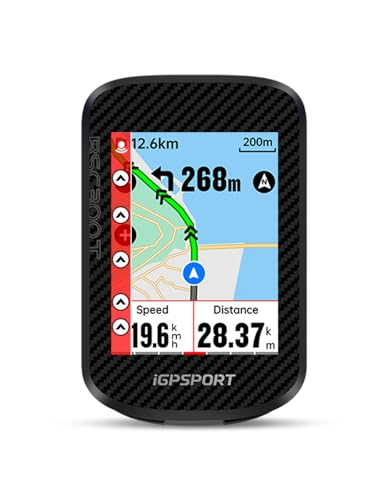
- 20-hour stated battery life
- Worldwide offline maps and off-course warnings
- 130-plus metrics with ANT+ and Bluetooth
Best For: Long rides requiring offline navigation and rich data
Best Renewed Touring Option
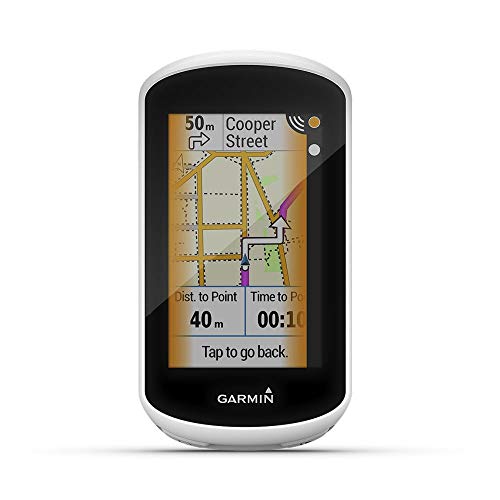
- 3-inch glove- and rain-friendly touchscreen
- Turn-by-turn Garmin cycling maps
- Smartphone and Varia compatibility
Best For: Budget-minded touring and recreational riders
Best for Smart Route Planning
iGPSPORT BiNavi Touchscreen Bike Computer

- 3.5-inch color touchscreen with map navigation
- Automatic rerouting and saved-point navigation
- 35-hour battery with climb and training tools
Best For: Cyclists who want interactive navigation and route-planning features
Best for Connected Training
COOSPO CS600 Touchscreen GPS Bike Computer

- 2.4-inch color touchscreen with auto-backlight
- Custom dashboards and 150+ data insights
- 36-hour battery with IPX7 waterproofing
Best For: Training-focused riders building a connected cycling setup
Best for Long Battery Life
iGPSPORT BSC100S GPS Bike Computer

- Up to 40 hours of battery life
- Tracks more than 40 ride metrics
- IPX7 waterproof with ANT+/Bluetooth support
Best For: Long-distance riders who prefer simple button controls
Best for Long-Distance Adventures

- 3.5-inch color touchscreen plus tactile buttons
- 50-hour battery life
- Offline maps with turn-by-turn navigation
Best For: Bikepacking, gravel riding, and long-distance exploration
Best Button-Controlled Value

- 2.4-inch color display with three-button control
- GPX navigation with automatic rerouting
- Wi-Fi, Bluetooth, and ANT+ connectivity
Best For: Everyday riding and indoor smart-trainer workouts
Best Connected Touchscreen Option

- 2.8-inch touchscreen with three physical buttons
- Offline maps and app-assisted rerouting
- IPX7 waterproof with Wi-Fi and ANT+ support
Best For: Connected navigation and indoor training
Best Navigation Features – iGPSPORT BSC500
The iGPSPORT BSC500 is a strong choice among bike computers with touchscreen controls, combining a large 3.3-inch display with physical buttons. Its dual-band satellite support, voice navigation, automatic rerouting, and climbing tools make it practical for riders who want detailed guidance without relying on a phone.
Best For: Riders who prioritize large-screen navigation, voice prompts, and route guidance.
Pros:
- 3.3-inch touchscreen supports both touch and button operation.
- Dual-band positioning and five satellite systems improve location accuracy.
- Offers route importing, turn reminders, off-course rerouting, and voice navigation.
- IPX7 water resistance and a stated two-year warranty add everyday practicality.
Cons:
- The 107-gram unit is heavier than some compact cycling computers.
- Several advanced functions depend on the iGPSPORT app or connected services.
The BSC500 stands out for riders who want a touchscreen bike computer with navigation depth and multiple ways to interact with the display. Its feature set is especially appealing for longer rides and unfamiliar routes.
Best Easy-Use Garmin – Garmin Edge Explore 2
The Garmin Edge Explore 2 is an approachable pick among bike computers with touchscreen displays. Its glove- and rain-friendly 3-inch screen, preloaded activity profiles, cycling maps, eBike routing, and connected safety features make it well suited to riders who want straightforward navigation.
Best For: Touring, recreational, and eBike riders seeking simple Garmin navigation.
Pros:
- 3-inch high-resolution touchscreen is designed for gloves, rain, and direct sunlight.
- Includes preloaded road, off-road, and indoor activity profiles.
- Provides searchable points of interest, popular-road mapping, and eBike routing.
- Offers up to 16 hours of stated battery life and compatibility with Varia devices.
Cons:
- Heart-rate, speed, cadence, and Varia accessories are sold separately.
- The listed map coverage is North America.
The Edge Explore 2 focuses on ease of use rather than an overly complex training interface. It is a sensible option for riders who value clear mapping, smartphone connectivity, and eBike-aware navigation.
Best Battery Value – iGPSPORT BSC300T
The iGPSPORT BSC300T offers a practical balance of touchscreen operation and physical controls for riders comparing bike computers with touchscreen navigation. It includes worldwide offline maps, off-course warnings, more than 130 riding metrics, and a stated 20-hour battery life.
Best For: Riders wanting offline maps, long battery life, and extensive ride data.
Pros:
- 2.4-inch capacitive touchscreen works alongside six physical buttons.
- Supports worldwide offline map downloads, route previews, and turn prompts.
- Provides more than 130 riding data points and real-time group tracking.
- ANT+ and Bluetooth 5.0 support a broad range of sensors and accessories.
Cons:
- The screen is smaller than the displays on the two Garmin models and the BSC500.
- A USB Type-C cable is not included according to the supplied details.
The BSC300T is a versatile pick for cyclists who want navigation without needing a constant phone connection. Its long stated runtime and wide data support make it particularly useful for extended rides and varied bike setups.
Best Renewed Touring Option – Garmin Edge Explore
The renewed Garmin Edge Explore is a straightforward touring choice among bike computers with touchscreen controls. Its 3-inch sunlight-readable display, preloaded Garmin cycling map, turn-by-turn directions, and connected safety features cover the essentials for recreational route navigation.
Best For: Budget-conscious touring riders who want Garmin mapping and touchscreen control.
Pros:
- 3-inch touchscreen is designed to work with gloves and in rain.
- Includes turn-by-turn navigation and popularity-based route planning.
- Tracks distance, speed, elevation, and ride location using built-in GPS.
- Supports Varia awareness devices and smartphone-connected features.
Cons:
- As a renewed product, it has a shorter stated 90-day limited warranty.
- Its listed battery life is up to 12 hours, less than newer options in this roundup.
- The supplied map coverage is North America.
The Edge Explore remains a focused navigation device for riders who do not need the newest hardware. Its renewed status may appeal to shoppers seeking Garmin’s core touring features at a potentially lower cost, provided the shorter warranty fits their expectations.
Best for Smart Route Planning – iGPSPORT BiNavi Touchscreen Bike Computer
The iGPSPORT BiNavi is a strong option among bike computers with touchscreen controls, pairing a 3.5-inch color display with route planning, navigation, and ride-management features. It supports routes from the iGPSPORT app and compatible third-party apps such as Strava and Komoot, while dual-band GPS and five satellite systems are designed to improve positioning.
Best For: Riders who want touchscreen map navigation, route rerouting, climb planning, and phone-based music control.
Pros:
- 3.5-inch capacitive touchscreen with color display.
- Supports route imports, saved-point navigation, and automatic rerouting when off course.
- Up to 35 hours of battery life with dual-band GPS and five satellite systems.
- Includes climb planning, training analysis, and music control when paired with a phone.
Cons:
- Its navigation and music features depend partly on phone and app connectivity.
- The supplied information does not confirm the current software-update date.
BiNavi stands out for cyclists who prioritize navigation and interactive controls over a simple ride-data display. Its substantial screen and broad route features make it especially suitable for longer or unfamiliar rides.
Best for Connected Training – COOSPO CS600 Touchscreen GPS Bike Computer
The COOSPO CS600 combines a 2.4-inch color touchscreen with built-in route navigation and extensive ride-data analysis. For shoppers comparing bike computers with touchscreen controls, it offers a practical mix of auto-backlight visibility, wireless connectivity, training-plan support, and IPX7 waterproofing.
Best For: Riders who want customizable data screens, route following, connected accessories, and detailed training insights.
Pros:
- High-resolution color touchscreen with auto-backlight technology.
- Supports uploaded routes and breadcrumb navigation.
- Provides more than 150 data insights and customizable dashboard layouts.
- Offers 36-hour battery life, IPX7 protection, and ANT+/Bluetooth connectivity.
Cons:
- Additional sensors and extension mounts are sold separately.
- Its 2.4-inch display is smaller than the BiNavi’s 3.5-inch screen.
The CS600 is a well-rounded choice for riders who want touchscreen convenience without giving up training connectivity. Its ecosystem support is particularly useful if you plan to pair the computer with sensors, radar, lights, an e-bike, or an indoor trainer.
Best for Long Battery Life – iGPSPORT BSC100S GPS Bike Computer
The iGPSPORT BSC100S is a straightforward GPS cycling computer for riders who value long battery life and clear ride metrics. Unlike the other bike computers with touchscreen controls in this roundup, it uses physical buttons rather than a touchscreen, but it still provides a large anti-glare display, wireless sensor support, and broad satellite coverage.
Best For: Cyclists who want dependable ride tracking, long endurance, and compatibility with ANT+ and Bluetooth sensors.
Pros:
- Up to 40 hours of battery life with a 2.6-inch anti-glare display.
- Tracks more than 40 metrics, including speed, distance, grade, cadence, and calories.
- Supports GPS, BeiDou, GLONASS, Galileo, and QZSS positioning systems.
- IPX7 waterproofing plus ANT+/Bluetooth connectivity for compatible sensors.
Cons:
- Uses buttons rather than touchscreen input.
- A USB-C charging cable is not included.
- It does not provide the built-in touchscreen map-navigation features found on the other listed models.
The BSC100S is best viewed as a durable, data-focused alternative rather than a touchscreen navigation computer. Its 40-hour battery and broad sensor compatibility make it a sensible fit for long-distance riders who prefer simple physical controls.
Best for Long-Distance Adventures – Bryton Rider S810
For riders comparing bike computers with touchscreen controls, the Bryton Rider S810 stands out with its large 3.5-inch color display, tactile buttons, offline navigation, and exceptionally long battery life. It is designed for riders who want detailed route guidance without relying on cellular service.
Best For: Century rides, bikepacking, gravel adventures, and riders who need offline maps and extended battery life.
Pros:
- Large 3.5-inch color touchscreen with adaptive light sensor and tactile physical buttons.
- Up to 50 hours of battery life for long rides and multi-day trips.
- Offline maps, turn-by-turn guidance, and on-device rerouting without cell service.
- Supports ANT+ sensors, smart trainers, Strava Live Segments, and Climb Challenge 2.0.
Cons:
- The device-only package may require separately purchased sensors or accessories.
- Its larger display may be more than casual riders need.
The S810 is a strong choice when navigation reliability and battery endurance matter most. Its combination of touchscreen convenience, physical controls, and broad sensor support makes it especially practical for serious outdoor riding.
Best Button-Controlled Value – GEOID CC600 GPS Bike Computer
The GEOID CC600 is a practical option for shoppers considering bike computers with touchscreen features but who prefer straightforward button control. Its 2.4-inch color display, route navigation, wireless syncing, and indoor-training support cover the essentials for structured rides and everyday cycling.
Best For: Riders who prefer physical controls, customizable data screens, route navigation, and indoor smart-trainer workouts.
Pros:
- Color display with durable Asahi glass and intuitive three-button operation.
- Route navigation supports GPX uploads, turn reminders, zooming, and automatic rerouting.
- Wi-Fi and Bluetooth support faster syncing, firmware updates, and AGNSS data transfers.
- Offers extensive data customization, ANT+ and Bluetooth sensor support, and indoor training.
Cons:
- It uses buttons rather than a touchscreen.
- The listed battery life is approximately 24 hours, shorter than some endurance-focused computers.
The CC600 makes sense for cyclists who value configurable data fields and broad connectivity more than touchscreen input. Its button-based interface and navigation tools offer a focused, practical setup for outdoor and indoor training.
Best Connected Touchscreen Option – GEOID CC700 Pro
The GEOID CC700 Pro is a well-rounded choice among bike computers with touchscreen controls, combining a 2.8-inch color screen with physical buttons for flexible operation. Offline maps, rerouting, wireless syncing, and smart-trainer support make it suitable for riders who want navigation and training features in one device.
Best For: Cyclists who want touchscreen navigation, offline route storage, wireless updates, and connected training features.
Pros:
- 2.8-inch color touchscreen supplemented by three physical buttons.
- Supports global offline map downloads, turn prompts, street names, zoom, and dual-perspective views.
- Wi-Fi and Bluetooth enable ride-record syncing, firmware updates, and fast AGNSS positioning.
- IPX7 waterproofing, ANT+/Bluetooth support, indoor training, and optional DJI Action camera controls.
Cons:
- Rerouting requires the bike computer to remain connected to the designated app.
- Its 2.8-inch display is smaller than the Rider S810’s screen.
The CC700 Pro is a compelling middle ground for riders who want modern touchscreen interaction without giving up physical controls. It is particularly useful for route-focused cyclists who also want indoor training and connected-device features.
How We Picked the Best Bike Computers with Touchscreen
We focused on the features that matter most during real rides: screen visibility, touchscreen responsiveness, GPS accuracy, map and rerouting tools, battery endurance, weather resistance, and compatibility with Bluetooth and ANT+ sensors. We also considered whether each computer suits casual riders, touring cyclists, structured training, or e-bike users.
Because product specifications and included accessories can vary, check the current listing before buying—especially for map coverage, heart-rate or cadence sensor support, mounting hardware, and charging requirements.
Quick Comparison
| Best For | What to Prioritize |
|---|---|
| Everyday navigation | Simple menus, responsive touch controls, and clear turn guidance |
| Long-distance touring | Offline maps, rerouting, waterproofing, and extended battery life |
| Training and performance | ANT+/Bluetooth support, structured metrics, climb data, and sensor connectivity |
| E-bike riding | E-bike compatibility, route guidance, and easy-to-read ride data |
| Budget-conscious riders | Reliable GPS, essential metrics, and a straightforward display |
Key Buying Factors for Bike Computers with Touchscreen
Display and Touch Control
Screen size, color, brightness, and glove-friendly responsiveness affect usability more than resolution alone. A larger display helps with maps and turn prompts, while physical buttons can be useful in rain or cold weather. Look for a layout that lets you switch screens quickly while riding.
Navigation and Mapping
Offline maps are valuable where cellular coverage is weak. Check whether the device supports turn-by-turn directions, rerouting, off-course warnings, saved routes, and automatic route synchronization. If you frequently explore unfamiliar roads, these features are usually worth prioritizing.
Battery, Durability, and Connectivity
Choose battery capacity based on your longest typical ride, not just average use. IP-rated water resistance is important for unpredictable weather. Bluetooth and ANT+ support allow connection to speed, cadence, heart-rate, power, and e-bike sensors, while Wi-Fi can simplify route and firmware updates.
Who Should Buy Which Bike Computers with Touchscreen?
Choose a basic GPS model if you mainly need speed, distance, ride time, and occasional route guidance. Touring cyclists should favor a larger color display, offline mapping, rerouting, and a long-lasting battery. Riders focused on training should select a computer with broad sensor support and detailed performance features. E-bike users should verify compatibility before purchasing, particularly if they want battery, assist, or ride-status data on screen.
For most buyers, the best choice is the model that balances map readability, dependable battery life, weather resistance, and controls you can use confidently on the road. A touchscreen is helpful, but navigation quality and everyday reliability should remain the deciding factors.