The best bike computers with navigation help you follow routes, monitor performance, and ride with less reliance on your phone. The right model depends on whether you prioritize simple directions, advanced training metrics, long battery life, or touchscreen convenience.
We compared 10 navigation-focused cycling computers across display quality, mapping, controls, connectivity, battery performance, and ease of use to help you find the best fit for your riding style and budget.
Best 10 Bike Computers with Navigation Picks for 2026
Best Smart Navigation Pick

- 3.3-inch touchscreen with button controls
- Voice prompts and automatic rerouting
- Imports routes from major cycling apps
Best For: Riders wanting feature-rich navigation with touch and voice guidance
Best Premium Choice

- Vivid 3.5-inch touchscreen
- Advanced course, climb, and power features
- Built-in speaker and up to 60-hour saver-mode battery
Best For: Performance-focused cyclists wanting premium navigation and training tools
Best Simple Long-Runtime Option

- Built-in GPS needs no wheel magnet
- Tracks altitude, gradient, and ascent
- Up to 28 hours of battery life
Best For: Riders seeking basic GPS data and extended runtime
Best Easy-to-Use Navigator

- 3-inch sunlight-readable touchscreen
- Road, trail, POI, and eBike routing
- LiveTrack and incident detection support
Best For: Touring, recreational, and eBike riders wanting simple navigation
Compact Route Companion

- On-device turn-by-turn prompts with LED and audible cues
- Automatic route downloads and ride uploads
- Up to 20 hours of battery life with IPX7 protection
Best For: Connected riders wanting compact, button-controlled navigation
Training-Focused Navigator

- Advanced maps with multi-band GNSS positioning
- ClimbPro ascent and grade guidance on every ride
- Up to 26 hours of battery life, or 42 in saver mode
Best For: Training-focused cyclists who also need advanced navigation
Long-Range Color Navigator

- 2.8-inch color touchscreen with preloaded OSM maps
- 33-hour battery for touring and extended commutes
- Turn-by-turn guidance with radar and Live Tracking support
Best For: Long-distance riders wanting color maps and extended battery life
Best Overall
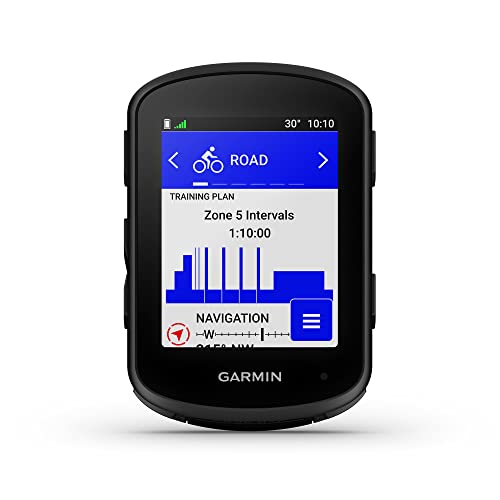
- Multi-band GNSS and searchable ride maps
- Touchscreen plus button controls
- Up to 26 hours of demanding-use battery life
Best For: Advanced navigation and training features
Best for Route Sharing

- Turn-by-turn guidance for multiple route sources
- Create routes directly from map selections or destinations
- Dual-band GPS with IPX7 water resistance
Best For: Imported, shared, and on-demand routes
Best Battery Value
COOSPO CS500 GPS Bike Computer

- Preloaded maps with turn prompts
- Claimed 45-hour battery life
- BLE and ANT+ sensor compatibility
Best For: Long rides and essential navigation
Best Smart Navigation Pick – iGPSPORT BSC500
For riders who want bike computers with navigation plus an easy-to-read interface, the iGPSPORT BSC500 combines a 3.3-inch touchscreen with button controls, route importing, voice guidance, and automatic rerouting. Its dual-band, five-satellite positioning support is designed to improve location accuracy on varied rides.
Best For: Cyclists who want touchscreen convenience, voice navigation, route planning, and training features in one computer.
Pros:
- Large 3.3-inch display supports both touch and button operation.
- Imports routes from the iGPSPORT app, Strava, Komoot, and route files.
- Provides turn reminders, voice alerts, and automatic rerouting when you go off course.
- IPX7 protection, ANT+ and Bluetooth connectivity, and a two-year warranty add practical value.
Cons:
- The broad feature set may take time to learn.
- Touchscreen operation may be less convenient in some wet or gloved conditions than physical controls alone.
The BSC500 is a strong all-around choice when navigation is the priority but you also want climbing previews and training analysis. Its combination of voice prompts and automatic yaw planning can reduce the need to stop and check a phone.
Best Premium Choice – Garmin Edge 1050
The Garmin Edge 1050 is a premium option among bike computers with navigation, pairing a vivid 3.5-inch touchscreen with detailed cycling metrics, course creation, road-surface information, and navigation prompts. Its built-in speaker also supports workout cues and a bike-bell function.
Best For: Serious cyclists who want advanced navigation, performance analysis, group-ride features, and extensive smart connectivity.
Pros:
- Large, vivid touchscreen supports course creation directly on the device.
- Offers road-hazard alerts, road-surface details, ClimbPro, and power-guidance features.
- Built-in speaker provides navigation and workout prompts and works as a bike bell.
- Battery life is rated up to 20 hours in demanding use or 60 hours in battery-saver mode.
Cons:
- Its advanced feature set is likely more than casual riders need.
- Some connected features require a compatible smartphone, sensors, or power meter.
The Edge 1050 stands out for riders who want navigation integrated with training and cycling awareness. It is especially compelling for structured training and group riding, provided you will use its broader ecosystem.
Best Simple Long-Runtime Option – GPS Bike Computer 2.4-inch
This compact GPS computer is a straightforward option for cyclists comparing bike computers with navigation and ride data. It uses built-in GPS without a wheel sensor or spoke magnet, while tracking speed, distance, altitude, gradient, temperature, and accumulated ascent on a 2.4-inch LCD.
Best For: Riders who prefer simple button operation, essential route-related ride data, and long battery life over advanced mapping features.
Pros:
- Built-in GPS works without a separate wheel sensor or spoke magnet.
- Tracks elevation, gradient, ascent, temperature, speed, and distance.
- Up to 28 hours of battery life supports extended rides.
- IPX7 waterproofing and automatic backlight suit changing outdoor conditions.
Cons:
- The supplied notes do not identify turn-by-turn mapping or voice navigation.
- The 2.4-inch LCD and button interface are more basic than touchscreen models.
This model makes sense when you want dependable GPS-based ride recording and climbing data without a complicated setup. Choose it for essential metrics and endurance rather than rich on-screen route guidance.
Best Easy-to-Use Navigator – Garmin Edge Explore 2
The Garmin Edge Explore 2 is designed for accessible navigation, with a 3-inch touchscreen, preloaded road and off-road profiles, searchable points of interest, and maps that highlight popular roads and trails. It also supports eBike-specific routing and battery-related guidance when paired with a compatible eBike.
Best For: Recreational, touring, and eBike riders who want simple navigation with connected safety and ride features.
Pros:
- Glove- and rain-friendly touchscreen remains visible in direct sunlight.
- Preloaded activity profiles and ride-type maps simplify setup.
- Supports popular-road, trail, traffic, POI, and eBike routing information.
- Works with LiveTrack, GroupTrack, incident detection, and Varia devices when paired with compatible equipment.
Cons:
- Battery life is rated at up to 16 hours, less than several alternatives.
- Heart-rate, speed, cadence, and Varia features require separately sold compatible devices.
The Edge Explore 2 is a practical fit for riders who value clear navigation over deep performance analytics. Its straightforward setup and eBike-aware routing make it particularly useful for touring and everyday exploration.
Compact Route Companion – Wahoo ELEMNT BOLT V3
If you want bike computers with navigation that keep route guidance straightforward, the Wahoo ELEMNT BOLT V3 combines on-device turn prompts with LED and audible alerts. It supports GPX and TCX files plus routes from services such as Strava, Komoot, and Ride With GPS.
Best For: Riders who want compact, button-controlled navigation with connected route syncing and safety features.
Pros:
- Generates turn-by-turn directions for imported routes and on-demand destinations.
- Automatically downloads saved routes and uploads completed rides when connected accounts are synced.
- Supports smart notifications, LiveTrack, and ANT+ rearview radar integration.
- Offers up to 20 hours of battery life and IPX7 protection.
Cons:
- LiveTrack and smart notifications require a smartphone connection.
- Its 2.3-inch LCD is smaller than the displays on some competing units.
The BOLT V3 is a practical choice for riders who value dependable route prompts and a compact handlebar setup. Its phone-connected features add convenience, while the integrated LEDs and audible cues help keep navigation glanceable.
Training-Focused Navigator – Garmin Edge 540
The Garmin Edge 540 is one of the more training-oriented bike computers with navigation, pairing advanced mapping with adaptive coaching and performance tools. Its multi-band GNSS is designed for improved positioning accuracy, while ride-type maps highlight popular roads, trails, and points of interest.
Best For: Cyclists who want navigation alongside structured training, climbing guidance, and long battery life.
Pros:
- Provides advanced navigation with searchable points of interest and ride-specific maps.
- Multi-band GNSS helps support positioning in challenging environments.
- ClimbPro shows ascent and grade on every ride, even without a course.
- Offers up to 26 hours of battery life, or up to 42 hours in battery-saver mode.
Cons:
- Targeted coaching and several performance features require compatible power and heart-rate sensors.
- Button controls may be less intuitive than a touchscreen for some riders.
The Edge 540 stands out when navigation is only part of your buying decision. It is especially appealing for riders who want to plan routes, manage climbing efforts, and follow adaptive training guidance from the same compact computer.
Long-Range Color Navigator – Bryton Rider 650
For riders comparing bike computers with navigation, the Bryton Rider 650 offers a large 2.8-inch color touchscreen, preloaded OSM maps, and turn-by-turn follow-track guidance. Its 33-hour battery is suited to extended tours, commuting, and long rides where frequent charging is inconvenient.
Best For: Long-distance riders who want color maps, touchscreen controls, and substantial battery life at a more accessible feature level.
Pros:
- Displays full-color maps with street names, points of interest, and turn-by-turn guidance.
- 33-hour battery life supports long weekends and extended commuting.
- Includes Live Tracking and rearview radar support for added ride awareness.
- Works with ANT+ sensors and syncs rides to services including Strava, TrainingPeaks, and Komoot.
Cons:
- Some connected sharing and syncing features depend on the Bryton Active app and Bluetooth.
- At 92 g, it is slightly heavier than the listed Wahoo BOLT V3.
The Rider 650 is a strong fit for cyclists who prioritize readable color mapping and endurance over a minimal racing-oriented design. Its touchscreen interface and generous battery make it especially practical for touring and everyday exploration.
Best Overall – Garmin Edge 840
The Garmin Edge 840 is a feature-rich choice for riders comparing bike computers with navigation. Its touchscreen and button controls, multi-band GNSS, searchable maps, and turn-free ClimbPro planning make it well suited to detailed route guidance and structured training.
Best For: Cyclists who want advanced navigation, training guidance, and broad connectivity in a compact computer.
Pros:
- Multi-band GNSS is designed to improve positioning accuracy in challenging environments.
- ClimbPro shows remaining ascent and grade, even when riding without a course.
- Offers touchscreen and button control, plus up to 26 hours of battery life in demanding use.
- Supports personalized workout prompts and extensive performance features with compatible sensors.
Cons:
- Many advanced training features require compatible power and heart-rate sensors.
- Its extensive feature set may be more than casual riders need.
The Edge 840 stands out when navigation is only part of the purchase decision. It is especially compelling for riders who also want adaptive training, climbing data, and detailed cycling analysis.
Best for Route Sharing – Wahoo ELEMNT ROAM V3
The Wahoo ELEMNT ROAM V3 is a practical option among bike computers with navigation for riders who frequently import, share, or create routes. It provides turn-by-turn guidance for common route files and services, while its dual-band GPS is designed to maintain accuracy around urban density and heavy tree cover.
Best For: Riders who want flexible route importing, on-device route creation, and easy sharing through the ELEMNT ecosystem.
Pros:
- Generates turn-by-turn prompts from GPX, TCX, Strava, Ride With GPS, Komoot, and other route sources.
- Can create routes from a destination, address, point of interest, or map selection.
- Dual-band GPS supports positioning across multiple satellite systems.
- Offers a 2.8-inch display, IPX7 protection, and up to 25 hours of battery life.
Cons:
- Some route-generation and sharing functions rely on the ELEMNT companion app.
- At 109 g, it is heavier than some compact cycling computers.
The ROAM V3 is a strong match for cyclists who value route flexibility over extensive training metrics. Its combination of route-file support, on-demand generation, and public route sharing makes navigation convenient for changing plans.
Best Battery Value – COOSPO CS500 GPS Bike Computer
The COOSPO CS500 offers a straightforward way to get navigation and ride data without frequent charging. For shoppers comparing bike computers with navigation, it combines preloaded maps, turn prompts, multi-system GPS, sensor support, and a claimed 45-hour battery life in a compact 2.6-inch unit.
Best For: Riders seeking long battery life, essential navigation, and broad sensor compatibility at a practical feature level.
Pros:
- Preloaded maps and turn prompts provide on-handlebar route guidance.
- Supports GPS, BeiDou, GLONASS, Galileo, and QZSS positioning systems.
- Claimed 45-hour battery life reduces charging interruptions on long rides.
- Connects with BLE and ANT+ speed, cadence, heart-rate, trainer, and power sensors.
Cons:
- Its 2.6-inch LCD is smaller than the Wahoo display in this roundup.
- Navigation and data features are more focused on essentials than advanced training analysis.
- App syncing and sharing use the CooSporide app.
The CS500 is appealing when endurance and core navigation matter more than premium training tools. Its long stated battery life and radar compatibility add useful practicality for extended or safety-conscious rides.
How We Picked the Best Bike Computers with Navigation
We focused on models that provide built-in GPS navigation rather than basic speed and distance tracking alone. The selection includes established cycling computers from Garmin, Wahoo, Bryton, iGPSPORT, and COOSPO, along with feature-rich options suited to different budgets and riding goals.
Our comparison emphasizes practical ownership factors: map and route support, screen readability, control layout, battery expectations, wireless compatibility, water resistance, and access to useful cycling data. Because navigation needs vary significantly between casual riders, commuters, gravel cyclists, and serious training users, we included both straightforward navigators and advanced performance computers.
Quick Comparison
- Best for premium features: Garmin Edge 1050 offers a vivid touchscreen, advanced metrics, speaker functionality, and connected riding tools.
- Best for simple navigation: Garmin Edge Explore 2 is designed around accessible route guidance rather than intensive training analysis.
- Best for compact performance: Garmin Edge 540 and Edge 840 provide advanced navigation and training features in smaller formats.
- Best for Wahoo users: ELEMNT Bolt V3 favors a compact design, while the ROAM V3 provides a larger navigation-oriented experience.
- Best value-focused choices: iGPSPORT, Bryton, and COOSPO offer route guidance and core ride data at potentially lower prices.
Key Buying Factors for Bike Computers with Navigation
Mapping and Route Guidance
Check whether the computer supports turn-by-turn directions, rerouting, color maps, breadcrumb trails, or preloaded regional maps. Riders exploring unfamiliar roads generally benefit from full mapping and rerouting, while familiar-route users may need only a clear track line and upcoming-turn alerts.
Display and Controls
Touchscreens are convenient for map interaction, but physical buttons can be easier to operate with gloves, rain, or rough terrain. Consider screen size, brightness, glare resistance, and whether the display remains readable in direct sunlight.
Battery and Connectivity
Long battery life matters for touring, endurance events, and multi-day trips. Also verify compatibility with Bluetooth and ANT+ sensors, heart-rate monitors, power meters, radar, phones, and electronic shifting systems if you plan to expand your setup.
Training Features and Durability
Advanced cyclists may want structured workouts, adaptive coaching, power analysis, climbing data, and recovery insights. For all riders, water resistance, dependable GPS reception, secure mounting, and straightforward syncing are more important than an overwhelming feature list.
Who Should Buy Which Bike Computers with Navigation?
Choose a simple navigation computer if you mainly want dependable directions, speed, distance, and elevation without extensive training analysis. A compact performance model is a better match for cyclists who want structured workouts and detailed ride metrics. Select a larger touchscreen computer if map visibility and easy route interaction matter most. Touring and adventure riders should prioritize battery capacity, full mapping, rerouting, and broad sensor compatibility. If price is the main concern, compare the lower-cost models carefully for map coverage, app quality, and the navigation features included rather than judging by screen size alone.