A good sleeping pad does more than soften hard ground—it helps insulate your body from the cold beneath your tent. The best insulated sleeping pads balance warmth, cushioning, packed size, weight, and setup time for the conditions you expect to face.
This roundup compares 10 options ranging from lightweight three-season pads to thick, high-R-value models designed for colder camping. Use the guide below to narrow the list by warmth, comfort, portability, and overall value.
Best 10 Insulated Sleeping Pads Picks for 2026
Best All-Season Hybrid
Oxylus 4.3 R-Value Self-Inflating Pad
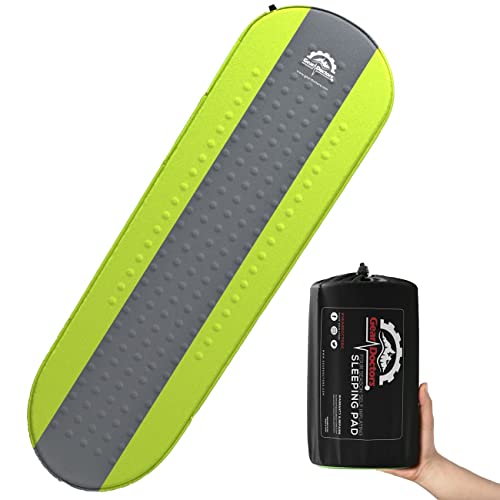
- 4.3 R-value hybrid foam-and-air design
- Self-inflates in under five minutes
- Durable 75D shell with lifetime replacement guarantee
Best For: Four-season camping and versatile backpacking
Best Cold-Weather Cushioning
Hikenture R7.3 Foot-Pump Sleeping Pad

- Certified 7.3 R-value for sub-zero insulation
- Four inches thick with 440-pound load capacity
- Built-in foot pump inflates it in about 90 seconds
Best For: Cold-weather camping and comfort-focused backpacking
Best Lightweight XL Pad
Naturehike 4.6R Insulated Air Mattress

- 4.6 R-value with eight-layer aluminum insulation
- Roomy 77.17-by-25.2-inch sleeping surface
- About 1.7 pounds with pumpsack and accessories
Best For: Lightweight backpacking and hiking
Best for Stable Car Camping

- Three-inch hybrid memory-foam cushioning
- Built-in foot pump for firmness adjustments
- Quiet, insulated design with a non-slip base
Best For: Car camping and comfort-focused tent use
Best Value 3-Season Pad

- R-value of 4.0 for three-season warmth
- Wide, 3.25-inch-thick sleeping surface
- Pump sack and repair accessories included
Best For: Three-season backpackers seeking comfort and value
Best All-Season Thickness

- 7.2 R-value for all-season insulation
- Four-inch thickness for added cushioning
- 330-pound capacity and compact packed size
Best For: Campers prioritizing warmth and support
Best Lightweight Cold-Weather Pick

- ASTM-tested 6.2 R-value for cold resistance
- About 1.53 pounds with a 40L pump sack
- 3.2-inch thickness and repair patches included
Best For: Lightweight backpacking in colder conditions
Cold-Weather Comfort Pick
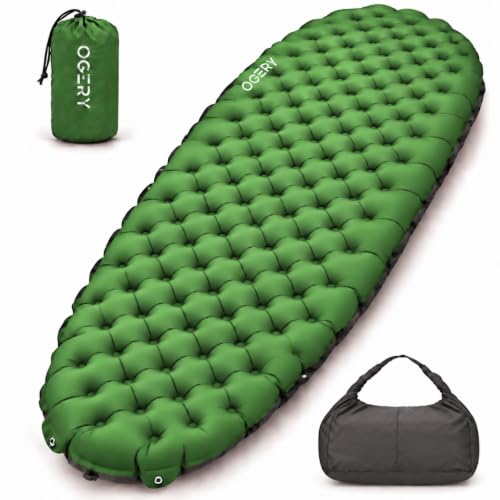
- R-value 9.0 insulation for cold ground
- 4.7-inch cushioning with rectangular design
- Includes pump bag and storage bag
Best For: Winter camping and cushioned outdoor sleeping
Fast-Inflation Value Pick

- Built-in pump inflates in about 30–60 seconds
- Includes an integrated pillow
- Weighs 1.5 pounds and connects to another pad
Best For: Lightweight camping and quick setup
Four-Season Backpacking Pick

- Certified R-value 9 with nine-layer insulation
- Four-inch thickness supports uneven ground
- 2.2 pounds with pump sack included
Best For: Four-season backpacking and rugged conditions
Best All-Season Hybrid – Oxylus 4.3 R-Value Self-Inflating Pad
The Gear Doctors Oxylus is a practical choice if you want insulated sleeping pads with a balance of foam cushioning, warmth, and straightforward setup. Its self-inflating design expands after you open the valve, while a few breaths let you fine-tune firmness. At 35.2 ounces, it is better suited to versatile camping and backpacking than to ultralight trips.
Best For: Four-season camping, car camping, hiking, and backpackers who prefer hybrid foam-and-air comfort.
Pros:
- 4.3 R-value foam-and-air construction adds insulation for cooler ground.
- Self-inflates in under five minutes and rolls up with the included elastic band.
- 75D micro-coated polyester shell is designed to resist moisture, abrasion, and UV exposure.
- 72-by-20-inch sleeping surface and 1.5-inch thickness provide supportive cushioning.
Cons:
- At 35.2 ounces, it is heavier than many minimalist inflatable pads.
- The 20-inch width may feel narrow for sleepers who prefer extra room.
- Self-inflation still benefits from additional breaths for firmness adjustment.
The Oxylus stands out as a durable, easy-to-use insulated sleeping pad for campers who want dependable warmth without giving up foam-backed support. Its lifetime replacement guarantee adds reassurance for frequent outdoor use.
Best Cold-Weather Cushioning – Hikenture R7.3 Foot-Pump Sleeping Pad
The Hikenture R7.3 is among the most heavily insulated sleeping pads in this roundup, pairing a certified 7.3 R-value with four inches of cushioning. Its built-in foot pump avoids the need for separate inflation equipment, making it a compelling option for cold-weather camping when warmth and comfort take priority.
Best For: Cold-weather camping, larger sleepers, and backpackers seeking thick cushioning with a compact packed size.
Pros:
- 7.3 R-value and triple-layer aluminum film system are designed for sub-zero insulation.
- Four-inch thickness and 500-plus support points help prevent bottoming out.
- Built-in foot pump inflates the pad in about 90 seconds.
- 75.2-by-25-inch surface supports restless sleepers and accommodates up to 440 pounds.
Cons:
- At 2.1 pounds, it is heavier than the lightest backpacking air pads.
- The substantial four-inch construction may be more than warm-weather campers need.
- It requires foot-pump inflation rather than passive self-inflation.
Choose the Hikenture when ground insulation and pressure relief matter more than minimizing every ounce. Its combination of high R-value, generous dimensions, and rapid built-in inflation makes it especially appealing for winter trips and comfort-focused backpacking.
Best Lightweight XL Pad – Naturehike 4.6R Insulated Air Mattress
The Naturehike 4.6R is a strong lightweight pick for hikers comparing insulated sleeping pads by warmth-to-weight ratio. It uses an eight-layer aluminum insulation structure, measures 77.17 by 25.2 inches, and weighs about 1.7 pounds including its storage components. The included pumpsack provides inflation without mouth blowing.
Best For: Backpackers and hikers who want a roomy sleeping surface, meaningful insulation, and low carry weight.
Pros:
- 4.6 R-value is rated for temperatures above -4°F/-20°C.
- Eight-layer aluminum structure is designed to reduce convective heat loss and noise.
- Large 77.17-by-25.2-inch surface provides room to turn over.
- Compact 1.7-pound design includes a pumpsack, straps, and repair allowance.
Cons:
- The 20D nylon construction is lighter but may require more care around abrasion.
- It is an air-filled pad, so firmness depends on proper inflation.
- The manufacturer cautions against over-inflation and recommends adjusting air with temperature changes.
Naturehike’s pad makes sense for people who want an XL sleeping surface without carrying a bulky mattress. Its R-value and compact design suit three-season and colder shoulder-season trips, provided users follow the inflation guidance.
Best for Stable Car Camping – OGERY 3-Inch Memory Foam Pad
The OGERY is designed for campers who prefer the steadier feel of foam over the bouncier sensation of an air-only mattress. This 3-inch hybrid pad combines memory foam with adjustable air support, a built-in foot pump, and a textured non-slip base, making it one of the more comfort-oriented insulated sleeping pads for tents, cars, and cots.
Best For: Car camping, tent camping, and sleepers who want quiet, stable memory-foam cushioning.
Pros:
- Three-inch high-density foam helps support side, back, and stomach sleepers.
- Self-inflates after opening the valve, with a built-in foot pump for firmness adjustments.
- Foam layer helps reduce heat loss and movement noise.
- Textured underside helps limit sliding on tent floors, car trunks, and cots.
Cons:
- At six pounds, it is substantially heavier than backpacking-focused air pads.
- The 76.77-by-27.17-inch packed system prioritizes comfort over minimal pack weight.
- Its one-year manufacturer warranty is shorter than some lifetime-guarantee options.
The OGERY is best viewed as a comfort-first camp mattress rather than an ultralight backpacking pad. Its quiet foam construction, wide profile, and non-slip base are particularly useful when sleeping in a vehicle, tent, or on a camping cot.
Best Value 3-Season Pad – Big Agnes Divide Insulated
The Big Agnes Divide Insulated is a practical choice among insulated sleeping pads for three-season backpacking. Its R-value of 4.0, 3.25-inch thickness, and wide 25-inch sleeping surface balance warmth, comfort, and packability.
Best For: Three-season backpackers who want a roomy, lightweight pad with an included inflation sack.
Pros:
- THERMOLITE insulation and heat-reflective film provide an R-value of 4.0.
- Wide 25-by-72-inch design and 3.25-inch thickness offer supportive comfort.
- I-Beam construction, durable recycled nylon ripstop, and aviation-grade TPU lamination support reliable use.
- Includes a pump sack, storage sack, repair patches, and replacement valve seal.
Cons:
- Its R-value is aimed at three-season use rather than the coldest conditions.
- The included specifications list differing weights, so verify the current product listing before buying.
The Divide Insulated stands out for combining a wide sleeping area, dependable construction, and useful accessories at a practical price. For colder ground, Big Agnes notes that pairing it with a closed-cell foam pad can increase insulation.
Best All-Season Thickness – Trekology UL R7 Sleeping Pad
The Trekology UL R7 is one of the more heavily insulated sleeping pads for campers who want year-round warmth and substantial cushioning. Its 7.2 R-value, four-inch thickness, and 330-pound capacity make it suited to sleepers prioritizing support over minimum trail weight.
Best For: All-season campers and backpackers who want a thick, supportive pad that packs to roughly the size of a water bottle.
Pros:
- 7.2 R-value helps reduce heat loss across varied conditions.
- Four-inch thickness helps prevent bottoming out and supports side and back sleepers.
- 40D ripstop nylon with TPU coating is water-resistant and designed for durability.
- Supports up to 330 pounds while weighing about two pounds.
Cons:
- At about 900 grams, it is heavier than the lighter pads in this roundup.
- No pump bag or built-in pump is included; inflation is by mouth or with a separate pump bag.
- The 70.8-inch length is best suited to sleepers up to about 5 feet 11 inches.
Choose the UL R7 when warmth and cushioning matter more than achieving the lowest possible pack weight. Its compact packed size and high weight capacity add versatility, while the lack of an included pump bag is worth planning for.
Best Lightweight Cold-Weather Pick – Hikenture R6.2 Insulated Pad
The Hikenture R6.2 is a lightweight option among insulated sleeping pads, combining an ASTM-tested 6.2 R-value with a 3.2-inch air cushion. Its included 40-liter pump sack helps speed inflation without adding a separate pump to your kit.
Best For: Backpackers who want strong cold-ground insulation, low weight, and convenient pump-sack inflation.
Pros:
- ASTM F3340-22-tested R-value of 6.2 provides substantial insulation.
- Aluminum film construction helps reflect body heat.
- Weighs about 1.53 pounds and uses a 2-in-1 storage bag that doubles as a pump sack.
- Includes two repair patches and a 12-month warranty.
Cons:
- Its 3.2-inch thickness is less cushioned than the Trekology pad’s four inches.
- The supplied notes do not specify the pad’s inflated length or width.
- Only the carry bag is listed among the included components, so confirm the current package contents.
The Hikenture is a strong fit for cold-weather trips where warmth-to-weight ratio matters. The integrated pump-sack design, repair patches, and compact build make it especially convenient for backpacking.
Cold-Weather Comfort Pick – OGERY R-Value 9 Sleeping Pad
The OGERY is a strong option for campers comparing insulated sleeping pads for cold ground. Its R-value 9.0 insulation, 4.7-inch thickness, and included pump bag provide substantial warmth and cushioning, while the rectangular shape gives you a roomy sleeping surface.
Best For: Winter camping and campers who prioritize high insulation and thick cushioning.
Pros:
- R-value 9.0 insulation with multiple reflective layers helps reduce heat loss to the ground.
- 4.7-inch thickness provides cushioning for side or back sleeping.
- Includes a pump bag, storage bag, and one-year manufacturer warranty.
- 40D nylon with TPU coating is designed for outdoor use and the pad supports up to 440 pounds.
Cons:
- At 2.5 pounds, it is heavier than some ultralight backpacking pads.
- Requires careful placement away from sharp objects.
Choose the OGERY if cold-ground insulation and a generously cushioned surface matter more than minimizing pack weight. Its 70.8-by-24-inch rectangular layout is particularly practical for campers who prefer extra room.
Fast-Inflation Value Pick – FUN PAC Camping Sleeping Pad
The FUN PAC stands out among insulated sleeping pads for campers who want quick setup and a built-in pillow. Its integrated foot pump, compact design, and 1.5-pound weight make it convenient for camping, hiking, backpacking, and travel.
Best For: Campers seeking a lightweight pad with fast inflation, built-in head support, and flexible sleeping space.
Pros:
- Built-in pump inflates the pad in about 30–60 seconds without mouth inflation.
- Integrated pillow and egg-shaped air cells are designed to support the neck and back.
- Lightweight 1.5-pound construction packs compactly for travel and backpacking.
- Side buttons allow two pads to connect into a wider sleeping surface.
Cons:
- The supplied specifications do not include an R-value, so cold-weather insulation is less clearly defined.
- Its listed 3-inch thickness provides less cushioning than the thicker options in this roundup.
This is a practical choice when portability and setup speed are your main priorities. The built-in pillow and connecting buttons add versatility, though shoppers planning cold-weather trips may want a pad with a clearly stated R-value.
Four-Season Backpacking Pick – Elegear CumbreX 4-Inch Pad
The Elegear CumbreX is designed for backpackers who need insulated sleeping pads for varied conditions. Its certified R-value 9, four-inch thickness, 2.2-pound weight, and 20D ripstop nylon construction balance cold-weather protection, cushioning, and portability.
Best For: Four-season backpacking and campers traveling through changing temperatures or rugged terrain.
Pros:
- Nine-layer insulation delivers a certified R-value of 9 for cold-weather use.
- Four-inch thickness and support cells help cushion uneven or rocky ground.
- Includes a pump sack, repair patch, storage bag, and user guide.
- Waterproof 20D tear-resistant nylon with reinforced TPU is designed for repeated outdoor use.
Cons:
- At 2.2 pounds, it is not the lightest pad for ultralight trips.
- The mummy shape may offer less width than a rectangular sleeping pad.
- Inflation uses a pump sack rather than a built-in pump.
The CumbreX is a well-rounded choice for serious backpackers who want high insulation without moving to a much heavier camping mattress. Its mummy profile saves space, while the thick, waterproof construction supports use across multiple seasons.
How We Picked These Insulated Sleeping Pads
We selected models that offer meaningful insulation, practical camping comfort, and distinct strengths for different types of buyers. Key considerations included stated R-value, thickness, packed portability, inflation method, construction, and intended use. Because manufacturer ratings and real-world conditions can vary, treat R-value as a useful comparison point rather than a guarantee of performance in every situation.
The selection includes self-inflating foam designs, air pads with built-in or separate pumps, and lightweight backpacking models. That range makes it easier to compare comfort-focused car-camping options with pads better suited to carrying on the trail.
Quick Comparison
- Best for three-season backpacking: Big Agnes Divide Insulated and Naturehike Ultralight.
- Best for maximum warmth: OGERY R-Value 9.0 and Elegear R-Value 9.
- Best for thick cushioning: TREKOLOGY 4-inch and Hikenture R7.3.
- Best for easy setup: Models with built-in foot pumps, including the OGERY, Hikenture, TREKOLOGY, and FUN PAC options.
- Best for foam-supported comfort: Gear Doctors Oxylus and OGERY Self-Inflating.
Key Buying Factors for Insulated Sleeping Pads
R-Value and Camping Temperature
R-value indicates how strongly a pad resists heat loss through the ground. Lower values can work for warm-weather trips, while higher values are generally preferable for shoulder-season and winter camping. For versatile three-season use, look for a midrange rating; for freezing conditions, prioritize a substantially higher rating and verify the manufacturer’s temperature guidance.
Thickness, Shape, and Sleeping Comfort
Thicker pads usually provide more cushioning and help prevent hips or shoulders from touching the ground. However, extra height can increase packed size and make a pad less stable for restless sleepers. Check the width and length as carefully as the thickness, especially if you sleep on your side or need room to turn.
Weight, Packed Size, and Inflation
Backpackers should compare total packed weight, not just the pad’s listed weight. A built-in pump can simplify setup but may add bulk, while a pump sack can reduce moisture entering the pad and save breath. Self-inflating designs are convenient and often feel more foam-like, though they may pack larger than compact air pads.
Durability and Maintenance
Ripstop fabrics and reinforced seams can improve resistance to punctures, but every inflatable pad benefits from careful site selection. Clear sharp objects before pitching your tent, use a groundsheet when appropriate, and store the pad dry according to the manufacturer’s instructions.
Who Should Buy Which Insulated Sleeping Pads?
Choose a lightweight, moderate-R-value model if you primarily backpack in mild or standard three-season conditions. Choose a thick pad with a built-in pump if quick inflation and cushioned car-camping comfort matter more than minimum weight. Choose a high-R-value model if you camp in cold weather or want more insulation for shoulder seasons. Choose a self-inflating foam pad if you prefer a stable, supportive feel and do not mind a larger packed footprint.