Icy trails demand more than a rugged outsole. The right footwear must balance dependable grip, weather protection, comfort, and enough flexibility for changing terrain.
This roundup compares trail shoes and traction devices for winter running, hiking, and everyday outdoor use, so you can choose the setup that fits your conditions and stride.
Best 10 Trail Running Shoes for Ice Picks for 2026
Best Winter Traction Pick

- Vibram Arctic Grip traction
- Responsive PWRRUN cushioning
- Weather-resistant upper
Best For: Winter trail runners seeking wet- and slippery-surface traction
Best All-Terrain Option

- TrailTack Green outsole
- DNA LOFT v3 cushioning
- Rock shield and protective upper
Best For: Mixed-terrain trail runners who value stability and protection
Best Add-On Traction

- 360-degree steel-coil grip
- Easy-on heel-tab design
- Cold-weather thermoplastic sling
Best For: Adding traction over footwear for icy and snowy walking
Best Waterproof Protection

- GORE-TEX waterproof coverage
- FF BLAST PLUS and GEL cushioning
- Rock plate and toe guard
Best For: Wet, rugged trail routes where waterproof protection matters
All-Surface Spike Upgrade
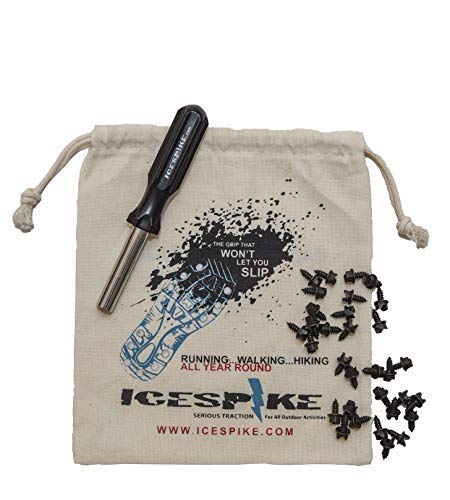
- 32 case-hardened steel spikes with installation tool
- Installs on running shoes, boots, and waders
- No straps, chains, or coils required
Best For: Customizing footwear for versatile terrain traction
Secure Winter Grip
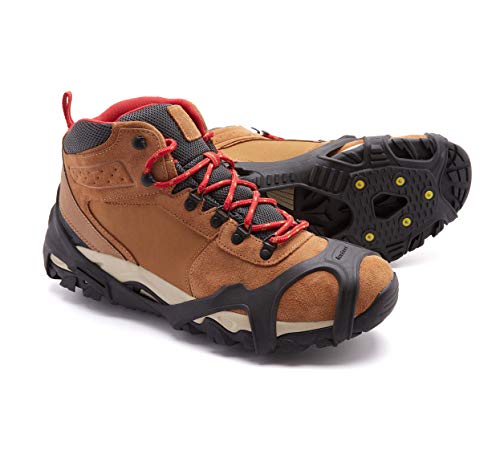
- Nine tungsten carbide crampons for ice and snow
- StayON toe cap helps secure the fit
- Reflective heel improves low-light visibility
Best For: Quick-fitting winter runs in compatible shoe sizes
Runner-Focused All-Direction Traction

- Carbide spikes and stainless-steel coils work together
- 360-degree traction supports directional stability
- Reflective straps and multiple size options
Best For: Winter training in over-shoe running traction cleats
Best for Natural Stride

- 360-degree coil traction from heel to toe
- Flexible rubber stays supple in freezing temperatures
- Heel tab supports quick on-and-off use
Best For: Packed snow and icy paths requiring flexible traction
Best for Aggressive Grip
19-Spike Ice Cleats for Winter Trails

- 19 stainless steel spikes per foot
- Thick TPE rated for temperatures to -45°C
- Adjustable strap and included carry bag
Best For: Icy, angled, and difficult trail sections
Best Winter Traction Pick – Saucony Peregrine Ice+ 3
For trail running shoes for ice, the Saucony Peregrine Ice+ 3 stands out for its Vibram Arctic Grip outsole, which is designed for traction in wet and slippery conditions. It also combines moderate-to-high cushioning with a weather-resistant upper for winter outings.
Best For: Winter trail runners who prioritize wet- and ice-oriented traction with responsive cushioning.
Pros:
- Vibram Arctic Grip technology is designed for wet, slippery surfaces.
- PWRRUN cushioning offers a springy, responsive feel.
- Weather-resistant upper helps handle rain, snow, and mud.
Cons:
- The product details list the shoe as not water resistant despite the weather-resistant upper description.
- It uses a neutral, low-top design without listed ankle coverage.
The Peregrine Ice+ 3 is the most directly ice-focused running shoe in this group, particularly for runners who want dedicated winter traction without giving up a lightweight, cushioned feel.
Best All-Terrain Option – Brooks Cascadia 19
Brooks Men’s Cascadia 19 Mountain Trail Running Shoe - Black/Black/Ebony - 12 Medium
Check Price On AmazonThe Brooks Cascadia 19 is a versatile choice among trail running shoes for ice, with a TrailTack Green rubber outsole specified for wet and dry terrain. Its cushioning, rock shield, and protective upper make it suited to varied mountain trails rather than ice alone.
Best For: Trail runners who need stability, protection, and adaptable traction across mixed terrain.
Pros:
- TrailTack Green outsole is designed for wet and dry traction.
- DNA LOFT v3 cushioning provides a soft, responsive ride.
- Ballistic Rock Shield, toe cap, and mudguard add trail protection.
- Breathable, quick-drying mesh upper helps manage debris.
Cons:
- It is not listed as water resistant.
- The outsole is described for varied terrain, not specifically ice.
The Cascadia 19 makes sense when icy sections are only part of a broader route. For consistently slick ice, a dedicated traction aid or ice-specific outsole may be more appropriate.
Best Add-On Traction – Yaktrax Walk Traction Cleats
The Yaktrax Walk Traction Cleats are not trail running shoes for ice, but they can add 360-degree underfoot grip over compatible footwear. Their zinc-coated steel coils and cold-weather thermoplastic sling are designed for snow, ice, and multi-terrain walking surfaces.
Best For: Walkers and outdoor users who want an easy-on traction layer for icy or snowy surfaces.
Pros:
- 360-degree coil traction supports forward, backward, and lateral movement.
- Stretchable thermoplastic sling fits over various footwear shapes and sizes.
- Heel tab makes installation and removal easier.
- Steel coils are abrasion- and corrosion-resistant.
Cons:
- They are walking cleats rather than running shoes.
- The supplied listing identifies the size as Small.
- Coils may be less suitable for smooth indoor or delicate surfaces.
Choose these when your priority is supplemental ice traction rather than a purpose-built running shoe. They are a practical add-on, but runners should verify fit and intended activity before using them at speed.
Best Waterproof Protection – ASICS Gel-Trabuco MT GTX
ASICS Men's Gel-Trabuco MT GTX Trail Running Shoes, 11, Clay Canyon/Spice Latte
Check Price On AmazonFor trail running shoes for ice in wet, rugged conditions, the ASICS Gel-Trabuco MT GTX emphasizes waterproof coverage and underfoot protection. GORE-TEX Invisible Fit helps provide bonded waterproof coverage, while the rock protection plate and toe guard address rough trail hazards.
Best For: Trail runners who prioritize waterproof coverage, cushioning, and protection on rugged routes.
Pros:
- GORE-TEX Invisible Fit provides bonded waterproof coverage.
- FF BLAST PLUS and rearfoot GEL technologies support cushioning and responsiveness.
- Flexible rock protection plate helps shield against rocky terrain.
- Toe guard improves durability around the front of the shoe.
Cons:
- The supplied details do not specify an ice-specific outsole compound or traction technology.
- At ankle height and approximately 2 pounds, it may feel more substantial than a low-top option.
- The listing’s water-resistance field says not water resistant despite the GORE-TEX description.
The Gel-Trabuco MT GTX is compelling when moisture and rugged ground are bigger concerns than dedicated ice grip. Pairing it with appropriate traction equipment may be worth considering for truly slick surfaces.
All-Surface Spike Upgrade – ICESPIKE Deluxe Package
ICESPIKE™ Serious Traction for Any Outdoor Activity! No Straps, Chains or Coils.
Check Price On AmazonFor runners comparing trail running shoes for ice, the ICESPIKE Deluxe Package takes a customizable approach: its case-hardened steel spikes install directly into running shoes, hiking boots, or other footwear. It is designed for traction across rugged terrain and multiple seasons without slip-on straps, chains, or coils.
Best For: Runners who want permanent-style, tool-installed spikes for versatile footwear and terrain coverage.
Pros:
- Includes 32 case-hardened steel spikes and an installation tool.
- Can be installed on running shoes, walking shoes, hiking boots, work boots, or waders.
- Designed for traction on treacherous surfaces and rugged terrain.
- Avoids bulky strap, chain, or coil attachments.
Cons:
- Installation is required rather than simply slipping the product over footwear.
- One-size design may require careful placement for a particular shoe.
- Only a 30-day warranty is listed.
ICESPIKE stands out when adaptability and direct installation matter more than quick on-and-off convenience. The included tool and 32-spike package offer broad customization, but shoppers should be comfortable modifying their footwear.
Secure Winter Grip – ICETRAX V3 Tungsten Crampons
For trail running shoes for ice, the ICETRAX V3 combines nine tungsten carbide crampons with a snow-tread traction system. Its StayON toe cap and heel fit are intended to keep the cleat positioned on footwear, while the reflective heel adds visibility for early-morning or evening runs.
Best For: Winter runners seeking quick slip-on traction, reflective details, and a secure fit on compatible footwear.
Pros:
- Nine tungsten carbide crampons are paired with a snow-tread traction system.
- StayON toe cap helps prevent movement or loss during use.
- Slips on most footwear in seconds and stores compactly.
- Reflective heel supports visibility in dark conditions.
Cons:
- The listed L/XL size fits men’s 9.5–13 and women’s 11+; other sizes are not specified.
- At 12 ounces, it is heavier than the ICESPIKE and Yaktrax options listed here.
- The listed warranty is limited to 30 days.
ICETRAX V3 is a practical choice for runners who prioritize fast application and a secure over-shoe fit. Its tungsten points and reflective heel suit icy winter outings, provided the listed size range matches your footwear.
Runner-Focused All-Direction Traction – Yaktrax Run for Snow and Ice
Designed specifically for runners, Yaktrax Run fits over running shoes and combines 3 mm carbide-steel spikes with stainless-steel coils. The 360-degree traction system supports stability in multiple directions, while reflective elements add visibility during winter training.
Best For: Runners who want lightweight, over-shoe traction with both spikes and coils in multiple size options.
Pros:
- Combines 3 mm carbide-steel spikes with 1.4 mm stainless-steel coils.
- Provides 360 degrees of traction for all-direction stability.
- Rubber frame, toe design, and straps help secure the device over running shoes.
- Available in S, M, L, and XL sizes, with reflective heel and side straps.
Cons:
- It is an over-shoe device, so it adds another layer rather than replacing the shoe.
- The supplied listing is the Large size, specified for women’s 13–15 and men’s 11.5–13.5.
- Its mixed spike-and-coil design may be less suitable for shoppers seeking only fixed spikes.
Yaktrax Run is the most purpose-built running option in this group, offering lightweight construction and broad directional traction. Confirm the shoe-size range before buying, especially since the supplied listing is Large.
Best Budget Spike Set – 2-Pair Ice Cleats for Shoes and Boots
If you need trail running shoes for ice but already own suitable footwear, this two-pair set adds removable traction without replacing your shoes. Its TPE construction and 16 multidirectional stainless steel spikes are designed for icy and snowy surfaces, while the stretch-on design fits several adult shoe and boot sizes.
Best For: Runners, walkers, and hikers who want two pairs of compact, easy-to-attach ice grips for winter activities.
Pros:
- Includes two pairs, useful for multiple users or as a spare.
- Sixteen multidirectional stainless steel spikes provide traction across icy and snowy surfaces.
- TPE material is designed to stretch over compatible shoes and resist tearing or snapping.
- Folds for convenient storage in a backpack.
Cons:
- These are traction accessories rather than complete trail running shoes.
- Correct sizing is important, with fit limited to the listed ranges.
- The plastic material may offer less structure than full mountaineering crampons.
This set is a practical value option for occasional winter running, hiking, or snow shoveling. Check the size range against your footwear before buying, and use the front-and-heel installation for a secure fit.
Best for Natural Stride – Yaktrax Pro Traction Cleats
Yaktrax Pro Traction Cleats for Walking, Jogging, or Hiking on Snow and Ice (1 Pair), Small , Black
Check Price On AmazonFor trail running shoes for ice, the Yaktrax Pro takes a low-profile approach with stainless-steel coils rather than sharp spikes. The coils provide underfoot traction from heel to toe and are designed to support a more natural walking motion across packed snow and icy surfaces.
Best For: Users who prioritize easy application, 360-degree underfoot grip, and a flexible traction accessory for snow and ice.
Pros:
- Steel coils provide traction from heel to toe and in forward, backward, and lateral movement.
- Thermoplastic rubber remains flexible in freezing temperatures and stretches over footwear.
- Heel tab and performance strap make the cleats easier to put on and remove.
- Smooth coils are designed not to damage surfaces, footwear, or equipment.
Cons:
- Coils may be less aggressive than dedicated multi-spike crampons on severe terrain.
- Only one pair is included.
- Size selection is essential, and the supplied listing specifies the Small size.
The Yaktrax Pro suits winter routes where flexible, all-around traction and a natural stride matter more than maximum spike penetration. It is a straightforward choice for packed snow and icy paths when paired with compatible footwear.
Best for Aggressive Grip – 19-Spike Ice Cleats for Winter Trails
When comparing trail running shoes for ice, these crampons are a strong option for runners who want more pronounced traction from an add-on device. Each foot uses 19 stainless steel spikes, supported by a firm chain system and a thick, stretchy TPE body rated in the notes for performance down to -45°C.
Best For: Trail runners, hikers, and winter users tackling icy roads, angled terrain, wet grass, mud, or difficult trail sections.
Pros:
- Nineteen stainless steel spikes per foot provide substantial grip across challenging terrain.
- Thick TPE material is designed to remain strong in temperatures as low as -45°C.
- Adjustable strap helps with application and fit.
- Lightweight, portable design includes a carry bag.
Cons:
- The supplied listing is for the Large size, so fit must be checked carefully.
- More aggressive spikes may be unnecessary for mild, compacted surfaces.
- These are add-on crampons and do not replace purpose-built winter footwear.
This model stands out when traction demands are high and conditions may include angled or uneven icy sections. Confirm the Large sizing and practice fitting the strap before heading onto the trail.
How We Picked the Best Trail Running Shoes for Ice
We focused on products designed to improve winter traction, including dedicated cold-weather trail shoes and removable cleats for snow and ice. Our evaluation priorities were grip, fit, weather resistance, durability, ease of use, and versatility across packed snow, slick pavement, mixed trails, and changing temperatures.
Because no single outsole works perfectly everywhere, the roundup includes both complete trail-running shoes and traction systems that fit over compatible footwear. That distinction matters: a winter shoe offers integrated protection and a more natural fit, while cleats can upgrade shoes you already own.
Quick Comparison
| Best For | Recommended Type | What to Look For |
|---|---|---|
| Regular winter trail runs | Dedicated ice-ready trail shoe | Secure fit, aggressive lugs, weather protection |
| Variable snow and ice | Running-specific traction cleats | Flexible design, stable heel, low bulk |
| Walking and commuting | Over-the-shoe ice cleats | Easy installation, broad traction coverage |
| Hiking in severe conditions | Heavy-duty crampons | Durable spikes, secure retention, robust construction |
Key Buying Factors for Trail Running Shoes for Ice
Traction Design
Look for multidirectional lugs, carbide or tungsten elements, or stainless-steel spikes that bite into frozen surfaces. Running cleats should flex with your foot rather than feeling like rigid hiking crampons. Deeper traction can help in snow, but a dense spike pattern is often more useful on hard ice.
Fit and Stability
A secure heel and snug midfoot reduce sliding inside the shoe or cleat. Leave enough room for winter socks without allowing your foot to move. Over-the-shoe products must match the shoe’s sole width and heel shape; an imprecise fit can cause shifting or premature wear.
Weather Protection and Comfort
Water-resistant uppers, gusseted tongues, and sealed construction help keep slush out. For longer outings, also consider cushioning, breathability, weight, and insulation. Waterproof membranes can protect well but may feel warmer during high-output runs.
Durability and Surface Compatibility
Metal traction can wear quickly on bare pavement and may damage indoor floors. Remove cleats before entering buildings, and check whether the manufacturer recommends use on asphalt, rock, or mixed terrain. Flexible elastomer bands are convenient, while heavier spike systems generally provide stronger bite but add weight.
Who Should Buy Which Trail Running Shoes for Ice?
Choose a dedicated winter trail shoe if you run frequently on snowy routes and want consistent fit, comfort, and weather protection without installing equipment. Choose running-specific cleats if you already have comfortable trail shoes and need extra grip for occasional icy sections.
For walking, commuting, or errands, prioritize easy-on designs with heel tabs and broad, all-direction traction. Hikers facing steep, hard-packed ice should consider more substantial crampons with secure retention and durable spikes. Whichever option you choose, test the fit indoors first and slow down on glare ice, descents, and transitions between surfaces.