The right battle rope can turn short training sessions into demanding full-body workouts. These 10 options cover traditional anchored ropes, protective-sleeve designs, and portable cordless models for athletes training at home or outdoors.
Use the guide below to compare rope diameter, length, durability, portability, and resistance so you can choose equipment that matches your space, conditioning goals, and training style.
Best 10 Battle Ropes for Athletes Picks for 2026
Best Overall Protection
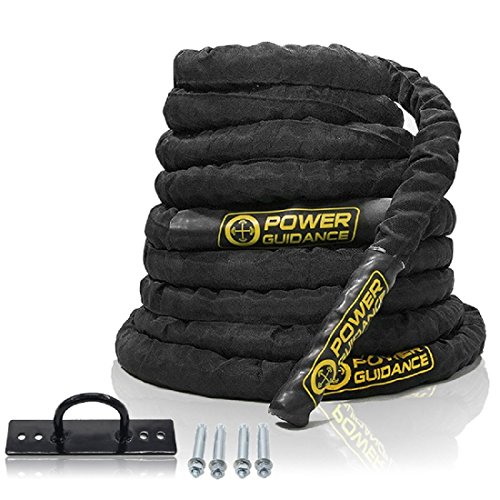
- Double-layer nylon cover helps protect against wear.
- Includes a wide battle-rope anchor strap kit.
- 30-, 40-, and 50-foot length options.
Best For: Athletes seeking a durable, anchor-ready rope with flexible sizing
Best Portable Option
Weighted Cordless Battle Ropes

- Requires no anchor or dedicated floor space.
- Adjustable resistance rings support progression.
- Low-noise design suits home and travel workouts.
Best For: Athletes needing compact, cordless wave training
Best Straightforward Pick
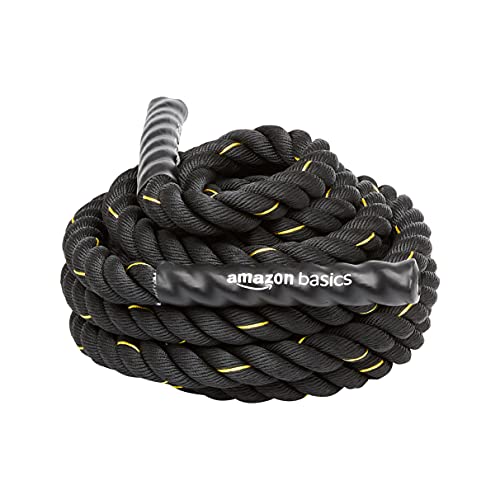
- 100% Poly Dacron three-strand construction.
- 600D Oxford sleeve helps protect the rope.
- 30-foot length and 1.5-inch diameter.
Best For: Athletes wanting a standard rope for home conditioning
Best Grip Comfort

- Multiple lengths and diameters support intensity changes.
- Protective sleeve helps reduce friction and fraying.
- Long rubber-sleeved handles provide a non-slip grip.
Best For: Athletes seeking comfortable handles and versatile conditioning
Rugged Resistance Pick
Keepark 40-Foot Heavy Battle Rope

- Wear-resistant nylon sleeve
- Secure 7.5-inch handles
- Includes anchor strap
Best For: Athletes wanting a durable, high-resistance rope for home or outdoor training
Space-Saving Conditioning Pick
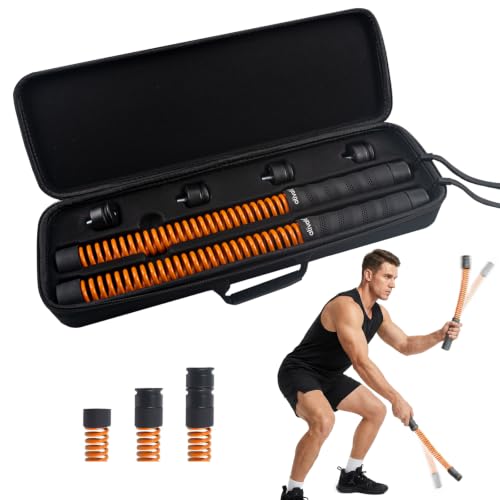
- Extended spring for smoother resistance
- Four removable weight blocks
- Includes storage case and wrist straps
Best For: Athletes needing portable rope-style training without an anchor
Versatile Training Value
Just.smile 30-Foot Battle Rope

- 1.5-inch heavy rope diameter
- Durable braided construction
- Portable for gym, home, or park
Best For: Athletes wanting a conventional rope for versatile full-body workouts
Best All-Level Pick
Adjustable Weighted Battle Rope

- Protective polyester-and-nylon construction
- Multiple diameters and lengths available
- Includes handles, gloves, anchors, and straps
Best For: Progressive home and outdoor conditioning
Best Heavy-Duty Pick
Fitvids 1.5-Inch Poly Dacron Rope

- Durable three-strand polyester blend
- Rolls up for compact storage
- Heat-shrink ends improve grip
Best For: Portable home-gym endurance and strength training
Best Heavy-Duty Setup
Sleeved Battle Rope With Anchor Kit

- Nylon sleeve helps resist friction and abrasion
- Includes rust-resistant anchor strap kit
- 1.26-inch, 30-foot beginner-friendly configuration
Best For: Protected home, garage, and outdoor conditioning
Best Overall Protection – POWER GUIDANCE Battle Rope
For athletes looking for battle ropes for athletes that can handle regular home-gym or outdoor sessions, the POWER GUIDANCE model combines a 100% polyester rope with double-layer nylon protection. Its available lengths and included anchor strap make it adaptable to different training spaces and experience levels.
Best For: Athletes wanting a durable, anchor-ready rope with multiple length options.
Pros:
- Double-layer nylon cover helps resist wear and abrasion.
- Includes a wide anchor strap kit designed to distribute tension and protect the rope.
- Available in 30-, 40-, and 50-foot lengths with 1.5-inch thickness.
- Long heat-shrink handles provide a more comfortable grip.
Cons:
- A full-length rope requires an anchor point and sufficient training space.
- The 7 kg weight may be substantial for some home users.
The combination of polyester construction, protective covering, and included anchoring hardware makes this a practical choice for athletes who prioritize durability and setup flexibility.
Best Portable Option – Weighted Cordless Battle Ropes
These cordless weighted ropes offer a convenient alternative for athletes who want battle ropes for athletes without an anchor, long rope, or dedicated workout area. Each rope weighs 1.44 pounds and uses adjustable resistance rings for portable wave-training sessions.
Best For: Athletes training in apartments, small spaces, or while traveling.
Pros:
- No anchor or floor space is required for setup.
- Adjustable resistance rings support progression as strength improves.
- Textured, sweat-resistant handles and wrist straps improve control.
- Steel-core construction and reinforced springs are designed for repeated swings.
Cons:
- They provide a different training feel from full-length ropes that create floor waves.
- The upper-body emphasis may be less suitable for users seeking a traditional full-body rope setup.
With two compact weighted units, adjustable resistance, and a low-noise design, this set is especially practical when portability and minimal setup matter more than traditional rope length.
Best Straightforward Pick – Amazon Basics Battle Rope
The Amazon Basics battle rope is a straightforward choice for athletes comparing battle ropes for athletes for home workouts, CrossFit, cardio, and conditioning. Its 30-foot length and 1.5-inch diameter provide a familiar format, while the protective sleeve and end caps help address common wear points.
Best For: Athletes who want a standard 30-foot rope for varied conditioning workouts.
Pros:
- Durable 100% Poly Dacron, three-strand construction.
- Includes a 600D Oxford waterproof protective sleeve.
- Heat-shrink end caps help prevent fraying.
- Orange/yellow tracking line improves visibility during use and maintenance.
Cons:
- Only one 30-foot length and 1.5-inch diameter are specified.
- The 15.8-pound listed weight may be heavy for some users to move or store.
This model keeps the specification simple while adding useful protection against moisture, friction, and fraying, making it a sensible general-purpose rope for established workout spaces.
Best Grip Comfort – Perantlb Poly Battle Rope
The Perantlb Poly Battle Rope is designed for athletes who want battle ropes for athletes with durable coverage and substantial handles. Its protective sleeve reduces friction near the anchor, while the 8.66-inch rubber-sleeved handles aim to provide a secure grip during conditioning movements.
Best For: Athletes prioritizing handle comfort, rope protection, and workout variety.
Pros:
- Available in 30-, 40-, and 50-foot lengths and multiple diameters.
- Protective sleeve helps reduce friction, fraying, and wear.
- Long, non-slip rubber-sleeved handles support sweaty training sessions.
- Supports waves, slams, throws, lunges, and plank variations.
Cons:
- Longer and thicker configurations may demand more space and strength.
- The supplied details do not specify that an anchor kit is included.
With several sizing choices and grip-focused handles, this rope suits athletes who want to tailor training intensity while keeping a range of conditioning exercises available.
Rugged Resistance Pick – Keepark 40-Foot Heavy Battle Rope
For athletes comparing battle ropes for athletes, this 40-foot, 1.5-inch Keepark model emphasizes durability, grip security, and high-resistance conditioning. Its polyester construction, wear-resistant nylon sleeve, and included anchor strap make it well suited to demanding home, garage, backyard, or outdoor sessions.
Best For: Athletes seeking a long, heavy battle rope for full-body conditioning and outdoor or home-gym training.
Pros:
- Heavy-duty nylon sleeve helps protect against friction and wear.
- Heat-shrink handles provide a secure, textured grip during intense movements.
- Includes an anchor strap for attachment to trees, posts, poles, or equipment.
- Supports waves, slams, pulls, and other full-body exercises.
Cons:
- The 40-foot length requires more training space than a shorter rope.
- At 15.5 pounds, this version may be demanding for beginners.
This is a practical choice when longevity and substantial resistance matter most. The long format and heavier weight favor experienced users, while the available sizes provide a lighter starting point for those progressing toward advanced training.
Space-Saving Conditioning Pick – ATIVAFIT Ropeless Battle Rope
For battle ropes for athletes who train in limited spaces, the ATIVAFIT ropeless design creates resistance without an anchor or long workout area. Its extended spring, adjustable weight blocks, wrist straps, and storage case make it a portable option for HIIT, cardio, strength, and athletic conditioning.
Best For: Athletes training in apartments, offices, hotels, or other spaces where a traditional anchored rope is impractical.
Pros:
- 20-inch spring steel coils provide smoother wave motion and resistance.
- Four removable 50-gram weight blocks offer three resistance levels.
- Compact cordless format needs no anchor or large training area.
- Includes wrist straps, a training poster, and a hard-shell storage case.
Cons:
- It does not reproduce the anchor-based inertia of a traditional long rope.
- The compact design may be less suitable for users specifically seeking heavy rope slams.
This model is best viewed as a convenient, adjustable alternative rather than a direct replacement for a full-length battle rope. It stands out for portability and quick setup, especially when consistent training space is limited.
Versatile Training Value – Just.smile 30-Foot Battle Rope
For athletes seeking straightforward battle ropes for athletes training at home, in a gym, or outdoors, the Just.smile Fitness Battle Rope offers a 30-foot length and 1.5-inch diameter. Its braided construction and cloth sleeve support repeated waves, slams, and swinging patterns while remaining portable enough for flexible workouts.
Best For: Athletes wanting a conventional, portable rope for full-body conditioning and high-intensity workouts.
Pros:
- 30-foot length supports waves, slams, and varied swinging patterns.
- 1.5-inch diameter delivers a substantial rope-training feel.
- Heavy-duty braided construction is designed for rigorous routines.
- Portable nylon and rope design simplifies storage and transport.
Cons:
- No anchor strap is listed among the supplied product details.
- The 30-foot format may provide less reach than a 40-foot rope.
This is a balanced option for users who want a traditional battle rope without moving into the longest format. Its combination of a useful training length, heavy line, and portability suits general conditioning across multiple locations.
Best All-Level Pick – Adjustable Weighted Battle Rope
For athletes comparing battle ropes for athletes, this model stands out for its range of diameters, protective construction, and included setup accessories. Choose from 1.26-, 1.5-, or 2-inch options and 30-, 40-, or 50-foot lengths to match your training experience and available space.
Best For: Athletes and home-gym users who want multiple sizing options, outdoor versatility, and a rope suitable for everything from beginner conditioning to advanced training.
Pros:
- Three-strand polyester construction with a nylon protective cover helps resist wear, loosening, and breakage.
- Heat-shrink handles provide a secure grip, and gloves are included for added hand protection.
- Anchor and strap accessories support use around trees, poles, outdoor equipment, or other fixed points.
- Available in multiple diameters and lengths for different fitness levels.
Cons:
- The heavier 2-inch option may be demanding for beginners.
- Longer and thicker versions require more storage and training space.
This is a flexible choice for mixed-skill households or athletes who want to progress over time. Its included accessories also make it practical for both home and outdoor sessions.
Best Heavy-Duty Pick – Fitvids 1.5-Inch Poly Dacron Rope
Fitvids Battle Rope 1.5Inch Diameter Poly Dacron 30 FT Length, Heavy Ropes for Home Gym and Workout
Check Price On AmazonFitvids is a straightforward option for athletes seeking battle ropes for athletes with a balanced 1.5-inch diameter and 30-foot length. Its durable polyester blend, heat-shrink ends, and roll-up design suit regular home-gym conditioning without complicated setup.
Best For: Intermediate users who want a compact, portable battle rope for endurance and strength workouts.
Pros:
- Three-strand polyester-blend construction is designed to resist breaking, fraying, and loosening.
- Heat-shrink ends improve handling during rope exercises.
- Rolls up easily for storage and transport.
- Available in several length-and-diameter combinations.
Cons:
- This listed configuration is only 30 feet long and 1.5 inches in diameter.
- The supplied listing does not include an anchor kit or protective sleeve.
Choose this model if portability and simple storage matter more than included accessories. The 1.5-inch format offers a practical middle ground for users building strength and endurance.
Best Heavy-Duty Setup – Sleeved Battle Rope With Anchor Kit
For demanding battle ropes for athletes workouts, this heavy-duty model combines a three-strand polyester rope with a nylon sleeve and anchor strap kit. The 1.26-inch, 30-foot configuration is designed for intense home, garage, backyard, and outdoor conditioning.
Best For: Beginners and general fitness users who want a protected rope with included anchoring equipment for circuits, slams, pulls, and full-body conditioning.
Pros:
- Nylon sleeve helps protect against friction and anchor wear while reducing abrasion to hands and floors.
- Heat-shrink handles are designed to stay secure during sweaty, high-intensity sessions.
- Includes rust-resistant anchor strap equipment for posts, fixtures, and outdoor setups.
- Supports exercises targeting the arms, shoulders, back, core, and legs.
Cons:
- The 30-foot length may provide less wave distance than longer configurations.
- At 1.26 inches, it may not offer the resistance of the available 1.5- or 2-inch versions.
This model is a convenient choice when durability and anchoring flexibility are priorities. The listed 1.26-inch size is positioned for beginners and daily workouts, while other configurations are available for more advanced users.
How We Picked the Best Battle Ropes for Athletes
We focused on the factors that most affect performance and long-term value: rope material, diameter, length, handle comfort, protective sleeves, anchor hardware, portability, and resistance adjustability. The selection includes conventional poly Dacron ropes in several sizes, sleeved ropes designed to reduce abrasion, and cordless alternatives for users who lack a suitable anchor point.
Because athletes train in different environments, we also considered storage, noise, setup requirements, and whether each format supports progressive conditioning. A thicker or longer rope is not automatically better; it usually demands more space and produces greater fatigue.
Quick Comparison
| Type | Best For | Main Advantage | Trade-Off |
|---|---|---|---|
| Traditional anchored rope | High-intensity conditioning | Natural wave feedback and full-body loading | Needs a secure anchor and clear training area |
| Cloth-sleeved rope | Frequent home or outdoor use | Added abrasion protection | Can be bulkier than an uncovered rope |
| Cordless battle rope | Small spaces and travel | No anchor point required | Different feel and resistance profile |
| Thicker or longer rope | Experienced, stronger athletes | Greater resistance and challenge | More expensive, heavy, and space-demanding |
Key Buying Factors for Battle Ropes for Athletes
Diameter and Length
A 1.5-inch rope is a versatile starting point for many athletes. Two-inch models provide more grip and resistance but can quickly tax the forearms. Length affects wave travel and available training space; 30 feet is easier to manage indoors, while 40- or 50-foot ropes generally offer more room for larger waves.
Construction and Durability
Poly Dacron is common because it balances flexibility, weight, and durability. A nylon or cloth sleeve can help protect the rope from friction, especially when it is used outdoors or against rough anchor hardware. Inspect stitching, end caps, and handles before every session.
Handles and Anchor Setup
Look for handles that remain comfortable during high-repetition intervals and provide a secure grip when your hands sweat. For traditional ropes, use a rated anchor point or strap and leave enough clearance for the rope to move without striking walls, vehicles, or other equipment.
Portability, Noise, and Progression
Cordless models are practical for apartments, travel, and spaces where anchors are unavailable. Adjustable resistance or removable weight components can support progression, while traditional ropes usually deliver a more familiar wave-based training sensation. Consider floor impact and noise if you train near other people.
Who Should Buy Which Battle Ropes for Athletes?
- Choose a 30-foot, 1.25- or 1.5-inch rope if you have limited space or are new to battle-rope training.
- Choose a 40- or 50-foot rope if you have a secure outdoor or garage setup and want longer, more demanding intervals.
- Choose a cloth-sleeved model if abrasion resistance and frequent use matter more than minimum weight.
- Choose a cordless rope if portability, low setup time, and no-anchor training are your priorities.
- Choose a 2-inch rope if you already have solid grip endurance and want a heavier conditioning challenge.
Before buying, measure your training area, verify the anchor solution, and confirm that the rope’s length and diameter match your strength level. The best battle rope is the one you can set up safely and use consistently.