The best waterproof hiking shoes help keep your feet dry without sacrificing traction, support, or everyday comfort. This roundup compares 10 options for day hikes, muddy paths, changing weather, and light backpacking.
We focus on practical differences such as waterproof construction, outsole grip, cushioning, fit, breathability, and ankle support so you can choose footwear that matches your terrain and hiking style.
Best 10 Waterproof Hiking Shoes Picks for 2026
Wide-Fit Trail Pick
NORTIV 8 Waterproof Hiking Shoes

- Roomy toe box for wider feet
- Waterproof membrane for puddles and shallow streams
- Deep-lug outsole with protective toe cap
Best For: Roomy-fit hiking, camping, and outdoor work
Classic Mid-Cut Choice
Columbia Newton Ridge Plus Waterproof Amped

- Seam-sealed waterproof construction
- TECHLITE cushioning with energy return
- Omni-GRIP outsole for varied terrain
Best For: Three-season hiking in a supportive mid-cut boot
Lightweight Comfort Pick
SHULOOK Waterproof Trail Shoes

- Lightweight 1.2-pound construction
- Waterproof membrane with debris-blocking tongue
- Memory-foam insole and EVA midsole
Best For: Lightweight hiking, walking, travel, and outdoor use
Wet-Weather Trekking Pick
Columbia Transverse Hike Waterproof

- Omni-Tech protection for rain and snow
- Omni-GRIP traction on wet and dry terrain
- TECHLITE cushioning with durable leather and mesh upper
Best For: Wet-weather hiking across mixed terrain
Lightweight Women’s Pick
CC-Los Waterproof Hiking Shoes

- Waterproof, breathable suede-and-mesh upper
- Memory-foam sockliner for cushioned comfort
- Non-slip rubber outsole with reinforced toe
Best For: Women’s hiking, walking, and casual outdoor use
Proven Mid-Height Support

- Waterproof membrane with leather-and-mesh upper
- Contoured insole and nylon arch shank
- Vibram TC5+ outsole and protective toe cap
Best For: Hikers seeking mid-height coverage and structured support
All-Terrain Protection
HUMTTO All-Terrain Waterproof Hiking Shoes

- Waterproof membrane for all-weather outings
- Lugged rubber outsole for varied terrain
- Reinforced toe and heel for added protection
Best For: Men’s hiking, trekking, camping, and outdoor activities
Leather Trail Value
OL OUTJET LEGEND Waterproof Hiking Shoes
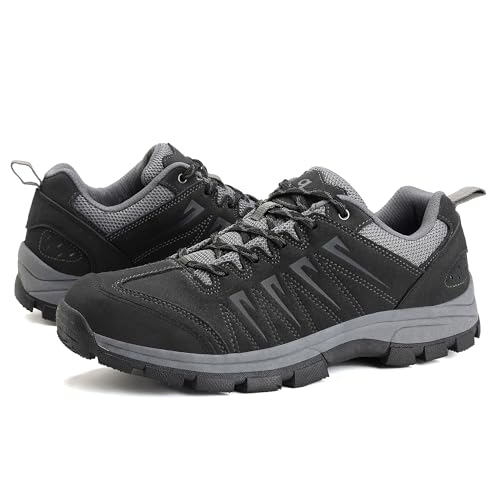
- Genuine leather upper with OL-TEX waterproofing
- EVA cushioning and slip-resistant rubber outsole
- Designed for trails, camping, work, and daily wear
Best For: Casual outdoor use and everyday hiking
Lightweight Cushioning Pick
NORTIV 8 Waterproof Hiking Shoes

- 4-in-1 rebound cushioning system
- Waterproof protection tested during four-hour submersion
- Triangular-tread rubber outsole for varied terrain
Best For: Light hikes, wet-weather walking, and travel
Mid-Top Protection
SHULOOK Waterproof Hiking Boots

- SL-TEX membrane and closed-cell tongue resist water and debris
- Mid-top ankle coverage with protective toe design
- Memory foam, EVA cushioning, and traction rubber sole
Best For: Wet-weather hiking requiring added ankle coverage
Wide-Fit Trail Pick – NORTIV 8 Waterproof Hiking Shoes
If you need waterproof hiking shoes with a roomier feel, these NORTIV 8 low-top shoes emphasize toe-box space, trail traction, and everyday comfort. Their waterproof membrane helps handle shallow streams and puddles, while the reinforced construction adds protection on rugged paths.
Best For: Hikers who prefer a roomy fit for hiking, camping, and other outdoor work.
Pros:
- Roomy toe box accommodates wider feet.
- Waterproof membrane helps keep feet dry in puddles and shallow streams.
- Deep-lug rubber outsole, toe cap, and reinforced heel support trail protection and grip.
- Flexible MD midsole provides cushioning and shock absorption.
Cons:
- Low-top design provides less ankle coverage than a mid-height boot.
- Moderate cushioning may not suit shoppers seeking maximum underfoot padding.
This is a practical option for casual-to-moderate outdoor use when fit flexibility and all-terrain grip matter more than boot-height support.
Classic Mid-Cut Choice – Columbia Newton Ridge Plus Waterproof Amped
These Columbia waterproof hiking shoes take a classic mid-cut boot approach, pairing seam-sealed construction with leather and suede support. The TECHLITE midsole adds lightweight cushioning, while the Omni-GRIP outsole is designed for traction across varied terrain.
Best For: Hikers seeking a supportive, classic-style women’s mid-cut boot for three-season trail use.
Pros:
- Seam-sealed waterproof construction helps keep feet dry.
- TECHLITE midsole provides cushioning and energy return.
- Omni-GRIP rubber outsole offers traction on varied terrain.
- Reinforced toe and heel barriers improve durability at key wear points.
Cons:
- Mid-cut boot design is less minimal than a low-top shoe.
- Leather and suede construction may feel less lightweight than fabric-forward trail shoes.
Choose this model if you want classic boot styling, waterproof protection, and added coverage for regular hiking rather than an ultralight shoe.
Lightweight Comfort Pick – SHULOOK Waterproof Trail Shoes
For shoppers comparing lightweight waterproof hiking shoes, the SHULOOK low-top trail shoes combine a waterproof membrane with breathable lining and cushioned foot support. A closed-cell tongue helps block rain, muck, and sand, while the rubber outsole is built for grip in varied environments.
Best For: Hikers who want lightweight low-top shoes for daily wear and varied outdoor activities.
Pros:
- Lightweight 1.2-pound design with breathable lining.
- Waterproof membrane and closed-cell tongue help limit moisture and debris entry.
- Removable memory-foam insole provides arch support.
- EVA midsole and traction rubber outsole support cushioning and stability.
Cons:
- Low-top profile offers less ankle coverage than a hiking boot.
- Suede and mesh upper may require more care than a fully synthetic upper.
This model stands out when comfort and low weight are priorities, especially for buyers who want one pair for hiking, walking, travel, and other outdoor activities.
Wet-Weather Trekking Pick – Columbia Transverse Hike Waterproof
The Columbia Transverse Hike is a mid-top waterproof hiking option designed for prolonged exposure to moderate rain and snow. Its seam-sealed Omni-Tech construction balances water protection with breathability, while TECHLITE cushioning and Omni-GRIP traction support longer outings over rock, dirt, and gravel.
Best For: Hikers who need weather-ready footwear for wet, mixed-terrain adventures.
Pros:
- Omni-Tech construction is waterproof, seam-sealed, and breathable.
- Omni-GRIP outsole supports traction in wet and dry conditions.
- TECHLITE midsole provides lightweight impact absorption and energy return.
- Leather and mesh upper, metal hardware, and cushioned collar support durability and comfort.
Cons:
- Mid-top design may feel less flexible than a low-top shoe.
- Pull-on closure offers less adjustment than traditional lace-up designs.
This is a strong fit for hikers who regularly encounter rain, snow, and changing trail surfaces and want a more protective, adventure-ready build.
Lightweight Women’s Pick – CC-Los Waterproof Hiking Shoes
For shoppers seeking waterproof hiking shoes that feel light and comfortable, the CC-Los women’s model combines a waterproof design with breathable suede and mesh, memory-foam cushioning, and a non-slip rubber outsole. Its low-top build suits hiking, walking, and casual outdoor use.
Best For: Women wanting lightweight waterproof hiking shoes for everyday trails, walking, and outdoor adventures.
Pros:
- Waterproof construction helps keep feet dry.
- Breathable suede-and-mesh upper helps manage foot sweat.
- Memory-foam sockliner and moderate cushioning support all-day comfort.
- Non-slip, wear-resistant rubber outsole and reinforced toe improve trail stability.
Cons:
- Low-top design provides less ankle coverage than a hiking boot.
- Moderate cushioning may not suit shoppers seeking highly cushioned footwear.
This is a practical choice when low weight, comfort, and water resistance matter more than boot-height support. The stability-focused design and traction-oriented sole make it well suited to general hiking and walking.
Proven Mid-Height Support – Merrell Moab 3 Mid Waterproof
The Merrell Moab 3 Mid Waterproof is a strong option for shoppers comparing waterproof hiking shoes with added ankle coverage. It pairs a waterproof membrane with a leather-and-mesh upper, a protective toe cap, removable contoured support, and a Vibram TC5+ rubber sole.
Best For: Hikers who want mid-height coverage, dependable trail construction, and structured underfoot support.
Pros:
- Waterproof membrane seals out water while allowing moisture to escape.
- Mid-height shaft provides more ankle coverage than low-top shoes.
- Removable contoured insole and nylon arch shank offer medium support.
- Vibram TC5+ rubber sole, protective toe cap, and heel air cushion support trail use.
Cons:
- Mid-height boot design may feel less minimal than lightweight low-top shoes.
- The supplied details specify medium support rather than a highly cushioned setup.
Choose this model if you prefer the fit and coverage of a hiking boot while still wanting breathable materials and shock-absorbing heel cushioning. Its construction is geared toward confident outdoor exploration and varied trail conditions.
All-Terrain Protection – HUMTTO All-Terrain Waterproof Hiking Shoes
Built for shoppers who need waterproof hiking shoes for changing outdoor conditions, the HUMTTO All Tex uses a waterproof membrane, a lugged rubber outsole, and reinforced heel and toe areas. Its flexible midsole and removable insole add cushioning and arch support for longer outings.
Best For: Men looking for lightweight, all-weather footwear for hiking, trekking, camping, and other rugged outdoor activities.
Pros:
- HUMTTO-TEX membrane construction is designed to resist water entry.
- Lug rubber outsole provides grip across varied terrain.
- Removable insole offers arch support, while the MD midsole adds cushioning and energy return.
- Reinforced toe cap and heel help protect high-wear areas and improve stability.
Cons:
- Low-heel athletic-shoe design offers less ankle coverage than an ankle-high boot.
- Moderate cushioning may not meet the needs of shoppers wanting maximum cushioning.
This model stands out for its balance of waterproofing, traction, and protective reinforcement. It is a sensible pick for active users who want one lightweight pair for trails and a range of outdoor pursuits.
Leather Trail Value – OL OUTJET LEGEND Waterproof Hiking Shoes
For shoppers comparing waterproof hiking shoes for everyday outdoor use, the OL OUTJET LEGEND combines a genuine leather upper with OL-TEX waterproofing. Its low-top design, moderate cushioning, and rubber-EVA outsole make it a practical option for trails, camping, walking, and work.
Best For: Casual hikers and outdoor users who want leather construction, all-weather grip, and versatile daily wear.
Pros:
- Genuine leather upper with OL-TEX waterproof design
- Thickened EVA midsole provides cushioning
- Rubber outsole offers slip-resistant traction
- Suitable for hiking, camping, cycling, fishing, travel, and work
Cons:
- Low-top shape provides less ankle coverage than a boot
- Moderate cushioning may be less suitable for users wanting maximum underfoot support
This is a versatile leather hiking shoe for mixed everyday and outdoor use. Consider it when waterproofing, flexible traction, and a casual low-top profile matter more than dedicated high-ankle protection.
Lightweight Cushioning Pick – NORTIV 8 Waterproof Hiking Shoes
These waterproof hiking shoes emphasize lightweight comfort and cushioning for wet trails, travel, and city walking. NORTIV 8 combines a mixed leather, Oxford fabric, and TPU upper with tested waterproof protection, a gusseted tongue, and a full rubber outsole for varied terrain.
Best For: Hikers who prioritize cushioning, lower weight, and reliable traction across trails and everyday settings.
Pros:
- 4-in-1 rebound technology combines foam, Strobel, and dual-density EVA cushioning
- Waterproof protection is tested for submersion up to four hours
- Full rubber outsole with triangular tread supports grip on slippery and rough surfaces
- Reinforced toe and heel, gusseted tongue, and low-top flexibility suit trail-to-town use
Cons:
- Listed as water resistant in the product details despite the stated waterproof testing
- Low-top construction offers less ankle coverage than mid-top hiking footwear
With its focus on rebound cushioning and a relatively light build, this model is well suited to hikers who want one shoe for light trails, wet conditions, travel, and walking. Its protective details add durability without using a boot-height design.
Mid-Top Protection – SHULOOK Waterproof Hiking Boots
For shoppers who want more coverage than low-top waterproof hiking shoes provide, these SHULOOK hiking boots use a mid-top ankle profile with a waterproof membrane and closed-cell tongue. They also pair memory-foam support, EVA cushioning, and a traction-focused rubber sole for hiking and outdoor activities.
Best For: Hikers seeking lightweight mid-top coverage, foot protection, and cushioning for wet outdoor conditions.
Pros:
- SL-TEX waterproof membrane helps block water while allowing vapor to escape
- Mid-top ankle design, sealed construction, and closed-cell tongue help keep out rain, muck, and sand
- Removable memory-foam insole provides arch support and heel cushioning
- Anti-collision toe and advanced traction rubber sole add protection and grip
Cons:
- Synthetic suede and fabric upper is less traditional than a leather hiking shoe
- Mid-top shape may feel less minimalist than a low-top trail shoe
- Product details list summer as the season, so cold-weather suitability is not established
This model is a strong choice when ankle coverage and wet-condition protection are priorities. Its lightweight construction and cushioning keep it practical for hiking, camping, travel, and other active outdoor use.
How We Picked the Best Waterproof Hiking Shoes
We evaluated these Waterproof Hiking Shoes around the features that matter most outdoors: water resistance, traction, comfort, stability, durability, and intended use. Low-top designs generally suit casual hikes, travel, and maintained trails, while mid-top boots provide more ankle coverage and support for uneven ground or heavier loads.
We also considered materials, including leather and synthetic uppers, because they affect break-in time, durability, flexibility, and breathability. A waterproof shoe should protect against rain, wet grass, and shallow puddles, but no membrane can compensate for water entering over the collar or through a submerged opening.
Quick Comparison
| Best For | What to Look For |
|---|---|
| Everyday day hikes | Lightweight construction, cushioning, and dependable grip |
| Wet or muddy trails | Sealed waterproofing and deep, well-spaced lugs |
| Rocky or uneven terrain | Firm midsoles, protective toe caps, and stable uppers |
| Longer hikes | Reliable fit, arch comfort, and reduced pressure points |
| Extra ankle support | Mid-top collars with secure lacing and structured heel support |
Key Buying Factors for Waterproof Hiking Shoes
Waterproofing and Breathability
Look for a waterproof membrane or sealed construction when regular exposure to rain and wet trails is expected. Breathable linings help release heat, but waterproof shoes will usually feel warmer than mesh trail runners. Wear moisture-wicking socks and avoid overly tight fits.
Traction and Outsole Design
Rubber outsoles with multidirectional lugs provide better grip on dirt, roots, and loose gravel. Deeper lugs can help in mud, while moderately spaced tread is easier to clean and often feels more comfortable on pavement.
Fit, Cushioning, and Support
Leave enough room for your toes to spread and for natural foot swelling on longer walks. Your heel should stay secure without slipping. Consider a firmer, more supportive shoe for rocky terrain and a lighter, more flexible model for short, smooth trails.
Durability and Weight
Leather and reinforced synthetic panels tend to resist abrasion, while lighter mesh-heavy designs improve flexibility and airflow. Choose the lightest option that still offers the protection and stability your routes require.
Who Should Buy Which Waterproof Hiking Shoes?
Choose a lightweight low-top pair if you mainly hike maintained trails, walk in wet weather, or want footwear that works for travel and everyday outdoor use. These models typically feel less restrictive and require less break-in.
Choose a more structured or mid-top boot if you hike over rocks, carry a pack, or prefer additional ankle coverage. If mud and slippery surfaces are common, prioritize aggressive tread and a secure heel fit over minimal weight.
For frequent hikers, prioritize comfort and proven fit first; waterproofing and traction matter only if you can comfortably wear the shoes for the full distance. Check the manufacturer’s sizing guidance, wear your intended hiking socks, and test the fit indoors before heading onto the trail.