Finding the best bike rollers for road cycling means balancing realistic handling, dependable stability, useful resistance, and compatibility with your bike. The products in this roundup range from full roller trainers to adjustable stands and replacement derailleur pulley wheels.
Use the guide below to narrow the options by training goals, bike type, available space, and the level of setup and balance control you want indoors.
Best 10 Bike Rollers for Road Cycling Picks for 2026
Stable Retractable Roller

- Tapered rollers center the wheels
- No power or maintenance required
- Folds for easier storage
Best For: Cyclists with compatible 26- to 29-inch wheels
Low-Drag Drivetrain Roller

- 12T, 50 mm guide pulley
- Aluminum body with sealed bearing
- Designed for smooth, quiet rotation
Best For: Compatible 12T rear derailleur replacements
Compact Balance Trainer

- Parabolic rollers center the tire
- Leveling feet support stability
- Includes a canvas storage bag
Best For: Road cyclists with the required balance trainer
Lightweight Replacement Roller

- Two-piece 11T replacement set
- Lightweight POM and nylon fiber build
- Sealed bearings for quiet shifting
Best For: Compatible road and MTB rear derailleurs
Best Adjustable Road Bike Rollers
Foldable ROCKBROS Magnetic Trainer

- Parabolic rollers improve stability
- Fits 16–29-inch bikes, including 700c road bikes
- Folds flat and weighs about 6.5 kg
Best For: Portable indoor training with adjustable bike fit
Best Road Bike Derailleur Rollers
11T Ceramic Bearing Pulley Wheels

- Designed for 11-speed drivetrains
- Ceramic bearings aim to reduce friction
- Includes two wheels and four reduction sleeves
Best For: Replacing or upgrading compatible derailleur pulley wheels
Best High-Capacity Road Bike Rollers
ROCKBROS Foldable Mechanical Trainer

- Supports a listed 300-pound load
- Fits 16–29-inch bikes, including 700c road bikes
- Parabolic rollers and fold-flat aluminum frame
Best For: Higher-capacity indoor training and compact storage
Compact Derailleur Upgrade
HARFINGTON Ceramic Guide Wheels

- 13T aluminum alloy guide wheels
- Smooth bearing design for lower friction
- Includes 4mm and 5mm reducer sleeves
Best For: Compatible rear-derailleur pulley replacement
Quiet Indoor Training Pick

- Fluid resistance for quieter indoor riding
- Compatible with mountain and road bikes
- Foldable aluminum frame for storage
Best For: Home road-bike conditioning and fitness
Drivetrain Efficiency Option
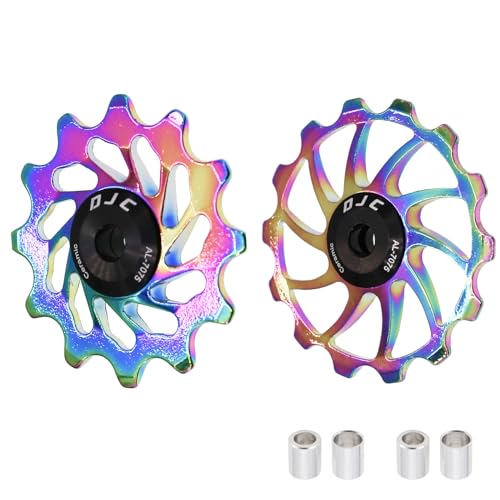
- Supports many 7-12-speed systems
- Hybrid ceramic bearings for smooth operation
- Multiple tooth counts and adapters included
Best For: Compatible Shimano or SRAM pulley replacement
Stable Retractable Roller – Garmin TacX Antares
For cyclists comparing bike rollers for road cycling, the Garmin TacX Antares emphasizes centered wheels and straightforward indoor training without requiring power. Its retractable design also makes storage more manageable when space is limited.
Best For: Road cyclists seeking a stable, maintenance-free roller setup for compatible 26- to 29-inch wheels.
Pros:
- Tapered rollers help keep the wheels centered.
- Requires no power and is maintenance free.
- Folds down for easier storage, with a maximum footprint of 53 by 18.5 inches.
Cons:
- Compatibility is listed for 26- to 29-inch wheels, so other sizes may not fit.
- The 18.7-pound frame is less convenient to carry than an ultralight trainer.
The Antares is a practical choice when stability, broad wheel-size compatibility, and compact folding matter more than powered resistance features.
Low-Drag Drivetrain Roller – 12T Aluminum Guide Pulley
Although it is not a full indoor trainer, this 12T guide pulley is relevant when maintaining the drivetrain used for bike rollers for road cycling. Its aluminum construction, sealed bearing, and ceramic material are aimed at smooth, low-drag derailleur operation.
Best For: Riders replacing a compatible 12-tooth rear derailleur pulley on a road, mountain, MTB, or BMX bike.
Pros:
- Aluminum alloy construction is lightweight and sturdy.
- Fully sealed bearing is designed for smooth, quiet rotation.
- Deep, positive-and-negative tooth guidance helps reduce chain drop.
Cons:
- This is a derailleur replacement part, not an indoor roller trainer.
- Installation requires a derailleur position that accepts a pulley at least 50 mm in diameter.
- Compatibility is primarily specified for 12T setups and 4- or 5-mm guide-wheel screws.
Choose this pulley only if your drivetrain matches the stated dimensions and tooth count; it can support smooth shifting but does not provide the balance-training function of bike rollers.
Compact Balance Trainer – Indoor Roller Trainer
For riders evaluating bike rollers for road cycling, this roller trainer focuses on balance, technique, and endurance rather than complicated setup. Parabolic polymer rollers help center the tire, while leveling feet and a storage bag suit home or event use.
Best For: Road cyclists and other riders who already have the required balance trainer and want portable, low-hassle indoor practice.
Pros:
- Supports balance, technique, and endurance training.
- Parabolic polymer rollers are designed to reduce noise and tire wear while centering the tire.
- Includes a durable canvas storage bag for transport.
- Leveling feet improve stability on uneven surfaces.
Cons:
- The required balance trainer is not included.
- Road bikes require spacers, according to the product notes.
- It does not offer a powered resistance feature; resistance comes from the rollers.
This is a sensible option for riders prioritizing portability and simple balance work, provided they account for the separate balance-trainer requirement and any road-bike spacers.
Lightweight Replacement Roller – 11T Rear Pulley Wheels
These rear derailleur pulley wheels are replacement drivetrain components rather than bike rollers for road cycling. The two-piece 11T set uses lightweight POM plastic and nylon fiber with sealed bearings for compatible variable-speed road and MTB systems.
Best For: Riders restoring shifting performance with a lightweight, direct-fit pulley-wheel replacement for a compatible rear derailleur.
Pros:
- Package includes two 11T pulley wheels.
- Lightweight POM plastic and nylon fiber construction can reduce drivetrain weight.
- Sealed bearings are designed to reduce friction and support quiet shifting.
- 44-mm outer diameter and 5-mm inner diameter are clearly specified.
Cons:
- Compatibility is described broadly, so buyers should verify derailleur fit before ordering.
- Plastic construction may not suit riders specifically seeking an aluminum pulley.
- No warranty is provided in the listed details.
This two-wheel set is best treated as a straightforward drivetrain replacement, not a training roller; confirm the 11T count and 5-mm fit before installation.
Best Adjustable Road Bike Rollers – Foldable ROCKBROS Magnetic Trainer
For riders comparing bike rollers for road cycling, this ROCKBROS trainer combines parabolic rollers with an adjustable aluminum frame. Its sealed bearings, magnetic resistance mechanism, and foldable design make it practical for indoor training and compact storage.
Best For: Road cyclists who want portable rollers with adjustable fit and magnetic resistance.
Pros:
- Parabolic rollers help enhance stability compared with straight rollers.
- Adjusts for 16–29-inch bicycles, including 700c road bikes.
- Folds flat and weighs about 6.5 kg for easier carrying and storage.
- Aluminum construction and sealed bearings support smooth operation.
Cons:
- The supplied details list one resistance setting.
- Its 250-pound load capacity may not suit every rider setup.
This is a well-rounded choice when adjustability, portability, and added stability matter more than extensive resistance customization.
Best Road Bike Derailleur Rollers – 11T Ceramic Bearing Pulley Wheels
These 11T guide rollers are replacement or upgrade components rather than bike rollers for road cycling in the indoor-trainer sense. Ceramic bearings, metal alloy construction, and an anti-drop tooth profile are aimed at smoother chain guidance on compatible 11-speed drivetrains.
Best For: Riders replacing worn 11-speed road or mountain bike derailleur pulley wheels.
Pros:
- Anti-drop teeth are designed to help prevent chain slippage.
- Ceramic bearings and metal alloy construction are intended to reduce friction.
- Includes two pulley wheels and four reduction sleeves for broad compatibility.
- Lightweight design weighs about 18.14 g.
Cons:
- Compatible with 11-speed drivetrains, not a universal derailleur upgrade.
- These are derailleur guide wheels, not an indoor bicycle roller trainer.
- No warranty is listed in the supplied details.
Choose this kit for drivetrain maintenance or a pulley-wheel upgrade, but look elsewhere if you need equipment for indoor road-bike riding.
Best High-Capacity Road Bike Rollers – ROCKBROS Foldable Mechanical Trainer
For bike rollers for road cycling, this white ROCKBROS model offers a foldable aluminum frame, parabolic rollers, and a mechanical resistance mechanism. It accommodates 16–29-inch bikes, including 700c road bikes, while supporting a listed load capacity of up to 300 pounds.
Best For: Heavier riders or households needing foldable rollers for multiple compatible bike sizes.
Pros:
- Parabolic roller design is intended to enhance stability.
- Adjustable front holes fit bicycles from 16 to 29 inches.
- Supports a listed 300-pound load capacity.
- Folds flat and weighs about 6.5 kg for storage and transport.
Cons:
- The mechanical resistance system may offer less adjustment than electronically controlled trainers.
- The supplied details list one resistance setting.
- The white finish may show dirt more readily with frequent use.
This model is especially useful when load capacity and compact storage are priorities, with the same broad wheel-size compatibility that suits many road bikes.
Compact Derailleur Upgrade – HARFINGTON Ceramic Guide Wheels
Although it is not a trainer, this HARFINGTON pulley set may be useful when maintaining a road bike used with bike rollers for road cycling. Its 13T aluminum alloy guide wheels use smooth bearings and include reducer sleeves for different spindle sizes.
Best For: Road cyclists replacing compatible rear-derailleur pulley wheels.
Pros:
- CNC-machined aluminum alloy construction with an anodized, corrosion-resistant finish.
- Smooth bearing design is intended to reduce friction and support efficient shifting.
- Includes 4mm and 5mm reducer sleeves for a 6mm spindle hole.
Cons:
- Compatibility should be checked carefully before installation.
- Overtightening the pulley screws can increase friction and reduce performance.
For riders tuning a compatible drivetrain before indoor sessions, this two-wheel set offers a lightweight maintenance upgrade. It is a component replacement rather than a bike roller or indoor trainer.
Quiet Indoor Training Pick – Home Use Fluid Bike Trainer
This adjustable fluid trainer is the most direct match for cyclists comparing bike rollers for road cycling. It converts a mountain or road bike into a stable indoor stationary setup, while its foldable frame makes storage and transport more manageable.
Best For: Road cyclists wanting convenient, lower-noise indoor training at home.
Pros:
- Fluid resistance is described as quieter than magnetic trainers.
- Supports balance, handling, cadence, pedal efficiency, and general fitness work.
- Foldable aluminum frame is designed for easier storage and carrying.
- Includes a replacement quick-release component for setup.
Cons:
- Smooth tires are recommended to reduce vibration during training.
- A carpet underneath may still be useful for vibration control.
- Assembly and bike attachment are required before use.
For apartment or shared-space riders, the low-noise positioning and foldable design are practical advantages. The trainer is intended for fixed indoor riding, so it will not provide the same balance challenge as completely free-rolling rollers.
Drivetrain Efficiency Option – DJC Ceramic Pulley Wheels
Like the HARFINGTON set, these DJC pulley wheels are a drivetrain component rather than bike rollers for road cycling. They can suit riders servicing a compatible rear derailleur, with hybrid ceramic bearings, several tooth-count choices, and adapters for common mounting sizes.
Best For: Riders seeking a lightweight replacement pulley set for compatible Shimano or SRAM systems.
Pros:
- Supports 7-12-speed chains and Shimano or SRAM systems, with stated exceptions.
- Hybrid ceramic bearings are designed for low friction and smooth, quieter operation.
- CNC-machined aluminum body weighs approximately 9g to 13g depending on tooth count.
- Available in multiple sizes from 11T through 16T and includes mounting adapters.
Cons:
- It does not fit the AXS Flattop 12-speed road bike chain.
- Correct tooth count and adapter selection must be verified before installation.
- Compatibility varies by derailleur and drivetrain configuration.
This set is worth considering when drivetrain maintenance is part of preparing a road bike for indoor training. Its broad stated speed support is useful, but the AXS Flattop exclusion makes compatibility checking especially important.
How We Picked the Best Bike Rollers for Road Cycling
We focused first on products intended to support indoor cycling, including complete roller trainers, foldable resistance stands, and adjustable training supports. We also considered whether each option appears practical for road-bike use, how clearly its construction and adjustment features are described, and whether its design suits regular home workouts.
Because this list includes several replacement derailleur pulley wheels, check the product type carefully before buying. Pulley wheels are drivetrain components, not bike rollers or indoor trainers, and they should only be considered when you specifically need a compatible replacement or upgrade.
Quick Comparison
| Option type | Best suited to | What to check |
|---|---|---|
| Full roller trainer | Balance practice and steady indoor riding | Roller dimensions, frame fit, and storage |
| Resistance stand | Structured workouts with a fixed rear wheel | Axle or quick-release compatibility and resistance control |
| Front-wheel training bracket | Basic indoor support and stability | Bike fit, adjustment range, and required accessories |
| Derailleur pulley wheels | Drivetrain repair or customization | Tooth count, speed, cage clearance, and Shimano or SRAM compatibility |
Key Buying Factors for Bike Rollers for Road Cycling
Trainer Style and Balance
Traditional rollers let both wheels move freely and can improve cadence control, smooth pedaling, and balance. They require more attention than a fixed trainer, especially for new users. A resistance stand generally feels easier to control and may be better for longer intervals or high-effort sessions.
Bike and Axle Compatibility
Confirm compatibility with your wheel size, tire width, axle format, and frame setup before ordering. Road bikes commonly use narrow tires and different axle standards from mountain bikes. Adjustable designs offer more flexibility, but the listed adjustment range still matters.
Resistance, Noise, and Footprint
If you plan to train regularly, look for usable resistance adjustment, a stable frame, and a foldable design that suits your storage space. Smooth rollers can help reduce vibration, while a floor mat may protect surfaces and limit noise. Check whether the product requires a separate balance trainer, front support, or other accessory.
Replacement Pulley Specifications
For derailleur pulley wheels, match the tooth count and drivetrain speed rather than choosing by appearance alone. Ceramic bearings and aluminum construction may appeal to performance-focused riders, but exact fit, tooth shape, bearing size, and cage clearance are more important than material claims.
Who Should Buy Which Bike Rollers for Road Cycling?
Choose a complete roller trainer if you want to practice smooth pedaling and bike handling in a compact indoor setup. Pick an adjustable resistance stand if your priority is controlled workouts, repeatable effort, and easier riding for extended sessions. A front-wheel bracket is best for riders who need simple support and already have a compatible training arrangement.
Buy replacement pulley wheels only when your derailleur specifications match exactly. For most road cyclists comparing Bike Rollers for Road Cycling, the safest starting point is a complete, adjustable trainer with clearly stated bike compatibility, stable construction, and convenient storage.