Regular calf mobility work can help athletes warm up more consistently, maintain ankle range of motion, and recover after demanding training. The right stretcher makes that routine easier to perform and repeat.
We compared 10 calf stretchers for athletes across several designs, including slant boards, foot rockers, and adjustable straps, so you can choose equipment that fits your sport, space, and stretching goals.
Best 10 Calf Stretchers for Athletes Picks for 2026
Best Overall
ProStretch Original Calf Rocker

- Focused rocker design for lower-leg stretching
- Slip-resistant pads and QR stretching guide
- Fits adult shoes up to size 12
Best For: Targeted calf and foot mobility work
Best Adjustable Board
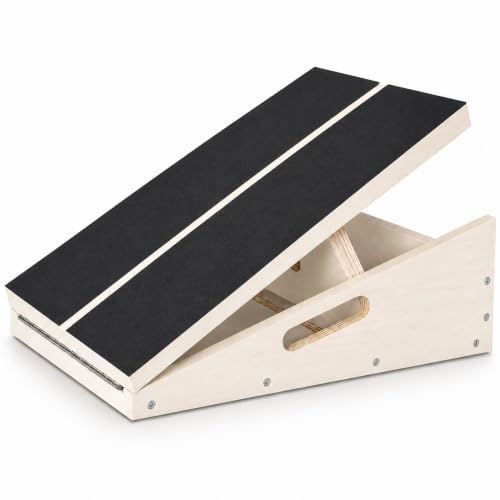
- Five angles from 15° to 35°
- 500-pound capacity with wooden construction
- Also supports squats, raises, and ankle mobility
Best For: Progressive stretching and lower-body training
Best for Two Feet
ProStretch Original Double Rocker

- Stretch both feet simultaneously or separately
- Designed for tight calves and foot discomfort
- Lightweight with nonslip pads
Best For: Efficient bilateral calf stretching
Best Portable Option
Five-Angle Wooden Stretch Board

- Five settings from 23° to 45°
- Supports calf, ankle, heel, and glute mobility
- Includes workout poster and instructions
Best For: Portable adjustable stretching at home or the gym
Adjustable Recovery Pick

- Adjustable heel rest for customized intensity
- Removable toe lift targets toes and plantar fascia
- Slip-resistant platform; fits shoes up to size 14
Best For: Targeted calf, Achilles, and plantar fascia stretching
Portable Angle-Training Pick
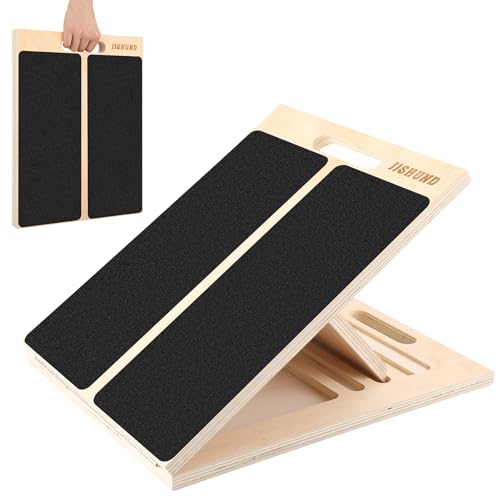
- Five angles from 20° to 45°
- Foldable with a built-in carry handle
- Anti-slip surface and bottom pad
Best For: Progressive calf stretching, mobility, and training
Compact Foot-Rocker Pick
PowerStep UltraFlexx Foot Rocker

- Focused foot and calf stretching design
- Non-skid rocker bottom supports stability
- Lightweight, compact plastic construction
Best For: Portable foot, calf, Achilles, and shin-splint stretching
Best with Extra Features

- Four incline settings from 30° to 45°
- Lightweight at about 4.5 pounds
- Works for stretching, squats, and rehab
Best For: Athletes wanting a stable, adjustable stretching platform
Best Travel Strap
Comness Foot and Calf Stretcher
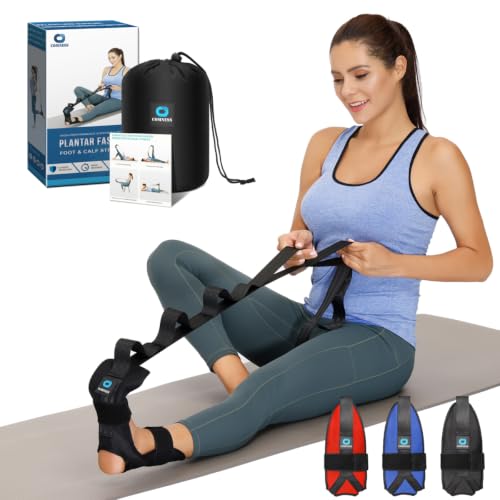
- Cradle design with six rugged webbing loops
- Supports foot, calf, hamstring, and thigh stretches
- Includes a carrying pouch and instructions
Best For: Traveling athletes and dancers needing versatile foot and leg stretching
Best Padded Strap
DMoose Fitness Foot and Calf Stretcher
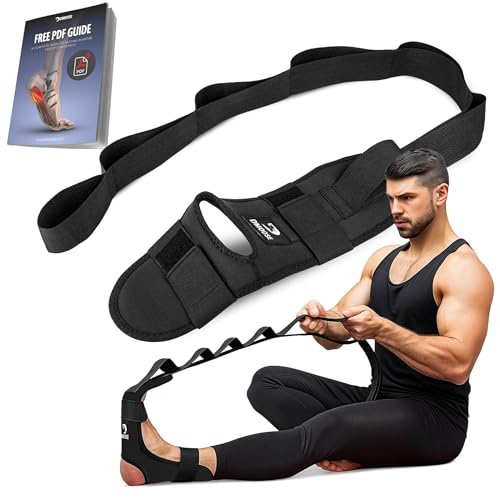
- 8 mm neoprene padding for added comfort
- Seven loops offer multiple grip positions
- Adjustable closures and included e-guide
Best For: Athletes and rehab users wanting a cushioned, adjustable strap
Best Overall – ProStretch Original Calf Rocker
For athletes who want a focused tool for tight calves and foot-related discomfort, the ProStretch Original is a compact foot rocker designed to isolate the lower-leg muscles, tendons, and ligaments. Its curved design supports a deeper stretch, while rubber strips help keep it in place during use.
Best For: Athletes seeking a simple, targeted calf stretcher for regular mobility work and recovery.
Pros:
- Designed to address tight calves, plantar fasciitis, Achilles tendonitis, and shin splints.
- Rocker design positions the foot for a focused stretch and may support flexibility and circulation.
- Slip-resistant pads, included QR-code stretching guide, and U.S. manufacturing add practical value.
Cons:
- Fits adult shoes up to size 12.
- Recommended weight limit is 250 pounds.
- Requires socks and rubber-soled athletic shoes during use.
This is a straightforward choice for athletes who prefer a dedicated rocker over a larger platform. Follow the stated footwear and weight guidelines for the intended use.
Best Adjustable Board – Wooden Five-Angle Slant Board
This wooden slant board gives athletes five angle choices—15°, 20°, 25°, 30°, and 35°—so calf stretching can progress from gentler mobility work to a more demanding incline. Its broad platform also supports ankle mobility, calf raises, squats, balance drills, and warm-ups.
Best For: Athletes who want one sturdy platform for adjustable calf stretching and lower-body training.
Pros:
- Five adjustable angles accommodate different flexibility levels and routines.
- Wooden construction and a 500-pound capacity provide a substantial training platform.
- Textured top, slip-resistant base, side carry handle, exercise guide, and three-year warranty are useful extras.
Cons:
- At 3.85 kg, it is heavier than a compact rocker.
- The 16-by-12.5-inch platform requires more storage space.
- It may offer more functionality than athletes who only need basic calf stretching require.
Choose this board if adjustability and exercise versatility matter more than minimal size. The lower starting angle can suit beginners, while higher settings provide progression for experienced users.
Best for Two Feet – ProStretch Original Double Rocker
The ProStretch Original Double is built for athletes who want to stretch both calves at once or work one side individually. Its dual foot-rocker design helps position the feet for a controlled stretch, and the nonslip pads help limit movement on the floor.
Best For: Athletes who value simultaneous bilateral stretching or convenient one-foot-at-a-time use.
Pros:
- Supports stretching one or both feet with the dual rocker layout.
- Designed for tight calves, plantar fasciitis, Achilles tendonitis, and shin splints.
- Lightweight, nonslip construction with a QR-code stretching guide.
Cons:
- Fits adult shoes up to size 12.
- Recommended weight limit is 250 pounds.
- Users must wear socks and rubber-soled athletic shoes.
The double format is a practical upgrade for athletes who regularly stretch both sides together. It is especially useful when saving time matters, while the single-foot option allows more focused work when needed.
Best Portable Option – Five-Angle Wooden Stretch Board
This portable wooden slant board offers five settings—23°, 30°, 35°, 40°, and 45°—for athletes who want adjustable calf stretching at home or in the gym. It can be used with one or both feet and also targets the ankles, heels, glutes, and leg muscles during mobility routines.
Best For: Athletes who need a portable, adjustable board for stretching and general mobility work.
Pros:
- Five angle levels provide options from easier to more challenging stretching.
- Supports calf, ankle, heel, glute, flexibility, and mobility exercises.
- Includes a workout poster and instructions and is designed for transport and storage.
Cons:
- The supplied specifications list conflicting capacity figures: a 460-pound highlight and a 300-pound maximum recommendation.
- No warranty is listed.
- Its 4.6-pound weight is portable but heavier than a small foot rocker.
This board suits athletes who want a travel-friendly platform with higher angle options. Because the capacity information differs across the supplied specifications, confirm the applicable limit before purchase and use.
Adjustable Recovery Pick – ProStretch Plus
For athletes comparing calf stretchers for athletes, the ProStretch Plus stands out for its adjustable heel rest, broad platform, and foot-rocking design. It is aimed at tight calves and lower-leg discomfort while also accommodating plantar fascia and Achilles tendon stretching.
Best For: Athletes who want a customizable calf and foot stretch with added toe and plantar fascia engagement.
Pros:
- Adjustable heel rest lets users increase or decrease stretch intensity.
- Removable toe lift adds a deeper toe and plantar fascia stretch.
- Wide, slip-resistant platform is designed to stay stable on different surfaces.
- Lightweight design fits adult shoes up to size 14 and includes a stretching guide.
Cons:
- Use requires socks and athletic shoes with rubber soles.
- Recommended weight limit is 300 pounds.
- Its focused foot-rocker design may be less versatile than a full slant board for general exercises.
With its adjustable setup and removable toe lift, this is a strong choice for athletes who want to fine-tune a targeted lower-leg routine rather than rely on a fixed-angle stretch.
Portable Angle-Training Pick – Adjustable Wooden Slant Board
This adjustable wooden slant board is a practical option for athletes seeking calf stretchers for athletes that can also support broader mobility and training work. Its five angle settings range from a gentle 20-degree position to a deeper 45-degree stretch.
Best For: Athletes who want adjustable calf stretching for warmups, recovery, ankle mobility, and progressive training.
Pros:
- Five angle settings support beginner through deeper stretching positions.
- Foldable design with a built-in handle makes transport and storage easier.
- Anti-slip surface and bottom pad help limit movement during use.
- Can also assist with leg, heel, ankle, squat, and flexibility exercises.
Cons:
- Its approximately 200-pound load recommendation is lower than some specialized stretchers.
- At 4.8 pounds, it is portable but heavier than compact foot-rocker designs.
- The wooden board has a larger footprint than a small, single-foot stretching device.
The multiple angle options make this board especially useful when an athlete wants to progress gradually or use one platform for both stretching and exercise support.
Compact Foot-Rocker Pick – PowerStep UltraFlexx Foot Rocker
The PowerStep UltraFlexx offers a compact approach for athletes evaluating calf stretchers for athletes. Its rocker holds the foot in position for a focused stretch that can address the calf, foot, Achilles area, and lower leg while supporting flexibility and strength work.
Best For: Athletes who prefer a lightweight, straightforward foot rocker for focused lower-leg stretching.
Pros:
- Designed to stretch and strengthen muscles, ligaments, and tendons in the foot and lower leg.
- Supports routines for tight calves, plantar fasciitis, Achilles tendonitis, and shin splints.
- Non-skid rocker bottom helps hold the foot in a stable position.
- Compact 10-by-5-inch design weighs about 0.4 kg.
Cons:
- Recommended for use with sturdy athletic shoes.
- Unlike an adjustable slant board, the supplied notes do not list multiple angle settings.
- Its single-foot rocker format offers less general-purpose exercise surface.
This is a sensible pick when portability and a focused foot position matter most. Athletes wanting angle progression or a larger training platform may prefer a slant-board design instead.
Best with Extra Features – Portable Wooden Slant Board
For athletes comparing calf stretchers for athletes, this portable wooden slant board offers adjustable incline angles for controlled calf stretching, squats, and weight-bearing exercises. Its lightweight design makes it practical for home, gym, office, or clinic use.
Best For: Athletes and active adults who want an adjustable, stable platform for calf stretching, mobility work, and rehabilitation exercises.
Pros:
- Four adjustable angles: 30°, 35°, 40°, and 45°.
- Lightweight design weighs about 4.5 pounds for easy portability.
- Supports stretching, squats, posture work, and rehabilitation training.
- Suitable for beginners, experienced athletes, and various fitness levels.
Cons:
- Its rigid wooden platform is less compact than a strap-style stretcher.
- Supplied notes do not specify a maximum user weight.
This is a strong choice when you prefer a firm, adjustable surface over a flexible strap. The multiple incline settings also make it easier to vary intensity as mobility improves.
Best Travel Strap – Comness Foot and Calf Stretcher
Among calf stretchers for athletes, the Comness foot and calf stretcher stands out as a portable strap for working on the plantar fascia, calves, hamstrings, and foot mobility. Its cradle design and carrying pouch make it convenient for use at home, in the gym, or while traveling.
Best For: Athletes, dancers, and recovering users who need a lightweight, on-the-go strap for foot and leg stretching.
Pros:
- Ergonomic cradle design supports the foot during stretching.
- Six-loop webbing allows multiple hand positions and stretching orientations.
- Targets the foot, calf, hamstring, thigh, and lower back.
- Includes a carrying pouch and instruction manual.
Cons:
- Requires active hand control rather than providing a freestanding platform.
- One-size design may offer less customized support than an adjustable brace.
The Comness is a practical pick for athletes who value portability and versatility. Its looped strap format supports several stretching positions without taking up much room in a training bag.
Best Padded Strap – DMoose Fitness Foot and Calf Stretcher
For athletes seeking calf stretchers for athletes with added comfort, the DMoose Fitness Foot and Calf Stretcher combines an adjustable strap with 8 mm of neoprene padding. Its multiple loops and secure hook-and-loop closures support stretching and rehabilitation routines.
Best For: Athletes, yogis, dancers, and rehabilitation users who want a padded strap with multiple grip positions.
Pros:
- 8 mm padding helps cushion the foot during stretching.
- Seven hand loops provide varied grip options and tension control.
- Dual hook-and-loop straps allow an adjustable fit for different foot sizes.
- Includes a QR-code e-guide with step-by-step exercise visuals.
Cons:
- Its strap format requires the user to maintain tension and positioning.
- At 52 inches long, it may be less compact than shorter stretching aids.
The DMoose is well suited to users who prioritize cushioning and guided technique. Its padded foot support, adjustable closure, and seven-loop layout provide flexibility for both mobility training and rehabilitation exercises.
How We Picked the Best Calf Stretchers for Athletes
We evaluated each option by design, adjustability, portability, weight capacity, stability, comfort, and the types of stretching it supports. We also considered whether a product is better suited to warm-ups, post-training recovery, physical therapy exercises, or regular home mobility work.
Because athletes have different needs, this list includes several formats rather than treating one style as universally best. A stable slant board may suit strength training and standing stretches, while a foot rocker or strap can be more convenient for seated routines and travel.
Quick Comparison
| Type | Best For | Main Advantage | Potential Limitation |
|---|---|---|---|
| Adjustable slant board | Progressive standing stretches and squats | Multiple incline angles and solid support | Bulkier than straps |
| Foot rocker | Simple daily mobility work | Fast, guided foot and calf positioning | Less versatile for full-body routines |
| Stretching strap | Seated stretching and travel | Lightweight and easy to pack | Requires more active control |
Key Buying Factors for Calf Stretchers for Athletes
Adjustability and Progression
Look for several angle settings if you want to gradually increase intensity or use the same equipment for different exercises. Fixed rockers can be easier to use, but adjustable boards offer more control as flexibility improves.
Stability and Capacity
A wide, nonslip base matters during standing stretches, loaded movements, and balance-sensitive exercises. Check the stated weight capacity and look for secure hinges, textured surfaces, or rubber feet where applicable.
Portability and Storage
Choose a compact board or strap if you train at multiple locations. Larger wooden boards are often more stable, but they need dedicated storage and may be less convenient for travel.
Comfort and Intended Use
Padded straps can make longer seated stretches more comfortable, while a foot rocker may provide a more consistent position. Avoid choosing based only on claims about pain relief; persistent pain or injury should be assessed by a qualified clinician.
Who Should Buy Which Calf Stretchers for Athletes?
Choose an Adjustable Slant Board If…
You want a stable platform for standing calf stretches, ankle mobility drills, squats, or progressive flexibility work. This is usually the most versatile choice for home gyms and structured training routines.
Choose a Foot Rocker If…
You prefer a simple tool for daily calf and foot stretching, especially after running, field sports, or long periods on your feet.
Choose a Stretching Strap If…
You need a lightweight option for seated stretching, rehabilitation-style movements, or travel. Straps also work well when floor space is limited.
Whichever format you choose, start at a comfortable intensity, move gradually, and follow any guidance provided by a medical or rehabilitation professional.