The right medicine ball can make circuit training more dynamic by adding resistance, power work, balance challenges, and easy-to-scale conditioning exercises.
We selected 10 options across multiple weights, materials, grip styles, and training purposes so you can match a ball to your space, workout style, and experience level.
Best 10 Medicine Balls for Circuit Training Picks for 2026
Reliable Everyday Pick
Amazon Basics 6-Pound Medicine Ball

- 6-pound rubber construction
- Textured grip with labeled weight
- Suitable for core and full-body drills
Best For: General circuits, core work, and balance exercises
Most Flexible Weight Range
Sunny Health & Fitness Medicine Ball

- Weights from 4 to 30 pounds
- Dual-textured non-slip grip
- Bounce-ready for strength and plyometric drills
Best For: Progressive training and varied home circuits
Best for Slams
Amazon Basics 15-Pound Slam Ball

- 15-pound sand-filled core
- Absorbs impact with minimal bounce
- Textured PVC grip for HIIT and CrossFit
Best For: Slam-focused power and conditioning circuits
Best for Progression
RitFit Multi-Weight Medicine Ball

- Ten options from 2 to 20 pounds
- Basketball-like non-slip texture
- Supports strength, balance, and coordination
Best For: Progressive training and varied full-body circuits
Heavy-Duty Slam Pick
ProsourceFit Textured Slam Ball

- Tire-tread surface supports a secure grip
- Sand-filled design minimizes bounce and rolling
- Available from 5 to 50 pounds
Best For: High-impact slam circuits and strength conditioning
Low-Impact Conditioning Pick

- Compact for travel or office workouts
- Unstable iron-sand filling challenges stability
- Available from 2 to 10 pounds
Best For: Balance, flexibility, Pilates, and controlled circuits
Progressive Training Pick
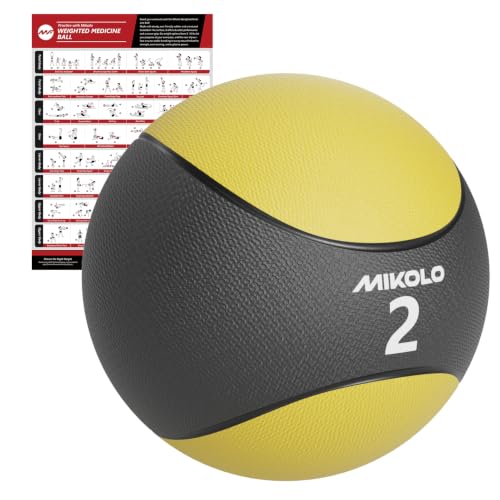
- Textured rubber grip supports control
- Eight options range from 2 to 12 pounds
- Works for strength, power, and coordination
Best For: Progressive full-body circuits and mixed movements
Reliable Bounce
Amazon Basics 10-Pound Medicine Ball

- 10-pound rubber construction
- Textured grip with weight markings
- Designed for bouncing and classic drills
Best For: Core training and traditional full-body circuits
Explosive Conditioning

- Weight options from 5 to 30 pounds
- No-bounce sand-filled core
- Textured grip for slams and throws
Best For: HIIT, CrossFit-style circuits, and power training
Progressive Comfort

- Available from 4 to 30 pounds
- Soft vegan-leather grip
- Built for controlled, non-slam exercises
Best For: Progressive strength, balance, and recovery circuits
Reliable Everyday Pick – Amazon Basics 6-Pound Medicine Ball
For shoppers comparing medicine balls for circuit training, this 6-pound Amazon Basics model offers a practical middleweight option for moves such as weighted twists, squats, sit-ups, and ball tosses. Its firm rubber construction and lightly textured surface support controlled handling during varied home or gym workouts.
Best For: General full-body circuits, core work, and balance exercises.
Pros:
- 6-pound weight suits a range of upper-, lower-, and full-body exercises
- Textured rubber surface provides a secure grip
- Can bounce off hard surfaces for tosses and dynamic drills
- Weight is labeled on both sides for easy identification
Cons:
- Only one weight option is specified for this listing
- Not described as a deadweight slam ball
This is a straightforward choice when you want one versatile medicine ball for circuit staples rather than a specialized slam ball. The 7.6-inch diameter and labeled 6-pound weight make it easy to incorporate into repeatable training sessions.
Most Flexible Weight Range – Sunny Health & Fitness Medicine Ball
Among medicine balls for circuit training, this Sunny Health & Fitness option stands out for its broad range of available weights, from 4 to 30 pounds. The dual-textured grip and bounce-ready rubber design make it useful for changing circuits that combine core training, strength work, and plyometric movements.
Best For: Households or training programs that need a medicine ball matched to different strength levels.
Pros:
- Available in nine weights from 4 to 30 pounds
- Non-slip textured surface supports a secure grip
- Designed for bouncing, throws, squats, twists, and core work
- Compact format suits home gyms, apartments, and garage gyms
Cons:
- The listed product configuration is the 4-pound version
- Weight options require selecting the appropriate size separately
This is a strong choice for progressive training because the line covers beginners through advanced athletes. Its durable molded-rubber construction and one-year manufacturer warranty add practical reassurance for regular home use.
Best for Slams – Amazon Basics 15-Pound Slam Ball
Amazon Basics Heavy-Duty Slam Medicine Ball for Exercise, Weighted Design, 15lb, Black
Check Price On AmazonIf your medicine balls for circuit training need to handle repeated impact, this 15-pound Amazon Basics slam ball is built specifically for hard slams and controlled power work. Its sand-filled core absorbs impact and limits bounce, while the textured PVC exterior helps maintain grip during demanding HIIT or CrossFit sessions.
Best For: Slam-focused circuits, explosive power training, and high-intensity conditioning.
Pros:
- Heavy-duty PVC construction is designed to absorb powerful impacts
- Sand-filled, deadweight design helps prevent unwanted bouncing
- Textured surface supports grip during sweaty workouts
- 15-pound weight suits demanding strength and conditioning work
Cons:
- 15 pounds may be challenging for beginners or lighter circuits
- Deadweight design is less suited to bounce-based drills
- Focused on slams rather than general medicine-ball versatility
This is the most specialized option in the group. Choose it when controlled impact and a predictable landing matter more than rebound exercises or a lighter, all-purpose training ball.
Best for Progression – RitFit Multi-Weight Medicine Ball
For medicine balls for circuit training that can grow with your fitness level, the RitFit range offers ten weight choices from 2 to 20 pounds. The basketball-like rubber texture supports handling across squats, lunges, presses, push-ups, chest tosses, jumps, and deadlifts.
Best For: Beginners and progressing trainees who want multiple weight options for strength, coordination, and balance work.
Pros:
- Ten weight options range from 2 to 20 pounds
- Textured rubber surface provides a comfortable, non-slip grip
- Supports a wide variety of strength, power, and conditioning movements
- One-year warranty is included
Cons:
- The listed configuration is the 10-pound purple ball
- Weight options require choosing a separate size
- Designed for exercise versatility rather than dedicated slam use
RitFit is a sensible pick when you want to start lighter and increase resistance over time, or select a weight that fits a shared workout space. Its emphasis on coordination and balance also makes it useful beyond basic strength circuits.
Heavy-Duty Slam Pick – ProsourceFit Textured Slam Ball
For demanding medicine balls for circuit training, the ProsourceFit Slam Medicine Ball is built for throws, slams, squats, presses, and core work. Its tire-tread texture supports a secure grip, while the sand-filled deadweight design minimizes bouncing and rolling during slam-focused circuits.
Best For: Athletes and home gyms needing a durable, non-bouncing slam ball for strength and conditioning circuits.
Pros:
- Non-slip tire-tread surface helps maintain control during intense workouts.
- Sand-filled construction minimizes bouncing and rolling after slams.
- Waterproof PVC shell is designed to absorb impact and withstand tough training.
- Available in weights from 5 to 50 pounds for different training levels.
Cons:
- The deadweight design is intended for slams rather than bounce-based drills.
- Heavier options may feel more challenging than traditional weights.
- The product notes recommend beginners start with 10–15 pounds for control and mechanics.
This is the strongest choice of the three for high-impact circuit stations and progressive loading. Choose a lighter model for learning technique, or move up in weight as your control and conditioning improve.
Low-Impact Conditioning Pick – Yes4All Weighted Toning Ball
The Yes4All Weighted Toning Ball offers a compact option for medicine balls for circuit training when balance, flexibility, and controlled movement matter more than heavy slams. Its PVC shell and unstable iron-sand filling can add resistance to Pilates, yoga, mobility, and stabilization exercises.
Best For: Beginners, travel workouts, office exercise, and low-impact circuits focused on balance and coordination.
Pros:
- Compact design is easy to take while traveling or keep at the office.
- Unstable iron-sand filling engages stabilizing muscles during exercise.
- Weight options range from 2 to 10 pounds.
- Useful for strength, balance, flexibility, Pilates, and yoga routines.
Cons:
- Its small size may not fit every user’s hands comfortably.
- The notes caution against placing it directly on painted furniture.
- Its lighter, soft toning-ball format is less suited to heavy slam training.
For circuits built around controlled repetitions, posture, and stability, this is the most portable and approachable option. Check the ball’s dimensions and select a weight that you can hold securely with one or both hands.
Progressive Training Pick – Mikolo Textured Medicine Ball
The Mikolo Weighted Medicine Ball is a versatile option for medicine balls for circuit training, combining a textured rubber grip with weights from 2 to 12 pounds. It supports dynamic movements such as squats, presses, lunges, chest passes, jumps, deadlifts, burpees, and rotational exercises.
Best For: Beginners and intermediate users who want one compact ball for progressive full-body strength, power, and coordination work.
Pros:
- Textured, basketball-like surface helps provide a secure grip.
- Eight weight options support gradual progression from 2 to 12 pounds.
- Suitable for strength, explosive movement, endurance, balance, and core stability.
- Rubber shell and bladder are designed for durability and impact resistance.
Cons:
- The maximum listed weight is 12 pounds, limiting heavier strength work.
- The supplied details identify the listed model as a 2-pound ball, so other weights require separate selection.
- Its broad exercise range may not replace a dedicated heavy slam ball.
This is the most adaptable pick for varied circuits and gradual progression. It works well when your routine mixes traditional resistance exercises with rotational, explosive, and coordination-focused movements.
Reliable Bounce – Amazon Basics 10-Pound Medicine Ball
For shoppers comparing medicine balls for circuit training, this 10-pound Amazon Basics model offers a firm rubber build, a lightly textured grip, and a size suited to classic full-body movements. Its ability to bounce off hard surfaces adds versatility for tosses and other conditioning drills.
Best For: Core work, squats, twists, sit-ups, balance exercises, and general full-body circuits.
Pros:
- 10-pound weight supports challenging strength and core exercises.
- Firm, lightly textured rubber provides a secure grip.
- Can bounce off hard surfaces for varied drills.
- Weight is labeled on both sides for quick identification.
Cons:
- Only one 10-pound weight option is supplied.
- Its 9.3-inch diameter may feel large for some users or exercises.
This is a straightforward choice when you want one durable, bounce-capable ball for traditional circuit-training exercises rather than a dedicated slam ball.
Explosive Conditioning – REP Sand-Filled Slam Ball
Among medicine balls for circuit training, the REP weighted slam ball stands out for high-impact work. Its sand-filled, no-bounce design keeps the ball from rolling away after slams, while the textured surface helps maintain control during fast-paced circuits.
Best For: Slams, throws, tosses, HIIT, CrossFit-style conditioning, and power-focused full-body workouts.
Pros:
- Available in multiple weights from 5 to 30 pounds for scalable training.
- Sand-filled construction minimizes bounce and rolling after slams.
- Soft, sand-textured surface supports grip during sweaty workouts.
- Suitable for home gyms, outdoor training, and circuit routines.
Cons:
- The supplied product details identify a 4-pound version, which is outside the listed 5-to-30-pound range.
- No-bounce construction is less suitable for exercises that require a lively rebound.
Choose this model when your circuit emphasizes explosive throws and slams, especially in spaces where a bouncing or rolling ball would be inconvenient.
Progressive Comfort – Core Soft-Touch Medicine Ball
For medicine balls for circuit training that prioritize comfort and progression, this Core model combines a cushioned vegan-leather exterior with a broad range of available weights. The grippy surface suits strength, balance, and recovery movements, but it is not intended for slamming.
Best For: Progressive strength training, balance work, recovery exercises, and controlled full-body circuits.
Pros:
- Weight options range from 4 to 30 pounds for gradual progression.
- Textured vegan leather offers a soft, non-slip feel.
- Packed inner material is designed to maintain its shape through repeated use.
- Supports strength, balance, recovery, and full-body exercises.
Cons:
- Not intended for slamming.
- The supplied listing identifies a 6-pound, 7.9-inch version, so availability may vary by selected weight.
This is a practical pick for controlled circuit movements and long-term weight progression, particularly if hand comfort matters more than impact-based training.
How We Picked the Best Medicine Balls for Circuit Training
We focused on the features that matter most during fast-moving circuits: dependable construction, secure handling, useful weight choices, and versatility across strength, conditioning, core, balance, and power exercises. The list includes traditional weighted balls, slam balls, soft toning balls, and models with textured or dual-grip surfaces.
Because circuit workouts often alternate between exercises, we also considered how easily each type can transition from presses and squats to rotational throws, carries, or slams. Always confirm the manufacturer’s intended use before throwing or slamming a ball.
Quick Comparison
| Best For | Look For | Recommended Type |
|---|---|---|
| General full-body circuits | Balanced size and comfortable grip | Traditional weighted medicine ball |
| Explosive conditioning | Dead-weight construction and durable shell | Slam ball |
| Grip-intensive exercises | Textured or molded handles | Dual-grip medicine ball |
| Beginners and mobility work | Light weight and soft exterior | Soft toning or training ball |
| Progressive home training | Several available weights | Line with multiple size options |
Key Buying Factors for Medicine Balls for Circuit Training
Weight
Choose a load that lets you complete every planned movement with control. Lighter balls are better for high-repetition circuits, overhead work, and beginners; heavier balls suit carries, loaded squats, and slower strength-focused intervals. If more than one person will use it, a range of weights may be more practical than one heavy ball.
Construction and Intended Use
Traditional medicine balls may be designed for controlled throws, while slam balls are built to absorb repeated impact. A dead-weight slam ball is generally the safer choice for floor slams, but it may not bounce or work like a rebound-style ball. Check the product description for approved exercises and surfaces.
Grip, Size, and Surface
Textured rubber, tread patterns, and molded handles can improve control when hands become sweaty. Larger balls can be easier to catch but may be harder to hold for small-handed users. Soft covers are comfortable for partner drills and floor exercises, though they may not be suitable for aggressive slamming.
Storage and Training Space
Measure your workout area before choosing a ball for throws or slams. Consider flooring, ceiling height, noise, and whether the ball needs a rack or storage bin. A compact, lighter model is often more convenient for apartment circuits.
Who Should Buy Which Medicine Balls for Circuit Training?
Beginners and General Fitness Users
Start with a lighter traditional or soft medicine ball that supports squats, lunges, presses, core exercises, and controlled rotations without compromising technique.
Power and Conditioning Athletes
Choose a purpose-built slam ball with a durable shell and suitable weight. A textured exterior is especially useful when circuits include repeated pickups and fast transitions.
Home Gym Users Building a Progression
Select a brand offering multiple weights so you can use lighter loads for speed and heavier ones for strength. This is more flexible than buying a single ball that quickly becomes too easy or too difficult.
Pilates, Yoga, and Balance Training
Soft, lightweight toning balls are typically the best fit for controlled balance, flexibility, posture, and stability exercises. Prioritize comfort and manageable resistance over impact durability.