The best slam balls for home gyms make explosive training easier to add to a garage, basement, or spare-room setup. They support power work, conditioning circuits, core training, and full-body exercises without requiring much equipment.
This roundup compares 10 options across multiple weights, shell designs, grip textures, and price points so you can choose a ball that fits your space, training goals, and experience level.
Best 10 Slam Balls for Home Gyms Picks for 2026
Best Overall Dead-Weight Option
ProsourceFit Tread Slam Medicine Ball

- Textured tire-tread grip
- Sand-filled, low-bounce design
- Available from 5 to 50 pounds
Best For: Versatile home gym conditioning
Best for Grip and Give
Champion Sports Rhino ProMax Elite

- Tacky Rhino Skin vinyl grip
- Large ergonomic throwing design
- More give and bounce than typical medicine balls
Best For: Dynamic throws, catches, and conditioning
Best Midweight Training Pick
ProsourceFit 15-Lb Tread Slam Ball

- Fixed 15-pound training load
- Textured PVC tread grip
- Low-bounce sand-filled core
Best For: Intermediate slams and full-body conditioning
Best Simple Budget-Style Choice

- Heavy-duty PVC construction
- Textured non-slip surface
- Fixed 15-pound dead-weight design
Best For: Straightforward home HIIT and strength training
Best Heavy-Duty Pick

- Dead-weight design minimizes bouncing and rolling
- Textured PVC shell supports a secure grip
- Available from 10 to 50 pounds
Best For: Explosive power and full-body conditioning
Best Lightweight Option
Amazon Basics 6-Pound Medicine Ball

- Light 6-pound format suits foundational training
- Rubber shell has a lightly textured grip
- Works for core, balance, and full-body exercises
Best For: Beginners and versatile home workouts
Best Versatile Range
ProsourceFit Dead-Weight Slam Ball

- Weight options span 5 to 50 pounds
- Sand-filled core reduces bouncing and rolling
- Waterproof shell and textured grip support hard training
Best For: Progressive home training from beginner to advanced
Best Versatile Set
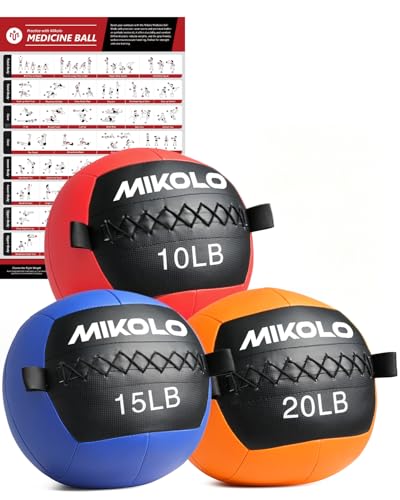
- Three-ball setup with multiple listed weights
- Wide finger loop for a secure grip
- Includes exercise chart for guided workouts
Best For: Home users wanting varied, softer medicine-ball training
Best Compact Starter Pick

- Light 4-pound option for beginners
- Textured surface supports grip
- No-bounce sand-filled design
Best For: Foundational home workouts and higher-repetition conditioning
Best Progression Range

- Moderate 6-pound training load
- Sand-filled core minimizes bounce
- Textured shell supports control
Best For: Progressive home strength and conditioning workouts
Best Overall Dead-Weight Option – ProsourceFit Tread Slam Medicine Ball
For shoppers comparing slam balls for home gyms, the ProsourceFit Tread model is a versatile dead-weight choice. Its sand-filled core minimizes bouncing, while the tire-tread PVC exterior provides traction for slams, presses, squats, throws, and core work.
Best For: Home gym users who want a non-bouncing ball with multiple weight options and a secure textured grip.
Pros:
- Textured tire-tread surface supports a secure grip during sweaty workouts.
- Sand-filled construction minimizes bouncing and rolling.
- Waterproof PVC shell is designed to absorb impact.
- Available from 5 to 50 pounds for different training levels.
Cons:
- The dead-weight design may feel heavier than traditional weights.
- Beginners may need to start lighter for proper control and mechanics.
This is a strong all-around pick when predictable, low-bounce handling matters. The 15- and 20-pound options can suit general conditioning, while the wider range supports progression over time.
Best for Grip and Give – Champion Sports Rhino ProMax Elite
The Champion Sports Rhino ProMax Elite stands out among slam balls for home gyms with its tacky Rhino Skin vinyl exterior and softer, larger build. It offers more give and bounce than typical medicine balls, making it suited to throwing, catching, slamming, and full-body conditioning.
Best For: Users who prioritize a comfortable, non-slip grip and a ball that is easy to throw and catch.
Pros:
- Tacky vinyl exterior supports controlled handling during sweaty sessions.
- Large ergonomic design makes throwing, catching, and slamming easier.
- Built for repeated impact and significant wear.
- Can support cardio, core, speed, agility, and full-body training.
Cons:
- Its greater bounce may be less suitable for users seeking a dead-weight ball.
- The listed model is an 8-pound ball, offering less loading flexibility than multi-weight lines.
- Coverage is voided by repeated impact on rough surfaces or ground slams from overhead.
Choose this model when handling comfort and dynamic drills matter more than minimizing bounce. Its 8-pound weight and oversized format make it approachable for movement-focused conditioning.
Best Midweight Training Pick – ProsourceFit 15-Lb Tread Slam Ball
For a practical midweight choice among slam balls for home gyms, this 15-pound ProsourceFit model combines a sand-filled core with a textured PVC outer layer. The dead-weight construction minimizes unwanted movement, while the tread pattern helps maintain control during demanding exercises.
Best For: Intermediate home gym users seeking a 15-pound ball for slams, strength work, cardio, and core training.
Pros:
- Non-slip tread texture improves traction during intense sessions.
- Sand-filled core minimizes bouncing and rolling.
- PVC shell is designed to absorb impact and resist sweat buildup.
- Works for slams, squats, presses, throws, and core exercises.
Cons:
- At 15 pounds, it may be demanding for beginners or rehabilitation work.
- Dead-weight handling can feel heavier than conventional weights.
This version is a focused option for buyers who already know they want a 15-pound training load. It offers the same broad exercise use as the line’s other sizes without requiring a separate adjustable system.
Best Simple Budget-Style Choice – Amazon Basics 15-Lb Slam Ball
Amazon Basics Heavy-Duty Slam Medicine Ball for Exercise, Weighted Design, 15lb, Black
Check Price On AmazonThe Amazon Basics Slam Medicine Ball is a straightforward option for shoppers building a home setup with slam balls for home gyms. Its heavy-duty PVC construction, sand-filled core, and textured surface are designed for controlled slams, HIIT, CrossFit, core work, and strength training.
Best For: Home gym users wanting a simple 15-pound dead-weight ball for general conditioning.
Pros:
- Sand-filled core absorbs impacts while helping prevent unwanted bouncing.
- Textured surface supports grip during sweaty workouts.
- Balanced dead-weight design suits controlled and dynamic movements.
- Useful for core strength, explosive power, and cardiovascular endurance work.
Cons:
- The listed model is available as a fixed 15-pound size.
- Its 7.87-inch diameter may provide less surface area than larger slam balls.
This is a sensible pick for buyers who want uncomplicated equipment rather than specialized features. The fixed 15-pound size makes it best suited to users comfortable with that load for repeated home workouts.
Best Heavy-Duty Pick – MARCY Sand-Filled Slam Ball
For home gyms needing a controlled training tool, the MARCY Slam Ball is a practical choice among slam balls for home gyms. Its sand-filled, dead-weight construction is designed to absorb impact without bouncing or rolling, while the tread texture supports a secure grip during demanding exercises.
Best For: Explosive power, conditioning, and full-body strength training.
Pros:
- Dead-weight design helps prevent bouncing and rolling.
- Durable PVC shell is built for repeated high-intensity use.
- Rugged, sweat-resistant tread texture supports confident handling.
- Available in weights from 10 to 50 pounds.
Cons:
- Sold individually, so multiple weights require separate purchases.
- The 9-inch diameter may feel substantial for some users.
With its impact-absorbing construction and broad weight range, this MARCY ball suits home-gym users who want a stable, durable option for slams and dynamic training.
Best Lightweight Option – Amazon Basics 6-Pound Medicine Ball
The Amazon Basics 6-pound medicine ball is a manageable entry point for slam-ball-style home workouts and general medicine-ball training. Its firm rubber construction and lightly textured surface support exercises such as tosses, twists, squats, sit-ups, and balance work.
Best For: Beginners and home users focused on core strength, balance, and coordination.
Pros:
- Light 6-pound weight is approachable for many exercises.
- Firm rubber construction is designed for regular training.
- Lightly textured surface provides a helpful grip.
- Supports upper-body, lower-body, core, and balance exercises.
Cons:
- It can bounce off hard surfaces, so it is less controlled than a dead-weight slam ball.
- Only one 6-pound weight is listed.
This is a versatile, lightweight medicine ball rather than a dedicated no-bounce slam ball, making it a sensible choice when your home-gym routine includes varied foundational exercises.
Best Versatile Range – ProsourceFit Dead-Weight Slam Ball
The ProsourceFit Slam Medicine Ball offers a wide selection of weights for home gyms, from 5 to 50 pounds. Its sand-filled dead-weight core minimizes bouncing or rolling, while the durable, waterproof PVC rubber shell and textured grip support slams, throws, presses, squats, and core work.
Best For: Home athletes who want one slam-ball line that accommodates beginner through advanced training.
Pros:
- Available in weights from 5 to 50 pounds.
- Sand-filled construction minimizes bouncing and rolling.
- Durable waterproof shell helps resist sweat buildup.
- Textured surface challenges grip, forearms, and core engagement.
Cons:
- The shifting sand can make the ball feel heavier than traditional weights.
- The textured grip may be more demanding for users with limited hand strength.
Its extensive weight range and dead-weight construction make ProsourceFit a strong all-around option for progressive slam training, conditioning, and functional movements at home.
Best Versatile Set – Mikolo Soft Medicine Ball Set
For shoppers comparing slam balls for home gyms, the Mikolo set stands out as a soft, multi-weight option for slams, tosses, wall-ball work, and general conditioning. Its wide finger loop and padded construction are designed to support a secure, comfortable grip during varied movements.
Best For: Home-gym users who want multiple weights and a softer ball for functional training, wall-ball exercises, and recovery-friendly routines.
Pros:
- Includes three medicine balls in multiple weights, with listed options from 10 to 25 pounds.
- Wide nylon finger loop provides additional grip space for lifts, tosses, and slams.
- Dual-layer PVC and mesh construction, reinforced stitching, and padded interior are designed for durability and softer impact.
- Includes a wall-mountable exercise chart with guided workouts.
Cons:
- The soft medicine-ball construction may not provide the same dead-weight feel as a traditional sand-filled slam ball.
- The product is relatively large, with a listed 14-inch diameter.
The Mikolo is a practical choice when variety matters more than a single specialized training weight. Its included guidance and softer build also make it approachable for beginners, while the multiple sizes support progression.
Best Compact Starter Pick – REP 4 lb Weighted Slam Ball
If you are building a home routine and prefer a lighter starting weight, this REP slam ball offers a compact 4-pound option for controlled slams, core work, conditioning, and strength training. Its textured exterior and sand-filled, no-bounce design are suited to focused workouts in limited space.
Best For: Beginners and home-gym users who want a lighter slam ball for foundational strength, HIIT, and conditioning exercises.
Pros:
- Light 4-pound size can be approachable for beginners and higher-repetition training.
- Textured surface is designed to improve grip during fast-paced movements.
- Sand-filled, no-bounce construction helps keep the ball in place after slams.
- Hand-stitched synthetic leather shell uses double-reinforced seams.
Cons:
- This listing is for one ball rather than a multi-weight set.
- The 4-pound weight may be too light for advanced power or maximal-strength sessions.
The REP 4-pound model is a sensible entry point for a home gym, especially when workout space is shared or limited. Choose a heavier size from the range if your training already calls for more resistance.
Best Progression Range – REP 6 lb Weighted Slam Ball
For home athletes ready for more resistance than a light starter ball, this 6-pound REP weighted slam ball provides a manageable step up for slams, throws, core training, and conditioning. The sand-filled core is designed to minimize bounce, while the textured surface helps maintain control.
Best For: Home-gym users seeking a moderate-weight slam ball for scalable HIIT, CrossFit-style conditioning, and full-body strength work.
Pros:
- 6-pound weight offers a moderate progression from lighter beginner options.
- Sand-filled, dead-weight construction minimizes bouncing and rolling after impact.
- Textured exterior is designed to support grip during explosive movements.
- Hand-stitched synthetic leather and reinforced seams support repeated training use.
Cons:
- The listing includes one ball, so adding multiple training weights requires separate purchases.
- A 6-pound ball may not provide enough load for advanced athletes seeking maximal power work.
This REP model balances accessibility and added resistance, making it a useful middle-ground choice for a home routine. Its no-bounce design is particularly practical when you want the ball to stay close after each repetition.
How We Picked the Best Slam Balls for Home Gyms
We focused on the factors that matter most during repeated home workouts: available weight options, construction, surface grip, dead-bounce performance, fill consistency, and suitability for common exercises such as overhead slams, rotational throws, squats, and loaded carries. We also considered whether a product works best as a single training ball or as part of a multi-weight setup.
Because home gyms vary widely, the selection includes lighter balls for beginners and fast conditioning work, heavier models for strength-focused training, and textured or soft-shell options for more secure handling.
Quick Comparison
| What to Compare | Best For |
|---|---|
| 5–10 pounds | Beginners, speed work, conditioning, and higher repetitions |
| 15–25 pounds | General strength, power training, and versatile home workouts |
| 30 pounds or more | Experienced users, heavy slams, and strength-focused sessions |
| Textured rubber shell | Durable handling and a firm grip during sweaty workouts |
| Soft or sand-filled shell | Reduced rebound and a more comfortable feel for carries or throws |
Key Buying Factors for Slam Balls for Home Gyms
Choose the Right Weight
Weight should match the movement rather than your maximum lifting ability. A ball that is too heavy can slow down slams, compromise posture, and increase the risk of poor technique. Beginners often benefit from 5 to 10 pounds, while intermediate users may prefer 10 to 20 pounds for a balance of speed and resistance. Heavy balls are better reserved for controlled strength work once your technique is consistent.
Check the Shell and Grip
A textured exterior is useful when your hands are sweaty or when exercises involve repeated catches and rotational movements. Tough rubber shells generally suit aggressive slamming, while softer covers may feel more comfortable for carries, cleans, and partner exercises. Confirm that the ball is intended for slamming rather than simply being a light, hollow medicine ball.
Consider Bounce and Flooring
Most slam balls are designed to limit rebound, but the amount varies by construction and fill. A dead-bounce design is easier to control in a home gym and reduces unpredictable movement. Use the ball on suitable rubber flooring, a lifting platform, or another surface approved by the manufacturer; avoid fragile floors and sharp outdoor surfaces.
Plan Storage and Progression
One ball is enough to start, but a two- or three-weight collection can support progression and varied workouts. Store the ball away from direct heat, moisture, and sharp equipment, and inspect the shell regularly for cuts, bulges, or leaking seams.
Who Should Buy Which Slam Balls for Home Gyms?
New users should start with a lighter, textured ball that allows clean, fast repetitions. General home-gym users will get the most versatility from a mid-range weight around 10 to 20 pounds. Experienced athletes and strength trainees can choose heavier models, provided they have enough floor space and appropriate impact protection. If several people share the equipment, a range of weights is usually more practical than choosing one very heavy ball.