Limited training space does not mean you have to give up resisted sprints, pushes, or strength work. The best running sleds for small spaces offer manageable footprints, adaptable resistance, and storage-friendly designs for garages, driveways, patios, and compact home gyms.
This roundup compares 10 sleds across several training styles, including plate-loaded steel models, harness-based options, and a versatile utility sled. Use the guide below to match your available space, surface, training goals, and storage needs with the right design.
Best 10 Running Sleds for Small Spaces Picks for 2026
Adjustable Terrain Pick
Large Adjustable-Height Weight Sled

- Curved base clears uneven obstacles
- Fits 1-inch and 2-inch plates
- Supports loads up to 286 pounds
Best For: Versatile push-and-pull training across varied surfaces
Gear-Hauling Pick

- 71-liter carrying capacity
- Handles loads up to 130 pounds
- Includes pull rope and built-in runners
Best For: Transporting outdoor gear in a durable utility sled
High-Capacity Training Pick

- Supports 1-inch and 2-inch plates
- Stated capacity up to 500 pounds
- Disassembles for convenient storage
Best For: Progressive strength and speed training
Compact Workout Pick

- Compact 20-by-15-by-10-inch design
- Includes padded harness and 10-foot leash
- Supports loads up to 100 pounds
Best For: Moderate-resistance home and field conditioning
Compact Steel Performer
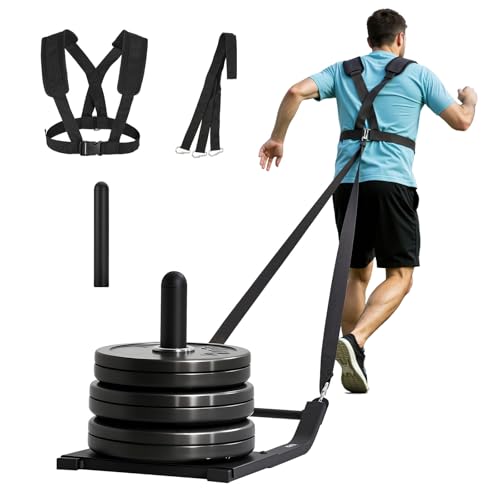
- Compact and disassemblable for easier storage
- Fits 1-inch and 2-inch weight plates
- Padded adjustable harness and stable pull hooks
Best For: Small home gyms and versatile dragging workouts
Warranty-Backed Trainer

- Small 16.3-by-12-inch storage footprint
- Includes belt, straps, and carabiners
- Two-year limited warranty and dual plate support
Best For: Compact pulling workouts with an included belt system
Push-Pull Power Option

- Supports pushing, pulling, and dragging
- Dual plate compatibility with a padded harness
- Stable four-corner hooks and Y-shaped drag
Best For: Versatile conditioning where extra storage space is available
Compact Adjustable Pick
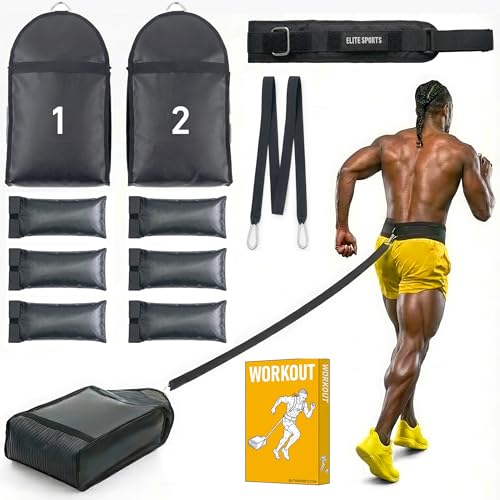
- Compact soft-sided twin-sled design
- Adjusts from 10 to 60 pounds
- Ships empty; sand is not included
Best For: Runners needing adjustable resistance with easier storage
Full-Handle Heavy-Duty Pick
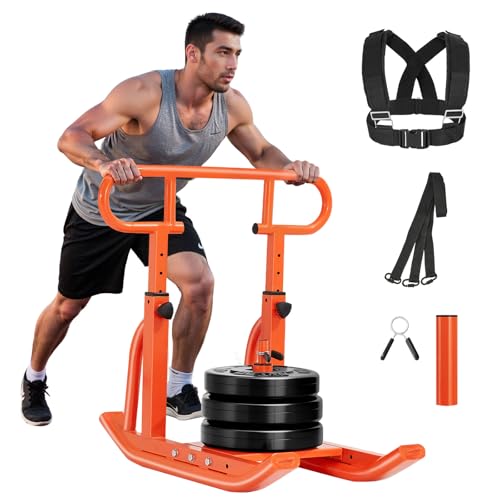
- Five-height adjustable full-range handle
- Fits standard 1- and 2-inch plates
- Disassembles for storage and transport
Best For: Athletes wanting sturdy push-pull training
Space-Saving T-Handle Pick

- Five-height adjustable T-shaped handle
- Supports standard 1- and 2-inch plates
- Disassembles for storage
Best For: T-handle push-pull training in a compact gym setup
Adjustable Terrain Pick – Large Adjustable-Height Weight Sled
For shoppers comparing running sleds for small spaces, the GDFISH Large Weight Sled offers a practical balance of adjustable resistance and flexible setup. Its curved base is designed to clear obstacles across grass, carpet, sand, cement, and other sports surfaces, while the interchangeable 1-inch and 2-inch loading bars support different plates.
Best For: Users who want a versatile push-and-pull sled with adjustable resistance and easier obstacle clearance.
Pros:
- Curved, flat-bottom design helps the sled pass over uneven surfaces without scratching venues.
- Supports both 1-inch and 2-inch weight plates, with capacity up to 286 pounds.
- Includes an adjustable vest and strap with self-locking steel buckles.
- Double-screw joint fixation is designed to improve stability.
Cons:
- At 8.33 kg, it is heavier than some compact plastic utility sleds.
- Assembly requires installing the longer side screws before the shorter top screws.
This is a strong choice when a small training area needs one sled that can handle varied surfaces and progressive loading. Check the frame labels and follow the supplied assembly order for smoother setup.
Gear-Hauling Pick – Pelican Trek 45 Utility Sled
Among running sleds for small spaces, the Pelican Trek 45 is better suited to hauling equipment than resistance sprint training. Its 71-liter capacity, included pull rope, and durable plastic construction make it useful when a compact storage and transport sled is more important than weight-plate loading.
Best For: Outdoor gear transport, including camping, hunting, and fishing trips.
Pros:
- Carries up to 130 pounds in a 71-liter body.
- Heavy-duty RAM-X construction provides shock resistance.
- Built-in HDPE runners support tracking and durability.
- Includes a pull rope and bungee-cord holding indentations.
Cons:
- It is a utility sled, not a dedicated weight sled for plate-loaded speed training.
- At 45.5 inches long and 20 inches wide, it may need more floor space than a compact fitness sled.
- The maximum recommended load is 130 pounds.
The Trek 45 makes sense for buyers who want a durable, easy-to-pull carrier that can be stored in a small gear area. For athletic resistance work, a purpose-built fitness sled may be a better fit.
High-Capacity Training Pick – SELEWARE Steel Weight Sled
For running sleds for small spaces, the SELEWARE Weight Sled stands out for its plate compatibility and high stated load capacity. It accepts both 1-inch and 2-inch plates, comes with adjustable straps, and can be assembled or disassembled for storage between indoor and outdoor workouts.
Best For: Athletes who want a configurable steel sled for progressive strength and speed training.
Pros:
- Durable powder-coated steel construction with a stated capacity of up to 500 pounds.
- Includes support bars for standard and Olympic weight plates.
- Curved elliptical-tube design is intended to navigate uneven terrain while protecting grass and carpets.
- Adjustable back and tension straps support setup and storage flexibility.
Cons:
- The steel construction weighs about 4.74 kg in the package, so it is not the lightest option to move.
- Its stated 500-pound capacity may be more than needed for beginners or very limited training spaces.
This sled is a compelling option when adjustable loading and broad surface compatibility matter most. Its ability to disassemble can help small-space users store it more conveniently, while the included harness supports pull-focused sessions.
Compact Workout Pick – ECOTRIC Fitness Sled
The ECOTRIC Fitness Sled is a practical candidate for shoppers seeking running sleds for small spaces, with a listed footprint of about 20 by 15 by 10 inches and a 10-foot leash. Its steel frame, padded harness, and adjustable loading make it suitable for controlled speed and resistance sessions across several surfaces.
Best For: Home and field workouts requiring a straightforward, plate-loaded fitness sled with a padded harness.
Pros:
- Compact listed dimensions make it easier to manage in a limited training area.
- Heavy-duty steel construction with red powder coating is designed for durability and grip.
- Adjustable resistance allows users to add or remove weight plates.
- Works on grass, snow, sand, sports turf, plastic tracks, and gym surfaces.
Cons:
- Maximum recommended load is 100 pounds.
- The design is listed for plates around 12 inches in diameter, with plate stacking under 8 inches.
- At 9 pounds, it is heavier than some lightweight utility sleds.
With its relatively compact frame and included padded harness, the ECOTRIC is well suited to basic speed and conditioning work where storage space is limited. Its 100-pound load limit makes it more appropriate for moderate resistance than very heavy pulling.
Compact Steel Performer – VEVOR Weight Sled
For shoppers comparing running sleds for small spaces, this VEVOR model offers a compact, disassemblable design that is easier to transport and store. It supports both 1-inch and 2-inch weight plates and is built for dragging workouts on tracks, artificial turf, and gym surfaces.
Best For: Home gyms and athletes who want a compact sled for push-pull strength and speed training.
Pros:
- Compact design measures 24.02 by 12.99 by 14.57 inches and disassembles for storage.
- Supports both 1-inch and 2-inch weight plates with dedicated support bars.
- Includes a padded, adjustable harness and two front pull hooks for steadier dragging.
- Steel construction has a stated 276.6-pound load capacity and outdoor powder coating.
Cons:
- The listed item weight is 10.6 pounds, which may be less convenient for users seeking a very lightweight sled.
- The supplied details focus on dragging rather than a dedicated push-handle setup.
Its compact footprint and flexible plate compatibility make this a practical choice when storage space is limited. The harness and stable front-hook design also support straightforward outdoor or indoor pulling sessions.
Warranty-Backed Trainer – LIONSCOOL Weight Sled
Among running sleds for small spaces, the LIONSCOOL stands out for its 16.3-by-12-inch footprint and field-ready setup. Its steel frame supports progressive loading, while the included belt, straps, and carabiners make it ready for pulling workouts at home, in a garage, or outdoors.
Best For: Users who prioritize compact storage, a complete pulling setup, and warranty coverage.
Pros:
- Compact 16.3-by-12-inch size is easy to store and transport.
- Two-in-one loading bar accepts both 1-inch standard and 2-inch Olympic plates.
- Includes an adjustable padded pulling belt, two 10-foot straps, and four carabiners.
- Three front attachment points help reduce lateral sway, and the product includes a two-year limited warranty.
Cons:
- The pulling belt fits waists from 38.2 to 55.5 inches, so fit may be limited outside that range.
- Its stated maximum support is 150 pounds, lower than some heavier-duty sleds.
This is a strong small-space option for buyers who want the accessories included rather than purchasing a harness and straps separately. Its compact frame and two-year warranty add practical value for regular pulling sessions.
Push-Pull Power Option – VEVOR Push-Pull Weight Sled
This VEVOR model suits shoppers seeking running sleds for small spaces but also wanting push-and-pull versatility. It supports dragging, pulling, and pushing, accepts 1-inch and 2-inch plates, and can be disassembled for transport or storage despite its larger working dimensions.
Best For: Athletes who want one sled for varied strength, speed, pushing, and pulling sessions.
Pros:
- Offers multiple training modes, including pushing, pulling, and dragging.
- Four-corner pull hooks and a Y-shaped drag help improve stability during pulls.
- Accepts both 1-inch and 2-inch weight plates and includes a padded adjustable harness.
- Steel construction has a stated 276.6-pound capacity and powder-coated outdoor finish.
Cons:
- Its listed dimensions of 29.33 by 17.32 by 18.7 inches require more storage room than the other options here.
- At 19 pounds, it is heavier to move and store than a smaller training sled.
- The supplied details do not specify a separate push handle.
The broader training range is this sled’s main advantage, making it useful when pushing and pulling are both priorities. However, small-space buyers should measure their storage area carefully before choosing this larger VEVOR design.
Compact Adjustable Pick – Elite Twin Sand Bag Sled
For shoppers comparing running sleds for small spaces, this twin sandbag design is a practical alternative to a bulky plate-loaded sled. It arrives empty, uses removable 10-pound sandbags, and adjusts from 10 to 60 pounds for progressive outdoor or indoor training.
Best For: Runners who want a compact, adjustable resistance sled and do not mind sourcing and filling sandbags separately.
Pros:
- Compact package measuring 20.75 x 17 x 3.5 inches.
- Six resistance levels from 10 to 60 pounds.
- Water-resistant PU-PVC-coated polyester construction.
- Padded adjustable waist strap and balanced twin-sled weight distribution.
Cons:
- Ships unfilled; sand is not included.
- Waist-mounted pulling design may be less suitable for users seeking a push handle.
The Elite Twin is especially space-conscious because its soft-sided sandbag format avoids storing a large steel frame. Confirm you have a suitable surface and plan for separate sand storage before buying.
Full-Handle Heavy-Duty Pick – VEVOR Adjustable Handle Sled
Among running sleds for small spaces, this VEVOR model offers versatile push-and-pull training in a steel frame that can be disassembled for storage. Its adjustable full-range handle and plate compatibility make it useful for changing workout angles and resistance.
Best For: Athletes who want a sturdy, plate-loaded sled for pushing, pulling, and speed work and have room to store a heavier steel unit.
Pros:
- Five-height adjustable all-around handle supports varied push and pull angles.
- Compatible with standard 1- and 2-inch weight plates.
- Four-corner pull hooks help provide stable dragging.
- Disassembles for easier transport and storage.
Cons:
- Heavier and bulkier than the soft-sided alternative, at 38.8 pounds and up to 35.43 x 29.06 x 33.15 inches.
- Weight plates are not listed among the included components.
This is the more substantial option for users prioritizing steel construction and a full handle. Although it can be disassembled, measure your storage area carefully before choosing it for a small-space setup.
Space-Saving T-Handle Pick – VEVOR T-Handle Sled
If you are comparing running sleds for small spaces but still want a conventional steel trainer, this VEVOR T-handle version balances adjustable handling with a disassemblable frame. It accepts standard plates and is designed to glide across gyms, artificial turf, tracks, and other surfaces.
Best For: Users who prefer a T-shaped push handle and need a plate-loaded sled that can be broken down for transport or storage.
Pros:
- Five-height adjustable T-shaped handle supports different training angles.
- Accepts standard 1- and 2-inch weight plates with locking support hardware.
- Four-corner pull hooks help reduce tipping during drags.
- Powder-coated Q235 steel is designed for outdoor durability and corrosion resistance.
Cons:
- Still a sizable steel unit, measuring up to 35.43 x 27.64 x 32.28 inches.
- Its 37.2-pound frame adds more storage and handling demands than a soft-sided sled.
The T-handle configuration is a good fit when push work matters as much as running pulls. For a genuinely tight storage area, verify the collapsed dimensions and available plate-storage space before ordering.
How We Picked the Best Running Sleds for Small Spaces
We focused on features that matter when training in a restricted area: overall portability, resistance adjustability, attachment design, construction, and the amount of equipment required. Plate compatibility was considered for shoppers who already own Olympic or standard plates, while harnesses, pulling belts, and ropes were assessed for setup flexibility.
Because “small space” can mean a short driveway, garage, patio, or indoor training area, we also prioritized sleds that can be stored without taking over a room. A compact sled is not automatically ideal if it requires a long straight lane, rough surfaces, or bulky accessories, so surface compatibility and maneuverability remain important.
Quick Comparison
| Best for | Look for | Recommended type |
|---|---|---|
| Short sprint lanes | Compact frame and smooth pull | Lightweight plate-loaded sled |
| Strength and conditioning | Push-and-pull capability | Steel power sled |
| Minimal equipment | Built-in or adjustable resistance | Sandbag or resistance-system sled |
| Outdoor versatility | Durable body and included rope | Utility sled |
| Shared household use | Adjustable handle or harness | Multi-position training sled |
Key Buying Factors for Running Sleds for Small Spaces
Footprint and Storage
Check the sled’s frame length, handle height, and whether the pull strap or rope detaches. A shorter frame is easier to turn and store, but it may provide less stability under heavy loads. Measure your storage location and training lane before ordering.
Resistance System
Plate-loaded sleds are convenient if you already own compatible weights, but verify whether the sleeve accepts 1-inch or 2-inch plates. Sandbag and built-in resistance systems can reduce equipment requirements, although their adjustment range may differ from a traditional weight post.
Surface and Traction
Most sleds perform best on turf, rubber, concrete, or another sufficiently durable surface. Rough pavement can increase wear on the base, while smooth flooring may provide too little resistance. If using a sled indoors, confirm that the base will not damage the floor and consider a suitable sled track or protective mat.
Harness, Rope, and Handle Design
A padded harness can make longer pulls more comfortable, while a rope or belt may provide greater freedom of movement in a compact lane. Push handles are useful for strength work but can increase the storage footprint. Adjustable handles are especially helpful when multiple people share the sled.
Who Should Buy Which Running Sleds for Small Spaces?
Choose a compact plate-loaded model if you want straightforward sprint resistance and already have the required plates. Select a push-pull steel sled if your sessions include heavy drags, prowler-style pushes, and strength conditioning. A utility sled is the better choice for shoppers who value general outdoor use and seasonal versatility.
For the smallest home setups, consider a sled with adjustable resistance, a removable harness, or a sandbag-based design so you can avoid storing a large collection of plates. Whichever model you choose, start with a light load, keep your lane clear, and increase resistance gradually as your technique and traction allow.