The best spotting scopes for hiking balance magnification, optical clarity, portability, and weather resistance. A scope that looks impressive on paper may be inconvenient on steep trails if it is too heavy or requires a bulky tripod.
We selected 10 options ranging from compact, budget-friendly designs to large-aperture scopes for detailed wildlife viewing, target spotting, and occasional stargazing. Use the guide below to match the right combination of size, performance, and accessories to your hikes.
Best 10 Spotting Scopes for Hiking Picks for 2026
Best Value Performance

- 20-60x zoom and 80mm objective lens
- HD optics with fully multi-coated lenses
- Waterproof, fogproof, and Arca-Swiss compatible
Best For: Hikers wanting powerful, durable optics at a value-oriented price
Best Lightweight Kit

- 12x magnification with a wide 6.5-degree view
- BAK4 prism and fully multi-coated lenses
- Includes phone adapter, tripod, and travel bag
Best For: Casual hiking, bird watching, and portable nature viewing
Best Low-Light Upgrade
Vortex Diamondback HD 20-60x85

- Large 85mm objective lens for light transmission
- 20-60x zoom with HD optics
- Waterproof, fogproof, and Arca-Swiss compatible
Best For: Serious wildlife observation and low-light glassing
Best High-Magnification Starter

- 25-75x zoom for scanning and detailed viewing
- BAK4 prism and FMC optical coating
- Includes tripod, phone adapter, and carrying case
Best For: Hikers wanting high magnification and an all-in-one kit
Long-Range Power Pick

- 100mm objective lens with 22-66x zoom
- Fully multi-coated optics for brighter views
- Includes case, T-adapter, and tripod plate
Best For: Long-range viewing from overlooks and accessible trail locations
Lightweight Trail Choice

- Light 1.9-pound design for easier carrying
- HD, fully multi-coated optics
- Arca-Swiss foot and unlimited lifetime warranty
Best For: Mobile hikers prioritizing portability and weather resistance
Accessory-Rich Value Option

- 20-60x zoom with an 80mm objective lens
- Includes tripod and smartphone adapter
- Waterproof, fog-proof, and BAK4 prism
Best For: Hikers wanting phone capture and a complete viewing kit
Bright-View Long-Range Pick
SVBONY SV28 100mm Spotting Scope

- Large 100mm objective for brighter views
- 25-75x zoom for detailed observation
- Includes phone adapter and carry case
Best For: Bright long-range viewing from accessible trails and overlooks
Weather-Ready All-Rounder

- 25-75x zoom with an 80mm objective
- Nitrogen-filled and O-ring sealed
- Includes tabletop tripod and phone holder
Best For: Weather-conscious hikers and wildlife viewers
Lightweight Beginner Choice
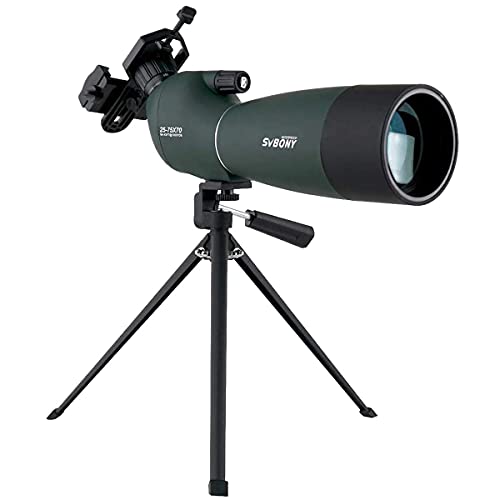
- Lightweight design at about 910 g
- 25-75x zoom with a 70mm objective
- Includes phone adapter and desktop tripod
Best For: Beginners and casual hikers prioritizing portability
Best Value Performance – Vortex Crossfire HD 20-60×80
For hikers who want serious reach without giving up value, the Vortex Crossfire HD is a powerful choice among spotting scopes for hiking. Its 20-60x zoom, 80mm objective lens, wide field of view, and HD optics support detailed viewing across varied outdoor conditions.
Best For: Hikers and wildlife observers who want high magnification, strong low-light performance, and durable weather protection.
Pros:
- 20-60x magnification with an 80mm objective lens for detailed, long-range viewing
- HD optics and fully multi-coated lenses support clarity, color fidelity, and light transmission
- Arca-Swiss-compatible foot, rubber armor, and waterproof, fogproof construction
- Includes a neoprene cover and comes with an unlimited, unconditional lifetime warranty
Cons:
- At 3.3 pounds, it may be heavy for ultralight hiking setups
- Its large 80mm objective lens creates a substantial overall package
The Crossfire HD balances optical capability and value well, though its size and weight favor deliberate glassing stops over fast-moving, minimalist hikes.
Best Lightweight Kit – OXK Optics 12×56 Monocular
The OXK Optics 12×56 is a compact alternative for hikers who prefer a simpler viewing setup. Its 12x magnification, wide field of view, large objective lens, smartphone adapter, tripod, and travel bag make it a practical entry point for spotting scopes for hiking.
Best For: Casual hikers, bird watchers, and travelers who want a portable monocular kit with phone-viewing capability.
Pros:
- 12x magnification and a 6.5-degree wide field of view provide comfortable viewing
- 56mm objective lens, BAK4 prism, and fully multi-coated lenses support brighter images
- Includes a smartphone holder, adjustable tripod, hand strap, and travel bag
- Waterproof design and lifetime warranty add practical outdoor protection
Cons:
- Fixed 12x magnification offers less reach and flexibility than a zoom spotting scope
- The included tripod is designed for portability rather than advanced mounting
This monocular kit is easy to carry and share, making it well suited to general nature viewing rather than demanding, high-magnification observation.
Best Low-Light Upgrade – Vortex Diamondback HD 20-60×85
When low-light viewing matters, the Vortex Diamondback HD offers a large 85mm objective lens and 20-60x magnification for detailed glassing. It is a strong premium option among spotting scopes for hiking, especially for users who value optical performance and rugged construction.
Best For: Serious hikers, hunters, and wildlife observers who need strong low-light capability and flexible tripod mounting.
Pros:
- HD optics and multiple anti-reflective coatings support resolution and light transmission
- 20-60x zoom and an 85mm objective lens provide substantial viewing capability
- Built-in helical focus, adjustable eyecup, and sunshade improve field usability
- Waterproof, fogproof, rubber-armored, and Arca-Swiss compatible
Cons:
- Its 3.8-pound weight and 16-inch optical tube are demanding for lightweight hikes
- The large objective lens makes it better suited to tripod-based observation
The Diamondback HD is an optical upgrade for deliberate viewing sessions, but hikers should plan for the added carrying weight and a stable mount.
Best High-Magnification Starter – SVBONY SV28 Plus 25-75×70
The SVBONY SV28 Plus gives hikers a broad 25-75x zoom range for scanning at lower power and examining distant details at higher power. With a tripod, phone adapter, BAK4 prism, and IP65 weather protection included, it is a versatile package for spotting scopes for hiking.
Best For: Hikers, target observers, and bird watchers who want high magnification with included accessories.
Pros:
- 25-75x variable magnification supports both wide-area scanning and detailed viewing
- 70mm objective lens, BAK4 prism, and FMC coating help produce bright images
- Includes a tripod, carrying case, lens covers, cleaning cloth, and phone adapter
- IP65 waterproof and fogproof construction is designed for changing weather
Cons:
- Its approximately 1.69kg weight may be considerable for long hikes
- High magnification makes a stable tripod especially important
- The manual-focus design requires user adjustment while viewing
The SV28 Plus offers an extensive zoom range and a useful accessory bundle, making it appealing for hikers who prioritize reach over minimum pack weight.
Long-Range Power Pick – Celestron Ultima 22-66×100
For hikers who prioritize maximum reach over pack weight, the Celestron Ultima is a capable choice among spotting scopes for hiking. Its 100mm objective lens and 22-66x zoom are suited to distant wildlife, scenery, and other long-range viewing, while the angled design is comfortable for extended observation.
Best For: Long-range wildlife viewing from established overlooks, trailheads, or other locations where a 4.5-pound scope is manageable.
Pros:
- Large 100mm objective lens and powerful 22-66x zoom support detailed distant viewing.
- Fully multi-coated optics are designed to improve brightness, color, and contrast.
- Includes a soft carrying case, extended tripod plate, T-adapter, eyepiece pouch, and lens cloth.
- Waterproof construction and a limited lifetime warranty add useful outdoor protection.
Cons:
- At 4.5 pounds and 21 inches long, it is less convenient for weight-conscious hiking.
- Manual focusing and high magnification work best with a stable tripod setup.
- The large objective lens makes this better suited to planned viewing than quick trail use.
The Ultima offers the strongest stated reach and light-gathering potential in this group, but its size makes it a specialized hiking companion. Choose it when distant detail matters more than minimizing your load.
Lightweight Trail Choice – Vortex Crossfire HD 12-36×50
The Vortex Crossfire HD is a practical fit for hikers seeking spotting scopes for hiking without carrying a full-size 80mm or 100mm model. Its 1.9-pound weight, straight viewing design, 12-36x range, and Arca-Swiss-compatible foot make it convenient for mobile observation.
Best For: Hikers who want a relatively light scope for scanning broad landscapes and viewing wildlife without giving up weather protection.
Pros:
- At 1.9 pounds, it is the lightest listed option and easier to carry on longer hikes.
- HD optics and fully multi-coated lenses are designed for resolution, color fidelity, and light transmission.
- Helical focus enables fast, fine adjustments, while the wide field of view helps with target acquisition.
- Nitrogen purging, waterproof and fogproof performance, rubber armor, and a lifetime VIP warranty support outdoor use.
Cons:
- The 50mm objective lens and 36x maximum magnification provide less reach than the larger scopes here.
- The straight configuration may be less comfortable than an angled scope for some tripod viewing positions.
- No phone adapter is listed among the included accessories.
This Crossfire HD balances portability, optical features, and durability better than the larger alternatives for active hikers. It is the most sensible pick when pack weight and quick setup are high priorities.
Accessory-Rich Value Option – Gosky 20-60×80
The Gosky 20-60×80 combines high magnification with a useful set of trail-viewing accessories. For shoppers comparing spotting scopes for hiking, its 80mm fully multi-coated objective lens, BAK4 prism, included tabletop tripod, and smartphone adapter make it appealing for wildlife, scenery, and casual digiscoping.
Best For: Hikers and campers who want a versatile observation kit with phone capture and a supplied tripod for stationary viewing.
Pros:
- Variable 20-60x magnification and an 80mm objective lens support detailed, bright views.
- BAK4 prism and fully multi-coated optics are designed to improve light transmission and clarity.
- Includes a metal tabletop tripod, smartphone adapter, carrying case, lens covers, and cleaning cloth.
- Nitrogen-filled, sealed construction is described as waterproof and fog-proof, with rubber armor for grip and shock resistance.
Cons:
- At 2.4 pounds, it is heavier than the Vortex for extended backpacking.
- The included tabletop tripod may be less suitable for full-height standing observations.
- The listed warranty is one year, shorter than the lifetime warranties of the other two options.
The Gosky is a well-equipped middle ground for hikers who value magnification and included extras. Its phone adapter and tripod add convenience, while the larger objective lens comes with a moderate weight penalty.
Bright-View Long-Range Pick – SVBONY SV28 100mm Spotting Scope
For hikers who prioritize a brighter view over pack weight, this SVBONY SV28 is a powerful choice among spotting scopes for hiking. Its 100mm objective lens gathers substantial light, while the 25-75x zoom supports detailed viewing of wildlife, distant scenery, and targets. The included phone adapter and carry case add convenience, though the scope is better suited to vehicle-based outings or short approaches than long treks.
Best For: Bright, detailed long-range viewing when portability is a secondary concern.
Pros:
- Large 100mm aperture is designed to provide brighter views, including in lower light.
- 25-75x zoom range supports both broad observation and close detail.
- Includes a phone adapter, desktop tripod, covers, cleaning cloth, and soft carry case.
- Twist-up eyecup and FMC optics support comfortable, brighter viewing.
Cons:
- At about 2,560 g, it is relatively heavy for extended hiking.
- The included desktop tripod may require an additional full-size tripod for outdoor viewing.
The SV28 100mm stands out when image brightness and reach matter more than minimizing pack weight. Consider it for accessible trails, overlooks, and observation points where you can use a sturdier tripod.
Weather-Ready All-Rounder – Gosky DiamondEdge 25-75×80
The Gosky DiamondEdge offers a balanced set of features for hikers who want one scope for wildlife, scenery, and occasional target viewing. Its 80mm objective and 25-75x magnification provide a broad viewing range, while nitrogen filling and O-ring sealing add protection in changing outdoor weather. At 4.5 pounds, it is more practical for short hikes or planned viewing stops than ultralight backpacking.
Best For: Outdoor observers who value weather protection, versatile magnification, and included accessories.
Pros:
- 25-75x zoom and an 80mm objective support versatile long-range viewing.
- Nitrogen-filled, O-ring-sealed construction is designed to be waterproof and fogproof.
- Dual-speed focusing, a twist-up eyecup, and retractable sunshade improve usability.
- Includes a tabletop tripod, phone holder, covers, cleaning cloth, and carrying case.
Cons:
- Its 4.5-pound weight is substantial for carrying on longer hikes.
- The included tabletop tripod is less suitable for standing-height trail observation.
This is a capable all-rounder for hikers who can tolerate extra weight in exchange for a more weather-ready design and a complete accessory bundle. A compatible full-size tripod may be worthwhile for extended viewing.
Lightweight Beginner Choice – SVBONY SV28 70mm Angled Scope
Beginners looking for spotting scopes for hiking may appreciate this angled SVBONY SV28 for its lighter, more manageable design. The 70mm objective gathers useful light, the 25-75x zoom covers nearby and distant subjects, and the included phone adapter makes sharing observations simple. Its desktop tripod is convenient for range use and low setups, but hikers may want a taller tripod for comfortable standing-height viewing.
Best For: Beginners who want a portable, budget-minded scope for casual wildlife and scenery viewing.
Pros:
- About 910 g, making it considerably easier to carry than the larger scopes in this group.
- 25-75x zoom and a 70mm objective suit varied wildlife and landscape viewing.
- Angled design, built-in sunshade, and FMC coating support practical outdoor use.
- Includes a phone adapter, portable desktop tripod, carrying case, and lens covers.
Cons:
- The included desktop tripod may be too short for comfortable standing observation.
- The listed 60-day warranty is shorter than the warranty coverage noted for the other options.
- It is described as light waterproof and fogproof rather than fully rugged weather protection.
This model is the most hiking-friendly option here when carrying weight is important. It makes a sensible entry point for casual trail observation, especially when paired with a taller compatible tripod for longer sessions.
How We Picked the Best Spotting Scopes for Hiking
We focused on the features that matter most outdoors: useful magnification, objective-lens size, optical coatings, focusing control, weather resistance, mounting compatibility, and overall portability. The selection includes angled and straight viewing designs, compact monocular-style options, and larger scopes that prioritize brightness and detail over low weight.
We also considered included accessories such as tripods and smartphone adapters. These can add value for beginners, but a bundled tripod is not automatically suitable for high magnification or windy conditions.
Quick Comparison
| Type | Best For | Main Advantage | Trade-Off |
|---|---|---|---|
| Compact 12×56 monocular | Day hikes and quick observations | Low weight and simple setup | Less magnification flexibility |
| 50mm spotting scope | Portable wildlife viewing | Good balance of size and reach | Dimmer at high power |
| 70–80mm scope | General wildlife and target use | More brightness and detail | Needs a sturdier support |
| 85–100mm scope | Long-range viewing and low light | Strong light-gathering ability | Heavier and less packable |
Key Buying Factors for Spotting Scopes for Hiking
Magnification and Field of View
Variable ranges such as 20-60x or 25-75x provide flexibility, but the highest setting is not always the clearest. Higher power narrows the field of view, exaggerates hand movement, and requires a more stable tripod. For moving wildlife and trail use, a lower starting magnification is often easier to manage.
Objective Size and Weight
A larger objective lens gathers more light and can improve detail in shade or early morning conditions. However, 85mm and 100mm models can add substantial bulk. For hiking, a 50mm to 80mm scope is usually the more practical compromise unless maximum brightness is the priority.
Optics, Focusing, and Weather Protection
Fully multi-coated lenses and BAK4 prisms can support brighter, higher-contrast images. A smooth helical or dual-speed focus helps you lock onto distant subjects quickly. Look for waterproof or IP-rated construction when routes may involve rain, dust, or changing weather.
Mounting and Accessories
At moderate to high magnification, a tripod is essential. Check for a standard or Arca-Swiss-compatible mounting system and make sure the tripod is stable enough for the scope’s weight. Smartphone adapters are useful for recording views, but phone weight can make a lightweight setup vibrate.
Who Should Buy Which Spotting Scopes for Hiking?
Choose a compact monocular or 50mm scope if you prioritize a light pack, fast setup, and casual wildlife viewing. Choose a 70mm to 80mm angled scope for the best all-around balance of reach, brightness, and hiking practicality. Choose an 85mm or 100mm model if you regularly observe distant targets, birds, or landscapes from a fixed viewpoint and do not mind carrying more weight. Beginners should prioritize a stable tripod and easy focusing over the largest advertised magnification.