The best graduated compression socks can make long flights, standing shifts, workouts, and daily errands more comfortable by applying targeted pressure from the ankle upward.
We’ve selected 10 options across common compression levels, materials, pack sizes, and intended uses so you can find a practical fit for your routine and budget.
Best 10 Graduated Compression Socks Picks for 2026
Athletic Support Pick
FITRELL 20-30 mmHg Compression Socks
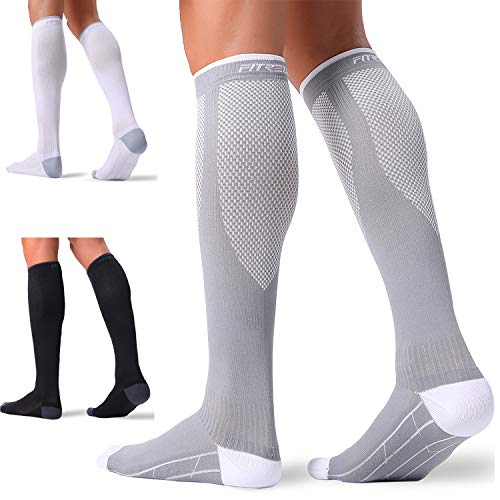
- Firm five-zone graduated compression
- Breathable, moisture-wicking athletic fabric
- Cushioned sole and seamless toe
Best For: Active users wanting firm unisex support
Everyday Relief Pick
Dr. Scholl's Men's Mild Compression Socks

- Mild 8-15 mmHg graduated compression
- Over-the-calf coverage for daily wear
- APMA accepted with smooth toe seam
Best For: Men seeking gentle everyday leg support
Flexible Unisex Value
CHARMKING 15-20 mmHg Compression Socks
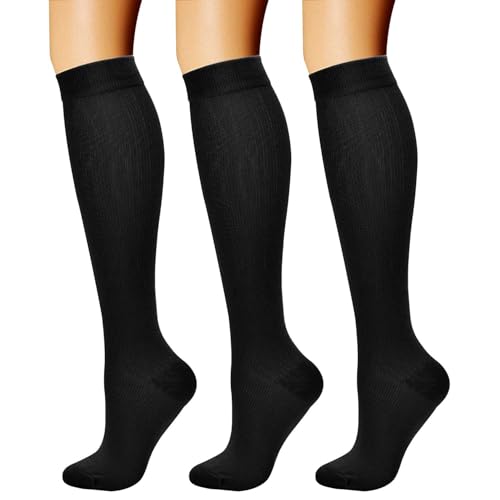
- Moderate 15-20 mmHg support
- Breathable 85% nylon fabric
- Three-pair unisex pack
Best For: Active or standing-heavy days
Women's Comfort Pick
Dr. Scholl's Mild Knee High Compression Socks

- Gentle 8-15 mmHg graduated support
- Moisture-wicking knee-high design
- Non-binding top and smooth toe seam
Best For: Women prioritizing everyday comfort
Best Value Multipack
CHARMKING 15–20 mmHg Compression Socks
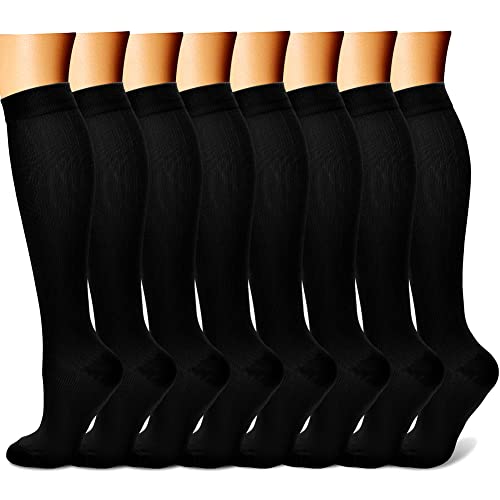
- 8-pair pack for easy weekly rotation
- Stretchy 85% nylon athletic fabric
- Machine washable and breathable
Best For: Athletes, commuters, and frequent wearers
Firm Support Pick
20–30 mmHg Graduated Knee-High Socks

- Firmer 20–30 mmHg compression
- Reinforced heel and toe construction
- Sizes available through 2XL–3XL
Best For: Travel, long shifts, and recovery support
Copper-Fiber Comfort Choice
15–20 mmHg Copper Compression Socks

- 8-pair pack for regular rotation
- Copper-infused moisture-wicking blend
- Mild support for work and travel
Best For: Nurses, travelers, runners, and active workers
Soft Travel Support
Merino Wool Graduated Compression Socks
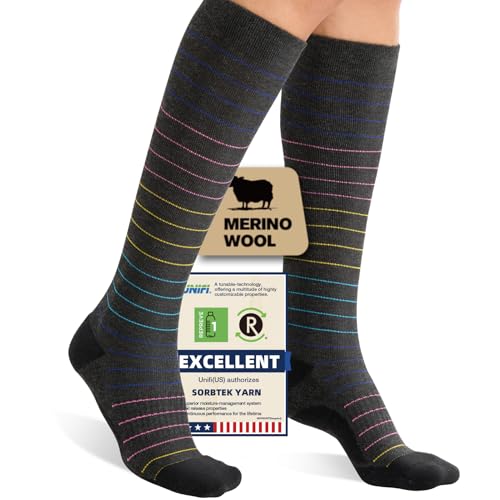
- 15–20 mmHg four-zone compression
- Merino wool and bamboo-viscose blend
- Seamless toe and reinforced footpads
Best For: Travel, everyday wear, pregnancy, and exercise
Easy-Wear Pick
Copper Fit Energy Compression Socks

- 10–20 mmHg graduated compression
- Easy-on, easy-off design
- Three-pair moisture-wicking pack
Best For: Travel, work, running, recovery, and daily rotation
Multi-Pack Value
fenglaoda 20–30 mmHg Compression Socks
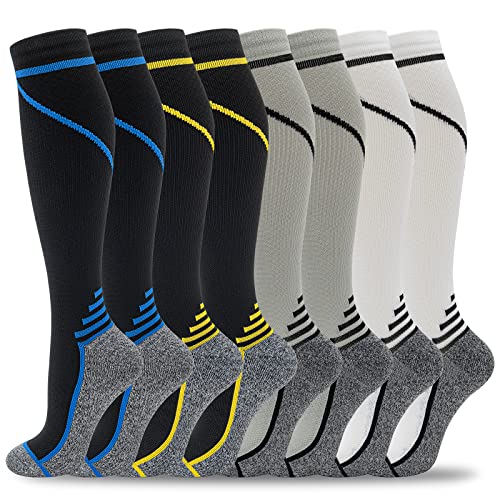
- Firm 20–30 mmHg graduated compression
- Eight knee-high pairs included
- Arch support and reinforced heel/toe
Best For: Nursing, travel, pregnancy, running, and frequent wear
Athletic Support Pick – FITRELL 20-30 mmHg Compression Socks
For shoppers comparing graduated compression socks for active days, travel, or everyday leg support, the FITRELL set combines firm 20-30 mmHg compression with athletic comfort features. Check calf measurements first, since the manufacturer recommends sizing primarily by calf circumference.
Best For: Runners, travelers, workers, and shoppers seeking firmer unisex compression in a three-pair set.
Pros:
- Five graduated compression zones are designed to support circulation, the Achilles, and plantar fascia.
- Moisture-wicking fabric and calf mesh panels help promote a breathable, dry feel.
- Seamless toes and cushioned soles help reduce friction and absorb impact.
- Available in two sizes for men and women, with machine-wash care.
Cons:
- The 20-30 mmHg level may feel too firm for shoppers seeking mild compression.
- Fit depends closely on calf size, and the listed size ranges overlap.
This is a feature-rich option for active users who want firm graduated compression plus cushioning. Its main buying consideration is getting the calf measurement right before ordering.
Everyday Relief Pick – Dr. Scholl's Men's Mild Compression Socks
These graduated compression socks are designed for men who want mild support during everyday activity. Their 8-15 mmHg compression starts at the ankle and gradually eases upward, while the over-the-calf design provides coverage through the calf.
Best For: Men looking for mild compression to help address tired, achy, or swollen-feeling legs during daily wear.
Pros:
- Mild 8-15 mmHg graduated compression offers a less intense option.
- Over-the-calf length supports coverage through the calf and is designed to fight fatigue.
- APMA accepted for promoting good foot health.
- Ultra-smooth Invisiseam toe construction helps reduce irritation.
Cons:
- The product is specifically described as men’s socks.
- Mild compression may not meet the needs of shoppers seeking firmer support.
- The supplied details do not identify moisture-wicking or cushioning features.
Dr. Scholl’s offers a straightforward mild-compression choice in a three-pack. It makes sense for routine comfort and fatigue relief, particularly if you prefer an over-the-calf fit and smoother toe seam.
Flexible Unisex Value – CHARMKING 15-20 mmHg Compression Socks
For a versatile middle-ground option, these graduated compression socks provide 15-20 mmHg support in a three-pair pack. The nylon-rich fabric is designed to stretch in multiple directions while remaining lightweight and breathable for running, cycling, work, or travel.
Best For: Men and women who want moderate compression and a flexible three-pair rotation for active or standing-heavy days.
Pros:
- 15-20 mmHg compression is positioned between mild and firmer support levels.
- Fabric blend uses 85% nylon and 15% spandex for stretch and durability.
- Breathable, lightweight construction is intended to maintain comfort during activity.
- Unisex design suits athletes, workers, travelers, and people on their feet.
Cons:
- The supplied listing identifies two size options but does not provide their measurement ranges.
- No specific toe-seam cushioning or padding features are listed.
- The provided product details show a Large-X-Large size, so availability should be checked.
CHARMKING is a practical choice when you want moderate graduated compression without a heavy athletic build. Confirm the available size before buying, especially if you need a precise calf or shoe fit.
Women's Comfort Pick – Dr. Scholl's Mild Knee High Compression Socks
These women’s graduated compression socks focus on gentle comfort for everyday wear. The 8-15 mmHg compression gradually decreases up the leg, while moisture-wicking fibers, a smooth toe seam, and a non-binding top help support an easy knee-high fit.
Best For: Women seeking mild compression with moisture management and comfort features for routine wear.
Pros:
- Mild 8-15 mmHg graduated compression provides gentle support.
- Moisture-wicking fibers help move moisture away from the skin.
- Invisiseam toe construction is designed to minimize irritation and bunching.
- Soft, non-binding comfort top helps the socks stay in place without squeezing.
Cons:
- The package contains one pair, offering less rotation than multi-pair options.
- Mild compression may be insufficient for shoppers wanting stronger support.
- The supplied details list a gray and purple floral design, which may not suit every wardrobe.
This is a comfort-forward pick for women who prioritize a gentle compression level and considerate sock construction. Its one-pair format is best for trying the fit rather than stocking up.
Best Value Multipack – CHARMKING 15–20 mmHg Compression Socks
If you want a practical supply of graduated compression socks for regular wear, the CHARMKING 8-pair pack offers moderate 15–20 mmHg support in a colorful, athletic design. The knee-high socks use a high-stretch nylon-spandex blend and are machine washable, making them convenient for work, travel, or exercise.
Best For: Athletes, cyclists, runners, office workers, and anyone who wants multiple pairs for frequent use.
Pros:
- Includes 8 pairs for convenient rotation throughout the week.
- 15–20 mmHg graduated-style support with targeted compression zones.
- 85% nylon and 15% spandex fabric provides stretch, flexibility, and durability.
- Breathable, machine-washable construction with several color combinations.
Cons:
- The listed color option is primarily black, so choices may vary by selected pack.
- Only one compression range is offered in the supplied details.
Choose this pack when quantity and everyday versatility matter most. Its athletic fit and high-stretch construction make it a practical option for active users and people who spend long hours on their feet.
Firm Support Pick – 20–30 mmHg Graduated Knee-High Socks
For shoppers seeking a stronger level of graduated compression, these knee-high socks provide 20–30 mmHg support in a 5-pair pack. Their thick-knit, reinforced construction is designed for repeated use, while multiple size options—including 2XL–3XL—make them suitable for a range of leg shapes.
Best For: Travelers, nurses, teachers, athletes, postpartum users, and anyone wanting firmer support during long periods of standing or sitting.
Pros:
- Higher 20–30 mmHg compression level for firmer support.
- Thick-knit build with reinforced heels and toes for durability.
- Available in S/M, L/XL, and 2XL–3XL sizing, including larger-fit options.
- Machine washable fabric is designed to resist pilling and retain its shape.
Cons:
- Firmer compression may be less suitable for shoppers wanting mild support.
- Only 5 pairs are included, fewer than some multipacks.
This is the strongest-support option in the group, with a durable build and inclusive sizing. Carefully check the size chart before ordering, especially when selecting the higher compression level or a wide-calf fit.
Copper-Fiber Comfort Choice – 15–20 mmHg Copper Compression Socks
These graduated compression socks combine mild 15–20 mmHg support with copper-infused fibers and an 8-pair format. The breathable, moisture-wicking blend is intended to help keep feet dry and fresh, making the knee-high socks a useful choice for workdays, travel, and low-impact activity.
Best For: Nurses, runners, hikers, travelers, office workers, and shoppers who prefer moisture-wicking fabric with mild compression.
Pros:
- Eight-pair pack provides convenient rotation and strong value.
- 15–20 mmHg compression offers mild support for everyday wear.
- Fabric includes 5% copper fiber alongside nylon and polyester.
- Breathable, moisture-wicking construction is designed to help control odor.
Cons:
- The supplied details list a Large–X-Large size, so fit availability should be checked.
- Copper-fiber features may appeal less to shoppers seeking a basic fabric blend.
Consider this pack if freshness and fabric technology are priorities alongside moderate compression. It is especially practical for people who need several pairs for active workdays, travel, or regular exercise.
Soft Travel Support – Merino Wool Graduated Compression Socks
These graduated compression socks combine 15–20 mmHg arch-to-knee support with a merino wool and bamboo-viscose blend. The breathable, moisture-managing fabric and seamless toe closure make them a practical choice for travel, work, exercise, or extended periods of sitting and standing.
Best For: Travelers, pregnant wearers, nurses, athletes, and anyone wanting soft all-season comfort with moderate support.
Pros:
- True four-zone graduated compression gradually decreases from the ankle upward.
- Merino wool, bamboo viscose, and Sorbtek fabric help provide softness and moisture management.
- Arch support, seamless toe closure, and reinforced footpads add comfort and durability.
- Machine washable and designed to resist shrinking.
Cons:
- Only one pair is included.
- The listed size is Large–X-Large, so fit options may be limited.
- Care requires a cold, gentle wash and low tumble drying.
Choose this pair if fabric softness and breathability matter as much as graduated support. Its 15–20 mmHg rating offers a moderate level of compression for everyday activities and travel.
Easy-Wear Pick – Copper Fit Energy Compression Socks
These graduated compression socks offer 10–20 mmHg support in a three-pack designed for easier on-and-off wear. Arch and Achilles support, breathable moisture-wicking fabric, and a pull-on design make them useful for travel, work, running, and recovery.
Best For: People who want multiple pairs of easier-wearing compression socks for travel, nursing, athletics, recovery, or daily use.
Pros:
- Easy-on, easy-off construction is intended to simplify wear.
- 10–20 mmHg graduated compression supports circulation and may help reduce swelling and fatigue.
- Targeted arch and Achilles support adds stability and foot comfort.
- Three-pair pack provides convenient rotation.
Cons:
- Hand wash only and air drying are recommended.
- Only black and one listed L/XL pack configuration are specified.
- The compression range is lower than the 20–30 mmHg option in this roundup.
This is a practical option when convenience is the priority. The three-pack and easy-wear design are especially useful for frequent travelers or anyone who prefers not to struggle with tighter socks.
Multi-Pack Value – fenglaoda 20–30 mmHg Compression Socks
For shoppers seeking stronger graduated compression and several pairs, this knee-high eight-pack provides 20–30 mmHg support for travel, nursing, pregnancy, running, cycling, skiing, and other active or long-duration situations. Non-slip ribbing, arch support, and reinforced heel and toe areas add practical wear features.
Best For: Nurses, travelers, runners, pregnant wearers, and anyone who wants a large rotation of higher-compression knee-high socks.
Pros:
- 20–30 mmHg graduated compression is suited to shoppers seeking firmer support.
- Eight pairs offer strong value and convenient rotation.
- Non-slip ribbing, arch support, and thickened heel and toe areas support stability and durability.
- Available in S/M and L/XL based on shoe sizing, with calf and foot measurements recommended.
Cons:
- Firmer compression may be less comfortable for shoppers who prefer lighter support.
- The polyester fabric may feel less soft than wool-blend alternatives.
- Care instructions recommend laying flat to dry and not ironing.
This pack stands out for quantity and compression strength. It is a sensible choice for regular wearers who need multiple pairs, provided the 20–30 mmHg level and sizing match their needs.
How We Picked the Best Graduated Compression Socks
We focused on socks with clearly stated compression ratings, knee-high coverage, and practical features for travel, work, exercise, or everyday circulation support. We also considered pack value, material choices, ease of use, sizing information, and the needs of shoppers looking for men’s or women’s styles. Because fit strongly affects comfort and performance, products with multiple sizes or broad-use designs offer an advantage.
Compression ratings are listed in mmHg, or millimeters of mercury. A higher number generally means firmer compression, but it is not automatically better for every wearer. Check the manufacturer’s size chart and follow medical advice when using compression socks for a diagnosed circulation condition.
Quick Comparison
| Best For | Recommended Type | Typical Compression |
|---|---|---|
| Travel and everyday wear | Lightweight knee-high socks | 15–20 mmHg |
| Standing jobs and fatigue | Firm, over-the-calf support | 20–30 mmHg |
| Running and cycling | Moisture-managing athletic socks | 15–20 or 20–30 mmHg |
| Cold-weather travel | Merino wool blend | 15–20 mmHg |
| Frequent use | Multi-pair bundle | Varies by pack |
Key Buying Factors for Graduated Compression Socks
Compression Level
Light compression around 15–20 mmHg is often a practical starting point for travel, mild leg fatigue, and general activity. Firmer 20–30 mmHg socks may suit long standing periods or shoppers who specifically need stronger support, but they can be harder to put on and may require professional guidance.
Fit and Length
Look for a knee-high design that reaches just below the knee without bunching. Measure your ankle and calf when the product’s chart requests it. A sock that is too tight, loose, or short can create discomfort and reduce the benefits of graduated pressure.
Fabric and Climate
Nylon and synthetic blends are commonly lightweight and quick-drying, while merino wool can provide warmth and odor resistance for flights or cool-weather use. For running, cycling, or nursing shifts, prioritize moisture management, stretch, and a secure cuff.
Ease of Use and Care
Firm compression socks may take more effort to pull on, especially if hand strength or mobility is limited. Consider easier-on designs, reinforced heels and toes, and washing instructions that fit your routine. Multi-pair packs can simplify rotation between washes.
Who Should Buy Which Graduated Compression Socks?
For Travel and Office Days
Choose a comfortable 15–20 mmHg knee-high pair with breathable fabric. Multi-packs are useful for frequent flyers and commuters.
For Nurses and Other Standing Jobs
Look for durable 20–30 mmHg socks with dependable calf coverage, supportive cuffs, and enough pairs for regular rotation.
For Running, Cycling, and Hiking
Select an athletic design that manages moisture and stays in place. Match the compression level to your comfort and any guidance from a healthcare professional.
For Cold-Weather Wear
Merino wool compression socks are a strong choice when warmth, odor control, and comfort matter as much as support.
For First-Time Buyers
Start with a clearly sized 15–20 mmHg option unless a clinician recommends otherwise. If you have peripheral artery disease, diabetes-related circulation problems, unexplained leg swelling, numbness, skin changes, or significant pain, consult a healthcare professional before using compression socks.